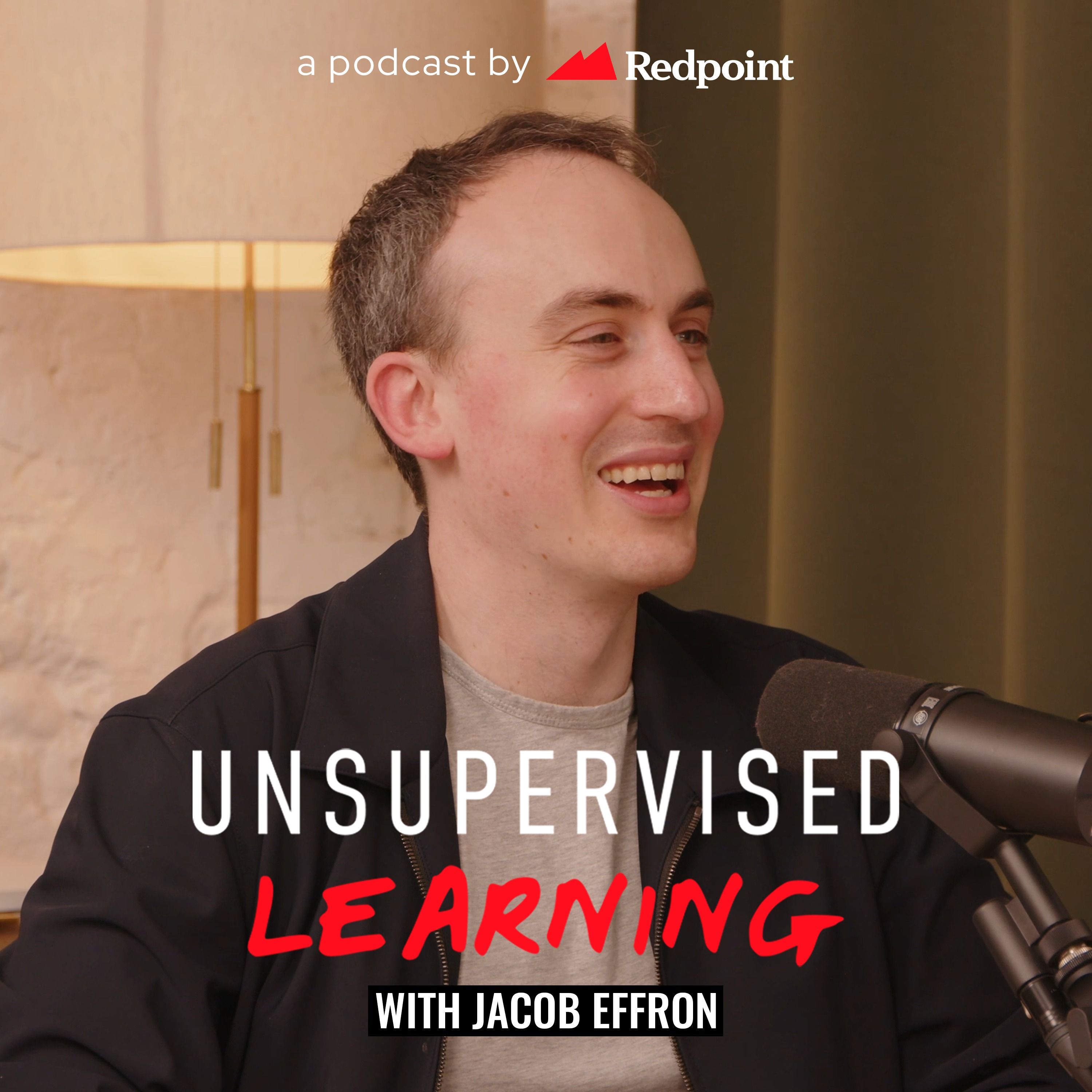
Ep 96: Nebius CTO on Racing the Hyperscalers Before AWS Wakes Up
Unsupervised Learning with Jacob Effron
Hosted by Jacob Effron
- 1h 1m
- Transcript
Summary
Written by a model from the transcript; not yet reviewed.
Jacob Effron talks with Neela, the CTO of Nebius, about building an independent AI cloud company to compete against major hyperscalers. They discuss the company's origin and separation from Yandex, how software acts as the primary moat rather than just raw GPU access, and the messy process of integrating next-generation Nvidia hardware before official launches. They also examine the massive demands of modern AI workloads, including extreme storage throughput requirements and the nuances of inference optimization.
The guest explains that Nebius operates as a software-first cloud provider designed to scale from single-GPU self-service users to massive enterprise clusters. They argue that hyperscalers struggle to prioritize external AI rental capacity due to heavy internal consumption and hardware shortages, leaving a vital opening for independent players. The conversation highlights the logistical challenges of data center build-outs, the growing importance of model pruning and compression for specialized enterprise agents, and the surprising ways customer scale has exceeded prior industry expectations.
- Nebius positions software as its core competitive moat, allowing the company to serve both retail users and massive multi-GPU clusters on a single platform. 1:59
- The guest notes that inference optimization remains largely unsolved across the industry, with significant performance gains still available through model pruning and compression. 25:14
- Infrastructure providers must account for extreme storage throughput demands, with modern training and inference customers routinely hitting hundreds of gigabytes per second. 16:46
- The guest shares that the single greatest bottleneck in the AI infrastructure build-out is not just hardware availability, but overall execution and project management. 34:57
Chapters
- 0:00Podcast Intro and Host Overview
Jacob Effron introduces the episode, setting the stage for a deep dive into Nebius and the AI cloud market.
- 0:49Nebius Origin Story and Yandex Relationship
Neela discusses Nebius’s beginnings, its split from Yandex, and the company’s early focus on GPU infrastructure.
- 3:33Nebius Business Model and Differentiation
Nebius explains its software-first approach, how it differentiates from neo-clouds, and its target market against AWS and Google Cloud.
- 10:43Hardware Integration with Nvidia and Chip Deployment
The team details the iterative process of integrating new Nvidia chips, from early schematics to production-ready clusters.
- 14:55Customer Segmentation and Service Offerings
Nebius outlines how it serves both large neo-cloud clients and smaller enterprise customers, balancing performance and compliance needs.
- 32:41Data Center Architecture and Asset-Light Model
Discussion on Nebius’s control over data center build-outs, the asset-light model, and how infrastructure choices impact service quality.
- 34:55Bottlenecks in AI Infrastructure and Execution
Nebius highlights the single bottleneck of execution across supply chain, talent, and resource constraints in scaling AI clouds.
- 39:17Hyperscalers vs. New AI Cloud Players
Exploration of why hyperscalers lag in AI cloud adoption, the market’s future consolidation, and the role of niche providers.
- 42:00OpenAI, Anthropic, and AI Cloud Consolidation
Nebius examines how large AI firms are building their own clouds, the impact on independent providers, and future market dynamics.
- 52:07Closing Reflections and Future Outlook
Final thoughts on AI trends, Nebius’s strategy, and the broader AI infrastructure ecosystem.
- 55:08Intro: Setting the Stage for Nebius
Jacob Effron opens the conversation by discussing the challenges of autonomous agents and the need for cautious innovation.
- 55:48Mistake: Underestimating Client Scale
The guest reflects on the biggest mistake of underestimating the scale of modern clients and the implications for infrastructure.
Highlights
- 1:59
Software as the Primary Moatinsight
The guest explains that Nebius was built on the premise that software is the true differentiator, allowing them to serve both small self-service users and massive interconnected GPU clusters using the same platform.
- 3:33
Competing Beyond Neo-Cloudsstrategy
The guest rejects the label of neo-cloud and states that their direct mental model is competing against AWS and Google Cloud, betting on an explosive ten-fold or hundred-fold increase in market demand over the next three years.
- 9:55
Software Team Outscaling Hardwaredata
Reflecting on the company's execution speed, the guest shares that while hardware procurement and build-outs were handled by a tight team of 40 to 50 people, the software organization scaled to 200 engineers.
- 10:43
Iterating on Nvidia Prototypesstory
The guest describes the messy, highly compressed reality of receiving early lab samples and schematics from Nvidia, noting that architectures iterate constantly right up until production.
- 16:39
Extreme Storage Throughput Demandsdata
The guest points out that modern AI workloads demand unprecedented storage performance, with customers routinely hitting 700 gigabytes per second of throughput from shared file volumes connected to thousands of servers.
- 25:14
Unsolved Inference Optimizationinsight
The guest argues that the industry has barely optimized inference on open models, highlighting that selective pruning and model compression offer massive untapped potential for specialized enterprise use cases.
- 34:57
Execution as the Ultimate Bottleneckinsight
When asked about industry bottlenecks, the guest dismisses individual hardware shortages and argues that the single true constraint is an organization's overall ability to execute and source components.
- 55:56
Underestimating Client Scalestory
Reflecting on past mistakes, the guest admits to initially underestimating the sheer scale at which single enterprise clients operate, noting that a 30-megawatt data center is now sometimes insufficient for one customer.
Quotes
“We are not a hardware-first company.”
Unnamed speaker · 10:10 “We are the AI cloud, and this is our mental model.”
Unnamed speaker · 3:33 “The single bottleneck and at the same time, the single like mode that you can impose on that is like your ability to execute around all these problems and concerns.”
Unnamed speaker · 35:58 “I stopped caring about like the new models being larger or smarter.”
Unnamed speaker · 57:57 “I'm very interested in how that part will shape up.”
Unnamed speaker · 59:05 “We were pretty optimistic from the very beginning, but I personally, that was like my strong bias for the first like significant part.”
Unnamed speaker · 56:04 “I just accepted that it's a given.”
Unnamed speaker · 58:04
Sponsored segments
- Anne Maris 15:18–15:34
About this episode
Nebius CTO Danila Shtan joins Jacob Effron to talk about what it takes to run an AI cloud at the frontier, and why he thinks the hyperscalers haven’t won this market yet. Today Nebius is a Nasdaq-listed AI cloud with infrastructure deals with Microsoft and Meta. Danila and Jacob discuss why open-model inference is still far from optimized, why 95% of Nebius customers run modified models instead of vanilla ones, and why prefill/decode disaggregation is more talk than practice. They also cover what’s actually constraining the AI buildout, why chip scarcity has kept AWS and Google from winning AI cloud, whether we’re overbuilding infrastructure, and how Nebius runs a large engineering org with no limits on AI token usage.
Transcript
9,991 words · 3 speakers
Speaker names marked are inferred from speaking time and the show’s known hosts — they are not voice-verified.
Topics
- AI
- Nebius
- Nvidia
- AWS
- OpenAI
- Yandex
- GPU
- AI cloud
- Neo-clouds
- Anthropic
Page updated · transcript and summary are machine-generated