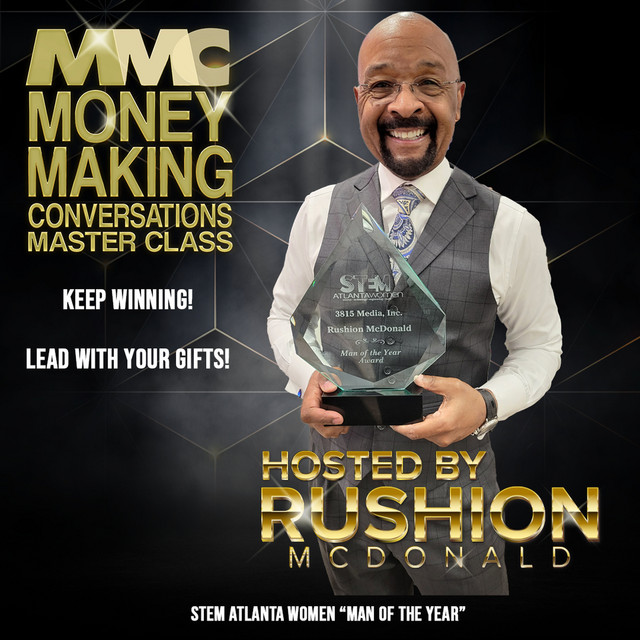
Overcoming the Odds: He built mailbox money through residuals and a career by staying relevant across decades of industry change.
Money Making Conversations Master Class
- 29m
- Transcript
Summary
Written by a model from the transcript; not yet reviewed.
This episode features television music composer Kirk Farquhar discussing his 38-year career in the entertainment industry, creating iconic scores and theme songs for shows like The King of Queens, Moesha, and The Neighborhood. The guest and host, Rashawn McDonald, examine the realities of sustaining a long-term creative career behind the scenes, earning residual income known as mailbox money, and adapting to decades of technological and cultural changes in television. Farquhar explains how treating art like a business, maintaining strong industry relationships, and embracing diverse musical genres enabled him to win ten BMI Awards and build a massive music library with over 10,000 songs. Listeners gain unique insights into the mechanics of television production, the importance of reliability over ego, and the value of saying yes to new opportunities.
- Sustaining a career in television for decades is significantly harder than breaking into the industry initially. 7:38
- Treat entertainment like a business by delivering quality work and remaining dependable for producers. 9:21
- Maintain professional relationships consistently instead of only reaching out when you need work. 26:45
- Build your own music library to generate additional licensing revenue streams across networks and streaming platforms. 30:13
Chapters
- 0:00Podcast Introduction and Host Overview
The hosts introduce the episode, explain the podcast’s purpose, and promote the host’s brand and services.
- 3:24Guest Introduction: Kirk Farquad
The host welcomes 10-time BMI award-winning composer Kirk Farquad and sets the stage for the interview.
- 4:17Kirk’s Early Career and First Projects
Kirk recounts his beginnings as a TV composer, early shows like Moesha and The King of Queens, and how he built his catalog.
- 6:38The Concept of Mailbox Money and Residuals
Kirk explains how residuals from long-running shows provide steady income and the importance of sustaining work over decades.
- 11:07Adapting to Industry Changes Over 38 Years
Kirk discusses staying relevant, evolving his style, and leveraging relationships to secure ongoing work.
- 22:35Current Projects and Future Plans
Kirk talks about recent shows like The Proud Family and upcoming projects, highlighting his continued relevance.
- 24:19Relationship Building and Networking
Kirk emphasizes the power of relationships, saying yes to opportunities, and maintaining connections for career longevity.
- 30:13Building a Diverse Music Library
Kirk details creating a vast licensed music library, its benefits, and how it serves various TV networks and streaming platforms.
- 33:58Closing Remarks and Podcast Wrap-Up
The host thanks Kirk, repeats promotional calls to action, and concludes the episode with final remarks.
Highlights
- 5:39
Longevity in Television versus Musicinsight
The guest explains that while the recording business often discards artists after age 29, film and television allow composers to work well into their 90s, citing John Williams as a prime example.
- 6:38
Building Mailbox Money Through Residualsdata
The host and guest discuss how composing for hit television shows generates ongoing residual payments, commonly referred to in the industry as mailbox money.
- 7:31
The Difficulty of Staying Relevantinsight
The guest notes that he is in his 38th season of television and emphasizes that continuing to work for decades is far harder than getting the first job.
- 13:34
Adapting Music to Storytelling Visionsstrategy
The guest explains that successful scoring requires listening closely to the writers and producers and co-opting their vision rather than forcing a singular, repetitive musical style.
- 15:36
Composing a Symphony at Twelvestory
The guest highlights his lifelong breadth of musical exposure by mentioning that he wrote his first symphony at age twelve and later toured with jazz artist Freddie Hubbard.
- 21:45
Inspiration From an Accidental Barking Dogstory
The guest shares a story about recording a live band in a garage where a barking dog in the distance matched the musical key, prompting him to instantly rewrite the piece.
- 25:18
The Power of Saying Yesstrategy
The guest explains that his career thrives on the power of saying yes more often to producers and projects, avoiding the trap of trying to predict blockbusters.
Quotes
“Making money isn't just about having a great idea.”
Unnamed speaker · 0:32 “Ever invest in something that seemed incredible at first, but didn't live up to the hype?”
Unnamed speaker · 1:33 “The things, the thing is, is not to just do it one time, but to do it again.”
Unnamed speaker · 7:04 “That fear is what keeps people out and, and this fantasy that it's, that, that, that it can only happen to this person.”
Unnamed speaker · 9:12
About this episode
Listen and subscribe to Money Making Conversations on iHeartRadio https://www.iheart.com/podcast/1119-money-making-conversation-28341098/, Apple Podcasts https://podcasts.apple.com/us/podcast/money-making-conversations-master-class/id1264705641, Spotify https://open.spotify.com/show/3ABAQdTXqAnhGwxrsjFa5y, www.moneymakingconversations.com/subscribe/ http://www.moneymakingconversations.com/subscribe/ or wherever you listen to podcasts. New Money Making Conversations episodes drop daily. I want to alert you, so you don’t miss out on expert analysis and insider perspectives from my guests who provide tips that can help you uplift the community, improve your financial planning, motivation, or advice on how to be a successful entrepreneur. Keep winning! Two-time Emmy and Three-time NAACP Image Award-winning, television Executive Producer Rushion McDonald interviewed Kurt Farquhar. Television & Film Composer, Founder of Fall Crop Productions and True Music Pro Notable Credits: The King of Queens, Girlfriends, The Parkers, Being Mary Jane, The Proud Family, The Neighborhood, Black Lightning Awards: 10 BMI Awards Tenure: 38+ years in television Purpose of the Interview The purpose of this interview is to educate and inspire creatives, entrepreneurs, and professionals about longevity, adaptability, and wealth-building behind the scenes. Kurt Farquhar’s journey highlights how sustainable success comes from mastery of craft, relationship-building, and treating creativity as a business—not chasing visibility or fame. Rushion McDonald uses Kurt’s career as a blueprint for: Building mailbox money through residuals Staying relevant across decades of industry change Monetizing intellectual property Leveraging relationships to sustain opportunity Core Themes Discussed Longevity vs. “getting on” Behind-the-scenes success Residual income (“mailbox money”) Adaptability in changing industries Creative originality Relationship capital Diversifying income through ownership Treating art like a business Key Takeaways 1. Staying In Is Harder Than Getting In While many focus on breaking into the industry, Kurt emphasizes that lasting success requires constant reinvention. “The continuing it for the 30-plus years has been way harder than the getting in in the first.” Insight: Longevity requires discipline, humility, and evolution. 2. Behind-the-Scenes Roles Can Be More Sustainable Kurt chose composing over performing, allowing him to age into his career rather than age out of it. “In television and film… all I’ve got to say is John Williams is in his 90s and still composing.” Insight: Choose lanes that allow long-term relevance and recurring income. 3. Residual Income Is Real Wealth Rushion and Kurt discuss “mailbox money”—recurring payments from past work. “If you just had the mailbox money for King of Queens, you’d be fine.” Insight: True financial freedom comes from owning work that keeps paying. 4. Adaptability Is Non‑Negotiable Kurt has survived massive industry shifts—from analog tape to digital production—by embracing change. “Sustain that good idea, change it, polish it up, and mold it for the changing times.” Insight: Talent without adaptability becomes obsolete. 5. Originality Comes From Listening, Not Forcing a Style Kurt avoids creative stagnation by serving the story, not his ego. “I don’t come in every day trying to force the singular style I’ve done for 38 years.” Insight: Longevity depends on collaboration and humility. 6. Relationships Are Career Currency Kurt credits long-term success to consistently showing up for people—before they’re powerful. “If you only call someone once you read they’ve got something coming up, it’s already too late.” Insight: Relationships built without agenda produce lasting opportunity. 7. Saying “Yes” Creates Opportunity Kurt embraces what he calls the power of yes. “I figure I can say yes more than you and end up making more and doing better.” Insight: Opportunity favors those who remain open, prepared, and professional. 8. Ownership Multiplies Creativity Into Business Kurt built True Music Pro, a licensing library used across major networks and streaming platforms. “I realized companies were licensing more of my music than I was… so I built my own library.” Insight: Ownership turns talent into scalable income. Notable Quotes “The journey to stay in is harder than the journey to get in.” “Treat it like a business and it might treat you in kind.” “I do my job, I do it the best I can, and I move on to the next one.” “Character is character. Relationships matter.” “That success doesn’t happen by accident. It happens with care.” Overall Impact of the Interview This interview serves as a masterclass on creative longevity and wealth-building without celebrity dependency. Kurt Farquhar’s story reframes success as: Consistent excellence Relationship stewardship Business ownership Adaptability across generations It is especially powerful for: Creatives seeking sustainable careers Entrepreneurs building IP-based businesses Professionals navigating long-term relevance Anyone pursuing “quiet wealth” over public fame #SHMS #STRAW #BEST #AMI Money Making Conversations Master Class with Rushion McDonald is America's premier entrepreneurship, business leadership, financial literacy, and wealth-building podcast featuring successful entrepreneurs, executives, founders, celebrities, and industry experts sharing actionable insights for professional and financial success. Business Podcast Entrepreneurship Small Business Business Growth Financial Literacy Wealth Building Black Entrepreneurs Minority Business Leadership Executive Leadership Business Funding Marketing Strategies Personal Development Startup Advice Sales Training CEO Interviews Founder Stories Professional Development Economic Empowerment Business Success Networking Brand Building Innovation How to start a business Small business funding Entrepreneur success stories Business leadership podcast Wealth building strategies Black entrepreneur podcast Minority business development Marketing for small businesses Business growth strategies Startup funding opportunities Executive leadership training Financial literacy education Success mindset podcast See omnystudio.com/listener https://omnystudio.com/listener for privacy information.
Transcript
6,159 words · 6 speakers
Topics
- ChatGPT
- Zepbound
- Money Making Conversations Masterclass
- The Parkers
- Granger
- The Neighborhood
- LinkedIn Ads
- ChatGPT.com
- iHeartRadio
- Spotify
Page updated · transcript and summary are machine-generated