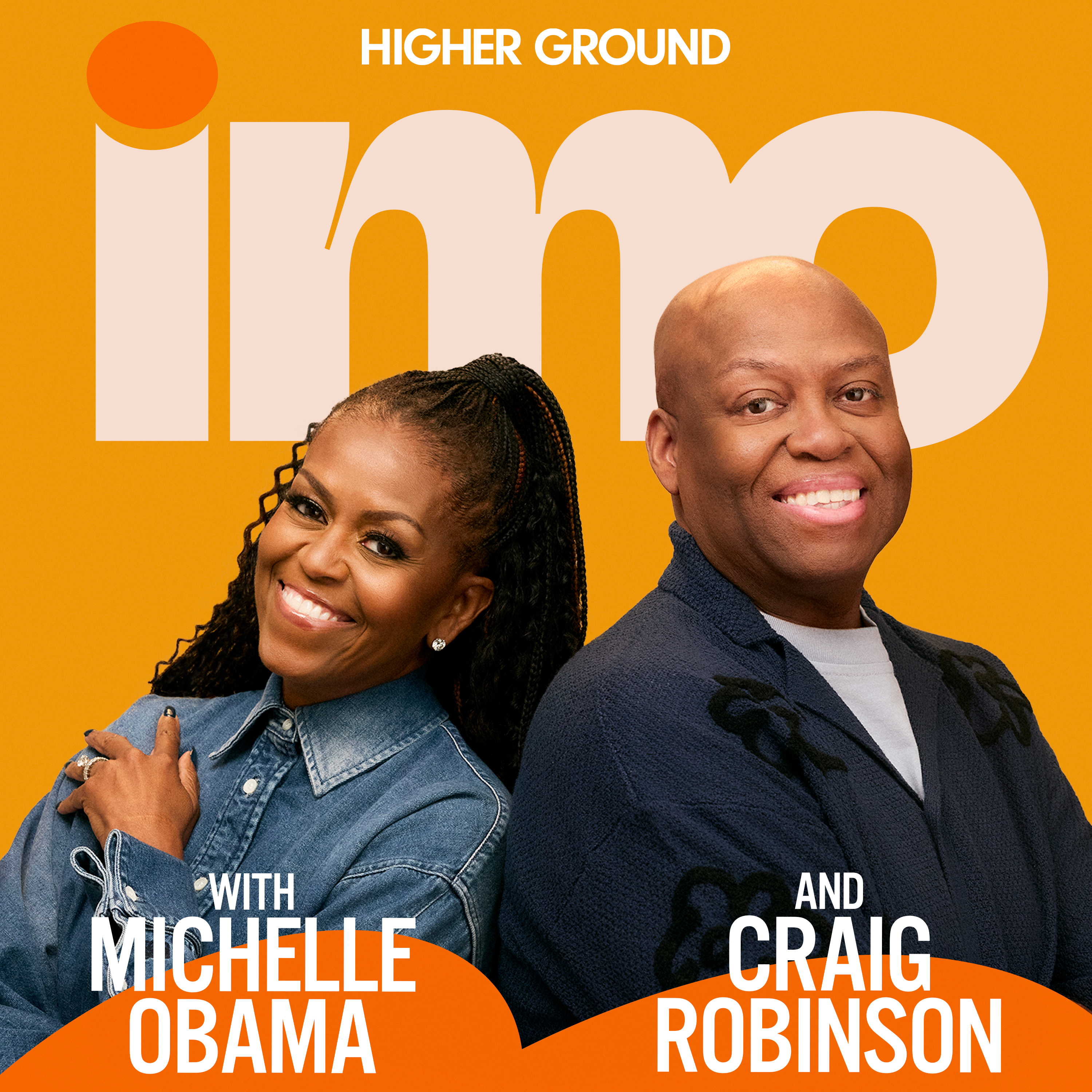
Pod Insights IMO with Michelle Obama and Craig Robinson You Need to Learn to Say No (Even to an Inauguration) with Taraji P. Henson About this episode Actress, businesswoman, and mental health advocate Taraji P. Henson joins to talk about setting boundaries, why Michelle didn't attend the inauguration, post-White House therapy, and the glories of the Real Housewives franchise. Plus Craig gets a birthday surprise!
Have a question you want answered? Write to us at imopod.com http://imopod.com/.
See Privacy Policy at https://art19.com/privacy and California Privacy Notice at https://art19.com/privacy#do-not-sell-my-info.
Transcript 11,435 words · 5 speakers
Speaker names marked ? are inferred from speaking time and the show’s known hosts — they are not voice-verified.
0:00 Michelle Obama? What happened that eight years that we were in the White House? What did that do to me? Yes. Internally, my soul, we made it through. We got out alive. I hope we made the country proud. My girls, thank God, are whole. But what happened to me? Right. Right?
0:23 Michelle Obama? This episode is brought to you by Pine Sol and Theraplu.
0:28 Michelle Obama? Craig Malcolm Robinson.
0:30 Craig Robinson? Michelle Lavon Robinson.
0:32 Michelle Obama? Not Robinson, Obama.
0:34 Craig Robinson? Obama.
0:35 Michelle Obama? What, thirty years?
0:40 Michelle Obama? How's it going?
0:41 Craig Robinson? It's going well. It's going well. How you doing?
0:44 Michelle Obama? Doing, doing well.
0:45 Craig Robinson? Yeah.
0:46 Michelle Obama? Yeah, happy to be here with you. We've got a great show coming up.
0:50 Craig Robinson? I'm so excited.
0:51 Michelle Obama? But we are here in LA and you doing your thing.
0:54 Craig Robinson? I'm doing my thing. Staying in an Airbnb again. And I tell you, every time I stay in one, it makes me want to stay in one wherever I go. You know, we're going, we're, the boys have a tournament coming up in a month or so. And rather than staying in a hotel, we're going to get an Airbnb so we can do all of our own cooking and washing of dirty uniforms.
1:17 Michelle Obama? Yeah, yeah.
1:18 Craig Robinson? So I'm really excited.
1:19 Michelle Obama? You're just becoming an Airbnb aficionado.
1:23 Craig Robinson? I am, I am.
1:24 Michelle Obama? Quite impressed.
1:25 Craig Robinson? I absolutely have enjoyed my time because, you know, I was always Mr. Hotel.
1:30 Michelle Obama? You were.
1:31 Craig Robinson? Points and all that stuff.
1:34 Michelle Obama? You seem younger than you are. That makes you more up to date than, you know, your age portends. You're living like a young person out there.
1:42 Craig Robinson? I know, I know.
1:43 Michelle Obama? But Airbnb is for everyone of all ages and you were living proof of that.
1:47 Craig Robinson? I am, I am. Well, how excited are we?
1:51 Michelle Obama? Very, very excited.
1:54 Craig Robinson? Well, folks, we, I'm gonna get right to our guest because we want to bring her out because this is one of those. And I am a huge fan and I've got goosebumps.
2:06 Michelle Obama? Let me just say, my brother has been giddy, little silly giddy all day. And he even wore a whole suit for this one.
2:13 Craig Robinson? I did.
2:14 Michelle Obama? Because he's usually in jeans. It's like there's usually, we don't know what's going on down there. But you could, but your top matches your pants today. That means we got somebody special here with us.
2:24 Craig Robinson? See, see what happens when you try and clean yourself up. Your sister takes full advantage. But we, our guest today is none other than Taraji P. Henson.
2:34 Michelle Obama? My girl.
2:35 Craig Robinson? And she is an Academy Award nominated actor, producer, and number one New York Times bestselling author, mental health advocate, and entrepreneur.
2:46 Michelle Obama? Yeah, yeah, owning her own stuff.
2:49 Craig Robinson? Yeah, she's starring in Tyler Perry's Straw on Netflix, which I watched the trailer and I was crying on the trailer.
2:57 Michelle Obama? I know, I know. Taraji, she'll do, she'll do that to you.
3:00 Craig Robinson? She does it to you. She does it to you.
3:02 Michelle Obama? Yeah, I can't wait for that to come out.
3:04 Craig Robinson? I know, I know. She is also the founder of the Boris L. Henson Foundation, named after her father, which works to enhance access to mental health services within black communities. She has also launched TPH by Taraji, a line of spa-inspired products, and is the strategic advisor for seven daughters Moscato. Moscato.
3:28 Michelle Obama? I got me a bottle. I might, I had two bottles. I may let you try one.
3:33 Craig Robinson? Let me, let me try one. I would love that. But without any further ado, Taraji, please come out and join us.
3:42 Craig Robinson? Thank you so much.
3:43 Speaker 02 Are you kidding me?
3:48 Speaker 02 I love your hair.
3:49 Craig Robinson? Thank you. Love yours too.
3:51 Speaker 02 Thank you.
3:52 Michelle Obama? Oh, my goodness.
3:54 Craig Robinson? It took a while to do mine, so.
3:56 Michelle Obama? Yeah, yeah. Yeah, looking, looking good, looking good. Now, the last time I, we saw one another was at the final White House party.
4:07 Speaker 02 Yes.
4:07 Michelle Obama? In the last.
4:08 Speaker 02 Yes.
4:09 Michelle Obama? The last night and.
4:11 Speaker 02 It was the last night.
4:12 Michelle Obama? It was, was it, was it the very last night or was it one of the last parties? I can't remember.
4:17 Speaker 02 So I think it was.
4:18 Michelle Obama? Yeah.
4:19 Speaker 02 I think it was, but I just never, I just never forget, I was leaving. And I thought it was pretty late.
4:27 Michelle Obama? It was.
4:28 Speaker 02 I'm leaving because I'm tired. My feet hurt. I have on socks.
4:31 Michelle Obama? And I remember you saying that because that was you like, girl.
4:35 Craig Robinson? You had socks walking to the car?
4:36 Speaker 02 Yes, because my feet, I danced out of my shoes and Tom Hanks was walking across the floor. He's still fighting. I will never forget that.
4:47 Michelle Obama? Well, we are thrilled, beyond thrilled to have you here.
4:52 Speaker 02 Thank you.
4:52 Michelle Obama? Let me, let me just fangirl a little bit. Because I, I didn't get to do that at the party when I saw you, but we are huge fans.
5:00 Speaker 02 Thank you.
5:01 Michelle Obama? And you, oh man, you just bring every part of you to the work that you do. And I will never forget my reaction. And I know a lot of actors like you who do so many things don't want to get pigeonholed into one role. But let me just say, Cookie on Empire. I mean, I got on the phone to people when, when you showed up on screen. Because I was like, this is a real character.
5:32 Speaker 02 Yeah.
5:32 Michelle Obama? I mean, this is like, like I felt all of who Cookie was. And I called people on the phone, I was like, you have got to watch Empire. This is a different kind of a series that's coming on. And it was because of your performance.
5:47 Speaker 02 Thank you.
5:48 Michelle Obama? And, you know, and then to see the trailer of Straw, which is, you know, the story of black women at the edge of everything. And just the trailer alone, as Craig said.
6:02 Craig Robinson? Yeah.
6:03 Michelle Obama? Has, it brings you to tears. I guess I just want to know, where does all that come from in that little bitty body of yours?
6:14 Speaker 02 Well, I am trained. I went to Harvard.
6:19 Speaker 02 But, you know, as an actor, sometimes, you know, sharing a bit of, you know, the character's joy or pain, mine might bleed in a little bit. And I've been through some things in life, you know? It wasn't easy growing up, you know, in the hood or whatever. But, um, you know, I made it out.
6:38 Michelle Obama? Yeah.
6:39 Speaker 02 You know? But, um, you know, life will throw curveballs at you. And it's not always, you know, I know people look at celebrities and they're like, oh, you got it made because you're rich. But like the great guru Biggie Smalls says, more money, more problems. You know, you think your problems go away because you finally made it or whatever. And it's like, no, they, you get more problems, more expensive problems. But again, you know, the training and just... Being true to the character, and I think as actors, what we do is very spiritual.
7:12 Michelle Obama? Yeah.
7:12 Speaker 02 Because we use our bodies as vessels to tell a character's truth.
7:17 Craig Robinson? Mm-hmm.
7:17 Speaker 02 And so I can't judge that character.
7:20 Craig Robinson? Right.
7:21 Speaker 02 A lot of times I do, like I judged Cookie at first. I was like, oh my God, she's a whore. I did. It was hard not to. But the job of the actor is to show the why.
7:31 Craig Robinson? Yeah.
7:32 Speaker 02 And when you show the why, that's when you gain empathy.
7:35 Michelle Obama? Yeah.
7:35 Speaker 02 Because there's always a why.
7:37 Craig Robinson? Mm-hmm. Well, I, you know, I'm a trained athlete, so I'm different. But when you said that, you know, I'm trained, it, you know, I never, I never think of that with non-athletes.
7:52 Speaker 02 Right.
7:52 Craig Robinson? And that is, it's a real skill.
7:55 Speaker 02 It is.
7:56 Craig Robinson? But to, I'm just sitting here getting nervous because every time I watch you on the screen, I feel something.
8:05 Speaker 02 Mm-hmm.
8:07 Craig Robinson? Emotionally, and I just want to thank you for that because it is a, I mean, just, I'm thinking about, you know, Benjamin Button, I'm thinking about Proud Mary. I mean, Proud Mary, well, you know, I still have a 15-year-old and a 13-year-old.
8:24 Speaker 02 Oh, wow.
8:24 Craig Robinson? So that, that, that hit me. You know, I will let my kids watch R-rated movies if you're in them.
8:32 Michelle Obama? I want to know some of the why of Taraji.
8:36 Speaker 02 Okay.
8:37 Michelle Obama? The real woman.
8:38 Speaker 02 Mm-hmm.
8:39 Michelle Obama? Um, you know, because you are doing a little bit of everything now.
8:43 Speaker 02 Yeah.
8:43 Michelle Obama? You know, you are not just acting and, and winning awards, but you're building an empire of, of your own.
8:52 Speaker 02 Yes.
8:53 Michelle Obama? Can you talk a little bit about that? Because you just had, you know, a major win personally on the business side.
8:59 Speaker 02 Yes.
8:59 Michelle Obama? Uh, gaining more control over your own stuff. Can you talk a bit about your company?
9:05 Speaker 02 Yes, well, TPH, I don't know if a lot of people that may or may not know this about me, but I didn't get accepted into Duke Ellington School of Fine Arts in Washington DC. And the next Thing, my next passion was cosmetology. I love doing hair and nails and makeup. But I missed, you had to enroll in the ninth grade. I missed it by a year and I just think it was God.
9:28 Michelle Obama? Yeah.
9:29 Speaker 02 You know, I wasn't supposed to go down that path. But that's, that's always been a passion of mine. That's how I fed myself in college, you know, cause I didn't have money. And so I would do $20 wet sets, cause I had a hooded dryer out of my dorm room.
9:45 Michelle Obama? And you went to Howard.
9:46 Speaker 02 And I went to Howard. But my first, I started at North Carolina A&T.
9:50 Michelle Obama? Oh, that's right.
9:51 Speaker 02 Yeah, because I really didn't think I could act.
9:53 Michelle Obama? That's right.
9:53 Speaker 02 And then my father let me fall flat on my face. Cause math is not, I'm not mathematically wired at all. I'm an artist. I am an artist to the bone. And so when I failed pre calc, my dad was like, that's what you get. Now you get back up here, go to Howard and you enroll and you get back into acting. And that's how I.
10:13 Michelle Obama? So you were running from acting?
10:14 Speaker 02 I ran from it.
10:15 Michelle Obama? Wow.
10:16 Speaker 02 Yeah, well, I ran from it. I was.
10:18 Craig Robinson? I thought you were saying your dad.
10:20 Speaker 02 No, he won it. No, no, he knew that I was a performer. He was telling me when I was little that I would win an Oscar. You're gonna be one of the greatest actors alive. And because I'd been hearing that so much from him when I did not get accepted into Duke Ellington. I, I couldn't, I didn't know how to take that, you know.
10:41 Michelle Obama? Take that failure on the chin and keep moving.
10:43 Speaker 02 At 13 or what was that 12? How you, that you, you believe that? You go, oh, that must mean I can't act.
10:50 Craig Robinson? Sure.
10:50 Speaker 02 You know?
10:51 Michelle Obama? Well, and, and having raised my children in Washington, we've done a lot of work with the Duke Ellington School. And to put it in perspective, it's, it's like the Whitney Young, the magnet school that I went to. You know, you know, well-funded school, you know, that, that just pushes out a lot of amazing artists all over the place. So I can imagine you grew up with that being your, you know.
11:16 Speaker 02 My North Star. So I just thought that, I just thought I didn't have the talent. And so imagine me going back to Howard. I felt out of sorts. And then finally, when I got back into the groove and I found my footing, everybody was like, well, you know, you went to Duke Ellington. And I was like, no, I didn't. They didn't accept me.
11:35 Michelle Obama? Well, that is, you know, a beautiful thing to have a black daddy.
11:39 Speaker 02 Right.
11:40 Michelle Obama? Believe in his baby so much in a very challenging and non-traditional career.
11:47 Speaker 02 Yeah.
11:48 Michelle Obama? You know, what a blessing to have that man be in that wind beneath your wings.
11:54 Speaker 02 Yeah, it was because, you know, in the day of, you should be a doctor or you need to be a lawyer. He really saw my gift. So, but like I said, I was doing $20 wet sets. So hair and cosmetology has always been in me. And I remember when I first got to Hollywood and I'd started working and I couldn't afford Weebs when I was in college. So when I got to Hollywood, I heard about, you know, women. I lost my edges and I didn't want to lose my edges and I started working and.
12:26 Michelle Obama? See, we have that issue too, Craig.
12:31 Craig Robinson? You see what she did?
12:32 Speaker 02 I'm sorry.
12:33 Craig Robinson? She said, we have that too. And then she looks up at my head.
12:35 Speaker 02 Well.
12:36 Craig Robinson? See, that's what happens. That's what happens.
12:39 Speaker 02 Maybe if you'd have found TPH.
12:41 Michelle Obama? There you go.
12:42 Speaker 02 Or you would have your edges.
12:44 Michelle Obama? I'm sorry, Taraji. I mean, I still have to give it to my brother.
12:48 Speaker 02 It was perfect timing.
12:49 Craig Robinson? You know, I'm the older brother, you know? You know that, right?
12:53 Speaker 02 She's making up for all the times when you picked on her when she was little. I'm sure.
12:57 Michelle Obama? But in the spirit of saving our edges.
12:59 Speaker 02 Yeah, so I just remember I got my first install and I was like, well, this is great for protecting my hair, but how do I get to my hair? How do I take care of my hair while it's in an install? And so I created this concoction and I remember going on vacation with a girlfriend of mine and her daughter, they had protective styles and they complained about itchy scalp. But I said, well, use what I use. And I put it together and they came out of the bathroom like, oh, my God, where do I get this? This is amazing. And I was like, give me a minute. And so that's how TPH was born. Out of my own necessity. And for me, it was about the education of scalp. Because I knew women were getting installs, wearing wigs.
13:40 Speaker 02 But I was like, I don't think they understand that you still have to take care of your hair if it's in an install. So that's when I was like, this is a great way for me to enter into the beauty industry. So that's how TPH was born, out of my own necessity.
13:54 Michelle Obama? And you now own it.
13:56 Speaker 02 I own it. I finally, I bought it back. It's mine, it's mine, it's mine. I have a lot of work to do, but I am ready. I'm ready for it because it's mine. I feel like, I feel like Cookie. I own my company.
14:08 Michelle Obama? There you go, there you go. And you know, that's where it begins. So now you a businesswoman.
14:13 Speaker 02 Yes.
14:14 Michelle Obama? You adding that on to your plate?
14:17 Speaker 02 Yes.
14:19 Michelle Obama? But you've been doing all that and raising a strong black man. I want to know, how do you manage it all?
14:28 Speaker 02 It wasn't easy. It's never easy. You know, as life, you have ups and downs. You have dark days, you have light days, you have gray areas. And for me, it was just learning how to take care of myself. Because as women,
14:45 Michelle Obama? Yeah.
14:46 Speaker 02 we take care of so much. And we take care of the family. And a lot of times, we put ourselves last.
14:54 Michelle Obama? Yeah.
14:55 Speaker 02 And it took me a while to understand that if I don't pour into myself, I have nothing to give.
15:01 Michelle Obama? Yeah.
15:01 Speaker 02 And I've reached those points a lot in my life, trying to do so much. And you know, I come from the grind, grind, grind. You know, that grinding will kill you. And I would work so hard and then just feel burnt out, you know? And it made me question sometimes, is this even still what I want to do?
15:24 Craig Robinson? Wow.
15:25 Speaker 02 You know, because of the exhaustion.
15:27 Craig Robinson? Acting.
15:28 Speaker 02 Yes. Also too, having to do so many jobs because the money, the math wasn't mathing.
15:36 Craig Robinson? Oh, gotcha.
15:37 Speaker 02 I wish I had the luxury of just doing one film a year.
15:40 Craig Robinson? Right, right.
15:41 Speaker 02 You know? But that's not the case for me.
15:43 Craig Robinson? And that's not the case for many black actors, I would imagine, right?
15:47 Speaker 02 Yeah, it's not.
15:48 Craig Robinson? Yeah.
15:49 Speaker 02 So when you see us working a lot, it's because we kind of have to.
15:52 Craig Robinson? Yeah.
16:00 Craig Robinson? Well, you know, another story I think about is how mom and dad trained us to work hard. You remember the chores?
16:11 Michelle Obama? Oh, yeah, we had chores very early on, very early on. That's another thing, I think, you know. One of the best things that our parents did for us is-
16:22 Craig Robinson? Real work.
16:23 Michelle Obama? Real, real work around the house.
16:25 Craig Robinson? And what I mean by real work is I had, my chores were to clean the bathroom.
16:32 Michelle Obama? I cleaned the bathroom. What are you talking about? We alternated.
16:37 Craig Robinson? We alternated weeks.
16:38 Michelle Obama? Okay, because I loved cleaning the bathroom.
16:40 Craig Robinson? And I didn't, but I had to do it. Mom wanted us both to know how to have a clean bathroom. But my every weekend job was cleaning those stairs.
16:53 Michelle Obama? Oh, that's right, yeah.
16:54 Craig Robinson? We had 14 stairs. Notice, I remember how many there were.
16:59 Michelle Obama? Yeah, you had to, yeah.
17:00 Craig Robinson? That-
17:01 Michelle Obama? Went from-
17:02 Craig Robinson? Went from our apartment down to our aunt, great aunt Robbie's apartment. And this is what I remember about Saturday morning. You remember that tin pot that we used to have? We had a tin pot, a pot now that used to be on the stove, which was now used for cleaning. And you put a little soap, dish soap in it, and then you put Pine-Sol.
17:25 Michelle Obama? Ooh, not like Pine-Sol.
17:26 Craig Robinson? And there was nothing like that smell. Like, when you came home from school and mom had been mopping, and you could smell the Pine-Sol, it was usually Monday because she had laundry on Monday. You come home from school and it smells like, ah, new house.
17:42 Michelle Obama? Yeah.
17:42 Craig Robinson? And I have to say that-
17:48 Craig Robinson? I still to this day, when I'm mopping, if we don't have that pine oil smell.
17:56 Michelle Obama? That's it.
17:57 Craig Robinson? That's it, isn't it? And here we are in adulthood and they're a partner of ours on this podcast.
18:04 Michelle Obama? You know, an appropriate partner.
18:06 Craig Robinson? How about it? So when you, when, when you get a chance out there, visit pinesal.com and find out where you can shop for your pine salt. This episode of IMO is brought to you by Theraplu. As a product that was created to provide effective and comforting relief when you're fighting the flu or a cold, Theraplu firmly believes that the ability to rest and recover when sick should be a right, not a privilege. You know, I think back to the time when my dad was working for the city of Chicago as a stationary fireman, and it seemed to us that he never missed work and he never got sick. But what we realized is that my dad didn't want to take his paid sick time because he
18:51 Craig Robinson? wasn't sure if he would keep his job by doing that. And my sister and I realized that my dad was, would be sick, but he just thugged through it. It was a difficult thing for him to deal with then, and unfortunately, so many Americans still face this pressure today. 27 million Americans still lack paid sick time, which causes them to have to choose between losing a day's pay and getting the proper rest they need in order to get better. And, and what's worse, this all too common issue disproportionately impacts lower income individuals.
19:31 Craig Robinson? Theraplu created the Rest and Recover Fund, which has committed nearly $1 million to provide micro grants to workers to help offset the financial burden of taking an unpaid sick day. It's been making a big impact and Theraplu is committed to keeping the fight going as everyone deserves the right to rest and recover. Learn more or help someone apply for the fund at theraplu.com/righttorecover.
20:06 Craig Robinson? Well, Taraji, what you just said about being burnt out, I hear my sister talk about that. And I didn't hear my mom talk about that. But I want to, I want to dig deeper into that a bit. Where does that, where does that start? Do you, do you think you were trained to take on all of these things? Or did you develop that because you just, you're?
20:33 Speaker 02 Out of necessity?
20:34 Craig Robinson? Out of necessity to be excellent because we have to be so much more, we have to be so much better than most to get where we want to be. Or, or is it innate just in our culture? Because where we have been because of slavery and the, it was really the black woman who had to protect the family because the black man was getting sold all over the place. Where do you think that comes from, from you? And then I want to hear where, where it comes from, from?
21:02 Speaker 02 I think it's a culmination of all of it. Because there is, you know, things that happen in slavery, that's still in our DNA. That's still a part of who we are.
21:13 Craig Robinson? Right.
21:14 Speaker 02 You know, so I can't run from that. That's my makeup. Watching my mother do it, watching my grandmother do it, you know? It's just what I'm used to.
21:28 Speaker 02 Unlearning, unlearning that trauma is where I am now. You know, but for so long, it was just, this is what you do. Yeah. You know, I watched my mother work two jobs, you know, and to put food on the table and pay the rent for our little apartment, you know? And so I grew up going, that's what you have to do. You gotta work however many jobs and grind hard to make it happen. I was a single mother, so I didn't have time to sit down. I remember one day, and this, like Marcel was like four years old. I was so tired, I wanted to cry. Like, you know, I don't think, I wouldn't wish being a single parent on my worst enemy. Literally, because. You know, think about when you're exhausted.
22:12 Speaker 02 And it's like the baby's crying, oh, can you go get him, honey? There was no honey. I was honey.
22:20 Speaker 02 So if I worked 12 hours and I come home, I was still honey. If the baby's sick, everything fell on me. You know, and I just remember one day, I just, I wanted to, I was on the sofa and I just wanted to give up. But that's not in me either. You know, I think those thoughts, but then my ancestors go, girl, you better get up.
22:42 Michelle Obama? You know, and that's the, you know, the part of what you said, that you'd never heard mom complain about it. I think that that's part of the, part of the issue.
22:52 Craig Robinson? Part of the trauma.
22:53 Michelle Obama? You know, when we grew up, our, our grandmothers, you know, Grandma Levon, Grandma Rebecca, you know, these were all women, all black women had to work.
23:04 Speaker 02 Yep.
23:04 Michelle Obama? Our, our mother was fortunate, she didn't work until I went to high school, but that was a choice that she and my father made. Because, so we lived off of one salary. And we made huge sacrifices for that. Because I think my mother understood that if she was gonna be the kind of mother she wanted to be, that we would forego living a good life, that we live in a little bitty apartment and just make ends meet. But that was a rare thing. But you've never heard these women complain. Because it wasn't what, it was just the way life was. And I think that that's part of our trauma too. Because we grew up with women who, who weren't voicing
23:46 Speaker 02 No.
23:47 Michelle Obama? the pain.
23:47 Speaker 02 Nope.
23:48 Michelle Obama? And the burden. They made it look easy. And when you make stuff look easy, people assume that you must like this.
23:57 Speaker 02 Yeah.
23:57 Michelle Obama? It's okay with you, right?
23:59 Speaker 02 Right.
23:59 Michelle Obama? You know, we don't articulate as black women our pain. Because it's almost like nobody ever gave us permission to do that.
24:08 Speaker 02 And does anyone care?
24:09 Michelle Obama? Yeah, there's that.
24:10 Speaker 02 They care.
24:11 Craig Robinson? If we knew, I think we would care. If we knew. If we knew.
24:17 Michelle Obama? Or, you know, yeah, and, and we have to ask ourselves, the men in our lives is.
24:25 Michelle Obama? You know, why wait to be asked? You know, it seems like what we go through is pretty obvious. I mean, maybe we're not complaining, but we're actually living life out loud. You know? You know, you see us carrying these babies. You see us working a job and coming home and managing, getting food on the table and handling doctor's appointments. And this is, you know, if you've got a partner, right? I think some of us feel like, why should we have to ask?
24:55 Speaker 02 Yeah.
24:55 Michelle Obama? You know, it seems, it seems apparent. And as Black women, sometimes we, you know, there is that underlying thing. We're socialized to believe from very early on that we don't deserve any better. You know?
25:09 Speaker 02 Or that this is, this is life for us. It's gonna be hard. Like, I grew up just expecting it. You know, I, I did. And, you know, it wasn't until, you know, like my son, he's growing up. There's no dad around. I lost my father in 06. His father was murdered two years prior to that. And so it's like, who do I turn to? You know? And, and then, as you know, young boys, as he's growing up, the rose colored glasses come off. And he's starting to see life for a young Black man. And that was difficult. And I'm not a Black man. So how do I help him maneuver through this? And, you know, I was like, we need help.
25:51 Speaker 02 And it was time to look for therapy, which I never shunned therapy. Because my father was a Vietnam vet and he always talked about his struggles openly. And so I was like, well, then we need help. And so I started looking for help for us. And when I couldn't find anyone who looked like us, because now I gotta get my son to open up to someone. And he's not gonna feel right.
26:17 Michelle Obama? Yeah.
26:17 Speaker 02 If the person doesn't feel familiar. And I was like, something has to be done here. That's when I launched the Forrest Lawrence Henson Foundation in honor of my father. Because I know in our community, we just do not talk about mental health. We don't.
26:32 Michelle Obama? Exactly.
26:33 Speaker 02 We do not. Because we are demonized, we are chastised, where it's, it's looked upon as weak. You know?
26:40 Michelle Obama? We give it to God.
26:42 Speaker 02 We give it to God.
26:43 Michelle Obama? And that's, that's an important.
26:44 Speaker 02 It's spirituality is an important. But God gifted humans. To be therapists to help other humans. So it go hand in hand. You need both. So I was like, this is a real problem. We started looking at the numbers and only like 7% of the therapists, clinicians and psychiatrists were of color. I was like, this is because our children don't know to, to go into this career, to even study this in college. And so I was like, we have to do something about this. That's when I started the work in the mental health. That's when I started checking myself, like, whoa, you have been operating dysfunctionally for a while.
27:28 Speaker 02 You know, so a lot of the stuff I'm doing now is undoing.
27:30 Michelle Obama? Yeah.
27:31 Speaker 02 It's a lot of undoing.
27:32 Michelle Obama? Yeah.
27:34 Speaker 02 But it's, I'm grateful. Because I feel better.
27:38 Michelle Obama? Yeah, yeah.
27:39 Speaker 02 You know? And then I can help this generation coming behind to not fall into the same, you know, traps that I did. And believing the same things that, you know, we just didn't know otherwise to believe.
27:54 Michelle Obama? Well, I think that's why it's important for us at tables like this, for women like us who do have a platform to talk openly about the challenges that we face. Not because we are complaining, which we don't want to ever be complaining. But because we need to change, we need to turn that cycle on its head.
28:17 Speaker 02 Yes.
28:17 Michelle Obama? And we have to talk about our stresses openly, you know? And also, as Black women, we are so easily labeled as angry and bitter. And let me tell you some of the most hurtful stuff that I experienced, you know, entering this life of public service at the heights that we entered into was during my husband's presidential campaign. And just me telling the truth of who we were, you know? You know, just humanizing him as a man, saying he's, you know, he's a great man, but he's not perfect. You know, he's got his foibles and his flaws, trying to humanize.
29:00 Michelle Obama? The first thing that some female journalist said was that I was bitter. I was emasculating him just by sort of trying to tell the truth about what life is. Right. And then you get labeled as angry, you know, because you talk forcefully or passionately about something, even if it's in the context of great joy and pride. That the first label they put on us as Black women is that we are angry.
29:35 Michelle Obama? And, you know, the irony is, is like, yeah, I am probably less light than many of my white female friends. I see that. Less light. You know? Light. L I G H T. Because I say this a lot. I mean, I see the difference in some of my white female friends. I see a lightness, an ability to be in the world and see what's going on, but still be not as burdened about it as I think I am.
30:14 Michelle Obama? You know, I think that what I see happen in the news, you know, the assault on immigration rights, the, you know, the challenges that face our community, the inequality. I think it burns at me in a different way.
30:34 Speaker 02 Because it affects you.
30:36 Michelle Obama? Yeah.
30:36 Speaker 02 It affects your children.
30:37 Michelle Obama? Yeah.
30:38 Speaker 02 It affects you.
30:39 Michelle Obama? Yeah. So imagine, you know, we wake up every day just carrying that.
30:45 Speaker 02 Yeah.
30:46 Michelle Obama? You know, even if it doesn't directly affect me, sometimes I just have to stop reading the paper.
30:52 Speaker 02 Yes.
30:53 Michelle Obama? So that I can, I can stop thinking about all that's wrong. Sometimes I don't know about you, Taraji, I can't stop thinking about it.
31:03 Speaker 02 Yeah. Yeah. That's why I have to, I'm not as, you know, I'm not on social media that much. You know, as you get older, you realize what's important and how to protect your peace. And honestly, social media, we're not supposed to feel all of the emotions that we feel in that short span of scrolling. One minute you're laughing, the next minute you're angry, the next minute you want to cry. That's, that's not even. That's not right.
31:27 Michelle Obama? Yeah, yeah.
31:28 Speaker 02 Something is wrong about that.
31:30 Michelle Obama? Mm-hmm.
31:31 Speaker 02 But, you know, a lot of times that's where you get the news. And, or you, you see something disturbing in it. I'm an empath, so I take things on. I stopped watching the news a long time ago.
31:42 Michelle Obama? Yeah.
31:43 Speaker 02 I had to, because sometimes I feel like, are they trying to scare us? Like, is there anything good happening out there?
31:52 Speaker 02 So I had to stop to protect my peace.
31:55 Craig Robinson? Well, speaking of taking care of ourselves, and we, we like to think of IMO as sort of therapy for the folks who
32:03 Speaker 02 Yeah.
32:04 Craig Robinson? aren't quite there yet.
32:05 Speaker 02 Yeah.
32:05 Craig Robinson? And in that vein, I'd love to get to our, our listener question
32:10 Speaker 02 Oh, perfect.
32:11 Craig Robinson? from Shante from North Carolina.
32:13 Speaker 03 We're not even halfway through the year. And as a black woman, I feel burned out. It's not just the world and politics, but it's also the expectations of myself and others as it pertains to my personal life, like career, family, issues at my job, obligations I feel pressured into, and more. I don't know you personally, but I imagine you might have been here before. Any advice?
32:40 Speaker 02 Mm-hmm. Better learn the word no.
32:43 Michelle Obama? Yeah, yeah.
32:44 Craig Robinson? Well, I know, I know this both, this hits both of you in a different way or in a similar way.
32:50 Michelle Obama? Well, you embarked upon an interesting journey to find your peace recently. Can you share some of your, your tools for, for trying to find that peace?
33:04 Speaker 02 Well, I'll tell you this, no is my favorite word.
33:07 Michelle Obama? Yeah.
33:08 Speaker 02 No. No is, and I found out how powerful no is.
33:13 Michelle Obama? Mm-hmm.
33:14 Speaker 02 Especially in this town. This is the town of yes. Yes, men, yes, I'll do it. Yes, whatever you need, just make me a star. You know?
33:24 Speaker 02 Make me rich. You know? But no is so powerful because that is you taking up for yourself.
33:32 Craig Robinson? Right.
33:33 Speaker 02 No, I don't feel like coming to dinner.
33:36 Craig Robinson? Mm-hmm.
33:36 Speaker 02 No, I don't want to do that role. I don't, that's, that's, that doesn't serve a purpose for me.
33:42 Craig Robinson? Yeah.
33:43 Speaker 02 I know the check is great, maybe that's someone else's blessing.
33:46 Craig Robinson? Yeah.
33:47 Speaker 02 You know what I mean? And the relief that I get. From saying no, because I know I'm protecting my peace. I know I'm doing a good thing, because for a while I was the yes girl, the people pleaser. You know, um, and I, I just couldn't do it anymore. Cause it wasn't servicing me and I wasn't, I wasn't feeling fulfilled. Because why am I doing this? I've had to cut people out of my life. It's okay. Um, you weigh me down. You know, I can't carry your load and mine. You know, um, family members even.
34:24 Michelle Obama? Yeah.
34:25 Speaker 02 Sorry. Um, and you don't learn that. It's unfortunate. You don't learn it until you get older.
34:32 Michelle Obama? That's right.
34:32 Speaker 02 You know, um, cause in your twenties, you just, I'm ready to do it all, even in your thirties still. But as I be, you know, I'll say about forty-five, I was like, yeah, I'm not gonna do that anymore. That doesn't serve me. That doesn't make me happy inside. And if I say yes, that person's happy, but then I'm left to carry something that doesn't feel comfortable to me.
34:54 Michelle Obama? Yeah.
34:54 Craig Robinson? Yeah. How have you shared this with your young son? And I say young, cause thirty's still young.
35:00 Speaker 02 Yeah, very young.
35:01 Craig Robinson? Um, do you encourage him to therapy? Because I'll tell you, you know how black men are with their, we, we ain't really feeling the therapy thing.
35:12 Speaker 02 No, he's not like that at all.
35:14 Craig Robinson? Oh, that's great, because it, it, it, I, I, we need to educate our young black men that therapy is a good thing.
35:24 Speaker 02 We go to therapy together. You think a mother-son relationship is easy?
35:28 Michelle Obama? Yes.
35:28 Speaker 02 Without a dad?
35:29 Michelle Obama? That's right.
35:30 Craig Robinson? Yeah.
35:30 Speaker 02 It's not. All relationships need work. You know, even the relationships with my girlfriends, you know? We get in our little stuff sometimes, but you know, we're in a place where we're all in therapy.
35:51 Craig Robinson? This episode of IMO is brought to you by Indeed. Finding the right job or candidate can be a game changer. I know that when it comes to finding talent, it's not about who you know or where you went to school. It's about the skills you have and whether that's on the court or in a company, that's what should matter most. Because when someone is hired for what they have to offer, the world works better. Individual abilities are important when recruiting players for your team. You look for scoring, shooting, rebounding, defending, et cetera. As the world's largest job site with millions of job seekers looking for work as well as employers offering it, Indeed isn't just dedicated to matching people with any job.
36:36 Craig Robinson? It's about matching people with the right opportunities and challenging the status quo of hiring. It's about prioritizing skills and being transparent about what you'll be doing, what you'll be paid, and what the workplace will be like. On this podcast, we're all about keeping things real and being honest. And that's also how Indeed views helping the world work better. Indeed is the place to find what you need. Visit Indeed.com and start finding better work. This episode of IMO is brought to you by Cologuard, a non-invasive colon cancer screening test. The Cologuard test is a one-of-a-kind way to feel more in control of your colon cancer screening
37:22 Craig Robinson? through a prescription-based test with none of the prep that's required of a colonoscopy. When I was a coach, my players had a team of people helping them with their physical well-being. They had so many tools to make sure every member of the team was on top of their health and wellness. But what I want our listeners to know is that even if you eat well and have a healthy lifestyle, that does not mean you are low risk for colon cancer. The Cologuard test is the only FDA-approved, non-invasive option that looks for both altered DNA and blood in your stool, which can indicate The presence of abnormal cells. The good news is that when caught at the early stages,
38:04 Craig Robinson? colon cancer is survivable in 90% of people. So screening and early detection are crucial. With zero downtime, no special preparation, and a screening test that's delivered right to your door, we shouldn't let our health take a backseat. So if you're 45 or older and at average risk, ask your healthcare provider about screening for colon cancer with the Cologuard test. You can also request a Cologuard prescription today at Cologuard.com/podcast. The Cologuard test is intended to screen adults 45 and older at average risk for colorectal cancer. Do not use a Cologuard test if you have adenomas,
38:48 Craig Robinson? have inflammatory bowel disease, and certain hereditary syndromes, or a personal or family history of colorectal cancer. The Cologuard test is not a replacement for colonoscopy in high-risk patients. Cologuard test performance in adults ages 45 to 49 is estimated based on a large clinical study of patients 50 and older. False positives and false negatives can occur. Cologuard is available by prescription only.
39:23 Michelle Obama? You know, when I hear you talk about the practice, what I'll call the practice of no, because you're absolutely right. And I know that everyone struggles with disappointing people with trying to set boundaries. But I particularly relate to, you know, what you were saying about it takes you a while before you, you know, maybe as a woman, as a Black woman, where we feel comfortable saying no. And I was sitting here thinking, well, why is that? And why was that for me? Because this is something that I am working on right now. You know, I, like you, I have believed in therapy my whole life. You know, done couples therapy with my husband.
40:08 Michelle Obama? Both my girls are, they believe in therapy. This generation, thankfully, I think our children are way more open to it. They understand the importance of self-help and all of that. I also sort of realize that, you know, Even Michelle Obama, I am still trying to tell myself that I am doing enough. Right? Because there's always that feeling. I think we practice that striving because in order to be successful, I always felt like I had to be smarter, faster, work harder because somebody was gonna doubt me.
40:50 Michelle Obama? Somebody was already telling me why I couldn't do something before they knew me or I even tried. So you get in the, and I don't think this is unique to just women of color. I don't think it's just unique to men. But when you get in that habit of that constant striving and constant proving that, you know, it's enough, it makes us overachievers, but you don't ever turn that off. And at 60, I was still, I had to convince myself that I had done enough. After all that I had done in the world, I still felt a guilt, right? Struggling with like deep guilt that maybe, maybe I needed to do a little bit more.
41:36 Michelle Obama? So I'm at this stage in life where I have to define my life on my terms for the first time. So what are those terms? And going to therapy, just to work all that out, like what happened that eight years? That we were in the White House? What did that do to me? Yes. Internally, my soul, we made it through, we got out alive. I hope we made the country proud. My girls, thank God, are whole. But what happened to me? Right. Right? Right. And going through therapy, you know, is getting me to look at the fact that maybe, maybe finally I'm good enough.
42:18 Michelle Obama? And unlearning some of those messages that I've been saying to myself and then trying to actively practice something different to rewire those neurons in my head that make me keep pushing and keep striving. And so practicing no in a very different way intentionally. But then this is what makes it hard because, you know, my decision to skip the inauguration, you know, what people don't realize, or my decision to make choices at the beginning of this year that suited me were met with such ridicule and criticism. Like, people couldn't believe that I was saying no for any other reason, that they had to assume
43:01 Michelle Obama? that my marriage was falling apart. You know? It's like, while I'm here really trying to own my life and intentionally practice making the choice that was right for me. And it took everything in my power to not do the thing that was right or that was, was that, that was perceived as right, but do the thing that was right for me. That was a hard thing for me to do. I had to basically trick myself out of it. And it started with not having anything to wear. I mean, I had affirmatively, because I'm always prepared for any funeral, anything. I have, I walk around with the right dress.
43:43 Michelle Obama? I travel with clothes just in case something pops off. So I was like, if I'm not going to do this thing, I gotta tell my team, I don't even want to have a dress ready. Right? Because it's so easy to just say, let me do the right thing.
44:00 Speaker 02 But then you become a shock absorber.
44:02 Michelle Obama? Yeah.
44:03 Speaker 02 And that's what women are.
44:04 Michelle Obama? Yeah. Shock absorbers. And that's exhausting. And it's not healthy.
44:09 Speaker 02 Yeah.
44:09 Michelle Obama? It is not healthy. You've had to be shock absorbers for your husband, for your children, for your mom, for your family, your loved ones, because of where you were sitting in the public eye. That's not fair to you. When do you ever get to live for you? I applaud you. I am, I'm happy that you are taking care of yourself in the way that you need to.
44:34 Speaker 02 Yeah.
44:35 Craig Robinson? You know, I've been talking to Misha about this and, um... Opting out might be that's a a great prognosis or a great
44:51 Craig Robinson? suggestion or strategy for for folks who are feeling the way what we're feeling the way
44:59 Speaker 02 Yeah, yeah.
45:00 Craig Robinson? We're talking about here.
45:01 Speaker 02 Because you can't keep pushing through. That's detrimental. That could end very bad. Because you're not paying attention. I mean, I had a girlfriend one time. She had, she was taking on so much. She didn't even realize she spilled hot grease on her chest. Wow. She just disfigured her entire chest doing too much. I mean, physically, it's impossible.
45:27 Craig Robinson? Mm hmm.
45:27 Speaker 02 You have to stop and go, whoa, what's happening with me? You know, I have to check out. I'm sorry, everyone. I have to check out for my own safety and sanity. Yeah, yeah. And it's a hard thing to do, but you must. You must. I don't know if that's sending the kids away for summer. I used to get on my mom because that last day at school, my bag was in the trunk. And she was driving me down south. Right, and I Now you understand. I totally get it. I understand that woman needed a break. And I was a lot as a kid. I was very rambunctious, probably undiagnosed ADHD. But here we are. Found a way to turn living to the living.
46:14 Speaker 02 Exactly. Mm hmm. Yeah, but like you're saying, you're just learning. I'm just learning. It's something that you have to do. And hopefully, Shante, you will get this message from hearing from me and from Queen Michelle that you have to take time for yourself in spite of making people happy. At some point, you have to make yourself happy. Yeah, yeah. It's that simple.
46:37 Michelle Obama? And one of the ways I started thinking about this, you know, because this is the habit. It's like, maybe if I'm maybe I'm still working on being able to do things just solely for myself and being OK with that. I'm still working on it.
46:52 Speaker 02 Yeah.
46:52 Michelle Obama? Through therapy and conversations like this and talking to my friends. But I'm still thinking about The example I'm setting for my daughters. Right? So I am trying now that they are 23 and 26 to talk to them about my menopause brain. I'm like, how old are they? Is what he's referring to.
47:18 Michelle Obama? I want them to start practicing now. The art of saying no. Yes. Because I see it in them, you know?
47:27 Michelle Obama? Pleasing, excelling, not wanting to take anything for granted. Always showing gratitude, right? Feeling like they're enough right now, right? It's a practice. It is. Right? It's a muscle that you have to build. Because if you don't constantly build it, you don't develop it. And I think we suffer because it's almost like we are, we just, we started training late in life. Yeah. To build that muscle, right? I am just now starting to build it, right? Yep. I want our daughters, I want the young women out there. And I, you know, I know we're talking about women of color, but we're talking about women and we're talking about all people. Yeah. Who take on too much.
48:12 Michelle Obama? I mean, we can identify and relate to our why as black women. But I don't, I don't presume that other people aren't, aren't dealing with these same struggles. Absolutely. Right? So I want my girls to start practicing different strategies for saying no, right? I don't want them to, because if I'm showing up at this stage in my life and they are seeing me still wonder whether I deserve to say no, what does that teach them? If I, after all that I've done in this world,
48:47 Michelle Obama? if I'm still showing them that I have to keep, I still have to show people that I love my country, that I'm doing the right thing, that I'm always setting, going high all the time.
49:01 Michelle Obama? Even in the face of a lot of hypocrisy and contradiction, right? All I'm doing is keeping that crazy bar that our mothers and grandmothers set for us. So I'm trying to teach them, just like, you know, Shante. You gotta start practicing your nose, so you build that muscle.
49:23 Speaker 02 The sooner the better.
49:24 Michelle Obama? The sooner the better. And here's the thing, what I've realized in practicing no a little bit, people can handle no.
49:33 Speaker 02 They really can. They have no choice. They have no choice, really.
49:37 Michelle Obama? And we're not all that important, you know? The world doesn't stop spinning. Because I said no to your event, they usually just move on to the next thing.
49:46 Speaker 02 Yes, absolutely.
49:48 Michelle Obama? You know, so, you know, life goes on. And if we, if we stop carrying the load, maybe somebody, we set it down, somebody will pick it up.
49:59 Speaker 02 Absolutely.
50:00 Michelle Obama? You know, somebody will pick it up.
50:03 Speaker 02 I just celebrated, we, my family just celebrated my grandmother's 101th birthday.
50:08 Michelle Obama? Oh, congratulations.
50:09 Speaker 02 Thank you. And this woman who raised eight of her own children, one niece, raised nine children, was married for 61 years before my grandfather passed away. I see her living her life finally. You know what I mean? And I think that's why she's still around.
50:30 Michelle Obama? What does that look like when you say, what does that look like at 101?
50:33 Speaker 02 She, okay, so, well, she's been with me to the Oscars, she's been with me to the Emmys twice. She's come out here, she's seen every house that I've owned out here in LA. She's traveled, she's been on cruises. And she not only, she prepares for the next day. Not only does she look forward to the next day, she prepares for it.
50:59 Michelle Obama? I love that.
51:00 Speaker 02 And she was like, what y'all gonna do for my birthday?
51:05 Speaker 02 She loves to celebrate it, she loves to bring people together and to have a good time. I see her living for herself finally. You know, she gets, it's literally about what she wants to do.
51:18 Michelle Obama? Yeah, yeah.
51:19 Speaker 02 And I know that's why she's still here.
51:21 Michelle Obama? Yeah.
51:22 Craig Robinson? Yeah.
51:22 Speaker 02 It's like a second verse.
51:24 Michelle Obama? Yeah. And we don't want to have to wait till we're 100.
51:26 Speaker 02 No, we don't.
51:27 Michelle Obama? To do that.
51:28 Speaker 02 No, we don't.
51:29 Michelle Obama? Or 61 to do it.
51:30 Speaker 02 Yeah, or 55.
51:31 Michelle Obama? Right.
51:32 Speaker 02 Shante, I don't know how old you are, but you better start saying no.
51:37 Craig Robinson? I love that. So now, let's think back to, so what you know now. You go back to the younger, your younger selves. Besides just saying, you gotta say no earlier, what are you telling your younger self? So that you can, you can start this work earlier?
51:57 Speaker 02 I wish I had known about therapy younger.
51:59 Craig Robinson? Okay.
51:59 Speaker 02 I didn't find that until late 40s, 50s.
52:02 Craig Robinson? Okay, okay.
52:04 Speaker 02 I didn't. I wish I had known about therapy earlier. I mean, I knew, but not only kind of, I didn't know, but I couldn't afford it.
52:13 Michelle Obama? Yeah, really.
52:14 Speaker 02 Couldn't afford it.
52:15 Craig Robinson? Yeah.
52:16 Speaker 02 Yeah.
52:16 Craig Robinson? And what kind of strategies are you learning that we can help Shante with? Or that have helped you outside of saying no?
52:25 Michelle Obama? I heard about, that I thought about you, Taraji, is that you, you play a lot. Tell, tell, tell us about, you got a playroom?
52:34 Speaker 02 I have a play. I always, okay. So when I grew up, my mom couldn't afford a lot of this stuff. Remember the catalogs you get six years?
52:42 Craig Robinson? Yeah.
52:44 Speaker 02 We would go in, rip pages, circle.
52:46 Michelle Obama? Exactly.
52:47 Speaker 02 And so I always.
52:48 Craig Robinson? Bathroom reading for us.
52:49 Speaker 02 Yes, yes.
52:51 Craig Robinson? Bathroom reading.
52:52 Speaker 02 I loved when we got those big catalogs and I would go in there and I would circle. And I would always promise myself, I don't care how old you get, but you're gonna be successful. And when you do, make sure you have your little girls' room. That's what I used to call it.
53:04 Craig Robinson? Okay.
53:05 Speaker 02 And in that room was gonna be all the things that my heart desired. You know, back then it was dolls and the things that, in the toy book. But as I got older, it became the salon. And in the salon is where I play. I have doll head, I have prosthetic hands where I practiced doing nails. And during the pandemic, they called me the quarantine queen. Because I was learning, teaching myself how to do nails. I was teaching myself how to cut and color hair. And that's where I would go. And anytime I'm in distress, you will find me in my salon.
53:40 Craig Robinson? Wow. And, and what you're doing is doing what you love doing for yourself.
53:45 Speaker 02 For myself. People think it's a little creepy because all the doll heads are looking at you.
53:51 Speaker 02 But it's my happy place.
53:53 Craig Robinson? It makes sense. It makes sense.
53:55 Speaker 02 Yeah.
53:55 Craig Robinson? Yeah.
54:03 Craig Robinson? This episode is brought to you by Rivian and their fully electric, full-sized SUVs and pickups that are designed for all of life's adventures. The folks at Rivian lent me an R1S to drive around while I'm here in LA and it has been awesome. You know, I'm 6'6" and there is plenty of legroom and headroom for a guy like me. In addition, there's also great cargo space for my luggage. So learn more right now at rivian.com. This episode of the IMO podcast is brought to you by BetterHelp. How many times a day do you compare yourself to others or wish your life looked like someone else's? We all do it sometimes because it's easy to envy friends' lives on social media when
54:48 Craig Robinson? you only see the good parts. But you know what they say, comparison is the thief of joy. And in reality, nobody has it all together. Therapy can help you focus on what you want instead of what others have. Like that career goal you set your sights on, or that relationship you want to grow, or that daily habit you want to get into. Because your best life is always better than the idea of someone else's. We believe in therapy at IMO and we've seen firsthand how beneficial it is to invest in your own well-being. You know, this reminds me of my teams when I coached. Back in my day, we didn't have therapists assigned to the team.
55:32 Craig Robinson? And boy, it sure would have been nice to have the access to BetterHelp so I could send my players to someone who I could trust and was reputable. BetterHelp has experienced therapists ready to help you with challenges ranging from anxiety and relationships to stress. It's convenient, too. You can join a session with the click of a button, helping you fit therapy into your busy life. And you deserve that. It's time to stop comparing and start living with BetterHelp. Visit betterhelp.com/IMO today to get 10% off your first month. That's betterhelp, H E L P, dot com slash I M O. I love this time of year,
56:17 Craig Robinson? but hosting during the holidays can be a bit of a challenge. So Kelly and I have collected a few hacks to make it a little bit easier. One of our favorite moves is an extendable dining room table. It's this great walnut color, and it's mid-century modern, so it looks awesome in our space. And it even has extra storage in the legs. When we don't need the middle panels, we just slide them out, and our space is back to how it was before. For all things hosting, Wayfair delivers high-quality, customer-trusted products for your home so you can host and celebrate without the stress. Use filters, customer photos, and more than 20 million verified 5-star reviews
57:01 Craig Robinson? to confidently find the right fit for your home. When refreshing your home this holiday season, Wayfair delivers exactly what you need. Head to wayfair.com to shop all things home. That's W A Y F A I R dot com.
57:17 Speaker 04 Wayfair, every style, every home.
57:25 Craig Robinson? I would be remiss if I didn't ask both of you. We don't know what Shante's situation is, but how can we, as men, help you all with this process?
57:40 Michelle Obama? Remember what I said at the convention? Do something.
57:45 Craig Robinson? See, this is why I got you.
57:46 Michelle Obama? Well, I mean, she has a point.
57:50 Craig Robinson? Do something. Do, okay. Any suggestions, my dear?
57:55 Craig Robinson? Just a couple.
57:56 Speaker 02 Do something, something, anything.
57:57 Craig Robinson? You know what I mean?
57:58 Speaker 02 Yeah, no, I know what you're saying.
57:59 Craig Robinson? Because we as guys are trying to help, but we don't know how to help. We can barely get ourselves to therapy, right? And we're trying to thug our way through this by, I'm here for you, but I don't know what to do.
58:12 Speaker 02 Sometimes just saying that. Literally, sometimes just saying that because I feel seen, okay?
58:19 Craig Robinson? Okay.
58:20 Speaker 02 You're not just ignoring me, you're not just going on about your way thugging your way through things. You're going, you know what, I see you're in distress, I just don't know how to help. Then that allows me to go, this is how you can help.
58:32 Craig Robinson? Okay.
58:32 Speaker 02 Open dialogue.
58:34 Michelle Obama? And you know what I also want? You know, if you're not going to therapy, then I want you to find the place where you're gonna keep growing too.
58:45 Speaker 02 That, yes.
58:46 Michelle Obama? And you can't grow in your own mind alone, right? So if there are issues, you know, and you see me struggling, you know, you can't always fix my struggle, but I would want the men in their lives to take a look at themselves too.
59:05 Speaker 02 Yeah.
59:05 Michelle Obama? Because if we're doing all this work as women, figuring it out, going to therapy, you know, finding our peace, you know, trying to heal our trauma, then you gotta be doing the same thing too. Because it's not just me, it's both of us, it's all of us. So I would say to the men, you know, do the work too. And find the way, find the way, do the work in the way that you can do it. And if you can't go to therapy because you're thugging it out, then talk to somebody.
59:39 Speaker 02 Somebody.
59:40 Michelle Obama? Talk to each other. Talk to each other. That would be something if that helps. And then, you know, throw a load of laundry in it, you know? Make breakfast.
59:52 Speaker 02 Yeah.
59:52 Craig Robinson? You know, I, you know.
59:54 Michelle Obama? Well, you know, I'm not, okay, if it's not you, then it doesn't apply.
59:59 Craig Robinson? It doesn't apply, but for the brothers out there.
1:00:03 Speaker 02 He did say the Airbnb, he washed the dirty uniforms. I heard him say that.
1:00:08 Craig Robinson? Thank you. It's nice of you to remember that. No, this has been extraordinarily helpful for me as a man to hear you all be so vulnerable and so authentic with this, so.
1:00:22 Speaker 02 And men can be vulnerable as well. Yes, yeah. Be vulnerable. Don't thug your way through everything.
1:00:28 Craig Robinson? Yeah, right.
1:00:28 Michelle Obama? And I think we have to talk, we have to, you know, we have to rip the veil off of these conversations.
1:00:35 Speaker 02 Yes.
1:00:36 Michelle Obama? And talk about what we struggle with. Talk about the help that we're getting.
1:00:40 Craig Robinson? And the help you need.
1:00:41 Michelle Obama? The help you need. And we have to learn how to articulate our pain.
1:00:47 Speaker 02 Yes.
1:00:47 Michelle Obama? And not be afraid to say we're hurting, that this is hard, that I'm scared, that I'm tired. You know, and then, you know, we want the men in our lives to, you know, give us a safe place to land when we do that, right?
1:01:06 Craig Robinson? Yeah.
1:01:07 Michelle Obama? Maybe there's nothing to fix, but maybe it's just, don't make us feel like we're crazy, you know?
1:01:14 Craig Robinson? Right, right. No, I get it.
1:01:17 Michelle Obama? Yeah.
1:01:17 Craig Robinson? So, this has been some heavy stuff. I would like to know, how do you spend your leisure time? Like, what does Taraji P. Henson do when she?
1:01:25 Speaker 02 Are you in your toy room? I'm in the toy room.
1:01:28 Craig Robinson? When you're not in the toy room, like, do you watch anything? Are you reading anything?
1:01:34 Speaker 02 I enjoy, I just got a new puppy. Oh. Well, I already have a dog, Buddha, and Buddha just seemed lonely because I can't chase Buddha around. He's a little French Bulldog.
1:01:46 Craig Robinson? Okay.
1:01:46 Speaker 02 And so I got him a friend, Zen, Buddha and Zen. And so, right now, that's what occupies my time. And puppy hole is Zen? He's four months. Oh. And Buddha is two. And so, right now, they bring me so much joy. So that and...
1:02:08 Speaker 02 You know, family time. And I love going to visit with fam. Like I said, I just came back. I have lots of cousins and, you know, that always lifts my spirits and it gives me the motivation I need to keep going. You know, my family, because I just love my family. I come from a family where, as cousins, we all used to sleep on the pallet. Remember that, the blankets, before the blow up mattresses, we had big blankets on the floor. And so, we're really close. So, I'm saying that right now because that's what's brought me this joy that I have, I'm carrying right now because I just came back, yeah, from seeing them. So, yeah.
1:02:50 Michelle Obama? And a little birdie tells me that you are a Real Housewives fan. Is that correct? Did I get that?
1:02:57 Speaker 02 I do, I watch, I watch.
1:03:02 Speaker 02 Unscripted is good.
1:03:04 Michelle Obama? I love Unscripted, too.
1:03:06 Speaker 02 Because it makes you forget about your problems.
1:03:08 Michelle Obama? Exactly.
1:03:09 Speaker 02 You're like, ooh, they going through that.
1:03:11 Michelle Obama? Exactly.
1:03:15 Michelle Obama? It's just like, ooh, what, girl?
1:03:19 Speaker 02 No, she didn't. You know, but it's my little secret pleasure.
1:03:25 Michelle Obama? We have our production company, Higher Ground, and a lot of people think that it's all presidential and we're going to do documentaries. And we just came out with Unscripted, Later Daters, where we.
1:03:38 Speaker 02 Oh, that's interesting. I like that.
1:03:41 Michelle Obama? Yeah, so we are, it's a show that couples find, finds love matches for aspirational people over 50, people who look like us.
1:03:52 Speaker 02 Yes.
1:03:53 Michelle Obama? You know, who are looking for love.
1:03:55 Speaker 02 I love that.
1:03:56 Michelle Obama? It's got this great dating coach, this young woman, Logan Urie, and you just sort of go along that journey. We are working, I'm not trying to pump the show, but I'm just saying that people didn't expect us to be doing Unscripted.
1:04:13 Speaker 02 Right.
1:04:13 Michelle Obama? But it's like, well, that's my taste, right? I mean. I love those kind of shows where it's just regular people. I think that maybe that's the sociologist in me that I love watching regular.
1:04:27 Speaker 02 Human connection.
1:04:27 Michelle Obama? Real interaction, although my brother says that unscripted isn't real. You know, that Real Housewives ain't real, they're acting and we don't even care.
1:04:36 Speaker 02 We don't care. It's good TV.
1:04:38 Craig Robinson? The, the, the, the most intellectual women that I know. My sister, my wife, my daughter, now you all watch this stuff and I am shocked.
1:04:54 Michelle Obama? Well, it's good. But I always say, you know, the NBA is like the real, you know, that's reality.
1:05:01 Craig Robinson? But that's reality TV now.
1:05:03 Michelle Obama? But it's still drama. There's drama.
1:05:05 Speaker 02 There's a lot of drama.
1:05:06 Michelle Obama? There's a lot of drama. Yeah, this is real too. These are real situations.
1:05:11 Craig Robinson? I think people manufacture beef.
1:05:14 Michelle Obama? Well, you don't know.
1:05:15 Craig Robinson? They manufacture beef.
1:05:15 Speaker 02 No, it's produced so you can have an actual beginning, middle and end. It has to have some kind of structure, otherwise it's just chaos. So, but at the end of the day, those are real issues.
1:05:26 Craig Robinson? It feels like chaos. It feels like chaos.
1:05:29 Michelle Obama? Well, there is chaos because there's chaos in friendships.
1:05:31 Speaker 02 Right.
1:05:32 Michelle Obama? There's chaos in life.
1:05:33 Speaker 02 Life.
1:05:34 Michelle Obama? There, there's, there's friction. So it, what's your favorite franchise?
1:05:39 Speaker 02 My favorite? Oh, I'm kind of.
1:05:41 Michelle Obama? You watch a little bit of all of them?
1:05:43 Speaker 02 I watch a little bit of all.
1:05:44 Michelle Obama? So do I, girl!
1:05:45 Speaker 02 Love and hip hop. I watch.
1:05:47 Michelle Obama? Oh, I do too.
1:05:48 Speaker 02 Oh, my God, I'm so happy.
1:05:52 Michelle Obama? Mama D? Oh, child.
1:05:55 Speaker 02 Yes, I love it because I know a Mama D. Everybody knows a Mama D, right? If you don't have one in your family, you got a Mama D.
1:06:04 Michelle Obama? Then you lying. You are lying. You're just not recognizing Mama D.
1:06:08 Speaker 02 I have a Mama D in my family. I ain't gonna say who.
1:06:13 Michelle Obama? But I'm like that. I tell my husband, I was like, you watch golf?
1:06:17 Speaker 02 Right. I watch unscripted.
1:06:19 Michelle Obama? Yes.
1:06:20 Craig Robinson? Okay, fair, fair trade off.
1:06:21 Michelle Obama? It brings me, I don't know, it just settles me down.
1:06:25 Speaker 02 You get to talk and I guess the, the, the blackness in us, the call of response.
1:06:31 Michelle Obama? Oh, because we were, I would have said, I would have, right.
1:06:35 Speaker 02 I would have. If that was me, uh-uh, no.
1:06:37 Michelle Obama? Like, listen to it while I'm taking my makeup off. You go like, girl, ooh, I swear to God.
1:06:45 Michelle Obama? Let me be at that dinner.
1:06:46 Speaker 02 Exactly, exactly.
1:06:48 Craig Robinson? Okay, I brought this on myself here. I brought it on myself.
1:06:51 Speaker 02 But you made a connection, because I would have never thought she would say love.
1:06:56 Craig Robinson? Well, before we, before we end up, and this has been just tremendous, and I want to thank you. But before we end up, I'd like to, to give Shante, just, I want to recap the strategies, because we, we hit on some good stuff.
1:07:13 Michelle Obama? Yes.
1:07:13 Craig Robinson? The saying no, and the find some therapy somewhere.
1:07:17 Michelle Obama? Mm-hmm.
1:07:18 Craig Robinson? Um, and your points, your many points, but, um.
1:07:26 Michelle Obama? Be, be okay with disappointing people.
1:07:30 Speaker 02 Mm-hmm.
1:07:30 Michelle Obama? You know, um, practice that disappointment and do the work of feeling good about yourself.
1:07:38 Craig Robinson? And that, that was the one that really stood out to me is, you're not just going to automatically feel help, happy, once you say no. You gotta keep working, but, you know, and I know this.
1:07:52 Michelle Obama? As I've discovered, there will be backlash.
1:07:54 Speaker 02 Yeah.
1:07:55 Michelle Obama? To your no.
1:07:56 Speaker 02 Yeah.
1:07:56 Michelle Obama? You know?
1:07:57 Craig Robinson? But, but like you said.
1:07:58 Speaker 02 And the guilt that comes with, because you've been saying yes when I'm like, did I do the right thing? Did I do the right thing?
1:08:02 Craig Robinson? But, but both of you all said, but after you learn to say no, you realize the world keeps turning.
1:08:08 Michelle Obama? Yeah, absolutely.
1:08:09 Craig Robinson? So, so once you feel, start to feel comfortable saying no,
1:08:13 Michelle Obama? Mm-hmm.
1:08:13 Craig Robinson? Things are gonna re, reconfigure. And then finally, and this is just on my, my mental list of the things that I, I thought were really good, outside of getting your men to go ahead and get in therapy was the, um, I liked your, the, the rejiggering your neurons in your brain.
1:08:34 Michelle Obama? You gotta practice different messages to yourself.
1:08:36 Craig Robinson? Yeah.
1:08:37 Michelle Obama? Because we have been raised with a different set of messages, and that gets imprinted in you in some real ways, just like trauma and pain. All of that is in our systems, right? And it becomes a loop, a negative loop.
1:08:54 Speaker 02 Yep.
1:08:54 Michelle Obama? That we can't get out of. And I think for me, I'm trying to recognize that what keeps me from my own peace sometimes is me.
1:09:04 Speaker 02 Yes. Most of us.
1:09:06 Michelle Obama? Most of us. It's me practicing old messages. And so knowing that I have to affirmatively work at telling myself different things is, it's a real practice.
1:09:21 Speaker 02 Yes.
1:09:22 Michelle Obama? At 61 years old, to reshape the way that I operate in the world, has to be mindful, intentional, and done frequently.
1:09:34 Speaker 02 Yeah, it takes work. It just doesn't go, oh, I did it today.
1:09:36 Michelle Obama? That's right.
1:09:37 Speaker 02 I'm the master. No. Some days are easier than others.
1:09:41 Michelle Obama? Yeah, yeah. Well, Taraji, thank you.
1:09:44 Speaker 02 Thank you.
1:09:44 Michelle Obama? So much. You are amazing. I love you. I'm so proud of you.
1:09:50 Speaker 02 Thank you.
1:09:51 Michelle Obama? You are doing it. And just know you got two fans, a whole Airbnb full of fans. Of folks who are rooting for you every single step of the way.
1:10:23 Craig Robinson? This episode is brought to you by Cologuard. I knew that I shouldn't delay screening for colon cancer, and Cologuard has made that process 1 million times easier for all of us. I just answered a few questions about my age and medical history. And once their licensed clinician determined I was eligible, they issued the prescription and the Cologuard Plus kit was sent right to my home. No doctor's office visit necessary. For me, there was just immediate relief in getting it done. It cost me $0 with my insurance. It took me truly 15 minutes. And now I can rest easier knowing I screened properly. Plus, if you get a negative result, you generally don't need a repeat Cologuard test for three years.
1:11:07 Craig Robinson? If you're 45 or older and at average risk, it's time to screen for colon cancer, even if you feel perfectly healthy. And Cologuard Plus gives you an option you can use right at home. Talk to your healthcare provider about screening for colon cancer with Cologuard, or request it online today at Cologuard.com, where they have an easy telehealth option. Don't wait. Cologuard products are intended to screen adults 45 and older at average risk for colorectal cancer. Do not use if you have had a personal history of colorectal cancer or polyps, have inflammatory bowel disease, a family history of colorectal cancer, or certain hereditary syndromes, or a positive result from another colon cancer screening method within that test-recommended screening interval. Cologuard results should be interpreted with caution as false positives and false negatives do occur. Available by prescription only.
Previous Dating Should Be about Pursuing Joy with Tracee Ellis Ross Next Respect Your Kids’ Choices with Damon and Marlon Wayans Page updated November 3, 2026 · transcript and summary are machine-generated