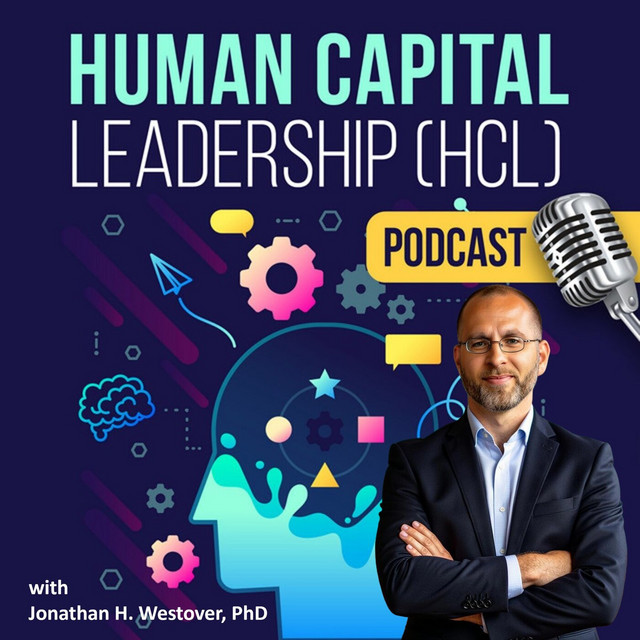
Pod Insights Human Capital Leadership How Companies Can Operationalize Agility for All Teams, with Juan Betancourt About this episode In this podcast episode, Dr. Jonathan H. Westover talks with Juan Betancourt about how companies can operationalize agility for all teams.
Juan Betancourt, CEO of Humantelligence, is a visionary leader with a lifelong commitment to reshaping the business landscape for the better. Having observed the limitations of conventional human capital management systems during his time in the software industry, Juan recognized a need for innovation. It was this realization that led him to Humantelligence, where he saw the potential to revolutionize productivity, motivation, and employee retention while making it accessible to all. With a track record of revitalizing global brands like Puma and overseeing the US division of Décathlon, Juan's expertise is unmatched. A Harvard economics graduate with an MBA from The Wharton School, Juan is committed to making work better for all and actively engages in community leadership roles.
See Privacy Policy at https://art19.com/privacy and California Privacy Notice at https://art19.com/privacy#do-not-sell-my-info.
Transcript 0:03 Speaker 00 Welcome to the HCI family of podcasts. We're your source for personal, professional, and organizational growth and development. We share our own original research, explore industry trends, and interview executives and thought leaders from across the globe. Join us for practitioner-oriented content around all things leadership, HR, talent management, organizational development, and change management. Maximize your personal and organizational potential with the HCI family of podcasts.
0:35 Speaker 00 Juan Betancourt, welcome to the conversation today.
0:38 Speaker 01 Thanks for having me, John.
0:39 Speaker 00 It's a real pleasure to be with you. You're joining us from Miami. I'm south of Salt Lake City in Utah. And today, we're going to be talking about how companies can operationalize agility for their teams. I think agility gets talked about all the time within organizations, and I think sometimes it actually means what we think it means, and other times it's just a buzz term. And so how do we get beyond that? And how do we actually implement it and operationalize in a way that's meaningful, and that will actually drive value for our teams, for our organization, and then ultimately drive value to the market? As we get started, I wanted to share Juan's bio with everybody. Juan Betancourt is CEO of Human Intelligence, and is a visionary leader with lifelong commitment to reshaping
1:21 Speaker 00 the business landscape for the better. Having observed limitations of conventional human capital management systems during his time in the software industry, he recognized a need for innovation. It was this realization that led him to Human Intelligence, where he saw the potential to revolutionize productivity, motivation, and employee retention while making it accessible to all. I could go on, but I'm going to pause there. Juan, anything you'd like to highlight by way of your background and personal context before we dive on it?
1:50 Speaker 01 Just I spent 15 years in the human capital space as an executive search consultant, what they call executive search recruiter. And I've worked both at the highest C-suite executive level and finding teams that work well together and great leaders, as well as my own career at a few Fortune 500 companies. Going through management training, and the challenge today that companies are not solving, which leads to not being agile, is that they don't have in their talent development function within HR, the budgets, the people, or technology.
2:26 Speaker 01 To even train and develop forty six percent of their managers. So the mid level managers, as per Gartner research report that came out a month ago. This is the fail, this will be the failure and end of any great company. Because if you cannot motivate, engage, train, develop those people to be great managers, you're not going to be able to communicate and execute on a vision from the C suite down to the masses. And so we focus on that middle level to help them become more agile. And if the managers are more agile and they're able to share that with their subordinates, an entire company then becomes more agile.
3:03 Speaker 00 Yeah, yeah. And maybe it goes without saying, again, it gets thrown around a buzz term all the time, but perhaps we can start by just defining, you know, what you mean by agile and, and why it's so important in the modern world of work, in the modern context.
3:18 Speaker 01 Great question. The term really came out during software development, where it became kind of mass known as a term, agile software development, moving away from waterfall, where you just, you, you kind of create a product, wait six months and then do it again, right? Agile software development was every two weeks, got to reiterate, iterate and change based on the market. And so that concept, I think, has now flooded into all functional roles, HR and for all employees, product development, you know, sales, where you constantly have to be changing and adapting to external factors, which often make people uncomfortable. Because if there's a product, a company or a team that are used to just setting it and
4:02 Speaker 01 forgetting it, like, let's say, a product development team that used to just do releases every six months, but now competition's coming out with new products every two weeks and you're getting customer feedback. It's very uncomfortable if you're not used to being so urgent and setting things up in a process that's every two weeks for six months. And so typically, people are not agile because they can't change how they behave. Their motivators might be limiting to them because to be, let's say, a team that for five years was, was motivated and bonused on being a team effort. And now the company needs to be more individualistic because that's the way the market's gone and the product's developing.
4:40 Speaker 01 It's hard for them to do that. And so that's how we have defined agility and what our product attacks is helping people be more agile in their behaviors. Their motivators and what motivates them at work, their work styles, and this way, a person, a team, a company can be more agile and more change oriented to delivering products and services to the market more frequently and with more breadth of potential.
5:14 Speaker 00 Yeah, I think that's very well summarized. And to your point earlier, there's a need to have this distilled throughout the whole organization, right? And not just, you know, certain pockets or not just the C suite, but it has to really be embedded throughout. And that takes training and development. That takes a learning strategy that's going to help people better understand how to do this. Not only the methodology of agile, but but just the the change mindset, like the change readiness.
5:43 Speaker 01 And by the way, you just named something very important. There is the methodology, a technical term on how to do agile, which is directly from software. And then there's the mindset of how to have an agile mindset. We definitely focus on the latter. I want to be clear, the company I have created is to focus on that and less on the process and the paperwork and you know, around that methodology. Here's a really high level way for the audience to understand it. Most Fortune 500 companies complain that they're not agile and it's hard to change. They always describe a Fortune 500, large 10,000 or more company as the Titanic and getting change. If there's a market change like, oh, we need to get into AI, they're really slow to move the big Titanic boat.
6:28 Speaker 01 But a small startup of 10 people, you can get a message from the CEO down to the last employee. They all report to each other. And become, you know, focused on AI or a new product or a new market space in seconds. And you can change your website, change your products, change everything like this. It's not so easy when you have 5,000 customers and already are moving in a certain direction with a support team. And so that is the is the dynamic that that if you can get the mindset of a large company where they can actually change, not like the Titanic, but like a small startup. You've won because then at every level, the company will be able to change direction, create products and services and move like a startup anywhere in the company, not like a Fortune 500.
7:05 Speaker 00 Yeah, yeah, I love it. And of course, there's so many benefits of the large companies, right? Economies of scale and they have the resources and all these different things. But one of the downsides or potential limitations is just the sheer scope of it and how difficult it can be to change. And so, you know, connecting the benefits of the large scale corporation with the small startup. That's really just change, add, you know, has that change agility mindset and capability. That's that's where you're really in a better position to win. Because agile and change and and just disruption, it's the name of the game in the current world of work.
7:45 Speaker 01 And the companies that have done it the best, Amazon, they're coming out with new products, new industries. And as big as they are, when you speak to people at Amazon, they have gotten agile down to every employee being able to solve problems like they're at a startup. And it's fascinating to watch the biggest company in the world still be the most agile company in the world. I mean, even Meta is pretty agile, right? And even Google is be pretty agile. You know, so you see, there are some examples where it's possible.
8:14 Speaker 00 Yeah, yeah, absolutely. Something you mentioned, and I'm not sure it was it was necessarily the the direction you're you're thinking to go, but it just clicked something in my head. Is is the current state of like change, the pace of change, the the scale and the scope of change as it relates to AI adoption in the workforce. Certainly it requires an agile mindset, right? And and one of the things we're seeing is there's a lot of companies that are kind of, I mean, they're investing. They're going all in an AI. They're investing a tremendous amount. Um, but a lot of companies are really just kind of in a holding pattern. They're so hiring is a really interesting thing right now. Um, especially kind of entry level types of positions.
8:57 Speaker 00 And so your, your, your comment around like training. Um, and developing people throughout the organization. Um, I think is a super important uh point. And then I, I wonder like, what does that mean for organizations that currently have slowed or even stopped? Hiring, you know, the, the younger employees, the entry level. Or really career people that eventually would move into those middle management and even senior executive roles. A little bit further down the line. Um, I worry that there's a little, going to be a little bit of a talent pipeline issue. As we move into the future. Does that make sense?
9:36 Speaker 01 Yeah, clearly companies are hitting their earnings numbers with less people, right? Like every unemployed Ivy League person I know tells me, oh my gosh, the economy must be terrible. I go, why? All the stocks are going to the roof and they're, they're breaking every earnings record ever. Yeah, but nobody's getting hired. So to your point, people aren't getting hired, but companies are still succeeding. Can they continue to do that? Either they're going to have to hire more people at that level you're describing, or they're going to be able to train the current people. To fill the jobs that they need. That they won't need new people for. So you know, 30% of roles at companies either get rid of those people or retrain them. I think what's happening is companies are retraining that 30% today instead of hiring to replace.
10:17 Speaker 00 Yeah. So I mean, it's so it's hard for those people coming out of college, right? Who are looking for those first positions. Um, yeah, I, I, I don't know what the answer is to that, you know?
10:27 Speaker 01 Yeah, I think University Boulder, Colorado is, I think, being pretty innovative. They see that wave coming. And instead of waiting for their seniors who are now getting out of college to get a job, they're now mandating or. I don't know, they're incentivizing 90% of the business school students that leads the business school. Um, to start co-op work as a freshman. So that by the time they're a senior. They've gotten four years, not just summer work, but during the year. Four years under their belt where the company has invested. They've invested. And when you're hiring someone out of college, it's no longer some green person. Who you got to start from scratch. There, there's no value in that anymore. I believe that, that model's gone. So I think. College, you know, the rest of the world's been doing co-op programs forever, right? College is not a fraternity. Let me do sports and hang out and get drunk, you know, for four
11:12 Speaker 01 years, anywhere other than the US. I think the US model will be slowly going away and nothing against NCAA football and the parties and that fraternity lifestyle. But if you want a job out of college, I'm pretty sure you'll start working when you're 18 and finding a company that you're doing these co-ops with for three to four years. Because those are the ones will be guaranteed jobs. I think everybody else, it's like, what really can you add value to me? Like, I have an AI agent that can do better than most green kids out of college, no matter what school they went to.
11:45 Speaker 00 Yeah, yeah. So it'll be interesting to see how all that shifts in the coming years. Right now, it's all a pretty new, fresh thing, right? And, and so you have some institutions like the University of Colorado. There are others that are really leaning into the apprenticeship model or the, you know, various experiential learning models, right? To give students, you know, that, that real work experience before they ever graduate. But the vast majority of institutions are still, you know, just kind of.
12:13 Speaker 01 Yeah, the same, same old, same old, yeah.
12:16 Speaker 00 It's the same old thing, you know?
12:17 Speaker 01 AI teaching, there's a high school called the Alpha School, which some billionaire tech person invested behind, I think Musk is also adding to it. They only have four campuses across the country, but in just the 10 years they've been around, their students are number one in every category, every age, in, in every subject. And they replace six hours a day of school with two hours a day of AI, personalized AI teaching. So everyone is taught at their level. So unlike a 30-person classroom where the top students are being held back in learning and the lowest students aren't learning because it's too fast for them, because they're teaching to the middle, doesn't help anybody. Now in two hours, everybody can do 12 hours of learning in two, which leaves four or five hours a day for doing passion projects. So you have kids in sixth grade, smarter than anybody else in the country and with
13:02 Speaker 01 more time to do the things they love. I think universities are still far from this kind of AI teaching, but that is going to be the model of future and 99% of universities are so far from even thinking that way. It'll just destroy their revenue model. And they don't know what to do with that. And, you know, they have all this retail space of the actual real estate cost they have to cover. So there's some big changes coming.
13:26 Speaker 00 Yeah, yeah, absolutely. So very interesting kind of subset of the labor force, you know, that we have to think a lot about in terms of preparing, you know, training and development needs, including the agile mindsets and the ability to adapt and change rapidly. So I think one of the things that I think is, you know, organizations are struggling with is just how rapidly the pace of change has shifted. You know, agile is not new. Like, as a methodology, it's not new. As a term or as a concept, or, you know, as a mindset, it's not new. And there are certainly companies leaning into this pre-pandemic,
14:05 Speaker 00 but it's really, you know, post-pandemic, post-COVID, you know, work environments are significantly different by and large, not everywhere. And there are certain types of jobs that are fairly similar to how they were before. But the nature of work and how work is designed and how it's implemented, and then you have the in-person versus the remote versus the hybrid, like distributed teams, like all of this has shifted so dramatically in the last five years. Speak to that a little bit more in terms of like how you see this agile mindset helping organizations adapt.
14:37 Speaker 01 Yeah. So what human intelligence in our tool called Askor does is it does a psychographic mapping of every person in the company. So what someone's behaviors are, right? Are they deliberate or decisive? Are they more outgoing, like working on projects with other people or alone in the way they like to enjoy work? Can they change direction quickly? Are they more steady, need more long-term kind of architect-like planning? Are they free-form like a maverick or cautious? Right? That's what they measure in terms of behaviors. And in terms of motivators, are you motivated by being more of service? Are you kind of a innovator, right? So service people more helping, supportive. They like knowledge and research. Others are more innovative. They're self-reliant. They're leaders. They kind of get other people to do the work. They're practical. They're really unique
15:21 Speaker 01 in their ideas. Things like this, in one day, you can map your entire company, let's say 10,000 employees. And so now, when you have challenges in the marketplace, a new product or a new challenge with, you know, AI is coming, what do we do? A company now, in the past, they're deer in headlights. Like, okay, we need change-oriented people who can do research and make decisions quickly to figure out a first prototype of a new AI product or service we could deliver. Well, in the past, they wouldn't even know who to go to. They would ask for volunteers. Now they can find those people more quickly. That's already being more agile as an organization on leveraging resources and who should be
16:02 Speaker 01 assigned to projects. And then, once those people are on those projects, they will, each individual, know literally how, you know, for example, how innovative somebody is on the team versus how process oriented. So now, when you're assigning tasks and things, you know, you can assign them. Now let's say you have a team that you don't, you don't have the luxury of 10,000 people, and you can't just go and pick people for the team you want. But you gotta get a team that's been steady course, doing the same thing for two years, and you can't change the composition. But now you can tell that team, hey, we're all very stability oriented, we're all deliberate, we're all reflective, steady. Here's your, here's your mapping as a team. The market is now mandating that we need to deliver products faster. We need to have more
16:47 Speaker 01 innovation, like three times a year versus once every two years. Here's our team. Here's the way we need to be to be able to deliver on these new challenges for the future. Push a button with AI, and it'll give a development plan of three hours. You can ask, give me a develop plan for Tom to learn how to be more decisive, to be more innovative in his thinking, find blogs, articles, and other resources from either our, our learning management system internally, if it's a big company, or from the internet, personalize the way that Tom learns, so that he can become more change oriented, more decisive, more, more innovative. And so now, every employee with AI can get a personal development plan, three hours of training per week, and then they can slowly move the needle over the next three months
17:31 Speaker 01 to be that team and align the strategy of what the company needs with the new culture and dynamics of that team. Prior to AI and prior to tools around psychometric like Zars, that was impossible. So that's how we're helping companies, people, and teams be more agile, and at the same time, developing the workforce at an organization for that future state, aligning strategy to culture at every level of the company. That is truly agile. When companies say we have one culture forever, I almost laugh, because no. You don't have one culture forever and within each division, right? The salespeople are going to be very different than marketing, very different than supply chain. We just take that down to the project level.
18:12 Speaker 01 You need a certain culture and dynamic and way of being for every project. And people and employees will be on demand. That is the way a company will become more agile. This kind of siloed structure where you're working with the same team forever is just not adaptable enough, not agile enough for the challenges coming down the road. Even employees won't be W2s, they'll be 1099s. And you'll have to figure out with the workforce of your organization, who's 1099, who's W2 and who's AI, right? And who are the agents? And putting these kind of agile teams together by project. So today, companies are more geographic and function based. The future is being project based and pulling from everything.
18:54 Speaker 01 And that's the lead that we're, we're the charge that we're leading to help create those agile teams for project based work.
19:02 Speaker 00 I love it. So fascinating. I think there's just so much huge potential here as organizations and as leaders are thinking of how to adjust, how to adapt. There's, you know, embedding this agility throughout the organization and a culture of learning and experimentation and just rapid iteration, you know, all that's so, so powerful. And then just helping leaders better understand how the, the nature of work and work design is shifting so dramatically, I think is, is really key. You know, a year from now, two years from now, five years from now, you know, I think we're just going to see such dramatic changes. And, and most organizations don't seem to be ready for it. Some, some are, but most aren't.
19:46 Speaker 00 So there's a lot of work to be done here. Well, Juan, this has just been a really great conversation. I know at the time and I need to let you go, but before we wrap up, I wanted to give you a chance to share with the audience how they can connect with you, find out more about your work, your team, and then give us the final word for today.
19:59 Speaker 01 Sure. People can find my company's website at www.Askaura.ai. Aura is spelled A U R A, like Laura without the L. Or they could find me on LinkedIn at John Betancourt. And write to me directly there through a LinkedIn message if they'd like, or at [email protected] .
20:20 Speaker 00 Well, thanks to you again. It's just been a real pleasure. I encourage the audience to reach out, get connected, find out more about what one can do for you and human intelligence. And as always, I hope everyone can stay healthy and safe. You can find meaning and purpose at work each and every day. I hope you all have a great week.
20:38 Speaker 00 Thanks for joining us for this episode of the podcast. We hope you stay healthy and safe and please join us again soon.
Previous Employee Experience Design, with Dean E. Carter Next Conscious Leadership and Resilience, with Irene Riad Page updated November 6, 2026 · transcript and summary are machine-generated