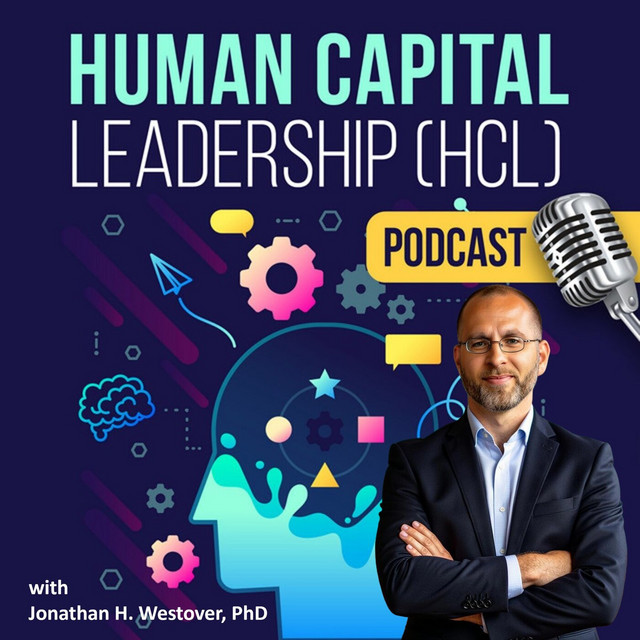
Turning Strategy Into Results, with Ganzorig Ulziibayar
- 31m
- Transcript
Summary
Written by a model from the transcript; not yet reviewed.
This podcast episode explores the challenges of translating corporate strategy into actual results and argues for placing human capability at the center of strategic planning. The guest, Ganzorig Ulziibayar, and the host, John, discuss why traditional academic frameworks and corporate planning cycles often break down when faced with real-world complexity and political haggling. They examine how companies frequently overlook their greatest asset, human capital, and why everyone from frontline workers to executives should be empowered as strategists. The conversation delves into the limitations of over-specialization in academia and introduces the concept of strategy as an attitude, focusing on how individuals can unlock their subconscious potential by overcoming cognitive biases and emotional barriers.
- Recognize that rigid strategic frameworks often fail in complex situations and require human judgment instead. 3:54
- Empower every employee across the organization to act as a strategist rather than restricting strategy to top leadership. 10:48
- Utilize your subconscious mind's vast processing power to navigate complex problems rather than relying solely on conscious bandwidth. 13:25
- Cultivate constructive attitudes at the subconscious level to counteract cognitive biases, fear, and anxiety. 23:24
Chapters
- 0:03Podcast Introduction and Host Greeting
The hosts introduce the podcast, its focus, and welcome the guest.
- 0:35Guest Introduction and Background
The host introduces Konzorik Ulziibayar, sharing his upbringing and career highlights.
- 1:52Critique of Traditional Strategic Frameworks
The guest discusses the limitations of conventional frameworks and the need for a more human-centered approach.
- 5:26Introducing Strategy as an Attitude
The guest explains his new theory that strategy must incorporate human attitudes and emotions.
- 8:45Human Capital as the Core of Strategy
The host and guest emphasize that people are the most valuable asset and should drive strategy.
- 9:23Academic vs. Practical Perspectives on Strategy
They debate how academia focuses on narrow, quantifiable research while practice needs holistic, actionable insights.
- 25:18Closing Remarks and Book Promotion
The guest shares where listeners can find his book and encourages applying the concepts.
Highlights
- 2:44
Strategy is for Everyoneinsight
The guest argues that strategy should not be confined to elite corporate leaders or military generals, but is a fundamental tool applicable by anyone, including scientists, researchers, parents, and artists.
- 4:08
Limitations of Academic Frameworksinsight
The host points out that pre-packaged consulting frameworks are overly simplified and quickly break down in complex, nuanced real-world situations, forcing leaders into dogmatic thinking.
- 7:40
Corporate Planning as Political Theaterinsight
The guest criticizes standard corporate planning cycles, noting that 99 percent of business plans and five-year projections become mere acts of political haggling and top-down pressure rather than genuine strategy.
- 9:27
Neglecting the Human Elementdebate
The guest and host discuss how companies obsess over financial capital and equipment while reducing human capital to a mere labor cost, ignoring the qualitative human capabilities that drive results.
- 16:20
The Academic Brick Analogyinsight
The host and guest use the analogy of building a wall to describe academic specialization, noting that researchers focus exclusively on tiny individual bricks without ever stepping back to see how the whole structure connects.
- 21:23
Subconscious Mind as a Supercomputerdata
The guest explains that the subconscious mind acts like a high-speed supercomputer with vast memory capacity, making it far better suited to handle complex strategic problems than the limited conscious mind.
- 21:32
Clearing Mental Virusesinsight
The guest compares cognitive biases, bad habits, and survival instincts to negative computer programs competing for processing power, which suppress the brain's innate strategic capabilities.
Quotes
Sponsored segments
- Strategies Attitude 25:14–25:21
About this episode
In this podcast interview, Dr. Jonathan H. Westover talks with Ganzorig Ulziibayar about turning strategy into results. Ganzorig grew up herding on the Mongolian steppe, the same landscape that produced history's most effective strategists. He pursued fifteen years of independent research into the subconscious foundations of strategic judgment. He became a CEO at twenty-seven and has spent two decades building companies and teaching strategy. He is a Founder of the Education Reform Movement, the founding chairman of Mandal Financial Group, a World Economic Forum Young Global Leader, and Founder of the World Financial History Museum, which houses more than one thousand artifacts spanning two millennia.
Transcript
4,672 words · 3 speakers
Topics
- Mongolia
- Education Forum
- Mandel Financial Group
- World Economic Forum
- World Financial History Museum
- Strategy Attitude
- Amazon
- Kindle
- San Francisco
- Salt Lake City
Page updated · transcript and summary are machine-generated