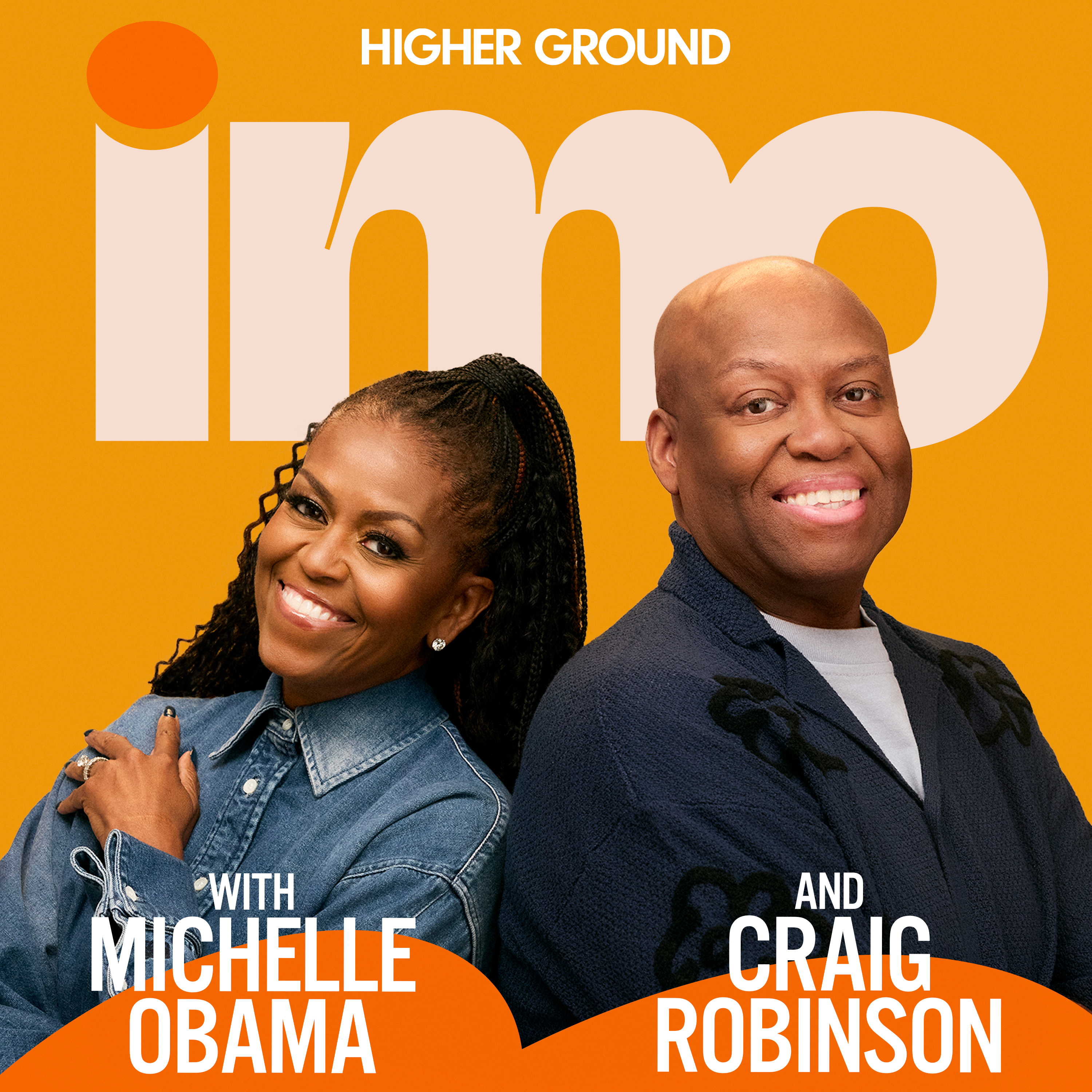
Pod Insights IMO with Michelle Obama and Craig Robinson Be a Different Kind of Leader with Brian Chesky About this episode This week Airbnb’s co-founder and CEO, Brian Chesky, joins Michelle and Craig at the table to discuss everything from boosting a business out of the startup phase to dating in search of deep connection. Brian shares stories about Airbnb’s early keys to success (hint: it has to do with breakfast cereal), the evolving responsibility of tech companies in the modern age and how young entrepreneurs can navigate the current tech landscape. Plus, Michelle presses Brian on the dating advice he received from a surprising source during the pandemic.
Have a question you want answered? Write to us at imopod.com http://imopod.com.
See Privacy Policy at https://art19.com/privacy and California Privacy Notice at https://art19.com/privacy#do-not-sell-my-info.
Transcript 10,102 words · 5 speakers
Speaker names marked ? are inferred from speaking time and the show’s known hosts — they are not voice-verified.
0:00 Michelle Obama? You know, I have to say, Brian, if I'm a single girl out there and I find out that Brian Chesky is single and I can like stay in his house.
0:09 Craig Robinson? Here she goes.
0:10 Speaker 02 There you go.
0:11 Craig Robinson? Right to the relation, Brian. You don't, you don't have to be filled with pressure.
0:14 Michelle Obama? No, but we've never talked about this.
0:16 Craig Robinson? He just got here.
0:17 Michelle Obama? Have you ever?
0:18 Speaker 02 Her, her husband has tried to set me up before, so.
0:21 Michelle Obama? Yeah, I'm very, I'm very invested in Brian's love life.
0:38 Michelle Obama? Craig Robinson.
0:39 Craig Robinson? Hi.
0:39 Michelle Obama? How you doing, dude?
0:40 Craig Robinson? Good. Nish, how you doing?
0:41 Michelle Obama? I am good. You're looking, you.
0:44 Craig Robinson? I was gonna say, you look refreshed.
0:47 Michelle Obama? Thank you. I am pretty refreshed. You look refreshed. You shouldn't be because you still have little bitty kids.
0:54 Craig Robinson? I know, I know. I should look worn out.
0:57 Michelle Obama? I should stop calling them little bitty.
0:58 Craig Robinson? Yeah, they're not little bitty anymore.
1:00 Michelle Obama? And they're almost as tall as me.
1:02 Craig Robinson? Yeah.
1:02 Michelle Obama? But yeah, you, you're coaching, doing, still doing all the stuff deep into the.
1:07 Craig Robinson? I'm still coaching and still parenting and all that kind of stuff. So I should look haggard. But I'm always so excited to do this with you.
1:16 Michelle Obama? You sent, Kelly sent a picture. Austin's starting to drive?
1:23 Craig Robinson? Yes. Oh, this is a good story. So you remember the green car?
1:28 Michelle Obama? The green car that's like 100 years old?
1:31 Craig Robinson? It's a 1999 GMC.
1:34 Michelle Obama? You talk about an old man keeping a car forever.
1:36 Craig Robinson? Well, you know, I just, I'm my dad's kid. There's no need to get a new car when your old car is running perfectly. Well, we're finally getting rid of it.
1:48 Michelle Obama? Okay, way to go.
1:50 Craig Robinson? Yes.
1:50 Michelle Obama? Brought everyone's slow clap on that one.
1:53 Craig Robinson? We're finally getting, getting rid of it. And the boys, Austin and Aaron, who are 15 and 13, heard about Avery and Leslie learning how to drive on that car and they wanted to drive it before we got rid of it.
2:08 Michelle Obama? Oh, they're so sweet. They just, they just really want to be a part of life. They always feel like they're missing out on something.
2:14 Craig Robinson? They feel like they came after all the good stuff.
2:17 Michelle Obama? It's right. They did. And they kind of did. They kind of did.
2:19 Craig Robinson? They did. They did. We'll have to spend some time talking about the stuff they missed.
2:24 Michelle Obama? Yeah.
2:25 Craig Robinson? Well, I'm excited because today we have our first really sort of tech expert.
2:31 Michelle Obama? Yeah, yeah, we're gonna be talking to Brian Chesky, who's a dear, dear friend. We will talk more about that. I love Brian. He and Barack have gotten close over the years and he's spent some time at our house. He's just a good dude. It's like if I had a son, I would want my son to be Brian.
2:52 Craig Robinson? Oh, that's a huge compliment.
2:54 Michelle Obama? And we're gonna be talking a little bit about social media, tech.
2:58 Craig Robinson? Loneliness.
2:59 Michelle Obama? Loneliness. So we got a lot on our plate, so let's not waste any time. Let's get Brian out here.
3:05 Craig Robinson? Well, let me give him a little bit of an...
3:08 Michelle Obama? Okay, okay.
3:08 Craig Robinson? I know you know him, but our audience should hear a proper introduction. Brian Chesky is the co-founder and chief executive officer of Airbnb. And in 2007, Brian became Airbnb's first host. But you know what's cool about that?
3:28 Michelle Obama? See, I want to hear about that because I don't know if I would be able to do that.
3:31 Craig Robinson? Wait, listen, he's still a host.
3:32 Michelle Obama? I know. We will talk about that.
3:35 Craig Robinson? We have to figure out how we can sign up for that. And since then, Brian has overseen Airbnb's growth to become a community of over 5 million hosts across 240-plus countries and regions. So without any further ado, welcome, Brian.
3:54 Michelle Obama? Brian.
3:55 Craig Robinson? Here he comes.
3:56 Michelle Obama? Hi, Brian.
4:05 Speaker 02 Thank you for having me.
4:05 Michelle Obama? Welcome to IMO.
4:07 Speaker 02 Yes.
4:08 Michelle Obama? I know, I know. I usually don't get to talk to you in an interview format.
4:13 Speaker 02 Yeah, I know.
4:13 Michelle Obama? So let's pretend like it's just us at dinner somewhere with me poking you and prodding you on how life is. But I do want to hear about you as a host.
4:25 Speaker 02 Yeah.
4:25 Michelle Obama? I mean, you open up your home often?
4:28 Speaker 02 Yeah.
4:29 Michelle Obama? Is this a regular thing that you do?
4:30 Speaker 02 Yeah, I have guests come and they can book on Airbnb and...
4:33 Michelle Obama? Do they know it's you?
4:34 Speaker 02 Yeah, they definitely know it's me and they typically...
4:37 Michelle Obama? Do they have to pay more?
4:38 Speaker 02 It's actually free. It's a free, so it's kind of like, you know, if you kind of get lucky enough, I think you can stay with me. And I have some really cool people I've had stay with me. And when they come and stay, they stay, I have a two bedroom house. It's not a big house, so they stay in the guest room. And the first night I'll have a dinner made for them. I'm not much of a cook, but I am a little bit of a baker. So I make Chesky's chips.
5:03 Michelle Obama? Would tell us about Chesky's chips.
5:05 Speaker 02 Yeah, these are chow chow cookies. They've been in the family, old family recipe I got off Google two years ago.
5:09 Michelle Obama? Well, why haven't you made us Chesky's chips?
5:11 Speaker 02 Well, you know, you can book on Airbnb.
5:14 Michelle Obama? Oh, man, I gotta go.
5:15 Speaker 02 So you got to stay in my guest room. And then like Sophie, my golden retriever may jump in bed with you. So if you're okay with dogs, leave the door open, she'll get in there. And I just, I actually love hosting, you know, like, you know, I was, my roommate and I were the first host on Airbnb. And there's something wonderful about open your home to the world.
5:34 Michelle Obama? What's the weirdest guest that you've had? Can you say without insulting anybody? Or is everybody just really nice? Are they on their best behavior?
5:42 Speaker 02 Everyone is absolutely on their best behavior, but one guest did tell me that they wanted to stay with me so bad. I only found this out after they stay with me, that they were reloading my page like thousands of times.
5:55 Michelle Obama? Oh, my God.
5:55 Speaker 02 And I thought to myself, this is, I don't think it's a good sign, but maybe, maybe a little bit much. But it turned out to be an amazing person.
6:03 Craig Robinson? Like concert tickets, right?
6:04 Speaker 02 Like this reload, reload. And I'm like, these chips are not worth it. I gotta be honest, he's a pretty average baker.
6:10 Craig Robinson? That's great.
6:11 Michelle Obama? Yeah, but you know, I have to say, Brian, if I'm a single girl out there and I find out that Brian Chesky is single and I can like stay in his house.
6:21 Craig Robinson? Here she goes.
6:21 Speaker 02 There you go.
6:22 Craig Robinson? Right to the relation, Brian, you don't, you don't have to be filled with pressure.
6:26 Michelle Obama? No, but we've never talked about this.
6:28 Craig Robinson? He just got here.
6:29 Michelle Obama? Have you ever?
6:29 Speaker 02 Her and her husband have tried to set me up before, so.
6:33 Michelle Obama? Yeah, I'm very, I'm very invested in Brian's love life. But so you've never met anybody that way, have you?
6:41 Speaker 02 No, no, I haven't. Um, most of the people have stayed are couples, actually.
6:46 Michelle Obama? Oh, that's sweet.
6:47 Speaker 02 Yeah, it's, it's.
6:47 Craig Robinson? But now that you've given the whole world an idea. Gee whiz. Wait, so Barack has actually tried to fix you up.
6:57 Speaker 02 Oh, yeah.
6:58 Craig Robinson? Is he any good at it?
6:59 Speaker 02 Um, we'll see, I guess.
7:01 Craig Robinson? Oh.
7:02 Speaker 02 Remains to be seen. But yeah, no, he's, he's definitely very invested and he's provided a lot of relationship advice to me, actually.
7:09 Michelle Obama? Well, we'll talk, talk more about that, but just to help people get a sense of why you and why, why we have become so close. I mean, I don't know if most people know about how Airbnb got started.
7:21 Speaker 02 Yeah.
7:21 Michelle Obama? But you want to tell that story a little bit?
7:23 Speaker 02 Yeah, I'll tell the, the, I'm from upstate New York. My parents are social workers. My mom once told me, um, growing up, like, I chose a job for the love and I paid, I could pay no money. So you should make sure that you get a job that pays you a lot of money. And one day I said, Mom, I want to be an artist. And she said, Oh, my God, you picked the only job that's going to pay you less than a social worker. And I said, Oh, I promise I'm going to get a real job. I ended up going to the Rhode Island School of Design.
7:49 Craig Robinson? RISD.
7:49 Speaker 02 RISD.
7:50 Craig Robinson? Yes.
7:50 Speaker 02 In Providence and you, uh, we, we have a Providence connection.
7:53 Craig Robinson? We do, we do. I coached at Brown, for those of you who didn't know that. And RISD was right down the hill and it was a wonderful place.
8:01 Speaker 02 I love RISD. I love Providence. It was such an amazing place because I always grew up thinking like you had to sit in class, sit still, like follow the rules. And then at RISD, they said, you're a designer. Everything around you was designed by someone else. You can design the world you want to live in. It made us very idealistic. I graduate RISD and I'm living actually here in Los Angeles. And my friend from RISD, Joe, tells me one day, Brian, come to San Francisco, let's start a company. I'm 25 years old and my life is like I'm in a car and the road in front of me looks like the road behind me. That's the rest of my life if I stay on this track. And so I quit my job, I pack everything back of old Honda Civic and I drive up to San Francisco. I get to San
8:45 Speaker 02 Francisco and Joe tells me, we have one problem. I said, what's that problem? He said, well, remember I told you the rent is a thousand dollars? Well, now it's been raised and it's now $1,150. And I'm like, oh, I couldn't even afford the old rent check.
9:02 Speaker 02 It turns out that weekend, a design conference was coming to San Francisco. And we went on the conference website for this conference. All the hotels are sold out and we had this idea. We said, what if we just turned our house into a bed and breakfast for a design conference?
9:14 Craig Robinson? No way.
9:15 Speaker 02 I didn't have any beds, though, because I just moved there. I didn't even bring a bed with me. Joe had three air mattresses in the closet. So we pulled the air beds out of the closet. We inflated them and we called it airbedandbreakfast.com. And that's where the name Airbnb comes from.
9:31 Michelle Obama? And what year was that?
9:32 Speaker 02 This is 2007. And we ended up having three people stay with us. Basically, what happened was we were able to pay our rent. But something I never expected to happen, which is these three strangers came as strangers and they left as friends, which is not unsurprising. When somebody lives here for a week, you take them around the city. And Joe and I realized, maybe there's a bigger idea here. I asked Joe, I said, who's the best engineer you know? He said, my old roommate Nate is. And this leads to how I got to know President Obama. Well, that's before, but 2008, summer of 2008. We're trying to figure out how to launch Airbnb. And we got this chicken and egg problem they use in Marketplace. How do you get people to list their homes when there's no people traveling?
10:17 Speaker 02 How do you get people to travel when there's no homes? So we needed a big event. The biggest thing happening in the summer of 2008 was the election.
10:26 Craig Robinson? Oh, okay.
10:28 Speaker 02 And then Senator Obama was just nominated, as you remember. And I remember sitting at home with my roommate Joe. And there was like the CNN on TV, DNC housing crisis. They move him from the basketball arena to the football stadium. And they're like, wait, where are all these extra people going to stay? That's how we launched. We launched at the Democratic National Convention. We got like 80 bookings. I thought we were huge. And then next weekend for Senator McCain, we had two bookings, not as popular. And then the following week, no bookings. And I realized, if only there were political conventions every week, we'd have a business. So we're now totally broke. We're like worse than broke.
11:10 Speaker 02 We're actually in debt. We don't know what to do. And our name is Airbed and Breakfast. And I'm like, the air beds aren't selling. Maybe there's money in breakfast because not everyone sleeps on air beds, but everyone eats breakfast. And we, this is where even the next step of the connection to President Obama comes in. We came up with a Barack Obama themed cereal. And it was this box. We were like, well, what would Barack Obama cereal? It was so obvious. He had the iconic O, like Cheerios. We called it Obama O's, the breakfast of change. And then we said, well, we gotta be nonpartisan. So we created Captain McCain's because he was a captain in the Navy, a maverick in every bite. So we make these cereal boxes.
11:54 Speaker 02 And that actually is how we funded the company. So the breakfast took off.
11:59 Michelle Obama? Who were you selling these to?
12:00 Speaker 02 You know what's funny? No one wanted the air beds. They're like, I'm not staying at a stranger's house. That's crazy. I'm not sleeping on an air bed.
12:08 Michelle Obama? See, now that makes sense. That would be my reaction. It'd be like, you know, you talk about this air mattress. I'm like, I don't know if I'm gonna rush to the air mattress. So you, you should have called me. I would have told you that early on.
12:21 Speaker 02 Well, funny enough, years later, President Obama said, yeah, I don't think we ever gave you permission for our likeness. And I was like, I was 26. Give me a break.
12:29 Michelle Obama? Minor details.
12:30 Speaker 02 Minor details. But, um, we basically, I remember once, I was pitching a producer about our website, like a TV producer. And I remember him saying, send me, he says, I can't take this call right now. And I said, can I send you an email? He goes, I get like 800 emails a day. And I remember that in my mind, like, these are producers, they get all these emails. And I said, you know what we don't get? 800 boxes of Obama O's a day. So I basically got a media list. Media list are, I don't know if they still have them, but you could basically get the addresses of all the reporters, the mailing address. And we got 100 boxes. We mailed them to these reporters. They had opened the boxes. They were like, what is this? They put them on their desk in the newsroom. And then it spread all over the news. And that's how we funded the company.
13:15 Speaker 02 We had to joke, we were like cereal entrepreneurs.
13:18 Michelle Obama? So you sold enough cereal.
13:19 Speaker 02 To fund the company.
13:20 Michelle Obama? To fund the company.
13:22 Craig Robinson? Was there actual cereal in the boxes?
13:24 Speaker 02 Where true artistic integrity mattered to me. So we actually had the exact cereal that was photographed on the box inside.
13:32 Michelle Obama? I didn't realize that that's how you funded the company. You sold that much cereal that you got the...
13:38 Speaker 02 About $35,000 of cereal.
13:40 Michelle Obama? Wow, wow. So it only took $35,000. You only needed $35,000 to get the company going.
13:49 Speaker 02 Pretty much. And then 2009, we like joined this incubator called Y Combinator. We raised another 20,000. I mean, back then, that was like a lot of money. Now, now like 26-year-olds are raising like $100 million for AI companies. They have five employees. Back then, we were like, $20,000 is enough money to get us to ramen profitable. This was the thing. Ramen profitable means your company is profitable if everyone in the company only lives on ramen.
14:19 Speaker 02 And so that was our goal.
14:21 Michelle Obama? So the bar was low?
14:23 Speaker 02 We slept on air batteries. You know, we lived the product. We only ate ramen. And eventually, we got the company going. It was during the financial crisis. 2009, people are losing their homes. Paul Graham, our first advisor and investor, said, make something people want. And we thought, what's better than making something people want? Making something they need. People need to make money because their home is about to get taken from them. And it happened during this new generation, the same generation that were the community mobilizers during President Obama's campaign. We were a new generation. And we wanted to connect and travel different than our parents. And we wanted to like have a more authentic way of traveling. We wanted to live like a local.
15:07 Speaker 02 And so this feeling totally new to us, even though it was weird to others.
15:11 Michelle Obama? Now, did you, did you come to the idea of Airbnb through your experiences? I mean, you're in design school.
15:19 Speaker 02 Yeah.
15:20 Michelle Obama? You're, you know, you're not a tech.
15:21 Speaker 02 He's an artist.
15:22 Michelle Obama? You're an artist.
15:23 Speaker 02 You're an artist.
15:24 Michelle Obama? You know, and you come from social workers.
15:26 Speaker 02 Yes.
15:27 Michelle Obama? When did you get that spark that I'm gonna go into business? I mean, was it, did it just, was it just something that continued to roll on? You were so far in, once you got to San Francisco.
15:37 Speaker 02 It was actually probably Aristi. The school was like very much like self-directed. You would like, I mean, first of all, like artists are all entrepreneurs, basically. I mean, they're sole proprietors, but you don't really work for somebody. There was this great quote of Aristi, "Art is the question of the problem in the world, and design is the answer." I started in art because I wanted to ask interesting questions about the world. And I kind of moved to design because I thought I really want to help people and try to design answers. And I thought to myself, I think this is for me. Like, I kind of knew. And then funny enough, my mom said, "You gotta get a real job one day." And I said, "What's a real job?"
16:12 Michelle Obama? Explain that.
16:13 Speaker 02 She's like, "A real job is one that has health insurance."
16:17 Michelle Obama? That sounds like a parent.
16:18 Craig Robinson? That sounds like our mom.
16:19 Speaker 02 So I end up getting a real job of health insurance in Los Angeles. I'm like a designer. We have all these like little clients. Like, my first project was like designing a toilet seat. So you gotta start somewhere.
16:31 Michelle Obama? Yeah, yeah.
16:32 Speaker 02 And then one day, you know, when I quit my job, I remember going home for Christmas, and one of our family members asked, "What are you doing?" And I remember telling them, "Oh, I'm an entrepreneur." And I could hear my mom across the room saying, "He's actually unemployed."
16:47 Michelle Obama? It's like, thanks, Mom.
16:48 Speaker 02 And that's what I realized, when you're starting, it's mostly in your head.
16:52 Michelle Obama? Yeah.
16:52 Speaker 02 Until you manifest it and make it real.
16:54 Craig Robinson? So, so now you've got, you've got this place now, Airbnb, which I have gone from being a hotel guy to an Airbnb guy, just so you know. Tell us what's new, what's, what's going on at Airbnb these days?
17:08 Speaker 02 I'm so excited about this because... I never thought we'd get to this point. You know, that very first weekend was about connection.
17:16 Michelle Obama? Yeah.
17:17 Speaker 02 It was about connecting with one another. And we always believed if we could build a platform for trust, that people don't want to host strangers, but they'll host Mike or Marcia, who went to school here, and we could bring the humanity out of everyone. And we thought, you know, what if you can Airbnb more than Airbnb? What if you can Airbnb a chef to come to your house? What if you can Airbnb a masseuse? What if you can Airbnb a makeup artist, a nail person, a personal trainer? And that's what we're doing. We've launched services and experiences. And I think this is just the beginning of the next chapter of Airbnb.
17:51 Michelle Obama? Yeah.
17:51 Craig Robinson? So I was telling Mish, I got a chance last night to experience the services part. A chef came to the Airbnb that we were at, and we had this wonderful six-course meal with a French chef and his sous chef. And he made a wonderful meal that was capped off with my favorite dessert, because my birthday's coming up. And it was a lemon meringue pie, made with lemons that he grew in his own garden. So I've had a little
18:27 Speaker 02 There you go.
18:27 Craig Robinson? taste of this, and I was blown away.
18:31 Speaker 02 I think there's this whole world just waiting for people. And imagine you can hit a button.
18:36 Michelle Obama? Yeah.
18:37 Speaker 02 And you can get anything you want in your life. And we vet everyone. And I think there's millions of people that can participate in this.
18:44 Craig Robinson? Now that we've launched this podcast, we've been getting some great questions from listeners. And a listener who just ironically named Brian has a question. And we now have our listeners ask the actual questions. So let's take a listen to Brian's question.
19:02 Speaker 03 How do you think social media can play a constructive role in society? And do you think we are spending way too much time online?
19:08 Speaker 02 There was a great saying at Apple in the 1980s when they developed the Macintosh. They said, "Never trust a computer you can't throw out the window." In fact, that's why they put a handle in the back of the computer. The reason why is they said, "A computer is a tool, and it doesn't dominate us. We dominate it." As long as we're in control of technology, then it's going to be wonderful. But when the technology starts to overtake our lives and be in control of us, it ceases to be a tool. And I think there's a real risk that social media has ceased to be a tool to connect us. And it's now a destination. And it's can potentially be replacing real in-person connections. I think that is potentially very dangerous. If social media is like a car, we're about to put a jet engine on the back of that car in the form of AI.
19:53 Michelle Obama? That's right.
19:53 Speaker 02 Because what you what changed in the last 10 years? The 2030s are going to change so much more quickly. And the question becomes, should we be concerned or excited? And I guess it's in our hands. We have all the tools to solve all the problems that I could imagine us solving. We also have all the tools to further divide us. Now, you do think a lot of the polarity and division and anger and resentment in the world, I think a lot of it comes from people feeling isolated, people feeling lonely, people feeling like they're falling behind, that the world's progressing without them. And I think we need to think these products as tools in service to us to make us happier, to make us more connected.
20:36 Michelle Obama? Brian, you you speak differently, not just as an entrepreneur, but as, you know, a person in tech, sort of the Silicon Valley crew. Because one of the things that I worry about as a mother, as just a human being, is that, you know, it feels like we're moving away from connection.
20:56 Speaker 02 Yeah.
20:57 Michelle Obama? So to hear you talk about what moves you, what moved you to start Airbnb, that it all starts with that connection. Why are you different? How are you here? Why are you talking in this way as compared to some of your peers?
21:15 Speaker 02 I remember when I first started Airbnb.
21:19 Speaker 02 Some, one investor told me, I pitched them and they said, I love everything but you and your idea. And I said, what does that mean? They said, well, strangers never stay with other strangers and designers don't start companies, tech companies.
21:32 Michelle Obama? Yeah.
21:33 Speaker 02 So the answer to why am I different is I'm a designer. I think technologists start with the technology.
21:40 Michelle Obama? Yeah.
21:41 Speaker 02 They start with a solution and they search for a problem. I think a designer starts with a problem. They start with a solution for the world and they work backwards to the technology. When I came to Silicon Valley, the word technology might as well have been a definition, dictionary definition for the word good. That technology was progress and every release of technology was a forward step for humanity. And so what we need is more technology. I think we probably should think of technology not as good or bad. It's unbalanced good, but I think we should think of it as a tool. Are tools good? A hammer can build a house. It can be used as a weapon. It depends on how you use it. We're putting the most powerful tools ever devised in the history of humanity in the
22:25 Speaker 02 hands of young people and even children. Johnny Ive is the person who designed the iPhone.
22:31 Michelle Obama? Yeah.
22:32 Speaker 02 I got to become friends with him. I know his children and he really did not allow his children to use a phone very much. I'm friends, I got to know Reed Jobs, Steve Jobs' son. And Steve limited the use of his device. The people who invented these devices limit the use of these devices, not because they think they're bad, but because so much of life must be experienced in the real world.
22:52 Michelle Obama? Yeah, yeah.
22:53 Speaker 02 And I think it's really important and I think, I also share your concern.
22:58 Michelle Obama? So what's gotten in the way of the, the use of this technology solely for good? What, what is keeping this country and some of the folks who've created these devices from sort of standing up and, and, and...
23:19 Michelle Obama? Supporting some kind of limits. I mean, because the it's difficult for parents, for schools, for communities to find ways to parent around these tools. And it doesn't feel like the tech community is on the side of of of kids and families.
23:40 Speaker 02 One of the conversations I had with President Obama when he was giving me advice, he told me something that I'll never forget. He said, you should institutionalize your intentions so that even when you're a public company, you can, you know, make sure not to compromise your vision. And what he meant by that, I think, was that you should be more thoughtful about what you're making, why you're making it, and the impact of what you're making is on people. And, you know, one of the things we talked about is a lot of leaders in power, I don't think they have bad intentions. They're more like self-driving cars.
24:16 Michelle Obama? Yeah.
24:16 Speaker 02 It's not that they are trying to go somewhere bad. It's that they're not really thinking about where they're going. And if you're not intentional, you know, these tools get you cannot invent a tool, put it in the hands of a billion people, and it be used for reasons you totally intended. It's going to have unintended consequences. And it's not necessarily your fault that that consequences were unintended. But the question is, once it's used, what do you do with that information? Do you pivot? Or do you kind of like put your head in the sand? And I think it's really, really important for us to always take responsibility, to imagine the kind of world we want to live in. Maybe imagine the kind of world you want your children to live in.
24:54 Michelle Obama? Yes.
24:55 Speaker 02 And say that like, we can design that world. And I think that's the role of a designer. The role of a designer is to assemble things, components or technology, to better suit the needs of society. And you're constantly in a state of redesigning based on getting more information. And it's easy to get defensive. Well, those people are just attacking me.
25:15 Michelle Obama? Yeah.
25:15 Speaker 02 So I'm going to defend. But at some point, you do have to look in the mirror and ask, well, is what they're saying true? And if it is true, and sometimes usually what happens is some things are saying is true, and then some things aren't, and not take it personally and say, well, I'm going to address the part that is true.
25:31 Michelle Obama? Yeah.
25:31 Speaker 02 And I think that is just what we need. And I I do think there's a new generation of technology leaders that I do think. Are just seeing the impact that their forbears had and they're starting to try and anticipate the needs a little bit more.
25:46 Michelle Obama? And money makes it so hard.
25:49 Speaker 02 It makes it really hard.
25:50 Michelle Obama? And the amount of money, I mean, Brian, you were a billionaire and you became a billionaire at such a young age.
25:59 Speaker 02 In their mid 30s.
26:00 Michelle Obama? Mid 30s and so many of your peers and that's what you hear about in Silicon Valley.
26:08 Speaker 02 Yeah.
26:08 Michelle Obama? It seems like a lot of people are drawn to the industry, not because of purpose or because even of love of technology. There are a lot of people that just want to get rich. And there was a time at which everybody was, you know, you start out at a startup company and you become, you know, if not a billionaire, then a millionaire. And that tends to be
26:30 Speaker 02 Yeah.
26:31 Michelle Obama? The driver. Can you talk a little bit about how that has kind of distorted some of the goals and the aims of people who, as you say, they aren't, they don't have bad intentions, but it just seems like people have gotten lost in the money.
26:48 Speaker 02 When I started Airbnb, there weren't a lot of billionaires in tech.
26:51 Michelle Obama? Yeah.
26:51 Speaker 02 There were hardly any. And I kind of joked that if I wanted to make money, the last thing I would have done is started a company called Airbed and Breakfast.
26:58 Michelle Obama? That's right.
26:59 Speaker 02 So when we came to Silicon Valley, it was much more passion projects because there wasn't as much money. We assumed we weren't going to be successful and we just made something for ourselves that we loved. I think the values have changed a little bit because there's so much money that is so tempting. And I do think the money creates, as we talked about, this momentum, this like pressure, this like blinding like magnet. And I think it can distort, yeah, a sense of people's priorities. And having gone through this now, it's like, it's really difficult, but sometimes you have to get to the top of the mountain to realize that was never about that mountaintop and you're not much higher than you ever were before. And I think it is true that like,
27:44 Speaker 02 You know, I mean, why do people want money? I guess because they want status, they want happiness. And I think I've like, someone having like, made a lot of money in my like, mid 30s, I can now say like, it does provide a lot for you, but like, only to a point. And money just amplifies everything. And if you don't have a really great foundation, the money is going to actually potentially cause you big problems. And actually, I, I had a bit of a, a personal kind of crisis of my own in my mid to late 30s, because my, my parents are social workers. I had more success than I ever thought. But the thing about being very successful in tech and making a lot of money and all
28:28 Speaker 02 this, is no one ever told me how lonely it would become. And I started realizing, oh, you know, it was weird, like, I had old friends that were middle class, and I'll be honest, a lot of them seemed happier than me at that point in my life. And I was like, I'm like, what is going on? And I realized, actually President Obama helped me see this, that I was just becoming really isolated. That the more successful you get, the more isolated you get. And I think people dream of success, but what they don't realize is a lot of, with success comes disconnection. Disconnection to your past, to yourself, to your friends. And I think a lot of what I've tried to do the last handful of years is to reconnect, to not live a life of isolation. I think it's made me like, a better friend, but also a better leader, because how do
29:12 Speaker 02 you make things for regularly people when you're no longer one of those people yourself?
29:17 Craig Robinson? I'm so, I'm, I'm just so glad to hear you say that, because you remember, our dad used to say the same thing. He used to say, if you're chasing money, you're gonna lose whatever little happiness you have. And he was a guy who had nothing, so nobody believed him because he didn't have money. So I really appreciate you being so open to talk about loneliness. And I want to know, someone in your shoes, who like, everybody's looking at Brian Chesky, okay, he's got money, he's happy, he's got a company. How did you combat that loneliness with all the expectations of being, you, you, you,
30:01 Craig Robinson? you can't be unhappy?
30:03 Speaker 02 Exactly. It actually started kind of long ago, where, um,
30:10 Speaker 02 I basically, if I just go back, when I came to Silicon Valley, I came to Silicon Valley in 2007. That was a very important year for Silicon Valley because two things happened. The first thing was the iPhone was created and announced. The second thing is that Facebook opened beyond schools. So 2007 was like this year of like a supernova energy because suddenly, social media was about to be on phones.
30:37 Craig Robinson? Okay.
30:38 Speaker 02 And we all felt like it was about to make the world connected. And what I noticed over the course of a decade or a decade and a half was that pretty soon, people were living on devices. And I think the products were starting to be used the way we didn't intend. Social media may be the most successful product in the world that was invented and actually uninvented, in the sense that at one point, it was called social networking.
31:05 Speaker 02 Then your friends pretty soon became your followers. And when your friends became your followers, it no longer meant it was about connection, it was about performing. And when you start performing for other people, you lose intimacy and you lose authenticity, which is not necessarily a bad thing, but it's not meant to fill the void of connection in your life. And I started thinking to myself, I said, I want Airbnb to be able to help combat loneliness because we were about connection in the real world.
31:31 Michelle Obama? That's right.
31:31 Speaker 02 We weren't about devices. We spend our whole lives on devices. And I noticed I've never had a dream where a device is in my dream. There's something about that. The real world is the real world.
31:45 Craig Robinson? Yeah.
31:46 Michelle Obama? Well, you've always been an intentional person. Even your relationship with Barack, I mean, you reached out.
31:55 Speaker 02 Yes.
31:56 Michelle Obama? You, before you had even had any conversations or had any kind of mentoring discussions, you reached out to him because you wanted to be a different kind of entrepreneur. Can you talk more about that?
32:10 Speaker 02 Yeah, absolutely. Well, I thought to myself, Airbnb is a community. Who's the most famous community organizer in the world?
32:19 Speaker 02 I had this unbelievable experience where I got to, like many entrepreneurs, meet President Obama. I spent some time with him. And then after he left the presidency, I just was really shameless about reaching out to him, asking for advice, asking for mentorship. And he would meet with me and he'd give me advice and I would take it and I'd like do all this work and I'd go and I'd like like a teacher, I'd show him the assignment and said like, and then he'd give me another assignment and I'd do it and I'd give it to him and then he would do another assignment. And at one point in 2018, we had a standing one hour call every week.
32:55 Michelle Obama? Yeah.
32:55 Speaker 02 And I basically had my day job during the day and then I had my like night school with the former president where I would give these assignments, but it changed my life. By the way, he's the one who told me to reach back out to my old friends.
33:08 Michelle Obama? Yeah.
33:09 Speaker 02 He said like, I have a circle of 10 to 15 really close friends. And I thought to myself, I guess I technically have 15 friends, but if I texted any of them or called them, I have to get them up to speed in my life. So therefore I'm not maintaining those relationships. But I think the thing that President Obama taught me was to be more intentional. He literally said like so many leaders are like self-driving cars, use that analogy. They're not intentional. They're like a car, but they never put the destination in.
33:37 Michelle Obama? Yeah.
33:37 Speaker 02 So they're just driving somewhere. And he made me really be intentional about like, what do I want out of my life, out of the company? I ended up writing down a whole bunch of principles. I tried to institutionalize them for the company. I think it made a really, really big difference. And he kind of taught me a little bit how to think more deeply. Cause I think as an entrepreneur, there's an element of impulsiveness, spontaneity that's important.
34:03 Michelle Obama? Well, it's rewarded.
34:04 Speaker 02 Yeah. You need to like have an idea and you need to do things. It's actually important when you first have an idea not to overthink things. And so you just go and you go and you don't overthink. Cause if you overthink and you're like get stuck in business plans, nothing ever happens. And the entrepreneur has to do a thousand things a thousand times. The problem is when you never make the shift. And at some point you have to go from an entrepreneur to a CEO.
34:26 Michelle Obama? Yeah.
34:27 Speaker 02 And a CEO can't operate that way. A CEO has to realize like, I'm responsible. I'm a steward for a community of hundreds of millions of people. Thousands of people's job depend on me. I gotta actually think like, if I do this, what are the second and third order consequences? We as entrepreneurs and tech folk, we're not trained to do that.
34:46 Speaker 02 And so I think it's hard to make that shift.
34:48 Craig Robinson? Can I, can I make a reckless speculation here? Because I'm, I'm sitting here listening to Brian. So this is my first time listening to Brian. And I want to go back and I'm, I'm, I'm in my mind. I'm trying to figure out what makes him different. What do I see here that's making him different? This is the same questions you're asking. And can I even speculate that? Most people don't know this about you, but I did in doing my research that
35:16 Craig Robinson? Brian grew up a hockey player, right?
35:17 Speaker 02 Yeah, that's right.
35:18 Michelle Obama? Oh, sports. It all comes down to sports. Okay.
35:21 Craig Robinson? It doesn't all come down to sports, but just let me, let me finish.
35:27 Craig Robinson? Being an athlete, you know, you're, you're naturally, so you've been raised as a team player.
35:34 Speaker 02 Yes.
35:36 Craig Robinson? Here's the reckless speculation. I'm not sure that your brethren in tech had that same experience. And could that be a reason why you take a more humanitarian look at technology when the others don't?
35:52 Speaker 02 That's actually profoundly stewed insight. And I would.
35:58 Craig Robinson? Excuse me. Did you hear what he said?
36:00 Michelle Obama? Okay, whatever. All right.
36:01 Speaker 02 It really is. No, you're right. So many people in our industry, they're so talented. They've got so many gifts, but I do think this is really interesting. They really struggle shifting from being a founder or CEO. And it's because being a founder is kind of a single player sport to some extent. And being a CEO is almost the definition of a team sport. And you also have stakeholders.
36:29 Craig Robinson? Right.
36:29 Speaker 02 Beyond your, like, your team, you have like investors and shareholders. You have like the public good society. You have your, your guests, your host, or your buyers or sellers.
36:40 Craig Robinson? You gotta be a player, you gotta be a player coach.
36:42 Speaker 02 You gotta be a player coach. And, and also you gotta, you gotta teach people. You gotta like, your job is to make other people around you better. You stand on the shoulders of others. I think that's really important. I mean, my dad, by the way. You know, it's funny, my dad never rewarded me for being talented, which I think was a good thing in hindsight. He only rewarded me for putting my best effort forward and being a good team player.
37:06 Michelle Obama? When you talk about the next generation of entrepreneurs, that brings to mind the current financial instability that we're experiencing. I just want to get your sense of what, what impact you think that will have on young entrepreneurs, their ability to become the next you, because they have to go through that ramen phase, right? And with this current market instability, it seems like it's going to be harder for that next generation to get the foothold that you guys had. I mean, you guys were developing Airbnb in a pretty, you know, it was a pretty good market for that, right?
37:49 Michelle Obama? There was capital everywhere, people were investing, there was a hunger for this new technology, and which is why how Silicon Valley came to be, because there was money out there for it. And right now, we're hearing stories about new startups because of these tariffs. I mean, people, some people can hold on, but other people are not only losing their businesses, but they're losing their homes in the process. So I'd love to get your take on that.
38:19 Speaker 02 I mean, obviously, this is evolving week to week. As of last week, and I know entrepreneurs, what they were telling me was that a lot of fundraising, for all intents and purposes, was kind of on hold.
38:30 Michelle Obama? Yeah.
38:31 Speaker 02 So there was a whole bunch of people that were raising money. The deals are kind of on hold. A lot of limited partners and investors are just like hunkering down. And what we know about investors, they don't like uncertainty. I think people are going to sit this one out until things stabilize. And if they don't stabilize, we're going to be in for a very prolonged, like prolonged, kind of. Dry spell for fundraising. If you did not go to a prestigious school, if you weren't like purely a team of technical engineers, if you're not trying to create an AI company, just trying to create a business, they will probably, that will be more difficult.
39:08 Michelle Obama? Which is 99% of the...
39:10 Speaker 02 99% of people. And so I think that is, that environment needs, wants a good economy. Now, there is a silver lining. The economy was initially good when we started Airbnb, but then when we went to raise money, it was 2009 during the financial crisis. And a lot of great companies have been started in a recession. And the one, I won't say it's a good thing, but what it does is it teaches you a certain type of discipline. A tough economy teaches you a discipline that gets institutionalized into your culture, that a great economy, an economy of abundance, overabundance, can kind of help you perpetuate like bad strategies and be a little less disciplined. So I think the good news is a lot of great entrepreneurs are incredibly resourceful and they will find a way to work.
39:55 Speaker 02 But we absolutely need like a very stable economy. And I do think that, you know, I had the privilege of having a tech company and I had a lot of connections and my co-founder went to Harvard, was a computer scientist. And so we probably got some opportunities that now everyone will get. And so the question is, how do we make sure more people have economic opportunity? And I think we're going to need a very healthy economy for that.
40:20 Michelle Obama? It's kind of scary.
40:21 Speaker 02 Yeah, yeah.
40:22 Michelle Obama? What would you tell young people out there now? And I'm not just talking about the entrepreneurs, but they're, you know, I mean, I have kids. They are just starting their lives. You know, they're, one's in film, one's going to grad school to study mental health, maybe going to psychiatry. But I'm talking to so many young people who are deathly afraid of their futures in this climate. They're not just worried about jobs. They're worried about being able to become the next entrepreneur. They're wondering whether, you know, they'll have healthcare and housing, whether they'll be able to pay off their student loans.
41:05 Michelle Obama? In your seat, what would you tell them right now? What advice would you give them?
41:10 Speaker 02 Somebody once told me a metaphor for where we are right now in the world, especially maybe in part the technology. That technology was like a train. And all you had to do was get on the train of progress and you could ride it into the promised land.
41:24 Michelle Obama? Yep.
41:25 Speaker 02 And now a lot of people feel like they're on the train tracks and the train is coming for them.
41:29 Michelle Obama? Mm hmm.
41:30 Speaker 02 I think there's a lot of fear. There's a lot of concern in the world. My advice to young people is to like dash into the future, to like, to like use these tools, to lean in, to not brace, seek out mentors. And maybe your mentor won't be a former president, but like my first mentors weren't either. They were people, they were three years ahead of me in my career. It is going to be profoundly different. And whether or not that different is better or not depends not on, I don't think it's depending on people like me.
42:03 Michelle Obama? Mm hmm.
42:04 Speaker 02 I think it's dependent on people in their twenties. The next generation is going to decide what happens. And so it is this generation, there is cause to be afraid, but there's also cause to be hopeful. This is their world. They're about to take it over or they're going to contribute to this world. And I think that new technology is going to level the playing field and allow a door to open for a new generation to step in.
42:31 Michelle Obama? That is, if everyone actually has access.
42:34 Speaker 02 Yes, that's critical.
42:35 Michelle Obama? And that, that is just something that I want everybody to have in their minds.
42:41 Speaker 02 Yes.
42:41 Michelle Obama? That for a tool this powerful, equity, equality.
42:46 Speaker 02 Yes.
42:46 Michelle Obama? Justice, fairness has to play out.
42:49 Speaker 02 Yes.
42:50 Michelle Obama? Because we're in line for the opposite to happen right now as, you know,
42:57 Michelle Obama? Basic federal workers who are making up a huge percentage of of jobs and livelihoods for people are being laid off as, you know, there are still fears that AI will replace Yeah. real people, you know, it will replace teachers and accountants and and bus drivers and truck drivers with no plan on how to stabilize or retrain or create another workforce. Those are going to be jobless, homeless people who won't be able to afford to go to college. They won't be able to afford healthcare. They won't have healthcare because there's no plan for that.
43:39 Michelle Obama? And if you are of the wrong ancestry, if you speak the wrong language, if you're not the right color, if you didn't come from the right country, you know, there's no telling what can happen, right? So for that equity to happen, right, for the for for that that tool to really do what you say it's got to do, the Constitution, democracy, all of that has to be in place. And the leaders who run this country have to value that. They have to understand that all ships have to rise. And I don't want to go on a soapbox, but, you know, that's why it's not, you know, hope has to be paired with real action.
44:24 Michelle Obama? I agree.
44:25 Craig Robinson? Yeah, I I agree with you, Michelle. I don't think it's a soapbox. I think you're absolutely right. But hope has to also be paired with, for these 20 year olds to know to go forward, we have to be intentional, to use you all's term, about training them as as parents.
44:44 Michelle Obama? I agree with that.
44:45 Craig Robinson? Right? I think what we cannot Do is be caught up in our own sort of social media and let our kids just sort of get dragged up. We have to raise them. We have to, we have to be, thinking back to what you were saying about the founders that you talked to, who didn't let their kids use their phones.
45:07 Speaker 02 Yeah.
45:08 Craig Robinson? But we have to be intentional about teaching people how to use the tool.
45:13 Speaker 02 A hundred percent.
45:14 Craig Robinson? And that is what, why I'm so happy we're doing this and have you on here because I don't know that parents are equipped.
45:25 Speaker 02 It might be one of the defining things for the next generation, is what is our relationship with these devices, with social media? How do we use it? And how do we use technology to lift people up, to make sure that it helps parents, it helps young people, and that people in positions of power like us, that we're not using, we're not closing the door behind us, that we're like keeping the door open, and we're encouraging the next generation to walk through that door.
45:50 Michelle Obama? So as you're
45:52 Speaker 02 Go ahead.
45:52 Michelle Obama? I don't want to
45:53 Speaker 02 No, you do.
45:54 Michelle Obama? Flip it a bit, as you're, you know, quasi-big sister on the other half of your mentoring team.
46:00 Craig Robinson? She just inserted herself. Just inserted herself in.
46:06 Michelle Obama? You know, I want to, how are you using these tools to find your life partner? What are you doing?
46:14 Craig Robinson? Oh, niche, come on.
46:16 Michelle Obama? I mean, no, I want to, I want to know. And for those listening, looking, you know, look, Brian
46:22 Speaker 02 I come on podcasts, that's what I do.
46:24 Michelle Obama? Brian is handsome, he's funny, he's whip smart.
46:28 Craig Robinson? As your new mentor brother-in-law.
46:33 Speaker 02 Yeah, thank you.
46:34 Craig Robinson? You do not have to answer this question.
46:36 Michelle Obama? Yeah, yeah, let's talk about that.
46:38 Speaker 02 I've not had a lot of success with the tools, if I'm being honest. The best success I've had with meeting people is the old-fashioned way, through other friends.
46:47 Michelle Obama? Yeah.
46:48 Speaker 02 Or just meeting someone in the real world, and that has still been, or having friends of mine make introductions at dinner tables, so.
46:57 Michelle Obama? Yeah, yeah, yeah. Well, we've got to, anyone out there who has good friends with good values, because what's some of the best advice that Barack has given you about dating?
47:09 Speaker 02 Oh, my God.
47:10 Michelle Obama? And finding a partner?
47:11 Speaker 02 One time I was like, I met somebody and I was about to go on a date with, I went on a date with them. And I remember telling him like, oh my God, like she checks all the boxes and like this, this, this, this, this. And I remember him saying something, he said, it's not a checklist.
47:26 Michelle Obama? Yeah.
47:27 Speaker 02 And I said, oh, interesting. And I'm like, yeah, it kind of makes a lot of sense. He's like, the right person is someone where they've got this like weird laugh or snort and you find it really funny. And it's like, in other words, it's not necessarily what you think you're looking for.
47:39 Michelle Obama? Yeah.
47:40 Speaker 02 And you're not dating a checklist, you're dating a real person. And the real person makes you feel a certain way. And I think that was, that was, I think it was like a really, really important piece of feedback, a piece of advice. Cause I think, I think this also is a bit of a problem with dating in the world today. You know, one of my best friends is, it went, my name Whitney Wolfher, she started a dating app, Bumble. And one of the things that we've discussed, and I think where she's taken the company is, online dating especially has become a world of judgment.
48:11 Michelle Obama? Yeah.
48:11 Speaker 02 You literally swipe right within milliseconds, swipe right, swipe left, swipe right, swipe left. If people say have a type, the question I'd have back is if you've met enough people in the world to know there's a type.
48:21 Craig Robinson? There you go.
48:22 Speaker 02 And I think your type is your predisposition based on the limited people and experiences you've already had. So many people end up with people that aren't quote their type. And I think that we need to, and this is similar to social media, we probably need to live in a world of curiosity, not judgment. Instead of swiping, we need to like discover and find what's really interesting in people. And so I think that like, that's probably one of the things that we need to do more of.
48:44 Craig Robinson? So this is what happens when you have a good guest that you know, right? Because you guys have come up with these takeaways for the other Brian that I didn't have to say, okay, what are the takeaways for Brian? But that I wrote some down here. First of all, there's too much reliance on social media. All right. So we've, we have to be more intentional at, at not relying on social media as much.
49:11 Michelle Obama? It's a tool, but you can't like all tools, you can't abuse it and you can only use one tool.
49:17 Craig Robinson? Yeah. Well said. And then here, this is what I like. Most of life you have to do in the real world, not on your device.
49:28 Michelle Obama? Yeah.
49:28 Craig Robinson? It's, it's just such simple but profound advice. And then finally, Miesh, you said, you have to be comfortable living with some.
49:40 Craig Robinson? Obstacles, and we are trying to avoid that. Is there anything else that we need to share with Brian to help him?
49:50 Michelle Obama? Well, I, you know, I want Brian, people like Brian, young people, to understand that the future of this technology, as Brian says, is in their hands. And it's not just about the technology. It's not just about creating the best app and having the, you know, the best tool. You have to think purposely and intentionally about the use of that tool for young creators out there, for people who want to be the next tech giants. You can't just have a great idea. You have to have a broader purpose of the why. And it has to be greater than making money.
50:35 Michelle Obama? It has to be something bigger than yourself. You have to be a team player. You have to think about the whole of it. That is as much a responsibility as anything, I think. And I think our politics, our democracy, having one that is healthy and vibrant, I think, is so essential to ensuring that these tools aren't abused.
51:02 Craig Robinson? Right.
51:02 Michelle Obama? You don't have, you don't have one without the other. You can have these great tools, but in the wrong hands, without the wrong regulations, without the right safeguards, they can become very dangerous. And if everyone doesn't have access to them, if we aren't living in a society with equity, we are not going to achieve the utopian goals that these, the goods that these tools can offer. We will not do it if everyone doesn't have equal access. But those were just some of my thoughts.
51:37 Craig Robinson? Anything to add, Brian? I think on a personal front.
51:42 Speaker 02 I think I would just say like maybe two things and there are two things that I learned in part from President Obama, which is number one, I think, seek out mentors. And by the way, seeking out a mentor doesn't have to be like, can you be my mentor? It's just somebody doing something interesting and you are proactive in reaching out to them. Because I think for young people, the number one thing they need to learn how to do is how to learn. And some of the best ways to learn are from other people. And some of the best ways to learn from other people are, again, in the real world. You can still, AI can teach you a lot, but like, you need to have experience in the real world and I think that's really important. And the other thing is, yeah, like, you can use social media, but like, make sure you
52:27 Speaker 02 have real friends in the real world. And one of the most important things you can do, like, one of the simple life hacks to make your life happy is to basically just rekindle old relationships. And of all that time you spend on social media, to the point if you trade some of that with in-person connection, with people from your past, and then maybe meeting new people is going to have a huge impact on your life. And also, when it comes to mentors, like, a lot of people are afraid to ask other people for advice or help. What I've realized, that's a huge surprise I've had, is so many people feel deeply honored when someone asks them to help or asks them for advice.
53:08 Speaker 02 And I never, even before I was the founder of Airbnb, when I was totally broke, obscure 25-year-old, people wanted to help me when I reached out to them, because it made them feel good and it gave them a sense of purpose. And I think the vast majority of people, if they reach out to someone, someone will want to help them. They reach out to an old friend, the old friend will want to reach back out to them. And that is the path for reconnection. It's a path for relationships and it's a path for purpose.
53:36 Michelle Obama? Beautiful, beautiful.
53:38 Craig Robinson? Well, Brian, you have been incredibly gracious with your time and your insights and taking abuse about your dating life for my sisters.
53:49 Michelle Obama? I don't think that was abuse.
53:51 Speaker 02 No work in progress.
53:52 Michelle Obama? I don't think that was abuse.
53:53 Craig Robinson? But we really appreciate you being here with us, man.
53:55 Speaker 02 Thank you so much.
53:56 Michelle Obama? And let me just say, I'm so proud of the person you have become.
54:01 Craig Robinson? Oh, thank you.
54:02 Michelle Obama? You, this journey of yours could have taken you in any number of crazy directions. And a tribute to your parents for, you know, getting you started with a clear head.
54:15 Craig Robinson? Yeah.
54:16 Michelle Obama? And doing the best you can to stay sane in some unusual circumstances. So, thank you. Thank you for sharing your insights so clearly and warmly. And I know we'll see you this summer at dinner.
54:30 Speaker 02 I can't wait to see you this summer. Can't wait.
54:33 Michelle Obama? Maybe with a date.
54:34 Speaker 02 Yes, that's a good call. That's a good call.
54:36 Michelle Obama? I usually don't let people bring dates, but if you get a date.
54:39 Speaker 02 Then you'll, I can get a plus one?
54:41 Michelle Obama? You can get a plus one.
54:42 Speaker 02 Man, please.
54:49 Michelle Obama? I want to go to a wedding soon.
54:51 Speaker 02 Oh, God, can't wait.
54:52 Michelle Obama? Big wedding.
54:53 Craig Robinson? You know, you can tell her to stop.
54:57 Craig Robinson? She's not a first lady.
55:20 Craig Robinson? I love this time of year, but hosting during the holidays can be a bit of a challenge. So Kelly and I have collected a few hacks to make it a little bit easier. One of our favorite moves is an extendable dining room table. It's this great walnut color and it's mid-century modern, so it looks awesome in our space. And it even has extra storage in the legs. When we don't need the middle panels, we just. Slide them out and our space is back to how it was before. For all things hosting, Wayfair delivers high-quality, customer-trusted products for your home so you can host and celebrate without the stress.
55:59 Craig Robinson? Use filters, customer photos, and more than 20 million verified 5-star reviews to confidently find the right fit for your home. When refreshing your home this holiday season, Wayfair delivers exactly what you need. Head to wayfair.com to shop all things home. That's W-A-Y-F-A-I-R dot com.
56:22 Speaker 04 Wayfair, every style, every home.
Previous “Success” Looks Different for Every Family with Glennon Doyle and Abby Wambach Next Take Back Control of Your Health with Dr. Sharon Malone Page updated November 3, 2026 · transcript and summary are machine-generated