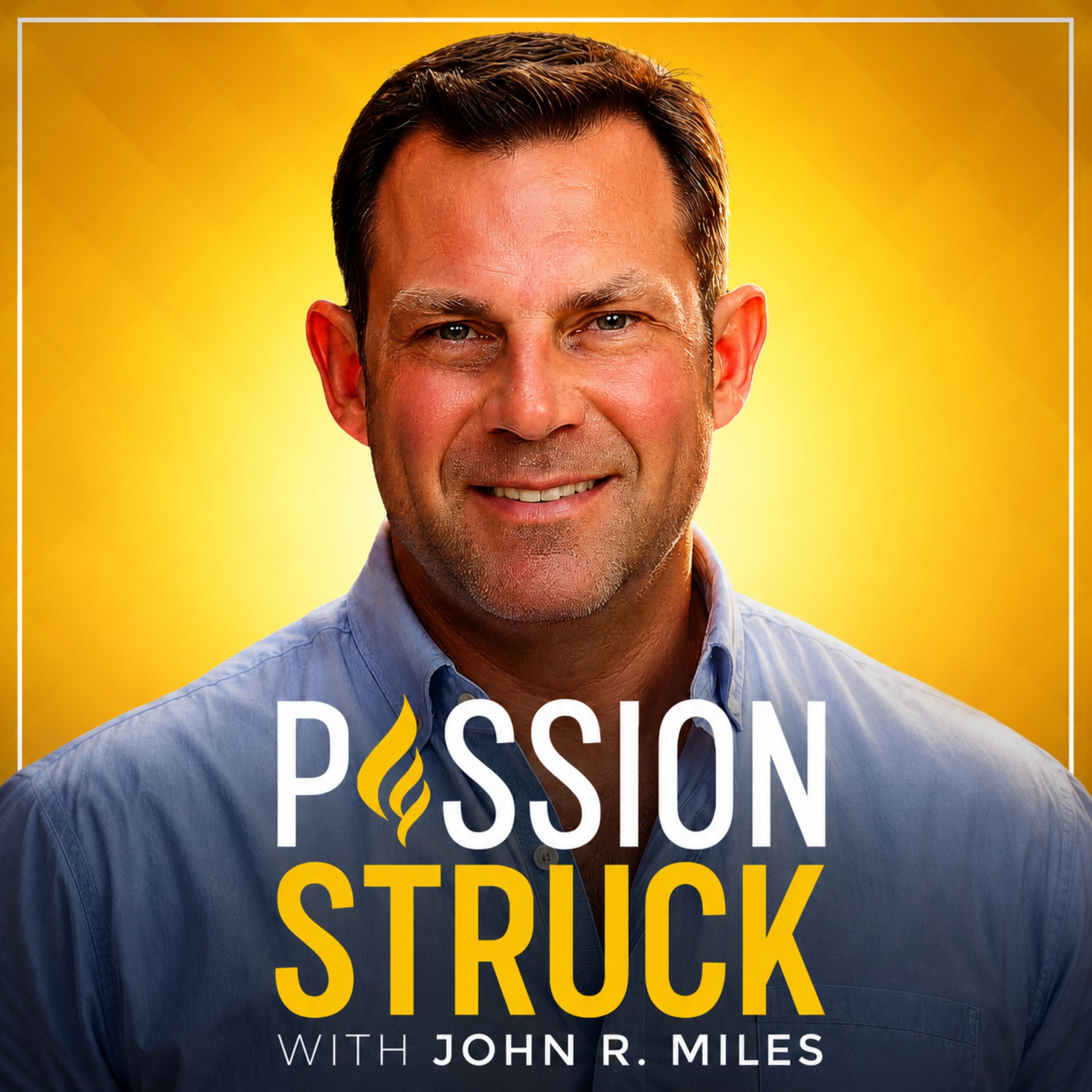
How Your Environment Shapes Your Life (And What to Change Today) | Leidy Klotz - EP 794
Passion Struck with John R. Miles
Hosted by John R. Miles
- 56m
- Transcript
Summary
Written by a model from the transcript; not yet reviewed.
This episode explores how physical environments quietly shape human behavior, relationships, and well-being. The host, John Miles, and the guest, professor and author Leidy Klotz, examine why humans constantly focus on changing themselves rather than the spaces they inhabit. They discuss how environments can be designed to foster agency, competence, and connection, drawing parallels between human builders and beavers, and exploring how children maintain wonder while adults gradually habituate to their surroundings. The conversation also highlights practical concepts like space before screen and examines how shared physical creation builds deeper bonds than mere consumption. In a deeply moving final segment, the guest discusses how the memory of his daughter Josie shaped his understanding of how spaces outlast us and hold love across generations.
- Use the habit of reaching for your phone as a reminder to take in your physical surroundings first. 0:52
- Incorporate sensory awareness into your daily routine by taking morning walks without listening to anything. 16:29
- Recognize that proximity often predicts friendship better than shared interests do. 39:55
Chapters
- 0:02Podcast Introduction and Book Teaser
Host John Miles introduces the episode, promotes his book "The Mattering Effect" and sets the stage for the discussion on environment and flourishing.
- 0:39Phone Distraction as a Cue for Presence
John Miles shares a personal practice of using phone reach as a prompt to pause and observe the physical surroundings, encouraging listeners to be more present.
- 1:17Episode Overview and Host Introduction
John Miles formally welcomes listeners, outlines the theme of flourishing, and introduces the episode’s focus on how places shape us.
- 3:05Introducing Guest Leidy Klotz and Book Premise
John Miles introduces Leidy Klotz, his background, and the central question of Klotz’s new book "In a Good Place" about how environments influence thriving.
- 3:39Proximity vs. Shared Interests in Friendship
Klotz explains why physical proximity predicts friendships more reliably than shared interests, linking this to belonging and human connection.
- 13:12Children’s Sensory Awareness of Place
Klotz discusses how children notice and remember places through multiple senses, offering insights into how adults can regain this awareness.
- 25:26Building Together Enhances Connection
Both hosts explore how collaborative creation—whether building a preschool or a simple home project—fosters deeper relationships than passive consumption.
- 30:36Agency, Competence, and Connection in Physical Spaces
The conversation turns to psychological needs—agency, competence, connection—and how engaging with the physical world satisfies them, while neglecting it erodes well‑being.
- 31:42Space Before Screen Practice
Klotz elaborates on the "space before screen" habit, advising listeners to pause before digital engagement and observe their physical environment.
- 32:35Open vs. Closed Work Environments and Productivity
John Miles shares his experience with an open office plan, and Klotz discusses how flexible, purpose‑driven spaces can support or hinder productivity and well‑being.
- 49:15Personal Stories of Place and Loss
Klotz recounts the loss of his daughter Josie and how places carry love across generations, culminating in a chapter on grief, memory, and the enduring power of space.
- 50:18Grief and Memory in Design
Lighty discusses how grief shapes her design work and the importance of honoring memory through space.
Highlights
- 7:03
Why We Focus on Self-Changeinsight
The guest explains that people try to change themselves instead of their environment because self-change feels manageable, whereas changing a static physical space seems too difficult or fixed.
- 9:21
Brain Anchors and Memory Hooksinsight
Memories tied to physical locations have more sensory details and hooks in the brain, which makes places preserve people and memories better than photographs alone.
- 13:21
Children See What Adults Missinsight
Children notice new details in the world because they have not yet formed assumptions or habituated to their surroundings the way adults do.
- 19:29
The Psychological Pull of Buildinginsight
Humans share an instinctive drive to shape their environment with animals like beavers, which fulfills deep psychological needs for agency and competence.
- 25:26
Creating Versus Consuming Togetherinsight
Working together on physical projects like building or cooking generates much deeper personal connections than simply consuming media or sitting together.
- 45:41
Spaces As Advertising Valuesinsight
Physical spaces constantly broadcast an organization's or individual's real values through their design, functioning like non-stop messaging.
- 49:27
Creating Spaces After Lossstory
Following the tragic death of his daughter, the guest created walking paths named after her to keep her exploratory spirit alive and provide places for children to adventure.
Quotes
“When I reach for my phone in the morning, I think space before a screen.”
Unnamed speaker · 0:52 “Creating something together generates deeper connection than consuming something together.”
Unnamed speaker · 25:26 “Proximity predicts friendship better than shared interest.”
John R. Miles · 3:39 “Our spaces are advertising our values and they never turn off, right?”
Unnamed speaker · 45:41 “I think it's all in the people, right? It's are you giving, are you having the knowledge?”
Unnamed speaker · 53:24 “My parents gave me a good Google name, so L E I D Y K L O T Z dot com.”
Unnamed speaker · 53:59 “proximity predicts friendship better than shared interests.”
John R. Miles · 54:49 “places aren't just physical things, they become containers for meaning, memory, and love itself.”
John R. Miles · 55:20
Sponsored segments
- The Mattering Effect 0:32–0:36
- Theignitedlife.net 23:29–23:59
About this episode
Leidy Klotz joins John R. Miles to reveal how the places we live, work, and spend time in quietly shape our happiness, relationships, creativity, and sense of belonging. Discover simple, research-backed ways to design environments that help you flourish instead of merely function.
Transcript
10,270 words · 3 speakers
Speaker names marked are inferred from speaking time and the show’s known hosts — they are not voice-verified.
Topics
- In a Good Place
- Lowe's
- dopamine
- Vanderbilt
- Habitat for Humanity
- Wall Street Journal
- The Good Life
- Charlottesville
- Subtract
- Indoor Epidemic
Page updated · transcript and summary are machine-generated