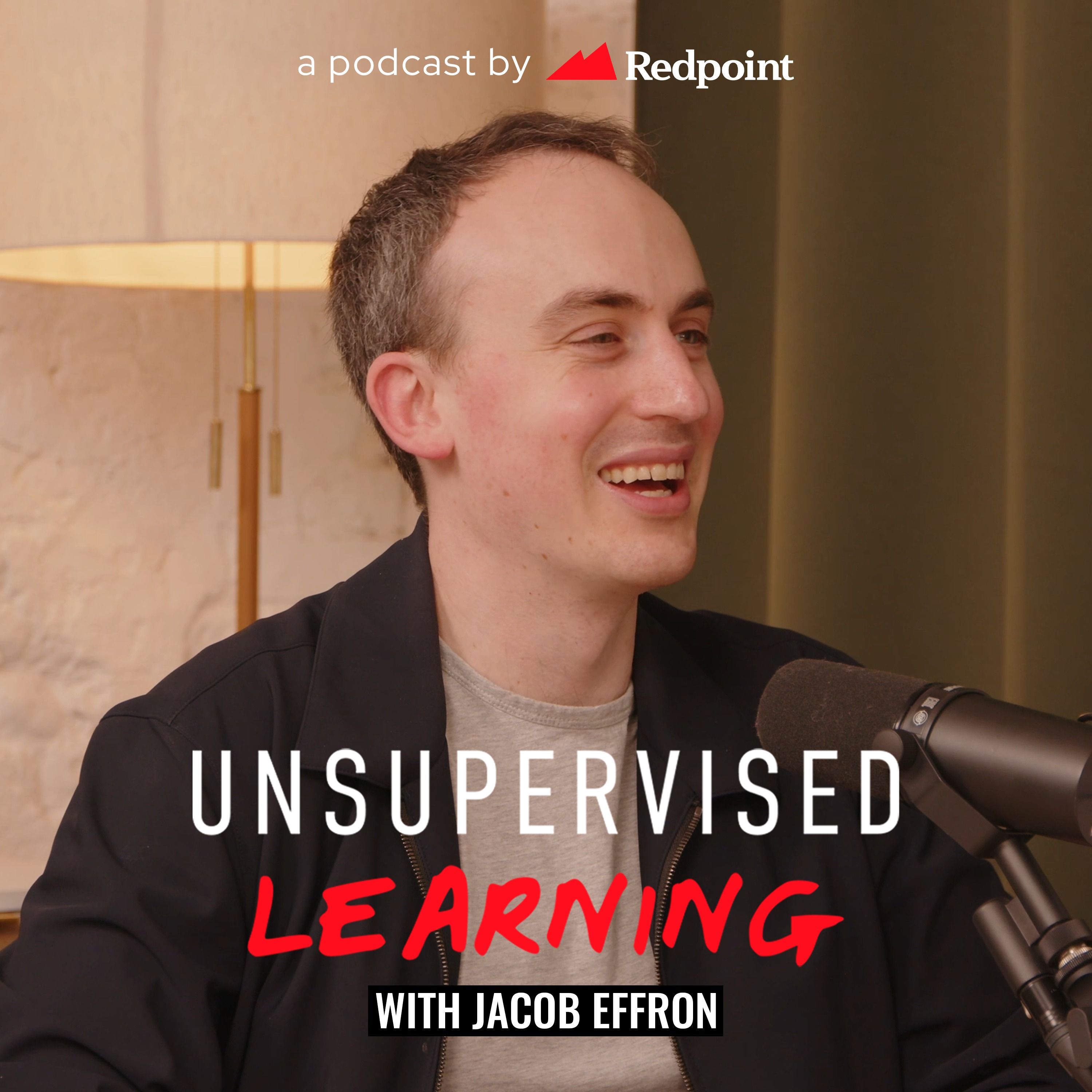
Ep 95: Modal CEO on the Future of Inference, the Chaos of the GPU Market & Origins of the Sandbox Bet
Unsupervised Learning with Jacob Effron
Hosted by Jacob Effron
- 59m
- Transcript
Summary
Written by a model from the transcript; not yet reviewed.
This episode of Unsupervised Learning features a discussion with the founder and CEO of Modal about building a multi-product cloud platform, the chaos of the GPU market, and the evolution of AI inference. The guest explains how Modal manages compute across twenty-five different clouds, the challenges of sourcing hardware in an inefficient market, and the company's strategic expansion into sandboxes, training, and dedicated LLM inference products. They also examine the economics of neo clouds, the impact of coding agents on software engineering productivity, and what lies ahead for high-performance AI workloads.
- Scale compute acquisition by aggregating demand and working across multiple cloud providers to efficiently manage capacity. 1:55
- Build core infrastructure components like file systems and container runtimes if they are necessary to achieve desired developer experiences. 10:38
- Leverage open-source inference engines while maintaining proprietary advantages in the broader infrastructure and auto-scaling layers. 15:13
- Focus resources on a portfolio of adjacent products rather than relying on a single trick pony to build a durable business. 22:41
Chapters
- 0:00Podcast Introduction and Host Overview
Jacob Effron introduces the episode, the host, and the guest, Eric from Modal.
- 0:42Compute Market Landscape and GPU Scarcity
Discussion of the fragmented GPU market, late‑night WhatsApp groups, and the challenges of finding compute today.
- 3:17Sandbox Product and the Rise of Coding Agents
Exploration of how the sandbox product emerged, its growth, and its role in enabling LLM‑driven coding agents.
- 10:23Infrastructure Innovations: File System, Container Runtime, and RDMA
Deep dive into the custom file system, container runtime, and RDMA‑based data transfer that give Modal a performance edge.
- 21:49Inference Market Dynamics and Differentiation
Analysis of the competitive inference landscape, the importance of efficient serving, and Modal’s multi‑product strategy.
- 23:49Customer Portfolio and Use‑Case Diversity
Overview of Modal’s major customers across reinforcement learning, generative media, biotech, and robotics.
- 24:56Prioritization and Long‑Term Vision for Modal
Insights into how Modal balances product investments, prioritizes features, and maintains a long‑term view amid rapid AI evolution.
- 29:23Agents, Automation, and the Changing Developer Landscape
Discussion of how coding agents alter software development, the need for robust deprecation handling, and the impact on CI/CD.
- 35:03Future Bets: Low‑Latency, Training, and OS‑Level Inference
Eric outlines upcoming priorities such as voice‑to‑voice inference, large‑model training, and supporting multiple operating systems.
- 39:18Robotics and Device‑Side AI
Discussion of how robotics will shift to on‑device inference and the opportunities for simulation and training environments.
- 41:04Pitch Deck Evolution and Rapid Revenue Growth
Review of Modal’s Series A pitch deck, the company’s 500× revenue growth, and the challenges of scaling fast.
- 43:38Neo‑Labs vs Neo‑Clouds and GPU Resale Risks
Examination of neo‑lab GPU commitments, potential resale strategies, and the risk of VC funding withdrawal.
Highlights
- 2:39
GPU Market as Open-Air Drug Marketstory
The guest describes attending GTC and networking in hotel lobbies to secure GPUs, comparing the process to an open-air drug market due to its inefficiency.
- 4:16
Automating Failure Recovery for Neo Cloudsstrategy
Modal manages reliability by automatically detecting when neo cloud nodes fail and taking them out of rotation or filing automated tickets.
- 7:41
Explosive Growth of Sandbox Productsdata
Modal's sandbox product grew almost a thousand-fold and now represents a significant portion of their three-hundred-million-dollar run rate business.
- 10:30
Building a Custom File Systeminsight
Building a proprietary file system, container runtime, and scheduler provided a massive source of alpha for achieving ultra-fast cold starts.
- 18:07
Despite the industry focus on newer hardware, H100 Hoppers remain the most common GPU type running large production use cases at Modal.
- 27:45
Agent-Written Code at Modaldata
Around ninety-five percent of the lines of code merged at Modal are written by AI agents, heavily utilized by senior engineers.
Quotes
“I think there's a lot of opportunity to move up in the stacks.”
Unnamed speaker · 9:25 “I think there's a lot of, we we're gonna see a lot of sort of incredibly cool applications in that space.”
Unnamed speaker · 40:25 “I think the neo clouds are like fine business models.”
Unnamed speaker · 43:12 “I think higher. You know, it's funny, like, I actually changed my mind on this, like, in the last 48 hours.”
Unnamed speaker · 55:57
Sponsored segments
- Modal 58:16–58:53
About this episode
Jacob Effron and Pat Chase sit down with Erik Bernhardsson, co-founder and CEO of Modal, for his second appearance on Unsupervised Learning, now with the company past a $1B run rate. They dig into how the AI compute market actually works behind the scenes, why Modal’s early bets on sandboxes and low-level infrastructure paid off, and Erik’s takes on NeoClouds, NeoLabs, and where GPU prices are headed next.
Transcript
13,609 words · 4 speakers
Speaker names marked are inferred from speaking time and the show’s known hosts — they are not voice-verified.
Topics
- inference
- US
- GPU
- neo clouds
- reinforcement learning
- LLMs
- Nvidia
- Anthropic
- Sweden
- neo labs
Page updated · transcript and summary are machine-generated