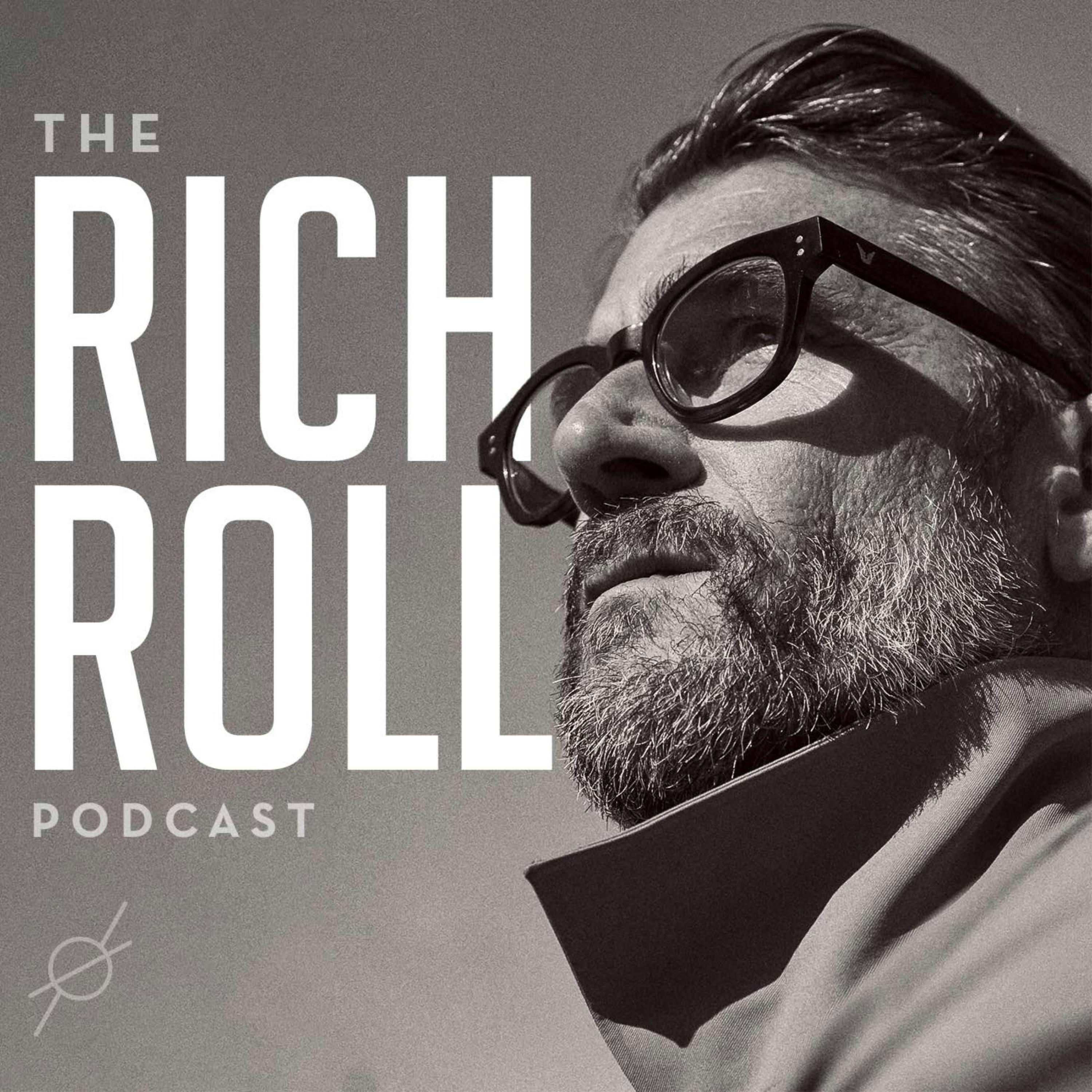
Pod Insights The Rich Roll Podcast Guru Singh On Our Addiction To 'Normal' About this episode It's been over a year since we dipped our toes in the rippling currents of the spiritual deep end.
To make amends for this grievous and much delayed pause, today marks the the welcome return of my favorite wizard and sparring partner when it comes to matters mystical, Guru Singh —here to resuscitate another round of Guru Multiverse.
The master of the Kundalini arts, now presiding over Kundalini University, Guru Singh has paid many a visit to this show. For those newer to the podcast, Guru Singh is a celebrated master spiritual teacher, third-generation Sikh yogi, author, accomplished musician, father, grandfather, and gift to humanity at large who has been teaching and studying Kundalini yoga for the past 40-plus years.
Our last get-together focused on navigating grief. Today we extend and apply that theme to aid in processing this most unusual year.
We discuss our addiction to the idea of normalcy. We explore the idea of a 'global reset' — the personal and planetary growth opportunity in the wake of what we have collectively weathered. And we weigh the pros and cons of incremental versus revolutionary change.
Make sure to stick around to the end. As has become his custom, Guru Singh takes it out with a song.
FULL BLOG & SHOW NOTES: bit.ly/richroll607
YouTube: bit.ly/gurusingh607
It's great to be back with my wise friend. I sincerely hope you enjoy this exchange.
Peace + Plants,
Rich
Learn more about your ad choices. Visit podcastchoices.com/adchoices
Transcript Speaker names marked ? are inferred from speaking time and the show’s known hosts — they are not voice-verified.
0:00 Rich Roll? Eating well rarely falls apart because of one big failure. It's the daily question that wears you down. Like, what am I actually gonna make tonight? What's in the fridge? And it's exactly why we built the Plant Power Meal Planner. It's a personalized, plant-based meal planning program that matches you with recipes based on your taste, your allergies, your cooking skills, and how much time you actually have. You build, through this program, a balanced, nutrient-dense plan for your entire household in a few minutes. Then it generates a grocery list for you with one click that plugs right into our delivery partners. All the recipes in the program are built by dietitians with culinary training. Plus, you get your own food coach to help you problem-solve along the way.
0:44 Rich Roll? It's kind of an amazing thing. For listeners of the show, all you special people, we're offering an exclusive $20 off an annual subscription right now. To get it, go to meals.richroll.com, take your quick personalization quiz, and enter promo code RICHROLL20 at checkout.
1:05 Guru Singh? When we wonder, we wander off the path. And in that wondering or wandering, we end up finding things that were not available or obvious to us in the path where it was just going in lockstep into a dismal future because it was starting to undo itself. A lot of people wondering will cause a lot of people wandering outside of normal. And the pandemic was a really good catalyst for that as well. Weren't we all addicted to what we called "normal"?
1:49 Guru Singh? And all of a sudden, here we are, with all of the emotions that were being satisfied by our consumption of "normal." This is Guru Singh, and Rich and I have finally gotten back together after so many months of being apart. This is the Guru multiverse with no sharp edges. Love and peace and plant power and gratitude to all of you out there. This is the Rich Roll Podcast.
2:34 Rich Roll? Greetings, all you wanderers, all you spiritual vagabonds, you beautiful conscious roamers, shapeshifters, seekers. My name is Rich Roll. I am keeper of the sacred podcast flame. Welcome to the show. It has been quite an extended minute, about a year and a half, if memory serves me, since we dipped our toes in the metaphysical, swam in the holy waters of the sacred, and dove off the spiritual deep end. But today, today, my friends, marks the very welcome return of my favorite wizard and sparring partner when
3:13 Rich Roll? it comes to matters mystical, Guru Singh, here to resuscitate Guru Multiverse, rebranded from its original moniker Guru Corner, because the infinite has no sharp edges, my friends, just pure expansiveness. The master of the Kundalini arts, now presiding over Kundalini University.com, has paid many a visit to this show. I believe this might be his ninth appearance, if I'm not mistaken. But briefly, for those newer to the podcast, Guru Singh is, in addition to being a very good friend, a celebrated master spiritual teacher, he's
3:52 Rich Roll? a third-generation Sikh yogi, an author, an accomplished musician, a father, a grandfather, basically, a gift to humanity, a guy who has been teaching and studying Kundalini yoga for the past 40 years. And it's great to be back. We'll get into the whats and the whatnots in a flash, but first.
4:21 Rich Roll? Okie dokie Guru Singh. So in our last get together, quite some time ago, we spoke about grief in the wake of his grandson's passing shortly after being born. And today, we kind of pick up on the aftermath of that grieving process and extend it to address more broadly the means by which we can all process this most unusual year in the healthiest manner possible. We discuss our addiction to the idea of normalcy. We talk about identifying the growth opportunities in the wake of what we have all collectively weathered. And we weigh the pros and cons of incremental versus revolutionary change and many other topics.
5:06 Rich Roll? Make sure to stick around to the end. Guru Singh takes us out with a really beautiful song. It is great to be back. So let's do the thing. This is me and Guru Singh.
5:22 Rich Roll? So good to see you.
5:23 Guru Singh? It's just really special to be back.
5:26 Rich Roll? We were chatting earlier today. And I was trying to remember the last time that I saw you. I mean, the last time that a Guru Corner episode went up was probably a year and a half ago, but that came out quite a bit of time after we actually recorded it. So I'm not sure we've seen each other in
5:43 Guru Singh? Two years.
5:44 Rich Roll? Almost two years.
5:46 Guru Singh? As I recall, it was July of 2019.
5:51 Rich Roll? Yeah.
5:52 Guru Singh? July or August.
5:54 Rich Roll? Too long.
5:55 Guru Singh? Yeah, way too long.
5:56 Rich Roll? But you've been up in Seattle, recently back to Los Angeles.
6:00 Guru Singh? Yeah, we are now truly bi-located.
6:07 Rich Roll? So cosmopolitan of you.
6:09 Guru Singh? We look at, we look at our lives as being a very large house with a highway for a hallway.
6:18 Guru Singh? Between the two extensions of the house.
6:20 Rich Roll? Uh huh.
6:21 Guru Singh? And that is the Interstate five between Seattle and Los Angeles.
6:25 Rich Roll? Right. Do you make the drive or do you fly?
6:28 Guru Singh? We drive.
6:28 Rich Roll? Yeah, so all your kids and your grandkids are up in Seattle.
6:31 Guru Singh? That's right. And, you know, being able to, which was not something we were able to do before because we were tied to bricks and mortar, right? We were tied to yoga centers and retreat centers. And so we operated out of Los Angeles. And now we operate out of wherever there's a high-speed internet connection.
6:56 Rich Roll? Sure. So is Yoga West reopening? Or are you going all digital with everything that you're doing?
7:02 Guru Singh? I'm all digital.
7:03 Rich Roll? Hmm. Wow. From here on out?
7:05 Guru Singh? From here on forward. People say, you know, when are you gonna do, you know, gatherings? And I'm thinking to myself, why?
7:12 Rich Roll? Hmm.
7:13 Guru Singh? You know, I love the, I love the gathering, but at a gathering, you can do, you know, at most a few hundred. But we're, we're on the road to doing thousands of students.
7:25 Rich Roll? Hmm. Hmm.
7:26 Guru Singh? And my task in life, like your task in life, is to reach
7:33 Guru Singh? as many as possible to uplift them.
7:35 Rich Roll? Sure. But in your classes, you would also livestream them on Facebook or Instagram, et cetera. So you were, you were serving that dual function of having that in-person connection. I mean, there is something about the energy of being physically present with the teaching and the ripple effect that comes with that. I can't imagine you're, you're not going to have some form of, of gatherings in the not-too-distant future.
8:02 Guru Singh? Well, yeah. There will have to be because, you know, as well as I do, that I came from the stage anyway, you know, as a musician on stage. So, you know, they, that is a very important part.
8:15 Rich Roll? Hmm.
8:16 Guru Singh? But.
8:18 Guru Singh? The beauty and joy of family. And the beauty and joy of navigating the ups and downs of what we're going through right now as a world.
8:28 Rich Roll? Yeah. Well, the last time that we spoke, we spent most of that conversation exploring grief and the pain, navigating the pain of loss in the wake of your grandchild passing away as an infant. And I thought it would be interesting to kind of catch up on that story because there have been some developments.
8:54 Guru Singh? Yeah, there have been. So to put the end of the story first so that it doesn't have to be tension-filled. Within months after the passing, just after birth, 36 hours after birth of our grandson Tiaga, our daughter and son-in-law got pregnant again on purpose. And for the other two children and for the whole family. And we now have a nine-and-a-half-month-old granddaughter.
9:35 Rich Roll? Wow.
9:38 Guru Singh? And this is not always possible for people, so I don't want to try to present this as a prescription. But as a family, we navigated the grief really, really well. I remember our grandson, who at the time was like three. And every once in a while, he would just shout out, "I don't want my brother to die." And this was months after it had happened.
10:21 Guru Singh? And we would sit together and sit inside of that emotion.
10:31 Guru Singh? And then after a while, he would draw, at three years old, he would draw his own conclusions. With some guidance and some conversation. And he would come to a place where he would say, "But you know, he's still here. I still feel him. And that's okay for now." And this is coming out of, you know, the mouth of a three-year-old, and his sister, a five-year-old, at that time. So, the last two years have been a journey through death, and birth, and grief, and joy.
11:15 Guru Singh? And it reminds me of that, Isaac Newton's third law of motion, that for every action or activity, there's an equal and opposite, which is kind of a law of the physical universe. And so, this has been a really big lesson because even in the death of my parents, and my wife's parents, two of which have happened, or her parents have happened over the last two years since I saw you last. It was a, you know, it was, "Okay, we're gonna grieve in a very healthy way, meaning we're gonna fully grieve.
11:58 Guru Singh? But we're also going to look for the equal and opposite."
12:03 Rich Roll? Yeah, I feel like an event of such tragic proportions holds a lot of potential energy. In most cases, you see that ultimately splintering the marriage or the family unit because the grief is too much to bear, or the people who are reveling in that grief are ill-equipped with healthy tools to navigate it, and it makes those those bonds and those relationships fracture. So, to be able to... Whether it as a collective for you to be in Seattle and have that experience together and to see the family emerge from that more whole in some way.
12:42 Guru Singh? Yeah.
12:43 Rich Roll? Is inspiring and instructive. But as somebody who's, you know, you've been around a couple decades at this point. You've experienced loss and grief and death and every permutation in between. Was there something different about this experience that you learned from? That finds its way into how you teach and instruct your students?
13:08 Guru Singh? Yes, the
13:14 Guru Singh? the avenue at the juncture of death
13:19 Guru Singh? that expands the tragedy beyond just the normal grieving
13:28 Guru Singh? is the avenue of guilt and blame.
13:32 Guru Singh? Oftentimes, for example,
13:36 Guru Singh? our grandson Tiaga passed away 36 hours after birth and he had never really, really got a hold of his breath. He really, you know, there was intubation and there was mechanized breathing.
13:53 Guru Singh? And that was sustaining him and they thought, okay, let's see if that can hold him while other things are correcting. But the other things didn't correct. So ultimately, after about 30 hours, our daughter, as I told you before, said, "I just want to hold my baby." Because you couldn't hold the baby. The baby was in a, you know, in a refrigeration Right. kind of mattress and had a lot of tubes and everything. And there was really no
14:28 Guru Singh? path forward through the medical profession. And so they said, okay, let's just take everything out. Let me hold the child until he passes.
14:42 Guru Singh? That time was so precious for both our daughter, my wife, I hadn't yet arrived in Seattle, but my wife had arrived up there, and the father, our son-in-law. And in that time, they were able to, in that final six hours, they were able to get a full sense of this is happening. We are not at fault. If there's anything for us to learn, we won't be able to learn it through guilt.
15:23 Guru Singh? We'll be able to learn it through the openness of learning. And so there wasn't that sense of, we've got to figure this out, how did it happen? Why did it happen? There was just a tremendous amount of faith and trust in the fact that we'll be shown as long as we maintain the unit into which and from which this child came and left. And if we maintain this cohesive and compassionate unit, then not only will we be learning the lessons of what took place, but we'll also be, if you will,
16:06 Guru Singh? most open to the communication from Tioga, in whatever way he wants to communicate with us about his journey.
16:15 Rich Roll? Sure. Easier said than done, I would imagine.
16:20 Guru Singh? Yeah, and on occasion, easily done, and on occasion, horrifically difficult. You know, and then within a little while, what, we were, we were last around August of 2019, and then at the end of the year, we're into the pandemic. And all kinds of other complications that arrive when people can't connect with people. And so everyone in this world has been going through a lot of loss and a lot of grief,
17:00 Guru Singh? whether it's the loss of, I mean, my teaching partner in Seattle, early in the COVID experience, got a really, really horrendous case of COVID, was coming out of it, was starting to regain, and then collapsed into an internal infection and died. Oh, I didn't know that. Yeah, so my, my main teaching partner that had been with me here in Los Angeles a decade ago, or 15 years ago, and he had managed Yoga West, where I was teaching here in LA, and he moved to Seattle after I started teaching up there, and I said, okay, let's,
17:41 Guru Singh? let's build Seattle. And we built Seattle into the second largest Kundalini community in the world, Los Angeles being the largest. And yeah, so there's been, you know, some losses that have, that have, you know, challenged us. And this is not a, this is not a false feel-good attitude. This is an attitude, having died myself and knowing the, you know, the realms on the other side, I died in a hospital, as you know, and having, you know, known the realms on the other side, it's not the unknown territory for me. So
18:22 Guru Singh? when I'm trying to maintain my awareness and my connectivity with my grandson and with my partner, you know, with my business partner, et cetera, you know, this is a real game, if you can. This is a real game for me. This is not a, this is not a fantasy.
18:43 Rich Roll? Yeah, not a Pollyanna response. I mean, that's pretty heavy. And to come on the heels of your grandchild is quite the double whammy.
18:58 Rich Roll? But I think it is, there are lessons in those experiences that I think are powerful and instructive for people that are watching and listening because we have all endured a very unusual year. It's been much more difficult for some than others. But I think collectively, there is a sense of loss, a sense of grief. I think we're all trying to process it in real time. And because it's so unprecedented, we don't have lifetime experiences or benchmarks that we can look back upon or rely upon in order to figure out how to chart the course forward.
19:42 Rich Roll? And I feel like there's this, I see this in myself, or I feel this in myself, this urge or compulsion to just kind of get excited about the world opening back up right now and just say, wow, that was a crazy year. Like, that's in the rearview. Let me compartmentalize that and let me just move back into doing what I was doing before. But there is a powerful residue, I think, that we're all carrying. And short of really confronting that in a meaningful way and working through the complicated emotions of what we've all experienced in our individual ways, we're cutting ourselves short from a proper healing so that we can be whole as we kind of walk back into the
20:27 Rich Roll? world.
20:29 Guru Singh? What you just described in the pandemic sense is exactly what we were just addressing in an individual kind of grieving sense. For example, you said a moment ago that sometimes with a deep grieving situation, families splinter.
20:54 Guru Singh? And what you just described as a couple of options, right? Compartmentalize, move forward, is oftentimes what sort of aids in that disintegration. Because when you compartmentalize real events that are not over with when they're over, because there's just such a long tail that follows the event. They once said that death is like a crocodile or an alligator. That the death is in the head. But for that to leave the room,
21:39 Guru Singh? there's that long body and long tail. And in that process of it leaving the room, if you've compartmentalized it, there's a lot of unresolved emotions, as you well know. Same kind of thing that takes place in
21:59 Guru Singh? the sober world, right? The unprocessed emotions
22:06 Guru Singh? compound, build up.
22:08 Rich Roll? Yeah.
22:09 Guru Singh? And then when you don't process them in a
22:19 Guru Singh? in an event upon event upon event kind of way, it's just happenstance as to whether or not you can get through it. And what I find is that that event upon event upon event kind of way needs to be in big communication. Like we were with my daughter, son-in-law, my wife, his parents, and the other children. And the same thing is true in the pandemic.
22:51 Rich Roll? Yeah, I mean, there's this
22:54 Rich Roll? You know, with this compulsion to just move forward, we have to reckon with what's going on. And I can't help but, you know, lay that across the tableau of sobriety because that's my reference point.
23:08 Guru Singh? Yes.
23:08 Rich Roll? You know, the analogy would be you get sober and you think the problem is drugs and alcohol. And suddenly you're a raw nerve and you have all these emotions and they're spilling out all over the place. And you don't know what to do with them. And the steps are a methodical way of getting you to confront those difficult things that you've compartmentalized or the mirrors that you don't want to look into and helping you deconstruct those so that you can develop a greater self-understanding while in parallel giving you tools for how to work through them so that you can become essentially a whole person. And they're so powerful and also simple in many ways that I feel like
23:52 Rich Roll? everybody could benefit from learning about them and practicing them in their own right. But the pandemic provides this universal opportunity because it's been such a collective, global experience for all of us to reckon in a methodical way with the various forms of trauma that we've all experienced so that we can get back into the world and on some level perhaps even be better or more equipped, you know, better equipped to handle significant stressors as we mature through life.
24:28 Guru Singh? Thank you for drawing the parallel to sobriety and the world of addiction because weren't we all addicted to what we called normal?
24:37 Rich Roll? Right.
24:38 Guru Singh? And all of a sudden, we got sober, shall we say, from normal. And here we are with all of the emotions that were being satisfied by our consumption of normal.
24:58 Rich Roll? And this compulsion to relapse on normal as an anesthesia for having to feel these things that we're feeling right now.
25:05 Guru Singh? Yeah, and that is like a relapse, isn't it? For example, the bubonic plague lasted for about a decade and a half. And of course, they had less technology then, and so moving through it was much more difficult. But following the bubonic plague was the Renaissance.
25:26 Rich Roll? Mm-hmm.
25:27 Guru Singh? I mean, people were so pent up that going back to the normal, what happened? Politics changed because the monarchy was no longer going to be in charge of these people that had been suffering at the doorway of death for a decade and a half. Music changed, art changed, science changed, religion changed. The Gutenberg press came in, the romantic composers and artists came in. I mean, the pent-up energy just spewed into all of this science and technology and art. Here we are again.
26:06 Rich Roll? Mm-hmm. Yeah, the optimist in me really wants to see our version of that Renaissance transpire. I think the differentiator here is that we have this thing called the Internet. And as powerful as it is in terms of connecting all of us, you know, the pessimist in me sees the extent to which it divides us and the means by which it pits us against each other. And instead of, you would think, when we're having a collective, global, traumatic experience, that we would unite and rally around a solution, it would bring us together.
26:48 Rich Roll? Instead, I see quite the opposite. And so, when I think about that in the context of a modern-day Renaissance, I wonder how that might pan out.
27:02 Guru Singh? Yeah.
27:03 Rich Roll? Whether we're even in a position to have that kind of experience, given the way, you know, our current operating system functions.
27:10 Guru Singh? That's beautiful.
27:20 Guru Singh? You know, as you were talking about the Internet, I was thinking about the Gutenberg Press. And for the first time in the history of the human beings, we had pamphlets.
27:31 Rich Roll? Disseminate information, yeah.
27:33 Guru Singh? We had pamphlets that were the precursors to newspapers. We had the ability to publish ideas and get them out to more than just the people we could talk to. And so, the human brain, obviously, has evolved to handle much more information. But really, the amount of information that we're handling today is exceeding the human brain's capacity. And that's why the brain gets very, sort of, self-preserving. And that's when it turns nasty. And that's when the Internet can turn into that nasty service, rather than a collective, connective service.
28:14 Guru Singh? But you think about the early stages of the Gutenberg Press. They tried to regulate it, just like they've tried to regulate the Internet. Because they didn't like the ability for anybody to be able to say whatever they wanted to in print. And there was nastiness at that time, too. And it sort of resolved itself over time when people got accustomed to it. So what I see happening in today's world around the fact of the Internet is back to something that we may have discussed earlier in another podcast. But the world is a one-room schoolhouse. And there are... There's a spectrum of human beings. No one more important,
28:59 Guru Singh? no one more special than any others. But in a one-room schoolhouse, there's teachers, there's students that have been in it for a long time, and there's brand-new students. And when you think about the evolution of humanity...
29:15 Guru Singh? It's an evolution in which people either have access to that one-room schoolhouse, or come into it, you know, later in their existence. I mean, I'm trying to stay away from the thing of reincarnation and multiple lifetimes, because, you know, that may not be everyone's belief system. But just understanding, if I don't take it to that direction, just understanding that everyone has a different relationship with education in the one-room schoolhouse earth. And that some are highly educated in matters of spirit, in matters of the mind, in matters of the emotions, in matters of physiology.
30:00 Guru Singh? Take you, for example. You're like this, and I'll use the phrase, you're like this Renaissance man who has this incredible relationship with physiology. Diet, exercise, competition, the works. Which then also contributes to, even though it may not be always completely stable, a far more stable emotional system than the majority of people that are eating junk food and overdoing on all of the other kinds of additives that take place in the food. That then sets up a way in which you can operate your business,
30:42 Guru Singh? which is a business of exploring humanity through all of your podcasts and all of what you do in a service to people's emotions and people's mindsets, and ultimately also people's physiology. Then you have the people that are what we might call newcomers.
31:08 Guru Singh? No less special, no less important, but way less educated physically, diet-wise, emotionally, and mentally. And in the world, back in the ancient mystic and yogic teachings, it talks about how the majority of the human life is in that world. The majority of humanity will be in that world. And unfortunately, way back when these teachings first came out, they created the caste system out of it, which was the most horrendous thing possible,
31:51 Guru Singh? where people were stuck in these categories. No, like anything, you can do well in school, and you can move up through the grades. But we have to understand that the majority of human beings only take their body from the bed to the breakfast chair, to the chair in the car, to the chair or the stool at work, or standing at work, back to the chair in the car, back to the chair at home, downing a few, watching somebody else's life on the screen, and back into the bed. And that, as the majority of human habit, is
32:35 Guru Singh? a formula for the disaster that's taking place that you just talked about. And what we have to do is we have to reach the reachable and teachable. That's what my mission, that's what I picture is your mission. You can speak for yourself. But I see you reaching so many people and teaching with all of these incredible people that you have coming on your show.
33:02 Rich Roll? Well, it's very kind of you. I mean, I feel like the things that I've
33:10 Rich Roll? Brought into my life and the practices that I have adopted are really just survival mechanisms so that I'm not an insane person and behave badly in the world, like, you know, to put it bluntly. Yeah. But I hear you when it comes, and I don't consider myself a teacher. I do like to explore ideas with people who have walked various avenues of life. And I'm on a learning, you know, mission myself, as much as anybody who's watching or listening. Me too. Far be it from me to tell anybody how they should live their life. But I would agree with you that the majority of humanity lives in a very kind of stuck
33:51 Rich Roll? loop that is calcified or encouraged by a society and a culture that prefers it that way. It's consumers on a conveyor belt. Let's keep them comfortable and make sure that they have a nice, big, flat screen and delivery food available. The Roman Colosseum, right? And you can sort of, yeah, you can, what's the word? When you keep people sort of fat and content. Sedated. Yes, basically sedated. And that way, they become very malleable in terms of serving the interests of the powerful. Exactly. And short of some kind of revolution, that is a status quo that will perpetuate
34:34 Rich Roll? and keep the powerful, powerful and the moneyed interests safe. And I think COVID, the pandemic, shook that up a little bit. And some people have taken the opportunity to look in the mirror and do a little self-evaluation and, and a little bit of trajectory adjustment with their lives. But I think also, there's a large swath of, of that sedated population that then becomes very prone to, because some of those comforts are being stripped away or their status quo is being eroded, because the more powerful the powerful become, that the, the, the division
35:17 Rich Roll? between the haves and the have-nots continues to increase. We see the eradication of the middle class and the have-nots have even less. And that makes people, of course, they're going to be angry and resentful and they're going to be prone to being provoked by...
35:40 Rich Roll? Media outlets that understand how to marshal that anger towards a specific aim. And that, I think, sows the seeds for the destruction of kind of the culture that we've enjoyed for so long. And I don't know how that plays out.
35:59 Guru Singh? The way I see it playing out is it's like a spiral, where that entry point of consciousness, you know, leading into a more capable consciousness, that then tries to control the entry point, what you were talking about. The industrial age that sort of evolved time as money and banking as the exchange, not of goods and services, but that the exchange of wealth at the top.
36:39 Guru Singh? If we, instead of countering that move of the privileged, if we just start spreading the love and the understanding and the simple capacity to comprehend what is happening in our world, what is happening in our lives, and do so in a way, it's almost like going into an elementary school. And being a good teacher means that you have to not claim that you're a teacher, just like you did a moment ago. You said, "I don't consider myself to be a teacher."
37:24 Guru Singh? I consider myself, like you consider yourself, to be a participant with some information. And if I can teach by an example, and that example has grace and love and compassion and goodwill in it, then I will be able to accomplish a lot with these who are not that highly skilled or that highly aware, and we'll wake them up. And I believe that that shows that the race is on between those who are protecting their privileged position through engendering fear into the masses.
38:07 Guru Singh? And those of us that are engendering compassion and love and understanding and grace into the masses. It's a bit of a contest, if you will, at a spiritual level.
38:20 Rich Roll? Hmm.
38:21 Guru Singh? Where I think that, I think that the race is on, but I think that the outcome is slightly fixed in our favor. Because that's where, you know, they always say the arc of justice curves, but the curve takes a long time.
38:36 Rich Roll? Right.
38:37 Guru Singh? And I believe that the arc of goodness and goodwill in the human depth, which is the soul body, however you want to translate that as a human being, is goodness and willingness to serve. And if we can outpace that industrial motivated, financial motivated process while still using industry and capital, you know, in healthy ways, I believe that, and I've got it in my brain because I expect to live for a very long time.
39:17 Guru Singh? I've got it in my brain as to about a 50-year plan from now, that in 50 years, you know, marking the five and 10-year increments in between, we will arrive at a place that was like, rrrrr, growth curve that was coming right out of the depths of the dip.
39:37 Rich Roll? Well, I would agree, yes. The, the, the arc of history bends towards justice. That bend is, is gradual. And I think, you know, when we're looking at timeframes or timelines, how long is this gonna take, right? When I think about this arms race, I look at the status quo and see an institution that has a much larger defense budget and knows how to deploy those resources to continue to sedate the masses, manipulate them for their own agendas. On the other hand, you have these age-old...
40:21 Rich Roll? Concepts, erudite and ephemeral concepts of love and gratitude and compassion, which the average person struggles to get a hold of and are also tools that are much more difficult to weaponize in the best way possible, right? Like, we're doing a podcast, but we don't control the pipes that channel, you know, network television to people's homes every night, or all the other avenues of distribution that the status quo controls at the moment. So, the question then becomes, how long are we talking about here?
41:02 Rich Roll? And do we even have enough time before we destroy ourselves or we destroy the planet?
41:07 Guru Singh? Think about, think about the, the long game, is what you were saying. And the Renaissance. Up until the Renaissance, the only power in government was that whoever was the descendant of the most brutal warrior from hundreds of years before was the monarch. And however much land they had accumulated was their territory. And all of a sudden, human beings began to have an inner sense that something different is more appropriate.
41:52 Guru Singh? And it was a little bit like the, the book The Hundredth Monkey by Ken Keyes, whereby, at a certain point, enough of humanity, or in that case, enough of the monkeys, had learned a particular skill, that it became...
42:13 Guru Singh? Exponential across the species. That it was no longer an outward learning. It was now triggered as an inward learning. That's in my sense, how the goodness, the Ariadite goodness can be, if you will, weaponized. That it starts to come from the inside once enough people. I look at, at my goal, you know, it's 24 million and 240 million, whether it's 0.3% or 3% of the total global population, meaning around 8 billion in, in, you know, round figures.
42:51 Guru Singh? This is the audience that we have to achieve to come up with that leverage to be able to then cause this to happen from the inside of everybody. Everybody kind of shakes their head and goes, I think there's, I get a sense there's a better way. And once that starts happening, that becomes the new pandemic. The new pandemic of consciousness. There's, there's studies in bacteria and virus that show that this takes place, that
43:28 Guru Singh? once a particular virus figures out how to outmaneuver an antiviral system, all of the virus, anywhere on earth, has that same aha moment. So they have found this, what I'm saying is not woo woo, but it's, it is a living technology within biology. And so that's what I'm counting on. And that counting on it helps me.
44:05 Guru Singh? In the grief of this moment, in which so much of my addiction to normal has been stripped away, and I'm grieving the loss, not only of people, but of contact.
44:23 Rich Roll? Yeah. Well, there certainly are. I mean, I like that idea, and I think it's true, that ideas spread and infect people in the same manner that a virus or a bacteria does. And there's much to be learned from looking at epidemiology and turning your attention on how ideas propagate and cross the globe. And with these tools of the internet, that's only accelerated. There is an arms race afoot, but there's so much to celebrate. I mean, if you just look at the number of meditation apps and mindfulness apps, and the millions and millions of people that are practicing these techniques now, something you've been talking about
45:08 Rich Roll? your entire life that date back millennia, have reached a certain tipping point where the mainstream has gotten onto these, and they're seeing benefits. And that is a trigger point or a catalyst for greater spiritual growth and exploration and expansion in so many other areas. Like, just get people to sit for 20 minutes, use whatever app it is, whatever gets you to do it, and you're suddenly on a very different, gentle and gradual journey, but distinct from whatever it is you were doing before. We see it in our food choices with the proliferation of plant-based options now,
45:52 Rich Roll? and the advent of all of these dairy and meat analogues, and now the cell biology that's creating these cultured meat products that I think are going to revolutionize. How we think about our daily meal. And will soon put us in a position where the idea of slaughtering animals for food will just seem absolutely as barbaric as it actually is.
46:17 Guru Singh? Correct. Think about the downstream or upstream, whichever way you want to look at it, repercussions of all of this. Suddenly, we're not going to need to cut down forests for grazing land. And that's going to improve the climate circumstance on Earth. There's so many beneficial byproducts of this movement that you're describing, this plant-based movement. And a lot of people are thinking about putting plant-based existence to a test
47:00 Guru Singh? in their own life that would never have thought of it before. Simply because the pandemic has caused people to be a little more sedentary, because there's not all, you know, you can't all get out and do what you have to do. And in that way, eating the heavier foods, you know, the more fat-filled foods, has caused a lot of people, sugar-filled, to put on a lot of weight.
47:27 Rich Roll? Yeah.
47:28 Guru Singh? And so people are going, wow, how can I change this through my consumption? Other people are saying, well, have you heard of this? And have you heard of that? I mean, you go to the grocery store now and you see, I mean, just a common grocery store, and you see all kinds of things that say vegan, that say plant-based. That...
47:56 Guru Singh? Is a sign of the beginning, of the movement that you and I are praying for, that allows us to make the shift from the military-industrial complex to more the agri-human humanitarian complex in which we eat food that's food. We have relationships that are not canoes, that both people can stand up and they won't capsize. And all of a sudden, you look 100 years downstream, and that's why I feel very strongly about what, you know, I'm working on.
48:41 Guru Singh? You look 100 years downstream, and it looks like, wow. Can you believe what we went through? As opposed to, wow. This is getting worse and worse.
49:01 Rich Roll? I do wonder whether it can be accomplished through incremental change, though, because while recognizing these movements and the progress that's been made, the clock is ticking. And these advances in consciousness and in technology, et cetera, seem to be in lockstep with this march towards ecological destruction that we, as a human race, seem intent upon. And I wonder whether we can achieve the symbiotic balance with the planet that we aspire to have and that we actually must achieve if we want to perpetuate the species
49:46 Rich Roll? and the species with whom we share the planet in the current construct of a capitalistic democratic republic. Because capitalism, by its very nature, does operate with this zero-sum game, you know, competition construct.
50:11 Rich Roll? That by its very nature is somewhat can be characterized as predatory and really isn't simpatico with a symbiotic relationship with the planet. And as we see these advances, they become armaments in the toolbox of capitalism. They co-opt them and use them, and these are good things on some level. But ultimately, are we not blind to the bigger picture? Like, do we need to have more of a revolution in order to save the planet and survive?
50:52 Guru Singh? Your comment, "I wonder," is the stimulant. "I wonder" comes from the root of "I wander." When we wonder, we wander off the path. And in that wondering or wandering, we end up finding things that were not available or obvious to us in the path of that industrial, capital, democratic, et cetera, where it was just going in lockstep into a dismal
51:34 Guru Singh? future because it was starting to undo itself. A lot of people wondering will cause a lot of people wandering outside of normal, and the pandemic was a really good catalyst for that as well. And the revolution that I see coming is either going to be a climatic crisis in which everyone has to scramble on equal footing. Or it's going to be that incremental stage in which we are able to, and I hate using this because as you know, I love frogs, but there's the metaphor cliche of boiling the frog.
52:17 Guru Singh? If you raise the temperature a tiny bit, a tiny bit, a tiny bit, the frog doesn't jump out of the pot. So please forgive me frogs of the universe because I didn't mean to bring that up. However, it does make the point. And the point is that incremental changes may be safe enough to the powers that are holding on to the competitive, combative capital industrial military complex. And the zero sum economics is nowhere in the future. The zero sum of debt and asset is nowhere in the future. The future is found in The Hidden Life of Trees, which is the book about the economic system of the forest.
53:02 Guru Singh? And that economic system of the forest is where there's a need. The need will be met because the need has a supply that will meet it. And we have the same thing holding true in the world today. More food is thrown out because of blemishes than is needed to feed the starving across the planet. All someone would have to do is mastermind the way in which the distribution system connected everything together. That kind of economic system, the kind of spiritual religious system that doesn't compete with each other, the kind of political system that doesn't have one side competing and combating with the other side,
53:42 Guru Singh? the kind of economic system that is shareable and sustainable. These are the ways of the future. And to get there, we will either go incrementally. And if that isn't going to work, climate's going to change the case. And climate is going to bring about the revolution. And the revolution is not going to be, in my estimate, and don't think that I'm the one that's saying this is how it is and there's no other way. But in my view of things, the only way that climate is going to change us is the way the pandemic changed us.
54:23 Guru Singh? And that is that a significant series of disasters suddenly wakes up the wakeable. And, and those who can't be awakened, continue to try to struggle in the way they are, begin to learn from those who are waking up and finding a new way in the new environment to have life in a sustainable manner. And that's why I say, for me, it's a 50-year plan. It's not, it's not a decades plan. It's not an election cycle plan. It's not any of these things. It's a, it's a long-range plan. And if each one of us keeps doing what we're doing,
55:06 Guru Singh? that is positive and beneficial. I believe that, that we come out, and I won't say on top because that maintains the hierarchy. I believe that we come out in a common existence.
55:20 Rich Roll? Hmm. Always the hopeful optimist. Where, how far along are we on this 50-year, 50-year plan, Guru Singh?
55:28 Guru Singh? I think we're about 12 years in.
55:30 Rich Roll? Yeah.
55:31 Guru Singh? I think we're about 12 years in, meaning we got about 38 more to go. I mean, and this is obviously round fictitious numbers that are just guestimates. But they're based on a lot of intuitive, a lot of historical data, a lot of study of, as you said, epidemiology, a lot of study of the way other things at other levels of life have faced crises like this. Think about COVID and the coronavirus. It's facing a crisis right now. And it's got plans to try to circumvent the crisis. It's, it's, it's fighting for its life.
56:15 Guru Singh? These are the studies that I believe can help to show us where we can also find workarounds.
56:25 Guru Singh? The economic system that you touched on is really important, too. And that is that that zero sum where there's the haves and the have-nots. And in order to have, you have to go into debt to have. That zero sum base is, is, you know, it worked for a period of time. Just like the wooden pole worked for a period of time in pole vaulting. And then somebody came up with a fiberglass pole. Put six more feet on the on the end result, you know, which was like 50% advantage. This is going to happen in our world, too. We're going to, we're going to innovate something that is going to find a way through.
57:07 Guru Singh? Driving out here, by the way, I was, I was just constantly feeling like, Guru Singh, you're, you're wending your way through life, trying to find the light in, you know, in dark circumstances, you know, and thinking as you equate it to traffic, you know, there was the lanes and the people. This, if we maintain our innocence, not to the point of ignorance and not to the point of, of, of putting our head in the sand kind of innocence.
57:50 Guru Singh? But if we maintain our openness and our innocence, the clues, the signals will come to us. It's called the parasympathetic nervous system in medicine. Like, if you're into the problem, you're in your sympathetic nervous system and you're looking at the problem and you're striking the brain, trying to come up with an alternative, alternative. If you just take a step back and look at the bigger picture, that's all I'm saying, and then address the issue, not run away from the issue, that's the revolution. And what I think that revolution is, is just a slight revolution of the cycle of time so that we end up entering through a different doorway.
58:36 Rich Roll? I like that. And also, my mind keeps looping back to missed opportunities. When I think about the pandemic, I think about all these changes that we could have crafted from closing off urban streets and making them permanently for pedestrians and bikes, right? Like, let's get rid of the cars in Manhattan. Are we ever going to have this opportunity again? Look what we can do. We have a moment. We have an excuse. Let's make this happen. Let's democratize education, specifically higher education. Now that we're
59:14 Rich Roll? all virtual, why does Harvard have to restrict its, you know, its admission class to 1,500 or whatever it is? Make it 50,000. Charge less, democratize it, expand the scope of what this institution has to offer. Like, there's so many things like that, you know, healthcare now being virtual and telemedicine. There are things, like, we've planted the seeds for some of these changes to occur, and I think there's comfort in returning to this idea of patience and the arc of history bending towards justice. I just feel like, why couldn't we have accomplished some of these things with this very rare moment that
59:57 Rich Roll? we experienced where there was a window of opportunity to do something very real, very tangible, that could make such a huge difference in so many people's lives?
1:00:06 Guru Singh? I love your list. I think this is a phenomenal list, and I would put it on my own personal to-do list, is that, because you and I are both always meeting really incredible people who know other incredible people. And the web of our network is big, is huge. And we can begin to exchange those ideas and not think of it a missed opportunity, but think of it as an exposed opportunity that is missed if we don't pick up the ball and make sure that somebody picks up the momentum. Urban streets closed down for pedestrians,
1:00:51 Guru Singh? all cars being somehow different from gas guzzlers by a certain year.
1:01:00 Guru Singh? Urban gardens, on and on and on, on and on and on. Let's, let's you and I make a list of things that we're going to champion going forward. Because I think that a combination of your list from your perspective and my attitude from my pers- I think my attitude from my perspective, if left alone, is disastrous.
1:01:26 Rich Roll? Why is that?
1:01:27 Guru Singh? Because I think that it's got too much, um, it could wander into Pollyanna-ish.
1:01:33 Rich Roll? Yeah.
1:01:34 Guru Singh? And, and that's something that I'm dedicated not to do. So when I hear somebody like you talking about what you see as a missed opportunity, I say, okay, well, let's just shift the time so that it's not missed, but it's gonna have to be, it's gonna have to be done by this year, or else it will be missed. And if we give ourselves enough runway, like we got 38 years left in my plan, if we will, if we will go with that, then we say, okay, we gotta have urban streets by the year this, we gotta have, we gotta have urban streets, all walking, no driving, by this date, we gotta have this done by this date, we gotta have this done by this date.
1:02:13 Guru Singh? Now we have a chart, and I think that that chart could be an idea, if you will, that could be the revolution.
1:02:24 Rich Roll? All right, we'll stick it in your PowerPoint, your analog PowerPoint.
1:02:29 Guru Singh? I love it.
1:02:30 Rich Roll? Um, I want to keep this to a tight hour, but I can't wrap this up without, um, encouraging you to share a couple of thoughts or some, um, seeds of wisdom for people that, that have suffered tremendously over the course of, of this past year. Perhaps they were very sick themselves, or they lost somebody, or they had their job taken away.
1:02:56 Rich Roll? There's a lot of suffering out there right now. And as the world slowly begins to, uh, open back up and we're emerging out of this cocoon that we've all been in, how can you help people, um, chart a healthy course forward? Who are in that state of paralysis, or emotional trauma, or just very real life struggles?
1:03:25 Guru Singh? I'll go back to what I said a moment ago about the nervous system.
1:03:33 Guru Singh? There's two halves to the central nervous system. And they're not actually halves, there's more like a... It's more like a 65-35 kind of split. Between the 65% of your nervous system is the nervous system that keeps you functioning.
1:03:51 Guru Singh? And that is the sympathetic nervous system. That's about 65-plus percent of your nervous system. And it operates your body... It operates your emotional body and your mental body so that it can... It can keep your physical body functioning. And a lot of that is controlled not by your intellect and your conscious intelligence, but by your subconscious. And then you have the parasympathetic nervous system, which is the more contemplative, the more sort of discovery-oriented part of your nervous system that's looking for... Not how to do it the way I've always done it, but how can I do it better? Now, the parasympathetic nervous system is very active in children,
1:04:35 Guru Singh? and that's why children learn. And that's why education is focused on people before they're at the age of around 22 years old. Doing something on a daily basis
1:04:48 Guru Singh? to represent and reactivate your parasympathetic nervous system. Drinking sufficient amount of water.
1:04:58 Guru Singh? Eating food that wasn't produced in cruelty.
1:05:04 Guru Singh? Because when you eat food that comes through cruelty, such as slaughter, there's a lot of hormones and peptides and proteins and lipids in that food that are going to affect your own sense of safety and well-being. And it's going to lock you in. So, reducing the amount of fat, animal-based food intake.
1:05:34 Guru Singh? Another thing is be aware of how you're breathing. Most people breathe shallow and what's called paradoxically. And that means that they pull the belly in when they inhale and that just inhales into the upper lungs. But if you start breathing what is a more anatomical way, you'll push the belly out and you'll breathe down into the lower portion of your lungs, which will start to activate your diaphragm, which is the largest muscle in your body. And once that diaphragm is activated, you begin to have a relationship with two things:
1:06:15 Guru Singh? your subconscious brain and your emotional body, both of which are centered around the solar plexus, which is part of that diaphragmatic complex. That's just the beginning. So, sit and breathe diaphragmatically, pushing the belly out on the inhale and in on the exhale, and do it for three minutes in the morning, three minutes before lunch, three minutes before dinner, and three minutes before bed. Not a lot of time, total of 12 minutes in a day. Drink sufficient amounts of water.
1:06:56 Guru Singh? The first glass of water could be some salt water, slightly saline water, because that's a more assimilable kind of mixture of chemistry, because most of the water in your body is the same as the ocean, the same saline content. And I'm not telling you anything that you don't know, because you're an expert on these things also. And one last piece. Give yourself time in the morning.
1:07:27 Guru Singh? To contemplate your day and give yourself time in the evening to contemplate your day. The morning is a dedication contemplation and the evening is kind of an analytical contemplation. And you will start packaging your day in between what I'm going to do and how I might do it, what I did and how I might do it better at the end of the day. And what's going to happen is you're going to start programming your sleep and your waking
1:08:06 Guru Singh? hours so that you can work with life as a tool rather than as a happen chance. We've started a school that teaches this. There's many ways in which you can find information about this. All of your podcasts explore this. So I would encourage people to just do the things that they have heard and found to be effective, either in your podcasts, through the extension of your podcasts and however.
1:08:43 Rich Roll? I appreciate the practicality of those tools, right? They're very simple, they're basic, but a lot of bang for the buck, right? And they're not things that are going to alter your life dramatically after one day of practicing them. There's a cumulative impact of these things. They become more powerful as levers the more that you practice them.
1:09:07 Guru Singh? What did you call it when you said, "I don't know if we can change the world in a, we may need a revolution," what was that term?
1:09:16 Rich Roll? I don't remember.
1:09:17 Guru Singh? Incremental.
1:09:18 Rich Roll? Yeah, incrementally.
1:09:19 Guru Singh? You said that. And that's what you're saying, isn't it? I mean, when you're going to go train for a ultra or for a triathlon, you don't train a day and then go do it.
1:09:33 Rich Roll? No. You could. It's not going to work out so good.
1:09:37 Guru Singh? You train incrementally and you look for small, slow progress. And that's what I mean by my 50-year plan, 38 years left. Small, slow progress.
1:09:51 Guru Singh? And if you keep the discipline without having to see the results, that's an important element in the practicality of an opportunity.
1:10:03 Rich Roll? Yeah, I think that's a really good point. It reminds me of something I've said many times before that I believe in, which is this notion that we overestimate or overindex on things we think we can accomplish in a year, and we wildly underestimate what we can accomplish in a decade. And I think if we can do exactly what you were talking about, which is expand the scope of this timeline, and take a step back from our attachment to the results and just be engaged in the process, that we will all be amazed before we're halfway through.
1:10:43 Guru Singh? That is so cool.
1:10:44 Rich Roll? To quote the sober literature.
1:10:47 Guru Singh? I love that. I love that.
1:10:51 Rich Roll? Excellent. Well, I can't let you go without at least telling us a little bit about this Kundalini University. You said you mentioned you have this school. So take us out with a little bit of information about how people can get involved in that. And then I'm going to make you break out your guitar and sing a song.
1:11:10 Guru Singh? KundaliniUniversity.com is the address. You can get to it through gurusing.com or Kundalini University. What happened at the beginning of the pandemic? We also had a scandal in the hierarchy, that, you know, the leadership of the world of Kundalini yoga and meditation. And in response to all of that, I just said, you know, this, the as-is is going nowhere. We're going to have to revolutionize things. And a lady, Brett Larkin, who is one of the number one on YouTube and Google Hatha yoga teachers,
1:11:53 Guru Singh? was, had already been doing the online work for eight years and had perfected the way in which it could be presented. She happened to be a student in my in-person class in Seattle. And she came to me and said, "Let's do this together." And you're the, you know, the expert and the master in Kundalini Yoga and meditation, and I'm the expert and the master in doing this online. And so, we created Kundalini University and combined it with her version and vision, which is uplifted yoga. It is phenomenal. In the comfort of your own home, at the pace of your own activity,
1:12:36 Guru Singh? you can learn so much, and we're adding new courses all the time.
1:12:40 Rich Roll? That's very cool. That's a very, um...
1:12:46 Rich Roll? Uh, what's the phrase I want to use? I mean, it's so opportune that she ends up in your class in Seattle at just the moment where the world is upside down and you're ready to pivot your business for all sorts of external issues as well into this new world. And there you have the person who's already mastered it, sitting right there.
1:13:07 Guru Singh? And you know the word luck comes from the word lux, which means light? I believe that all of these situations that happen to us, when people say, "Wow, that was really lucky." I believe they're all guided by that light that is within us all, that there is a masterful plan, that if we can learn how to pay attention to it, we will be guided through the traffic on the 101 or the circumstances in our life in the day-to-day.
1:13:42 Rich Roll? And the more that you emit that light, the more you become a magnet for bringing more of that light into yourself and your life and your experience.
1:13:55 Guru Singh? This is such a joy, Rich.
1:13:57 Rich Roll? Thank you for coming. It's so good to see you again.
1:14:00 Guru Singh? Such a joy. Been too long, but it's such a joy.
1:14:03 Rich Roll? So, let's play a song.
1:14:05 Guru Singh? Let's do it.
1:14:07 Rich Roll? All right. Awesome.
1:14:31 Speaker 02 Open up your voice, rejoice, rejoice. Open up your mind, let your God light shine. Open up your heart, let the music start. Open up your soul, let the good times roll. Open up your voice, rejoice, rejoice. Open up your mind, let your God light shine. Open up your heart, let the music start.
1:15:16 Speaker 02 Open up your soul, let the good times roll. This reminds me of what we've been talking about. Open up your light, let your sight. Open up your heart, and let your whole life start. Open up your mind, see what you've been blind to.
1:15:52 Speaker 02 See what it reminds you to do, and to be as you.
1:16:13 Rich Roll? Yes, sir.
1:16:15 Speaker 02 Love you.
1:16:16 Rich Roll? Love you too. Peace.
1:16:18 Speaker 02 Peace.
1:16:19 Rich Roll? Plants.
1:16:20 Speaker 02 Plants. Gratitude.
1:16:22 Rich Roll? There you go.
1:16:23 Speaker 02 I love it.
Previous Dr. Andrew Weil Is The Medical Mystic Next Crush It As A Plant-Based Athlete: Matt Frazier & Robert Cheeke Page updated October 8, 2026 · transcript and summary are machine-generated