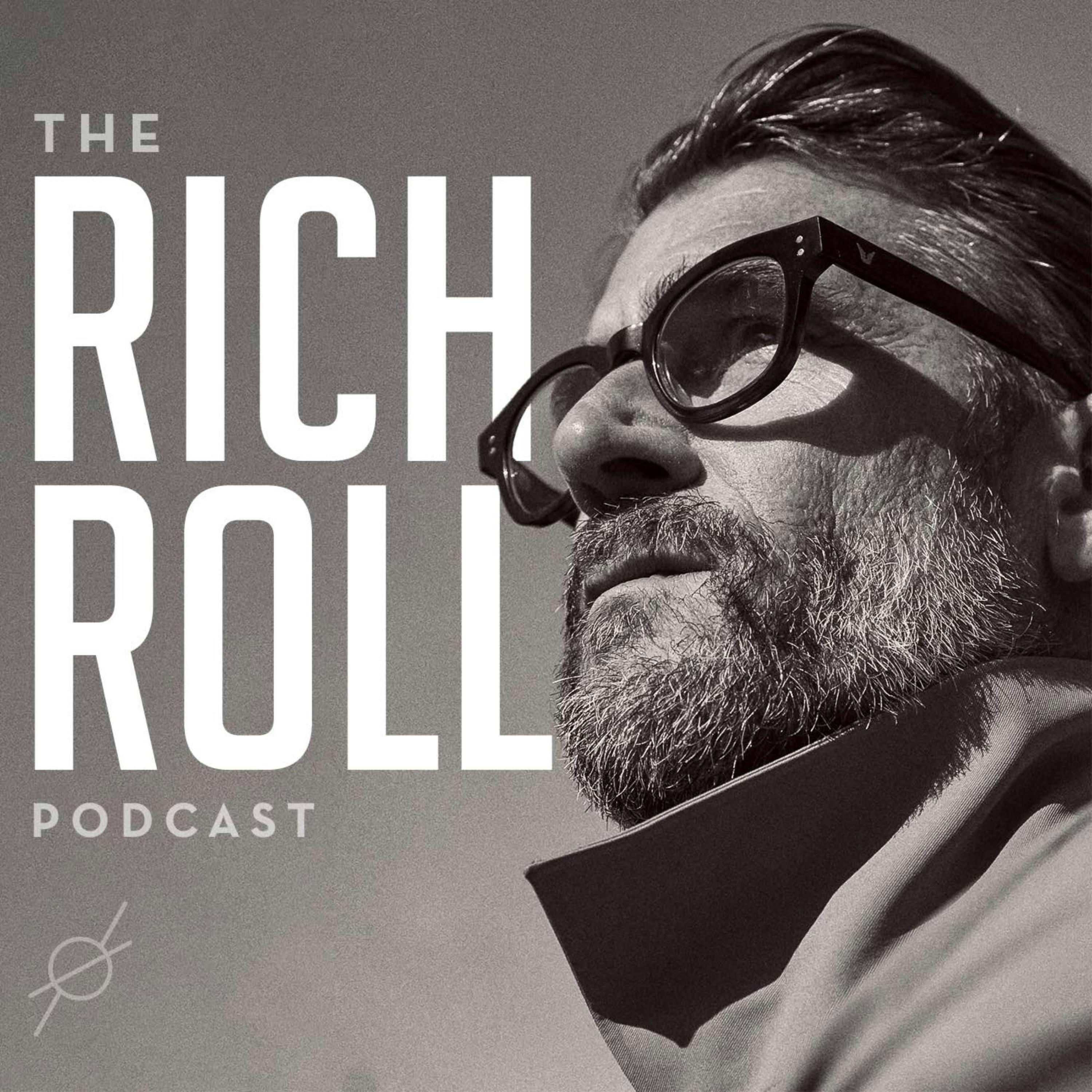
Pod Insights The Rich Roll Podcast Gut Health Compilation: Leading Experts On Fiber, Inflammation, Cancer Survival, & How Your Gut Predicts Your Future Health About this episode Leading microbiome researchers Will Bulsiewicz, Tim Spector, and Robynne Chutkan share discoveries that are rewriting health science.
This compilation explores how 5 grams of fiber can boost cancer survival by 30%, why tumors have their own microbiomes, and how 70% of your immune system lives in your gut. We discuss why depression is an inflammatory disorder and how what you eat directly affects how you feel.
These experts reveal how to optimize the trillions of microorganisms controlling your health.
The implications are vast, and the solutions are surprisingly accessible. Enjoy!
Show notes + MORE
Watch on YouTube
Newsletter Sign-Up
Today’s Sponsors:
Roka: Unlock 20% OFF your order with code RICHROLL👉ROKA.com/RICHROLL
AG1: Get a FREE AG1 "Morning Person" hat, welcome kit, and more! 👉drinkAG1.com/richroll
Bon Charge: Get 15% OFF all my favorite wellness products w/ code RICHROLL 👉 boncharge.com
Pique: Give your body what it actually needs to recover 👉 piquelife.com/richroll
ON: High-performance shoes & apparel crafted for comfort and style 👉on.com/richroll
SHOKZ: Use code RICHROLL for $10 off your purchase 👉 shokz.com
Check out all of the amazing discounts from our Sponsors 👉 https://www.richroll.com/sponsors
Find out more about Voicing Change Media at https://www.voicingchange.media and follow us @voicingchange
Learn more about your ad choices. Visit podcastchoices.com/adchoices
Transcript 10,496 words · 4 speakers
Speaker names marked ? are inferred from speaking time and the show’s known hosts — they are not voice-verified.
0:01 Speaker 00 I was at a microbiome meeting recently and blown away by what's happening in cancer research with the microbiome. Complete game changer.
0:10 Robynne Chutkan? The gut bacteria actually guide that immune response. They're constantly sending signals to the immune cells.
0:18 Tim Spector? The microbiome helps fight aging, helps fight cancer, sorts out allergies.
0:24 Speaker 00 Our modern lifestyle is basically activating these inflammatory mechanisms in a chronic smoldering way.
0:31 Tim Spector? We need to be focusing on the quality of food and that's totally clear.
0:36 Robynne Chutkan? What we should all be aiming for is this concept of a Goldilocks immune system.
0:40 Speaker 00 This is not just us describing the microbiome. We're talking about manipulating the microbiome to save people's lives.
0:47 Rich Roll? You think you're eating healthy. You think you're doing everything right, but your gut may still be screaming for help. You'll feel it everywhere. Brain fog, anxiety, fatigue, inflammation, weight gain. But here's a problem. Most people are still treating symptoms, taking probiotics, cutting carbs, drinking detox teas, while ignoring the real issue. The ecosystem living inside of you is out of balance. And we're going to get right into it in a sec, but first.
1:28 Rich Roll? Eating well rarely falls apart because of one big failure. It's the daily question that wears you down, like, what am I actually going to make tonight? What's in the fridge? And it's exactly why we built the Plant Power Meal Planner. It's a personalized, plant-based meal planning program that matches you with recipes based on your taste, your allergies, your cooking skills, and how much time you actually have. You build through this program, a balanced nutrient dense plan for your entire household in a few minutes. Then it generates a grocery list for you with one click that plugs right into our delivery partners. All the recipes in the program are built by dietitians with culinary training. Plus you get your own food coach to help you problem solve along the way. It's kind
2:13 Rich Roll? of an amazing thing. For listeners of the show, all you special people, we're offering an exclusive $20 off an annual subscription right now. To get it, go to meals.richroll.com, take your quick personalization quiz and enter promo code richroll20 at checkout.
2:36 Rich Roll? Okay. In this episode, some of the world's leading doctors and researchers break down what's really going on inside your gut and how to fix it with food, fiber, and science, not fats. So, if you've been bloated, constipated, wired, tired, or inflamed, keep listening. Your gut will thank you.
2:59 Rich Roll? What has got you excited in terms of the latest literature and what we're discovering about the microbiome?
3:07 Speaker 00 I was at a microbiome meeting recently and blown away, and this is coming from, you know, the guy who's nerding out on microbiome studies all day, blown away by what's happening in cancer research with the microbiome. Complete game changer. So what we're seeing here is that, first of all, going back a few years, we discovered that cancer has a microbiome, like-
3:31 Rich Roll? How does that work? Like a distinct microbiome that is differentiated from how we commonly think about it? Explain that.
3:38 Speaker 00 I'm not even talking about the gut microbiome. So let me start with this. Microbes are everywhere. They cover us from the top of our head to the tip of our toes. They're most concentrated inside of our gut, but they're on plants, they're part of the plant microbiome, they're in the soil, obviously. Everything that's alive in this planet either is a microbiome or has a microbiome. Those are the two choices. So, everything has a microbiome and I thought, like, a tumor- Would be a sterile mass of cells.
4:11 Rich Roll? Mm hmm.
4:12 Speaker 00 And a few years ago, they discovered that tumors, cancer tumors, actually have their own microbiome.
4:21 Rich Roll? Wow.
4:21 Speaker 00 Separate from the gut microbiome, they have their own microbiome. And they took this further, they were taking a look at pancreatic cancer, which is one of our most deadly cancers. And they analyzed the microbiome of the tumor, not the person's gut microbiome, of the tumor, and discovered that a person who has a low diversity within the tumor microbiome has a worse prognosis or a lower likelihood of survival relative to the person whose tumor has a high diversity.
4:49 Rich Roll? Hmm, so explain what that means, low diversity.
4:52 Speaker 00 So diversity is looking at sort of the spectrum of different types of microbes. So like different varieties of microbes and how strongly they're represented. So like inside of us as humans, inside of our gut microbiome, we could have anywhere from hundreds up to potentially a thousand different varieties of microbes living inside of our gut. And one of the things that we would look at in terms of the health of the gut microbiome in a human being is the diversity within that system.
5:20 Rich Roll? Sure.
5:20 Speaker 00 So what we find, Rich, is that if you look at ecosystems, whatever that ecosystem may be, you know, it could be the Amazon rainforest, it could be the Great Barrier Reef, and it can be actually our personal gut microbiome, which is an ecosystem.
5:32 Rich Roll? Mm hmm.
5:33 Speaker 00 And what we discover, biologists will tell you this, is that diversity within the ecosystem is a measure of health.
5:40 Rich Roll? Right, it makes it more robust and resilient.
5:42 Speaker 00 Right, because there are different players that are there and they all have different unique skills that they can basically contribute to the greater good. And if you, for example, if you take the rainforest diversity and like remove the snakes from the forest, I'm not a huge fan of snakes, you remove the snakes, the problem is that the other animals, they're not snakes, they're not really designed to fill that role within the ecosystem. And so when you remove the snakes, it actually has a ripple effect. Because all these other animals are being affected by the fact that you have disrupted the balance that exists within that ecosystem. So anyway, getting back to the cancer, they discovered that these cancer cells have their own microbiome and that the diversity
6:23 Speaker 00 within that microbiome could indicate prognosis. Now, this is quite fascinating, and so they continued down this path to look into this in more detail. And there have been a number of major discoveries. First, in acute myeloid leukemia, one of the treatments that they will give people are stem cell transplants. And it's basically trying to throw a Hail Mary and save a person's life. And there are some people who do great, and there are some people who do not. What they discovered recently is that the microbiome, the gut microbiome of the individual people who receive the stem cell transplant actually is difference making. If you have high diversity within your personal gut microbiome, and you receive
7:06 Speaker 00 the stem cell transplant, your survival is actually much better.
7:10 Rich Roll? But conversely, if the diversity of the microbiome with respect to the tumor is high, that would correlate negatively with treatment receptivity. Is that what you're saying? So if the microbiome on the tumor is very diverse and robust, then it's going to be much more treatment resistant?
7:30 Speaker 00 No, actually, it does better.
7:31 Rich Roll? Oh, I see. Because I was thinking, the diversity of that microbiome is there to support the tumor growth. So the less resistant it is, then the weaker it is.
7:40 Speaker 00 No, actually, so in both cases, a more diverse microbiome, whether it's inside the tumor, or whether it's the patient's actual gut microbiome, in both cases, a more diverse gut microbiome is associated with a better prognosis. So now, MD Anderson is like taking the ball and running with this. And they're doing quite fascinating research with melanoma specifically, which is a skin cancer. It's the most deadly form of skin cancer that exists. And one of the ways that they will commonly treat melanoma is with immunotherapy. Now, they've been doing this for about 10 years. And it can be highly effective, but of course, there are people that it does not work for. So how do we determine who are the people that it's good for versus the people that it's not good for? Well, kind
8:22 Speaker 00 of building up to the most recent stuff that's just from a couple of weeks ago. A few years ago, M.D. Anderson did a study where they looked at the effect of antibiotics immediately prior to receiving this treatment for melanoma. Antibiotics reduce diversity within the gut microbiome. And what they found is that in doing this, they actually were reducing the effectiveness That's fascinating. of their treatment. Taken it a step further, they then took a group of people and they showed that, once again, if you have a higher diversity of your microbiome, you are more likely to survive and have a good result from immunotherapy. They gave them a fecal transplant. So they started giving fecal transplants to people.
9:03 Speaker 00 And when you received a fecal transplant to boost your diversity temporarily, people had a better survival and better outcome from immunotherapy. That's amazing. So now, bringing it all the way forward to where we are today, more recent research has shown that the diversity within a person's gut microbiome, their gut microbiome, is very relevant to this melanoma, and they've identified specific species. And what's interesting is that the species that you want to have to basically pretend a better prognosis are the exact same ones that help us to process and digest our fiber and produce short-chain fatty acids.
9:45 Speaker 00 And these short-chain fatty acids, they are the product of fiber degradation by our gut microbes. Wow. Fiber is the prebiotic, our gut microbes are the probiotics, and when they come together, the fiber, the prebiotic, with the probiotic bacteria, they basically create this new compound, which we would call a postbiotic. And these are the short-chain fatty acids like butyrate. So they showed in this research that melanoma patients have a better survival if they have higher levels of these butyrate-producing microbes in their gut. Wow. So they did a new study looking at dietary fiber. What happens when people are eating more dietary fiber?
10:30 Speaker 00 And again, this is in the context of treating the melanoma with this intervention immunotherapy. And the cutoff that they used was 20 grams of fiber per day. Now, let me just first comment and say, this is actually less than the recommended.
10:46 Rich Roll? Yeah, I was gonna say, this is not very much.
10:48 Speaker 00 It's not very much.
10:49 Rich Roll? But probably more than most people are eating.
10:51 Speaker 00 Yes. So in this cohort of people, where this cutoff is 20 grams of fiber, so they considered it to be like, if you're more than 20 grams of fiber, you're a high fiber consumer. I'm just gonna tell you, the minimal recommended amount for a woman is 25 grams of fiber.
11:05 Rich Roll? And you're probably eating, I don't know, 200 grams of fiber a day.
11:08 Speaker 00 I'm supercharged on as much fiber as possible. The average for a man, the minimal recommended amount for a man is 38 grams of fiber. Right? So even at 20 grams, we are low. 71% of the people in this study did not hit 20 grams of fiber. And what they discovered is that the people who were the high fiber consumers, this 29%, they had a significantly improved survival after the immunotherapy for melanoma on the high fiber diet.
11:40 Rich Roll? Wow.
11:40 Speaker 00 So check this out. This is where like, my mind is blown when I saw this. For every five grams that you increased your fiber consumption, you increase your survival by 30%.
11:53 Rich Roll? That's an insane number. That's crazy. So the most general takeaway from that is if you are suffering from cancer and you're about to undergo treatment, or you're currently undergoing treatment, you should be boosting your fiber intake as much as possible.
12:08 Speaker 00 So I would expect that that would be true. We can't necessarily apply that to every single cancer, but here's what I can say. What we just saw this-
12:16 Rich Roll? It's not gonna hurt you.
12:17 Speaker 00 No, it's not gonna hurt you. This five grams of fiber translating into a 30% greater survival-
12:25 Speaker 00 Is giving me deja vu from a colon cancer study that came out in 2018, where if you increased your fiber intake after you were diagnosed with colon cancer, now these are, by the way, people who did not have metastatic colon cancer. Okay, so because metastatic is a totally different animal. But among people who do not have metastatic colon cancer, if you increased your fiber intake after you were diagnosed, for every five grams that you increased your fiber intake, you saw an 18% increased likelihood of survival. Hmm, wow. So we're seeing the pattern showing up among different types of cancers. And further study is going to push this even further along. Melanoma is where we have the most robust research because MD Anderson
13:10 Speaker 00 has really taken an interest in this particular topic. But I think this is the future. This is where people are going to be looking. And what's exciting, Rich, is that this is not just us describing the microbiome. We're talking about manipulating the microbiome by quite simply eating plants to save people's lives.
13:30 Tim Spector? The microbiome is the term we use for the community of microbes, microorganisms that live in our bodies. And we generally refer to the 99% that live in our lower intestine, our colon. And the microbiome really refers to the genes of those microbes. Should technically be called the microbiota. We just use them as microbiome because I'm not fussy about words. And everyone now understands that. So these, there are some dispute about how many there are, but they're probably, they're certainly trillions, maybe 100 trillion or so, roughly the same numbers of cells in our body. Most of them are the ones we know about are bacteria,
14:13 Tim Spector? but there are also these other related species called archaea. And there are fungi and yeasts. And there are viruses, five times as many viruses as bacteria that feed off them called phages, which also have a role in health. And there are even parasites that virtually all of us have to some extent in our guts, and some of which turn out to be beneficial as well. So it's this whole community, a bit like an ecosystem, that is living within us. And it best considers a virtual organ. Stick them all together, they weigh about two kilograms, same as your brain. And they're basically, as I said, these mini pharmacies pumping out chemicals,
14:57 Tim Spector? which send signals all over our body, but particularly to all the immune cells, the majority of which are immune cells, are actually lining our gut. And so they interact with those immune cells on a constant basis, signaling whether to be aggressive or be passive and modifying them, tuning them up and down. That helps fight aging, helps fight cancer, sorts out allergies, et cetera, et cetera. Infects, fights infections. And they also produce lots of chemicals that might go to our brain, responsible for serotonin and many other pathways in the brain as well.
15:37 Tim Spector? So affects our mood and obviously our metabolism and how we digest food amongst others.
15:44 Rich Roll? Right, like so many things, right?
15:46 Tim Spector? Infinite things.
15:47 Rich Roll? But this idea that that our immune system really resides in our gut is kind of a shocking revelation. Like I always understood that our immune system originates in our bone marrow. And you know, this is where we're producing all these cells. Yeah, this is why, yeah, this is. And, and, and, and why is it that we didn't begin to really even put these pieces together in a methodical way until, I don't know, the early 2000s? Like, it seems like you kind of got into this around 2011, right? Like, this is all extremely recent because prior to that, conventional wisdom was sort of like, you know, we got to get rid of parasites and all this stuff. This is, these are plaguing the human body.
16:31 Rich Roll? And at some point, somebody figured out like, actually, we're living symbiotically with all of this. And this is crucial to every facet of health. And we're still, it feels like in the very early beginning stages of trying to understand the true and vast implications of this incredibly complex system.
16:52 Tim Spector? I think it was medical hubris that says that, you know, our powerful drugs can get rid of this stuff. We're fighting the worst of the world. We know that microbes have killed lots of people in history. Infectious diseases, you know, were vitally important and we survived them. Therefore, you know, we can beat them. And antibiotics, sterilizing creams, you know, keeping people away from dirt. This is the way we're going to conquer our sort of our fears. And I think it was a blind spot to realize that the gut health really was important. And for so long, just regarded that the intestine as a tube to get rid of toxins.
17:34 Rich Roll? Right.
17:34 Tim Spector? And that's it.
17:35 Rich Roll? Absorb nutrients.
17:36 Tim Spector? Some people still believe that, right? But, you know, particularly the toxin bit, but the not realizing it had such major implications as a vital organ for us. And I think it was, you know, few people guessed at it. And even the, you know, you go back to the days of 100 years ago, Mechenkov and Pasteur talking about yogurt, they thought it worked because it deputrefied the body, you know, got rid of those toxins. They couldn't still imagine that it was feeding other, other microbes inside there. So I think we just had a blind spot to it.
18:15 Robynne Chutkan? Most of the immune system is physically located in your gut, about 70 to 80% of it. And so when we talk about the immune system, we do a little immunology 101 and, you know, full disclosure, I'm not an immunologist, I'm a gastroenterologist, but let me give folks some basics. So we're really talking about two systems. We're talking about the innate immune system that you're born with and an acquired immune system, sometimes called the adaptive immune system that you acquire over time. The innate immune system works quickly, but it's sort of nonspecific. So for example, if you get a cut, it works to help protect you from the bacteria that may be invading through that open wound, but in a very nonspecific way.
18:57 Robynne Chutkan? The acquired immune system develops over time and it actually keeps a record of every pathogen that you're exposed to so that it can remember it and mount a response. So it's sort of like that person who never forgets and holds a grudge and is like, oh yeah, in first grade, you kicked me onto the table.
19:13 Rich Roll? Right, like a crow, right? Crows never forget.
19:16 Robynne Chutkan? Exactly. So the acquired immune system is Able to, it takes a little bit longer to work and particularly if it's a new organism, but it it remembers and then it is able to release antibodies. So the acquired immune system involves T lymphocytes, B lymphocytes and the B ones make the antibodies and the T lymphocytes are kind of like air traffic control, destroying cells that have been infected, etc. But but if you think about the adaptive immune system, the point that I like to make for people is that that is a basis of vaccines, for example, right? A vaccine introduces a tiny little bit of the viral protein, not enough ideally to make you sick, but enough for your
19:58 Robynne Chutkan? adaptive immune system to start to create antibodies against it for the next time it encounters that virus. And so if you think about some of these things, like with measles, for example, a virus that's very old, you get measles and you have the illness, your immune system remembers so that the next time you're exposed to measles, you're immune. Now, vaccine can do the same thing, right? But so can having the disease in that particular instance. And so what we see is that the adaptive immune system can make you less sick or not sick at all the next time you encounter something.
20:35 Rich Roll? Sure. So the innate immune system, the acquired immune system. So when we talk about, I think you said 70% of the immune system resides in the gut. Like, so what is it exactly that is in the gut? Is it these lymphocytes? Is it these, you know, systems and pathways? Like, what are we talking about?
20:53 Robynne Chutkan? It's these actual cells. So when you think about the gut lining, this is a razor thin lining. It is literally, you know, a millimeter or two thick. And it's a net, it's a permeable net, like a fishing net with tiny holes. And it allows some things to go through. So typically, digested food, digested into the micronutrients passes through, and then the the excrement, the waste matter from cells passes out. And remember that when something is in your GI tract, it's not actually inside your body, it's in this long hollow tube from mouth to anus. And so things get passed out. Well, the immune cells are on One side, they're on the inside part of the net, inside your body. And your trillions of microbes are on the outside, on the other side of the gut lining.
21:38 Robynne Chutkan? And of course, there's a thick mucus layer also surrounding the gut microbes. But it is literally this hand and glove relationship. And there's constant communication. So the gut bacteria actually guide that immune response. They're constantly sending signals to the immune cells to tell them what to do. And I'll give you a great example of that is there is a bacteria in the gut called Bacteroides. It's a sort of type of bacteria and there are many different strains. And when certain viruses enter the GI tract, Bacteroides in the gut lining, right there, you know, in the lumen against the lining, will trigger a message interferons.
22:22 Robynne Chutkan? And they're called interferons because they interfere with viruses to release certain cytokines to destroy the viruses. And so if your complement of gut bacteria are off and you don't have a healthy microbiome and you don't have sufficient quantities or the right strains of bacteroides, you might not trigger that release of interferons and the sort of virus slaying capabilities, if you will. So it is, it's both a functional relationship and it's an actual physical relationship, Rich, because they're right there next to each other, constantly communicating. And when you think about it, your immune system, your gut lumen is exposed to trillions of different things, right? Because again, it's in contact with the environment, what we're eating and swallowing.
23:07 Robynne Chutkan? Everything's going into this open tube. And your immune system has to look at this morass of, you know, a gazillion different organisms and figure out what's friend and what's foe.
23:20 Robynne Chutkan? And it's really the gut microbiome that is directing that. And that's literally saying, yeah, this one, you need to be really worried. Do something big. This one, just ignore. Yeah, this one's actually helping. So it's that back and forth relationship, that communication that's happening all the time in our gut.
23:37 Rich Roll? Right. So essentially, these things are completely interwoven. You can't talk about the gut without talking about the immune system and vice versa. They are 100% dependent upon each other in terms of their functionality. And when we talk about immune system dysregulation, that can come in two forms. Either it's hyperactive, and then you see all of these like sort of autoimmune diseases or allergies to foods and such. The cytokine storm that comes with, you know, certain people who succumb to COVID, et cetera. Or the underperforming immune system that you mentioned, where you're not producing the interferons and cytokines necessary to combat the disease on the front lines, the virus on the front lines. Is that a fair?
24:20 Robynne Chutkan? Yeah, that's a, that's a beautiful summary. And I, I think even dividing it further into internal threats and external threats can, can help to clarify it even more. But you, you gave a beautiful summary of what it is. So if we think about an overactive immune system, on the one hand, I want people to think about internal threats, and that would manifest as autoimmune disease. So that's basically when your body is reacting to your own body's normal tissue. It's recognizing your own joints, skin, et cetera, as foreign and mounting an immune response. And so we see that with autoimmune disease, affect one in four Americans. There are over 100 different autoimmune diseases now, and this is a list that's growing, unfortunately.
25:03 Robynne Chutkan? We can talk about why that's happening later. When we look still in the category of an overactive immune system, we look at external threats. And so that would be people who are having allergies, peanut allergies, severe allergies to bee stings. I was exploring the Martian view from South Carolina, my husband's hometown, back in May. And we had the, we had the unfortunate.
25:28 Robynne Chutkan? Privilege of being bitten up by chiggers, these insects. And his healed in about two or three weeks and mine are still active. Four months later, I have this sort of unknown delayed hypersensitivity reaction to it. And maybe because he grew up in South Carolina and he's been bitten by chiggers before as a kid. And I never have, but that's an example of an exaggerated response to this external threat. So that's all overactive immune system. Underactive immune system, if we again, look at the two categories of internal threat and external threat. The internal threat would be people developing cancer because your immune system doesn't just protect you from infection. It also helps with cancer surveillance.
26:12 Robynne Chutkan? So as our cells start dividing, sometimes they start to divide a little precariously. And that reproduction leads to errors in the genetic material of the cell. And over time, that can transform to cancer. And so the internal cancer surveillance system is also something that our immune system does. And it would weed out those cells so that they die off and they're not continuing to proliferate and form cancer. So with an underactive immune system, your cancer surveillance is off and you're at increased risk of cancer on the internal side. And on the external side, that would be infection, viral, bacterial, fungal, et cetera. So what we're, should all be aiming for is this concept of a Goldilocks immune system, right?
26:53 Robynne Chutkan? An immune system that is active enough to clear a virus, but not so active that we end up with a cytokine storm. You mentioned this overblown immune response. And the really fascinating thing, when we look at this pandemic, is that a lot of the deaths and the illness have been due primarily to the immune response, not so much a virus itself. But it's our bodies unregulated or dysregulated response to that virus. That's causing the acute respiratory distress syndrome or, you know, other severe illnesses and sometimes even death.
27:26 Rich Roll? Yeah, sure. So there's so much in what you just said to unpack, but to kind of pull some threads on this. I mean, first of all, yes, like in, you know, in this era of COVID, I think we can all agree that we've been on the receiving end of a lot of conflicting information and social vitriol that kind of swirled around what is fact, what is fiction. Certainly, you know, one truth that was kind of underrepresented was that there was not enough messaging about the personal responsibility that we have for our own health. And much of what you talk about and is in your book is the malleability, the adaptability of
28:10 Rich Roll? the gut microbiome and in turn, our immune system when we sort of get rid of certain things or stop certain habits and adapt new habits. Like, it really is resilient in that regard. And we're all capable of, you know, creating a Goldilocks immune system. We, I mean, most of the languaging is around boosting our immune system. Obviously, that's problematic for the reasons that you just said. It is this Goldilocks immune system that we're all striving for.
28:44 Rich Roll? Let's bust a few diet myths, right? Like macros, calorie counting, like, come at me. Like, I know you got a lot to say about this kind of thing.
28:55 Tim Spector? They exist, but, you know, their importance has been massively hyped. And the idea you can describe food by calories and by macronutrients has been exploited to the nth degree by the food companies. And that's why they can sell us all these products with these health claims on them, when we know they're rotten, they're artificial, you know, they're just, they're fake food. But because they have the right macronutrients on the label, they get a nice tick, and we're poisoning ourselves. So I think...
29:35 Tim Spector? You know, we haven't really changed in a hundred years our basic concept of how to discuss nutrition properly. And we're only just starting to get into this discussion of what ultra-processed food is and the different levels of food processing, which the food industry doesn't want us to discuss because the last thing they want is some definition that they would have to apply to. So they are keeping muddying the water on it. So the fact that they, you know, the companies, and I discuss this in the book, you know, love the idea of calories, they love calorie things on menus, and they're describing food by its, it's as if you can tell if it's food good or bad by its calorie count and its
30:20 Tim Spector? fat content. It's complete nonsense. There is no real correlation, and there are good and bad fats, and there is good and bad calories, foods. You know, we need to be focusing on the quality of food, and that's totally clear. Like the example I gave you in the Zoe study of people given an identical calorie muffin, and some people react to that in a very different way and get a sugar dip and will overeat by 300 calories later in the day, others won't. If you describe food purely in terms of that, all calories are equal, and you just gave
31:02 Tim Spector? everyone these bad, bad foods, you wouldn't know that this is what this effect they're having on mood and energy and everything else. So smokescreen that we just need to get rid of, and we need to start talking about quality of foods, and what's whole food, you know, what's a whole plant food, not these foods that are made in a way to falsify real food. They're designed to reformulate actual food using fake ingredients, extracts, and I think that's...
31:38 Tim Spector? You know, no one denies that calories exist, but you know, we can go into the whole thing about why calorie counting diets fail the vast majority of people. It will work for a few weeks, then your body just readjusts and bounces back. The same way, exercise for most people does the same, because your body adapts to that exercise. You know, we're not just furnaces, we're finely tuned machines that change. So, these are concepts that have just stayed because of the market, the force of the calorie counting diet market, the force of the food industry trying to sell us worse and worse
32:23 Tim Spector? food with more and more health claims. And I think the science is now out there to show how irrelevant they are and how they are just a smokescreen.
32:35 Rich Roll? Yeah, there's sort of an arms race also, because as the public becomes increasingly more and more aware of the ills of ultra-processed foods, at the same time, the giant conglomerate food companies are getting better and better and better at dialing in palatability and the addictive nature of these foods with the exact recipe or combination of salt, sugar, and fat to kind of light up the dopamine centers and make it impossible to just have one. So it creates this sort of compulsive relationship with foods we know are not good for us, and
33:17 Rich Roll? yet we find ourselves powerless to deny, right? So, education takes us to a certain place, and you know, human frailty and weakness accounts for the rest. So, you know, it's sticky to like...
33:32 Tim Spector? Well, I've got no... I don't really have a beef with foods that are obviously unhealthy, but super tasty, right? But when something is wrapped up in all this healthy packaging and is sold to you as a healthy, low-calorie, low-fat alternative...
33:53 Tim Spector? That's criminal.
33:58 Tim Spector? It's like dressing up cigarettes as healthy because they're low in, like it used to be low tar or low nicotine, therefore they're fine.
34:08 Rich Roll? Right, yeah, that's like the sort of tobacco company version of greenwashing. It makes us just feel a little bit better about that purchase, you know, making that purchase.
34:18 Tim Spector? Exactly, so, you know, let's have, we're not going to get rid of them, but let's have them with health warnings, let's have them with a tax that reflects the huge burden on the taxpayer that all these foods are costing us, you know, so it's hundreds of billions of dollars a year just because of we're eating these foods. And why should the taxpayer be basically paying for all this when the food companies are making all the money? And, you know, and they're getting massive subsidies to do it. Whereas anyone producing whole plants and fruits is not getting those same subsidies.
34:57 Rich Roll? Right. Right, I mean, I agree with you completely, but then it becomes a question of political will and kind of penetrating the, you know, the battalion of lobbyists who are, you know, very invested in the status quo.
35:10 Tim Spector? Yeah.
35:11 Rich Roll? While we're all getting diabetes and becoming obese and dying of chronic lifestyle illnesses.
35:17 Tim Spector? There will be a point when the country just won't be able to afford it.
35:18 Rich Roll? You know, the healthcare system is broken, so it's, it is, and it's a national, it becomes a national security issue, honestly. Like, it's a really huge problem, and yet it continues to persist and metastasize, which is disturbing. But perhaps we can, you know, pivot to a more optimistic or helpful conversation around like how to guide people towards those better choices. I mean, we all know more fruit, more fruits and vegetables, nuts, seeds, you know, that's the kind of thumbnail, but for the conscious consumer who's just going to the supermarket and shopping for their family and is on some level of budget, what are some of the kind
36:00 Rich Roll? of guiding principles about what to avoid and, you know, what to invest in?
36:04 Tim Spector? Well, there's a lot to avoid, but in writing the book, there were some surprising findings that I found, that things that are relatively cheap aren't always unhealthy. So, things in cans.
36:21 Tim Spector? Many studies have shown that some canned tomatoes can have higher nutrient levels than fresh tomatoes, for example. Get a can of beans, they're just as healthy as getting your dried beans and doing them yourself, and they're often extremely cheap, really good source of protein. Most frozen vegetables and berries are also highly nutritious and really good for you and cost virtually nothing. So, we tend to think of anything frozen or in cans or in packaging as all the same. It's absolutely not true. As long as the sauce, it doesn't have, you know, an artificial sauce in it, it's going
37:05 Tim Spector? to be really good for you. So, that was a surprising finding for many of these products you can get out of season. Frozen berries, for example, out of the freezer, really good for you. Nuts, you know, there's nothing wrong with nuts as a snack. And there's a big difference between some artificially created snacks, like, you know, things like Pringles, which have very little potato in them, they're actually made of all kinds of, a composite of other things, versus some artisan potato chips that you can get that only have potato and olive oil or sunflower oil.
37:48 Tim Spector? So, there are some surprising ones in there, but unfortunately, the vast majority of ready meals that you buy have large lists of ingredients in them that you can't, wouldn't find in your home, and they're the ones that will cause you problems, they will make you overeat, and they will be bad for your gut microbes. And I think that's a really important educational message that needs to get out there, is that it's not about the fat, it's not about the calories, it's the fact they have this really harmful effect on your immune system, and you're going to eat more and more of them. So, they might be cheaper, but you're gonna, they're made for a purpose, so that you'll be overeating your family, and you will put on weight and have all these other diseases.
38:33 Tim Spector? So, I think it's this education about what's wrong with certain foods that are, you know, ultra-refined, have to have fibre, very little nutrients, get into your bloodstream quickly, don't fill you up, and they're just plain wrong. We weren't designed... By evolution to eat them.
38:52 Rich Roll? Right.
38:53 Tim Spector? And that, so to my mind, it's, it's, it's an educational way of thinking, but realizing there are some, you know, things that look quite similar that actually are still very good for people, but they're, they're not eating.
39:05 Rich Roll? Yeah. Your dietary perspective and, and recommendations, although very plant focused and kind of plant centric, are not ideologically sort of driven and, and they're not super strict in that regard. They're more like, this is what looks like the science supports and this is what I'm, you know, advising you to do and not do. And, and added wrinkle on top of that, that I found really interesting in the book, is addressing not only how the food is prepared, like have you cooked it? Is it better to eat raw? Or this is stuff I've thought about often, like, should I eat this vegetable raw or is it better cooked? Is it better to light? What happens if you overcook it?
39:49 Rich Roll? Am I destroying all the nutrients in it? And then also, how is the food packaged? What is the impact of, you know, food that's wrapped in plastic? And particularly if you end up like heating that food up while it's in the plastic and you kind of address all of these, which I think are, you know, kind of common questions we all think about, but maybe don't pay enough attention about. So can you kind of unravel some of that?
40:15 Tim Spector? Well, it's a lot to unravel.
40:17 Rich Roll? Yeah, I mean, there's, it is. I mean, you can read the book, but like maybe some sort of general principles around that.
40:23 Tim Spector? Yeah, well, I think a little bit comes down to understanding a bit more about the structure of food and cooking changes the structure of food. So, yeah, there was a common misconception that raw food is better for you and the raw food movement is, you know, a little of this and, but all the science suggests that actually lightly cooking food is the optimal. And so lightly steaming your food breaks down the structures, allows the nutrients to come out without destroying some of these vitamins and nutrients. And these polyphenols, we talk about these defense chemicals that are
41:00 Tim Spector? All plants that are really rocket fuel for our gut microbes, that are really what we should all be trying to get more of, that definitely aren't in ultra-processed foods. So, understanding the structure of food and how you're cooking is really important. Understanding that, you know, freezing stuff, even microwaving is fine. Before I researched the book, I was, oh, I'd got rid of my microwave, I thought this is terrible, you know, it's sort of, but it turns out that actually it doesn't destroy nutrients in any way, it's actually good, and it's much better for the planet. So in terms of the energy used, you know, if you say a baked potato in a microwave, it's much more efficient for climate change to use it.
41:44 Tim Spector? From an energy expenditure perspective. Energy expenditure perspective. It may not taste as good. I still struggle with the idea of like having a microwave, but go ahead. But, well, I was like you, you know, but in a way, having researched the book, I've said, well, if I care about the planet, I should use both of these tools, you know, and not be so obsessed with my prior beliefs. So, structure of food's important, how you cook it's important, what you cook it with. So just combining foods together will change their nutrient value as well. So, a lot of these Mediterranean dishes would use olive oil and garlic and onions, you know, collectively, they actually produce many more healthy chemicals together than
42:29 Tim Spector? they do when you have them alone. Chopping up your garlic 10 minutes before you use it actually trebles the amount of these really beneficial nutrients in the garlic that otherwise would get broken down. So, all these kind of funny weird stuff about structure of food is useful for people to know in everyday life about how to cook things. Obviously, cooking stuff close to plastics, and you've alluded to some of this, you know, the problem of microplastics is something we should be aware of, we don't really know enough about it, except there's lots, far too much plastic around, and so, limiting
43:14 Tim Spector? the plastic that's close to our food is also important. And I think, the other thing, I
43:26 Tim Spector? Realizes that no one had really written a book before that looks at all the different food groups and first takes health and then takes the ethics. So, you know, we're animals, you know, engineer, what's the ethical basis of that? Or what's a lot of, there's a lot of new stuff about child slave labor, for example, chocolate and that and coffee and various other tropical things that we need to be aware of. But also finally, the big other area is the environment. Sure. And it was a bit of an eye opener because it's quite hard often to balance these three things when you're making, you're going into a store and you wanna buy something
44:08 Tim Spector? nice and you're trying to work out all of, you know, to get all three perfectly aligned at the same time is kinda tough. And so, particularly when it comes to something like artificial milks. So I found that really interesting because I'd experimented with cutting out dairy milk and the main reason for me to cut out dairy is because of its harmful effect on the planet when you calculate how many cows and methane and land use etc. So it makes obvious sense to cut that out. So I switched to oat milk, which, you know, I didn't mind the taste of it, it seemed quite
44:50 Tim Spector? good, but then I put a CGM on me while I was drinking oat milk and I saw it shoot up. So suddenly I've swapped what was this reasonably healthy fat, mild sugar mixture for a much higher sugar, much more refined product, meant that if I was having regular oat milk, it would, for me, it'd be bad. Other people might be fine, but it would, that would be better for the planet if we all switched to oat milk. But it would probably cause more, have some disease consequences as well. So there are lots of examples of how tough it is to balance some of these things.
45:40 Rich Roll? Back to this idea of the gut-brain connection. What is the science saying about like people who suffer from some level of mood disorder or depression? Like, is there any interesting research coming out about how treating the microbiome can produce positive results?
46:02 Speaker 00 Not in the way that we have with the cancer research, and I think part of that is the investment of money into cancer research that's out there. But I think it's going to come. Here's what we do have. We first have dietary data. And we have interventional data, like not epidemiology studies, but instead an interventional trial where we will ramp up a person's fiber intake and we will see improvement of mood disorders. So I'm talking about things like depression. And so we have these dietary interventions, but at the same time, more recently, we have microbiome data. So we can see actually in the microbes, a specific pattern that exists among people that have mood disorders. This is true of both anxiety and also major depression.
46:46 Rich Roll? What about people who are suffering from some form of trauma or PTSD? Does that overlap?
46:53 Speaker 00 Oh, man, I want to talk about that. So let me hold that for a moment. We'll come back in just a second. So in the microbiome, here's what we're seeing. We first of all see a loss of diversity. Again, a trend that we've been talking about this whole time. But also the specific microbes have been altered. There are more inflammatory microbes. These are the microbes that have been associated with poor health outcomes. And simultaneously, we see in these people that suffer, for example, with major depression, with less of the anti-inflammatory
47:27 Speaker 00 Short chain fatty acid producing microbes. So part of the theory or idea behind this and like, why is the fiber intervention valuable to a person with a mood disorder? The fiber intervention is valuable because it can change the microbiome and it can also lead to the production of more short chain fatty acids. And we believe that the anti-inflammatory nature is helping to combat the inflammation of depression. Depression is an inflammatory disorder.
47:52 Rich Roll? That's super interesting. Now, I've never heard anybody say depression is a, is an inflammatory disorder.
47:57 Speaker 00 It 100% is.
47:58 Rich Roll? Explain that a little bit more.
48:01 Speaker 00 Well, basically, our body has an inflammatory mechanism and we evolved to have this with good reason. So if we go back to the time of like cavemen, Paleolithic times, the top causes of death were infection and injury. And so inflammation is the way that we fight infection. Inflammation is the way that we heal from an injury. Inflammation is supposed to be our friend, but you fast forward to 2022 and our modern lifestyle is basically activating these inflammatory mechanisms in a chronic smoldering way. So it's not the big burst of inflammation that you would get from, say, an infection
48:43 Speaker 00 or a big injury, but what it is, is it's just kind of perpetual activation of the immune system to create inflammation. And that inflammation is tied to most of the major health-related issues that we see as problems in 2022. So that includes coronary artery disease, that includes cancer, and I'm here telling you, and I don't think this is a big shock, but that includes mood disorders like anxiety and depression.
49:07 Rich Roll? Wow.
49:08 Speaker 00 So we have food and mood, we have microbes and mood, but what we're missing is the full cascade. Food translating into microbes, translating into mood. And that's a study I'm working on.
49:22 Rich Roll? Right, meaning we don't have it because it hasn't been adequately looked at.
49:27 Speaker 00 It's tough because you need the right data in order to do this.
49:30 Rich Roll? Yeah, that's a tough study to conduct properly.
49:33 Speaker 00 So what we're doing, one of the things that's interesting is with Zoe, when people participate, they have the app and they can enter into the app how they're feeling on a daily basis. So they could enter in their energy levels and it's done on what we call a visual analog scale where you basically slide a bar from zero to 100. Now, this visual analog scale is actually a validated measure, meaning that it's been proven through research to be valid and consistently useful for clinical research. So people enter into the app, whether or not they're feeling anxious. And we can measure this for 14 days. And now, using the Zoe data, even though the entire thing was built for metabolism, we have the ability to go back and look at, you know, what are they eating? What does their microbiome say? And what is their mood?
50:16 Rich Roll? Right. It seems like there should be an API where that data set would be supplemented with the data that you would get from, say, Whoop, that's tracking heart rate variability, sleep states, respiratory rate, et cetera, skin temperature, to be a more accurate predictor, rather than just consumer reporting, which obviously is, you know, can be problematic.
50:40 Speaker 00 So we have the large-scale consumer reporting where we're going to, you know, hopefully have millions of people who participate. And that's going to be intensely powerful because of the number of people. But where we started, going back to like what predates 2020 and the release of the commercial product, was a clinical trial called Predict One. And in the Predict One trial, Matthew Walker actually has been working with us.
51:02 Rich Roll? Oh, cool.
51:03 Speaker 00 And so he's the sleep expert, for those who don't know. And we actually published a sleep study very recently, looking at our data, because we actually did collect that. We had people wearing the accelerometer and collecting the sleep data so that we could actually do those types of analyses. So the Predict One study was not done. It was over 1,000 people. And it was not done using the at-home kit. It was instead done more like a clinical trial.
51:26 Rich Roll? Yeah, I think that's really important. I just noticed in wearing a CGM that the quality and duration of my sleep had a major impact on my body's ability to stabilize blood sugar. And I don't know, like, what's causing what, but there's definitely a relationship and an interplay there.
51:45 Speaker 00 Yeah.
51:45 Rich Roll? What about bowel movements? We talked about this before, but I think we should touch on it a little bit. Like, what can we infer from, you know, taking a look at what's happening down there?
51:55 Speaker 00 You can infer a lot. It's incredible.
51:57 Rich Roll? About like how, like, I have a thing with this, because like, mine don't really measure up based upon what you're telling me they should look like.
52:05 Speaker 00 Well, so I think at the end of the day, how do you feel?
52:08 Rich Roll? I feel fine, but it's pretty runny down there.
52:11 Speaker 00 Yeah, it may be very runny because you are so high in fiber that you're producing a shit ton of short chain fatty acids that ultimately are making it a little bit more on the loose side.
52:22 Rich Roll? Although, when I really ramp up the fiber and I'm kind of crushing like super dense, high fiber smoothies and the like, there tends to be a little bit more form.
52:32 Speaker 00 Hey.
52:33 Rich Roll? I've found that it's runnier when I'm off my perfect game.
52:36 Speaker 00 Yeah. Well, so I think that looking into, I think that the key here is this, we have stigmatized bowel movements, and that's kind of silly from my perspective.
52:47 Rich Roll? Yeah, I feel bad. I'm like, I'm supposed to know how to do this and I'm not, I'm not getting that optimal like form.
52:54 Speaker 00 Our body thrives on rhythm, right? So if I take you, you are a runner and you rely on the rhythm of your heart in order to facilitate your ability to run. If I throw you into an abnormal heart rhythm, I could literally make it so you can't even walk up a flight of stairs, right? Despite the fact that you're training for a marathon. And the same is true with our gut. Our gut thrives on rhythm. And rhythm means that we are having good, regular, complete, and dare I say it, satisfying bowel movements. Like, they're supposed to feel good. You're supposed to look forward to bathroom time.
53:34 Speaker 00 And the best way to start your day is a great bowel movement. And so the problem that we run into is that there are a lot of people out there who this is not what they experience. It's not in rhythm. They struggle with it. It doesn't come regularly. They fear bowel movements because they have to strain just to have like a little nugget, right? These are people who are out of rhythm and ultimately they manifest symptoms as a result of that. Our stool is not the excrement of our food.
54:07 Speaker 00 Our stool is predominantly made up of our gut microbes. Your bowel movement is a window into the health of your gut microbiome. And what we look at is not just how often you go. Like, that to me is, in itself, usually not super helpful. Now, I will say, if you tell me, "Hey, Dr. B, I haven't pooped in seven days." Okay, you're constipated. Like, I can say that for sure. But the problem is that there are a ton of people who poop every day. They are constipated. They poop a couple of times a day. They are constipated. There are people who have diarrhea that are actually constipated. And it's kind of mind-blowing. But what's happening there is that we're missing the second part of the story,
54:50 Speaker 00 which is really critical, which is, do you have a complete evacuation? So, when you go, do you feel like you're really completely going? Because if the answer is no, and you're simultaneously suffering with digestive symptoms, the number-one symptom of constipation is gas and bloating. The number-one cause of gas and bloating in my clinic is not histamine intolerance, even though I've been hyping this up. The number-one cause of gas and bloating is constipation. So, if you are someone who has incomplete bowel movements, even if it's every day, and you're suffering with gas and bloating, I am guessing you are probably constipated. And if you strain to have these little nugget turds, and you do that four times a day, you go into my office and you say,
55:35 Speaker 00 "Dr. B, I'm having four bowel movements a day." "Yeah, but what do they look like?"
55:38 Rich Roll? Right.
55:39 Speaker 00 "Are you completely evacuating?" "Oh, I'm not really evacuating, Dr. B. There are these little chicken nuggets."
55:43 Rich Roll? But is it a kind of, you know it when you feel it thing? Like, that satisfaction that you get where you're like, "Yeah, man, that thing, I emptied it out."
55:51 Speaker 00 When you whip that door open and you strut out in slow motion, right? Like, that is proof in itself.
55:57 Rich Roll? And there's that weird pride. You know, you're like, "Yeah, man, I crushed that one."
56:01 Speaker 00 Oh, 100%, right? But the problem is, there's a lot of people out there that aren't experiencing that. And, you know, the last thing that I want people to hear about, because I really hope that there are people who benefit from this, is that there is a group of people that have what is called overflow diarrhea. And these are people who chronically suffer with constipation. And one day, the poop gets impacted. And you have a column of solid stool that is not moving. And the only thing that can get through, sneaking through the cracks and the crevices.
56:32 Rich Roll? Is the liquid.
56:33 Speaker 00 Is the liquid.
56:33 Rich Roll? Yeah.
56:34 Speaker 00 And it comes down to the bottom and our bottom is not designed to stop liquid from coming out.
56:39 Rich Roll? Hmm.
56:40 Speaker 00 And so you get urgency, you rush to the restroom and it explodes out as diarrhea. And you go into your doctor and you say, I'm having diarrhea. And they say, take Imodium. And Imodium slows down your motility even more and your problem gets worse.
56:55 Rich Roll? Makes it worse. Yeah.
56:55 Speaker 00 The paradoxical solution in this particular case with a person who has this overflow diarrhea, the paradoxical solution is to flush it out. You gotta get it out and then start over.
57:06 Rich Roll? Hmm. I want to get to colon cleanses in a second. I want to touch on that, but first I'm going to take advantage of the fact that you're here. Like, I think I'm on the opposite end of the spectrum because I do a number two like six times a day. And I'm thinking, this can't be like, it's so much more often or frequent than most people that I know. And Julie's just, my wife's like, yeah, but you're like a furnace. Like everything, you know, everything down there is churning like so hot all the time. But what would a gastroenterologist say about this?
57:40 Speaker 00 How do you feel?
57:40 Rich Roll? Like, am I unhealthy in the other direction?
57:42 Speaker 00 How do you feel?
57:43 Rich Roll? I feel fine.
57:44 Speaker 00 Yeah. So from my perspective, a guy who's consuming a super high fiber diet, we know that, right? We know you're consuming a high fiber diet and you're a runner. And that actually stimulates motility and keeps things moving along. Like, we know that there's this common pattern among runners called the runner's trots.
58:02 Rich Roll? Yeah, I mean, I'll do a full blown bowel movement in the morning and think, I'm totally empty. And then I'll go running and 30 minutes into the run, I gotta pull over to the side of the trail.
58:12 Speaker 00 So when you move, this is important for people to know at home, like independent of talking about what's happening with you, is that when you move, your intestines move. You're stimulating motility. Our sedentary lifestyle is part of what's contributing to the epidemic constipation that we see out there these days. Constipation is far more common of a problem than diarrhea is. But when you move, your intestines move. People who run quite frequently will have more frequent bowel movements because they're a runner. So you take a gentleman yourself who's on a high fiber diet. A high fiber diet by itself, you were not a runner, Rich. If you were a sedentary man, you would still probably be having three or four bowel movements a day. But then you add in the fact that you are going on these runs and you are accelerating
58:54 Speaker 00 that motility a little bit, and that's probably what's contributing to that. Not only the frequency, but the form.
59:00 Rich Roll? Right. But if you're somebody who is constipated and perhaps not even aware of it for the reasons you mentioned, but you've got this skyscraper stuck inside of you, would that be somebody who would be a candidate for a colon cleanse? Like, I'm sure you're not in favor of these kind of, you know, cleaning out the colon from the rear side.
59:19 Speaker 00 Sure.
59:20 Rich Roll? Because it's gonna, you know, take out a lot of that microbiome that you want in there.
59:25 Speaker 00 Right.
59:26 Rich Roll? But would that be a scenario in which maybe that would be a good idea for that person? Or would you just amp up their fiber until the motility enhances and it all gets cleaned out?
59:36 Speaker 00 Well, I think you're bringing up a very important point that I'm glad that we get to address and bring out to the listeners.
59:40 Rich Roll? Who else am I gonna talk about this with?
59:42 Speaker 00 Yeah. So I think the important point that I want to touch on real quick, and then we'll talk more about the cleanse part, is that fiber isn't always the solution to constipation. So in people who have mild constipation, meaning not every day and not going on for days at a time, but instead like a touch and go here and there, maybe twice a month, right? In that person, you turn up the fiber, you increase your water consumption, you get some exercise, maybe you literally take a walk after dinner, something like that, those people will poop and they will be good. So, lucky them. The people that I've seen in my clinic, that's not them. You know, people with moderate to severe constipation, that's not going to work. And there's a problem.
1:00:26 Rich Roll? Even if they do like psyllium, you know, those psyllium husks that you can put in water that are supposed to enhance your ability to get it out?
1:00:34 Speaker 00 You can try, but here's, here's my word of warning. I just want people to be empowered with understanding what potentially could happen so that they can react and respond to what they experience in terms of their symptoms. So when fiber is moving through...
1:00:49 Speaker 00 Fiber is your friends, but when fiber gets locked up, it turns into cement and your gut microbes are given unlimited access to ferment that fiber. And what we see is that people who are constipated, they at baseline produce more gas. And there's this interesting vicious cycle that exists, Rich, where we have discovered that methane gas, which is the product of fermentation of fiber, methane gas actually slows bowel motility. So you get constipated, you produce more gas. That gas makes you more constipated. Now you pour fiber into this equation and it's effectively pouring gasoline on the fire. Now, if you pour the fiber in there and all of a sudden, boom, here we go, we're moving
1:01:33 Speaker 00 again, we're back in business. You're good.
1:01:42 Rich Roll? That's it for today. Thank you for listening. I truly hope you enjoyed the conversation. To learn more about today's guest, including links and resources related to everything discussed today, visit the episode page at richroll.com where you can find the entire podcast archive, my books, Finding Ultra, Voicing Change, and The Plant Power Way, as well as The Plant Power Meal Planner at mealplanner.richroll.com. If you'd like to support the podcast, the easiest and most impactful thing you can do is to subscribe to the show on Apple Podcasts, on Spotify, and on YouTube, and leave a review and/or comment. And sharing the show or your favorite episode with friends or on social media is of course awesome and very helpful.
1:02:27 Rich Roll? This show just wouldn't be possible without the help of our amazing sponsors who keep this podcast running wild and free. To check out all their amazing offers, head to richroll.com/sponsors. And finally, for podcast updates, special offers on books, and other subjects, please subscribe to our newsletter, which you can find on the footer of any page at richroll.com. Today's show was produced and engineered by Jason Camiolo. The video edition of the podcast was created by Blake Curtis and Morgan McRae with assistance from our creative director, Dan Drake. Content management by Shana Savoy, copywriting by Ben Pryor. And of course, our theme music was created, all the way back in 2012, by Tyler Pyatt,
1:03:12 Rich Roll? Trapper Pyatt, and Harry Mathis. Appreciate the love, love the support. See you back here soon. Peace. Blatz. Namaste.
Previous The Science Of Happiness: Dr. Laurie Santos Shares Evidence-Based Tools For Genuine Joy, Why We Chase The Wrong Things & What Actually Creates Well-Being Next World Champion John John Florence On The Mindset of Elite Sport, Walking Away At His Peak & Why True Mastery Begins With Surrender Page updated September 28, 2026 · transcript and summary are machine-generated