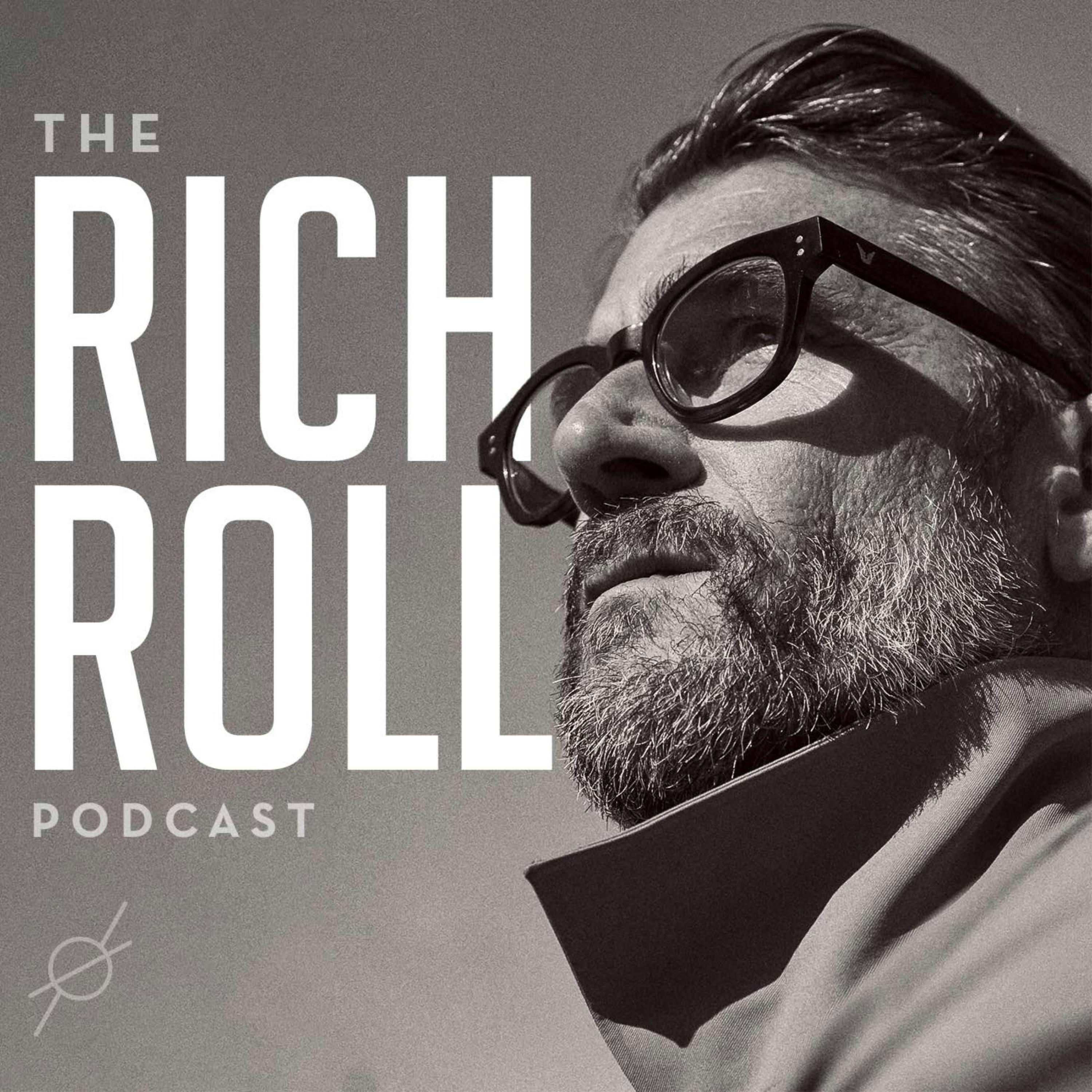
Pod Insights The Rich Roll Podcast Dr. Gabor Maté On How Trauma Fuels Disease About this episode In the most health-obsessed society ever, all is not well. At the root lies a sleeping giant: unhealed trauma.
Here to help us further explore this profound insight is renowned speaker and bestselling author, Dr. Gabor Maté.
Returning for his second appearance on the show (his first being RRP #188) Dr. Maté is an expert in a wide range of topics, best known for his work on the relationship between addiction and childhood development.
If you are interested in truly understanding the nature of addiction, his book In the Realm of Hungry Ghosts is an essential read that has influenced me profoundly.
Dr. Maté’s latest and most ambitious book to date is The Myth of Normal, a groundbreaking extrapolation of his addiction thesis that investigates the true causes of illness, the many ways in which our society breeds disease, and the pathway to health and well-being.
Over the course of this conversation, Dr. Maté brilliantly illuminates what we can do to course correct and heal as individuals, and as a collective society at large.
Watch: YouTube.
Read: Show notes.
I have great reverence for this man, and my hope is that Dr. Maté’s words inspire you to rethink your own behavioral compulsions, redress your own unhealed pain, and in turn treat those who suffer with more compassion and understanding.
Peace + Plants,
Rich
Learn more about your ad choices. Visit podcastchoices.com/adchoices
Transcript 16,088 words · 2 speakers
Speaker names marked ? are inferred from speaking time and the show’s known hosts — they are not voice-verified.
0:00 Rich Roll? Eating well rarely falls apart because of one big failure. It's the daily question that wears you down. Like, what am I actually gonna make tonight? What's in the fridge? And it's exactly why we built the Plant Power Meal Planner. It's a personalized, plant-based meal planning program that matches you with recipes based on your taste, your allergies, your cooking skills, and how much time you actually have. You build, through this program, a balanced, nutrient-dense plan for your entire household in a few minutes. Then it generates a grocery list for you with one click that plugs right into our delivery partners. All the recipes in the program are built by dietitians with culinary training. Plus, you get your own food coach to help you problem-solve along the way.
0:44 Rich Roll? It's kind of an amazing thing. For listeners of the show, all you special people, we're offering an exclusive $20 off an annual subscription right now. To get it, go to meals.richroll.com, take your quick personalization quiz, and enter promo code RICHROLL20 at checkout.
1:13 Rich Roll? The Rich Roll Podcast.
1:18 Gabor Maté? More and more people are getting sick, more addicted, more people are dying of overdoses.
1:23 Rich Roll? My guest today, returning for his second appearance on the show, is Dr. Gabor Mate.
1:28 Gabor Maté? The problem in our society is there's very little that actually promotes healing, and there's very much that undermines it.
1:35 Rich Roll? He's an expert in a wide range of topics, but is most lauded for his work on the relationship between addiction and childhood development.
1:43 Gabor Maté? This society loves you to be addicted, feeling inadequate. This path of illness is not supported by the culture, in fact, is undermined by it.
1:52 Rich Roll? Dr. Mate's latest and most ambitious book to date, The Myth of Normal, investigates the true causes of illness and the pathway to health and well-being.
2:01 Gabor Maté? This addiction that I have is not a disease that I inherited, but it's my attempt to escape from pain. And the more I learn about that pain, the less I'll inflict those imprints on myself and on the people around me.
2:14 Rich Roll? And it's all coming up quick, but first...
2:25 Rich Roll? All right, let's do the show. Round two with Dr. Gabor Maté. It's good to see you. It's been, I thought it was like three or four years, but I think it must have been
2:39 Gabor Maté? It's been double that.
2:40 Rich Roll? More like seven.
2:41 Gabor Maté? It's been double that, I think, yeah.
2:42 Rich Roll? That's showing my age, where everything kind of seems to run together. But I'm delighted to be able to continue the conversation that we started many years ago. Your work has been instrumental in my own life personally and how I think about addiction, trauma. You know, I just, I can't overstate how important I think your work is to the culture at large. And so it's an honor to talk to you today.
3:08 Gabor Maté? Well, that's so good to hear. Thank you.
3:10 Rich Roll? You've written and spoken extensively over the course of your storied career on many things like ADHD and cancer and autoimmune disease, but you're of course best known for your work on this relationship between childhood development and addiction. And what's interesting, and we were chatting a little bit before the podcast, is that this latest book, The Myth of Normal, really expands the aperture of your focus to kind of extrapolate on that basic notion that early childhood trauma underlies the expression of addictive behaviors. And you're now kind of applying it more broadly to posit that this rise in a vast litany of ailments that we're experiencing cannot properly be understood, let alone properly
3:54 Rich Roll? treated or addressed, without fully contemplating, understanding, embracing, and addressing the total and unique lived experience of the individual in the context of these broader social, external environments and our adaptive response to our environments. Is that a fair assessment of your focus?
4:16 Gabor Maté? Yes, essentially, what I'm saying is that all of our afflictions, whether it's addiction, chronic physical illness, what we call mental illness, dysfunctions, they all have a template of childhood wounding.
4:33 Gabor Maté? And they're not separate biological events happening in discrete individuals, but they are representative of a process inside each of us that manifests a relationship to our environment. Most importantly, our early rearing environment, but also the culture that we live in. So to give you one example, it's an obvious example. If you look at the number of kids diagnosed with, say, ADHD, the numbers are going up all the time. That can't be an individual thing. That has to say something about the culture, the context. Or if you look at the rising incidence of autoimmune disease, the rising incidence of addictions, of mental health conditions.
5:16 Gabor Maté? If you look at the fact that, say, black American women, the more experience of racism they have to endure, the greater the risk for asthma. It just tells us that it's not just about individual biology, it's about life in a culture.
5:32 Rich Roll? Yeah, and on that idea of culture, you use this Petri dish example to illustrate that point, which I thought was really powerful, because I'd never really thought of it in that way. Can you explain that?
5:43 Gabor Maté? Sure. So when we are studying microorganisms in a laboratory, we grow them in a broth. We give them a broth to nourish them. You call that a culture, a culture medium. And if the organisms in this culture medium, this culture broth, were dying off in great numbers, or not thriving, or ill, we would call that a toxic culture. I'm saying that when, in a society like ours, more and more people are getting sick, more addicted, more mentally ill, more people are cutting themselves, more people are dying of overdoses, that's also representative of a toxic culture.
6:24 Gabor Maté? And I'm saying that that's what we live in, hence the subtitle of the book, Trauma, Illness, and Healing in a Toxic Culture. This culture is not one that supports healthy human growth.
6:36 Rich Roll? And when you say toxic culture, we should probably define that, because it's a little bit different than what people might suspect. They're thinking of environmental pollutants and the like, and that's certainly a contributor to a lot of this, but you're really talking about what's going on societally and culturally.
6:53 Gabor Maté? Yes. So... That is all true, that it has to do with the physical stuff. There was an article reported just the other day that half of Americans were exposed to unhealthy levels of lead when they were kids. You know, that's toxic.
7:08 Rich Roll? Right.
7:09 Gabor Maté? But you're right, that's not the toxic that I'm talking about. I'm talking about the nature of the culture itself, the very values of the culture, the way we bring up children, the expectations we put on human beings. They're toxic to people's healthy development.
7:25 Rich Roll? Hmm. It seems so obvious, and in reading the book, it's like, of course, this is an issue. And yet, it's so highly unaddressed or ignored. And in reading the book, I couldn't help but draw an analogy to what you've all know Harari is doing in terms of how we think about history, like telescoping out and looking at everything from 10,000 feet, which is not something we do when we think about and talk about health. We narrow down to the cellular level, to the microbe level. And the scientific method dictates that we control for variables and look at things in isolation.
8:04 Rich Roll? And of course, we've made tremendous progress as a society by dint of, you know, the technological advances that we can make by utilizing the scientific method. But it's a method that's myopic to the deep interconnectedness of everything. It doesn't allow us to look at things as holistic systems and the interplay that is leading to so many of these problems. Like, we can't address these diseases and these conditions on their own without looking at what's contributing to them by virtue of external forces.
8:39 Gabor Maté? Well, you know, yes, I agree with your formulation, but I would also argue that there's all kinds of science that shows the interconnections of things. So that to talk about human beings in a context and that health represents life in a context rather than just a biological event. That's science.
9:00 Rich Roll? Mm hmm.
9:01 Gabor Maté? And we have literally tens of thousands of scientific studies to indicate how emotional environments affect people's biology, our immune system and our hormonal apparatus and our nervous systems and our guts and our hearts and so on. And how social conditions, how inequality, how stress, how um genderism or racism actually has physiological impacts. They go underneath the skin, they affect our biology. This is not speculation. My knock on the medical profession is we keep talking about evidence-based practice, but we don't look at a lot of the evidence that's already been published, including in major medical journals.
9:43 Gabor Maté? So I'm not talking about uh insight and uh ideology or spirituality on the one hand and science on the other. I'm talking about science that is actually showing the interconnections.
9:56 Rich Roll? But there's such a wide gap between that understanding and the practice of medicine or how we treat people.
10:05 Gabor Maté? Oh, yeah, there's a huge, what we can call the science and practice gap.
10:11 Rich Roll? Right.
10:11 Gabor Maté? So the problem is not with the science. The problem is that we don't put the science into practice. The average medical student does not get it. For example, I talk about trauma in this book. And trauma has many implications. Trauma has been implicated in autoimmune disease, in cancer, in addictions, in every mental health condition in the book. But the average medical student does not receive a single lecture on trauma, which is unbelievable, but it's true. For the most part, there might be a few exceptions here and there, but generally not. Secondly, doctors are very traumatized people themselves. Medical training is highly traumatic. I've talked to many physicians who talked about the assault on their sensibilities by medical school. Biologically, medical students age faster than other people their age
10:56 Gabor Maté? because of the stress they're under. So you've got this traumatized population treating the larger traumatized population without any awareness of trauma.
11:04 Rich Roll? Hmm.
11:06 Gabor Maté? So there's a huge gap.
11:07 Rich Roll? Right, let's, let's, let's define trauma. You have this idea of the capital T trauma and the lowercase t trauma. Um, and perhaps your definition differs from what people might conventionally think about when they think about trauma.
11:25 Gabor Maté? It's true, the average person, when they think about trauma, they think of horrible events like a war, like extreme abuse, physical, sexual, emotional abuse, catastrophes, people dying and so on, and you know, those are traumatic. But trauma is not the events. Trauma comes from the Greek word for wounding, so trauma is a wound that you sustain, and you can be wounded without catastrophic events. So those traumas, the big noticeable terrible events that happen to you, they're called, we can call big T-trauma. But you can also wound people, not only by hurting them badly, but simply by not meeting their needs.
12:10 Gabor Maté? And in this society, a lot of children grow up with their essential human needs being met. So that's what I call small T-trauma, where people aren't doing bad things to you necessarily, but the good things that should be happening are not happening. So you can hurt people by hitting them, you can also hurt people by not giving them water, so not meeting their needs. In that sense, we have certain emotional needs as human beings, as evolved human beings, that this society not only fails to meet, but actually tramples on very deliberately and very chronically. So a lot of children get traumatized, not just by what happens to them, but why doesn't, but why what doesn't happen to them that should have happened.
12:54 Rich Roll? Right. And in that early developmental stage, we develop our attachment strategies and we create these sort of patterns that recur over the course of our lifetime. I mean, you tell the story in the book about, you know, landing at the airport after coming back from a speaking engagement and acting like a petulant child because your wife blew you off to pick you up at the airport, like you're, despite everything that you know, there's some level of powerlessness that we have in terms of trying to course correct what has been so cemented.
13:26 Gabor Maté? Well, trauma is a wound that if it doesn't heal, it just keeps acting up. So that airport example is me arriving back from a speaking trip at age seventy-two or seventy-three, and my wife is not there to pick me up, and I go into a rage and I emotionally I become very withdrawn, which is a... A mirroring of exactly what happened to me when I was a year old, when my mother gave me to a stranger to save my life and I didn't see her. So my mother wasn't available to me. And when I saw her again after four or five weeks, this is wartime Hungary, I didn't even look at her for several days, which is what an infant does to protect themselves from the pain of being abandoned again.
14:09 Gabor Maté? So that wound on us is healed, will show up again even 70 odd years later, when the woman I'm relying on doesn't show up for me. So that's a traumatic imprint. And what happens is that when trauma acts up, the midfrontal cortex, the part that's rational and can respond in the present moment, goes offline. And these traumatic imprints show up and they govern your behavior. So all of a sudden, just as you say, I start acting like a hurt little child. Healing of trauma is in learning to recognize and cope with these imprints. But the lack of that healing shows up in a society, in every realm,
14:51 Gabor Maté? in medicine, in health, in mental health, in the pop culture, in politics, in economics, everywhere.
15:01 Rich Roll? Right. And in your previous work, you've drawn this connective tissue between trauma and how it can show up as addiction later in life with certain individuals. But create that connectivity between trauma and, for example, you know, chronic ailments that we're seeing on the rise across the world, or at least in the developed world.
15:25 Gabor Maté? Well, so there's a rise in autoimmune disease. Autoimmune disease are conditions where the immune system turns against itself. So, and starts destroying. The immune system, which is meant to protect us, turns against us and starts destroying our bodies. Now, examples are rheumatoid arthritis, scleroderma, lupus, chronic fatigue, multiple sclerosis, Crohn's disease, ulcerative colitis, chronic psoriasis, autoimmune eczema. One could go on. This is rising in this society. And not only is it rising in this society, as the globalized economic system takes over more of the world,
16:10 Gabor Maté? it's rising internationally.
16:13 Gabor Maté? And it's rising particularly amongst women. Now, when I looked at the people who develop autoimmune disease, it's always related to stress. And particularly, people's coping styles. So, people with autoimmune disease typically repress their emotions. They don't know how to be in contact with their healthy anger. They tend to suppress their real selves to fit in with society and with their families. And essentially, when people don't experience their healthy anger, their anger doesn't go away, it gets suppressed, turns against themselves.
16:58 Gabor Maté? Now, our emotional apparatus is very much connected to our immune system. In fact, they're part and parcel of the same system. When your emotions turns against us, our immune system can turn against us as well. In this society, because so many people are not allowed to be themselves, they have to kind of suppress who they are in order to survive and fit in. We're getting a more and more autoimmune disease. Is my view. Lots of evidence for that.
17:24 Rich Roll? Talk a little bit about this idea of disease as teacher.
17:29 Gabor Maté? Yeah. So, I've worked in all areas of medicine, from delivering babies to palliative care, looking after terminally ill people. So I've seen a lot of disease as a physician. What's surprising to me is that some people, who should resent their illness, we all would naturally, nobody wants to get sick, they found that the teacher actually be, sorry, that the disease is actually a teacher to them. Because the disease pointed out to them how they were not living a life that was authentic. How they were living a life of self-suppression. An example is a very well-known one, Anita Morjani, who wrote a book called Dying to be Me. She was literally on the verge of death.
18:13 Gabor Maté? And she was terminally ill, she wasn't gonna live. And then she had this near-death experience. And she finds out that all her life, she had not been herself. That's why the title, Dying to be Me. At the death's door, she realizes that she needs to be authentically herself. And she actually recovers. And so that the disease taught her to be herself. I give the example of the great dramatist and writer, V., formerly known as Eve Ensler, who has stage four uterine cancer. She found her disease taught her essentially to be herself. I've met people, even in terminal illness, who are not gonna recover, who did not recover, who said,
18:59 Gabor Maté? "What I learned was so precious, I'm grateful for my disease." I've met people with addictions, who said, "I wouldn't wish this on anybody, but my God, did it teach me."
19:10 Rich Roll? Yeah, that idea, you know, the grateful alcoholic notion. It's tricky, though. I mean, this is a sensitive thing because to tell somebody or to announce that your disease is your teacher when someone is in grave suffering, it's sort of like, how dare you, you know?
19:28 Gabor Maté? I don't tell anybody that. I don't tell anybody that. I just give examples of people who have found it that way. But it's not for me to tell somebody else with their illness, "You should be happy. This is a teacher for you." I wouldn't want anybody to tell me that, for God's sakes. I'd be very angry if they did. So it's not that we should tell people they should feel. But it's to point out the possibilities inherent in terms of what an illness can offer people. If people choose to go that way, that's their call. If they don't choose to go that way, I totally understand it.
20:04 Rich Roll? Yeah, baked into this is this idea that, you know, we sort of think these things happen by chance, randomly, happenstance. But when you, like I said earlier, telescope out and you really closely analyze the environment, the stress, the anxiety, the gestalt of what our kind of modern existence looks like on a day-to-day basis, there's all these contributing lifestyle factors, the food that we're eating, the lack of sleep, the, you know, the whatever light is coming out of this device that I'm staring into. All of these things are contributing to moving us out of balance with the natural rhythms of how we've evolved to live in the world. And so...
20:47 Gabor Maté? All that is true. And then there's the larger issues of, I mean, you look at the scientific literature on stress, and by stress I mean emotional factors that affect your physiology, your immune system and your hormones and everything. What are they? The major factors for stress are uncertainty, loss of control, lack of information, and conflict. Now, in this society, how many people are living with loss of control, uncertainty, lack of information, insecurity, and conflict? This system is almost designed to make people feel insecure.
21:32 Gabor Maté? And, for example, at the time of the economic crisis, they looked at young people in Greece as compared with Sweden, which wasn't having an economic crisis. The stress hormone levels of the young Greeks were really affected by what's going on economically. And that promotes inflammation. And the researchers found, actually said that, this is going to affect the future health of these young Greeks.
22:01 Gabor Maté? This is a social issue. It wasn't an individual biological problem restricted to a single human being. It was a social issue inflicted by social, political, and economic conditions. And that happens on a massive scale under globalized capitalism to a lot of people.
22:20 Rich Roll? Right. And on top of that, there's this idea of the loss of connection, interconnectivity, between human beings. You and I both know Johann Hari, and he has written books about this and speaks about this. But we're in this era in which we feel hyperconnected by virtue of our devices, and yet, most of us are suffering from some level of loneliness that is endemic to this period of time.
22:47 Gabor Maté? Well, I could speak a whole hour about the impact of the devices, about how the devices themselves are designed to keep people addicted, including very young kids. That's a separate issue. The issue of loneliness. So if you look at the number of people who are described as being lonely, in the United States, that's doubled within 20 years. And loneliness is as major a factor for physical illness as smoking 15 cigarettes a day, or as high blood pressure or obesity. And loneliness has been spreading in the Western world again, under the impact of a globalized economic system that pits people against one another, that says that competition
23:28 Gabor Maté? and aggression and mistrust of others is the way to survive, which has, in many, many ways, documented ways, evaded communities and extended families, and has cut down on people's sense of community. Loneliness is going up, and that's posing a major risk factor. People who are lonely get sicker faster, and they die sooner of their diseases. So that's a major problem in Western societies.
23:53 Rich Roll? What catalyzed your interest in writing this book? I mean, obviously, it does feel to me to be a natural progression of the work that you've already done. But why shift your focus away from what was keenly honed on addiction and broaden it?
24:11 Gabor Maté? Well, it was a natural progression. For example, I'm a Canadian, I live in Canada. So when I worked with a highly addicted population in Vancouver, Don'tan Eastside, which you visited the first time that we met. This is North America's most concentrated area of drug use. We have more people using, injecting, inhaling substances than anywhere else in North America. And 30% of my clients down there were indigenous Canadians. Indigenous Canadians make up 5% of the Canadian population, 30% of the addicted population, 30% of the jail population. Indigenous women make up 50% of the Canadian jail population amongst women.
24:54 Gabor Maté? Now, clearly, there's a link between socioeconomic and racial status and illness. You can't help but notice that. So then you have to start asking, what are the factors on a social level that promote addiction, that promote mental illness, that promote suicide, that promote physical illness? Now, First Nations Canadian, an indigenous Canadian woman has six times the rate of rheumatoid arthritis than anybody else.
25:24 Rich Roll? That much higher.
25:24 Gabor Maté? Six times. Women of color in the US has much higher rates of autoimmune disease than non-people who are considered not people of color. Now, these problems are not genetic. The indigenous population in Canada had no autoimmune disease before colonization at all. It's social, economic, racial, and historical. So that you can't help but notice these things. And by the way, I'm far from the first one. In the 19th century, there was a German physician renowned in the history of medicine, Rudolf Virchow, his name was.
26:04 Gabor Maté? And he said that politics is just the extension of medicine. That if we're going to deal with people's health, we have to deal with their politics. So this awareness is not new. But it's like that science on the mind-body unity that I was referring to, where we have the science, but the profession doesn't take it into account.
26:26 Rich Roll? Right.
26:26 Gabor Maté? And it's the same with this link between the individual and society. Again, the medical profession does not take it into account, despite the abundant evidence.
26:37 Rich Roll? There does seem to be a growing awareness around... Generational trauma and the, you know, the kind of tangential implications of that, as well as the epigenetic, which is sort of related, right? The epigenetic nature of this, which is to say that we have the genetic code and the epigenetics are what kind of toggle on and off these adaptive strategies and behaviors.
27:02 Gabor Maté? So epi means on top of, so epigenetics means on top of genetics, really. And what you're referring to is the fact that genes are turned on and off by the environment. They're not independent actors. So you can have people with the same genes, but different environments, they'll have very different outcomes. And so that's epigenetics. And to some extent, those epigenetics can be passed on to future generations. We know that from animal studies. So that when you look at one generation, you can't understand it without looking at the previous generation as well. So that the connection I'm talking about is both lateral, in the sense that it spreads
27:43 Gabor Maté? throughout the whole culture, but it's also vertical in that it spreads across the generations.
27:48 Rich Roll? Right. So if you were to take a Native American population in North America and, and just track the incidence of alcoholism, which is known to be higher in those communities, there's a generational trauma piece to that and an epigenetic piece to that.
28:04 Gabor Maté? Well, the generational trauma is genocide and oppression and loss of lands and livelihood and the deprivation of culture, the deliberate destruction of spiritual ways. All this happened in Canada and in the US. In Canada, Native children were abducted from their homes for a hundred years and forced to go into these residential schools where they couldn't see their parents, where they were forbidden to see their parents, and where they were sexually, physically abused, where their culture was denigrated, where they just found thousands of bodies of these children in Canada who died in these residential schools. Now, Those that survived the residential schools and went home,
28:48 Gabor Maté? their whole childhood had been robbed from them. Their parenting was taken away, their nurturing connections were destroyed. They didn't know how to parent the next generation. And this went on for 100 years. So in the native communities in Canada, we have much more alcoholism, much more child abuse. This is contrary how they used to raise children. These indigenous people raise children in much more healthier ways than we do.
29:14 Rich Roll? Right, right.
29:16 Gabor Maté? I mean, we need to learn for how they raised children. And I could talk about that. But because how they raised children was how we evolved as human beings. We're meant to raise children by evolution. So we destroyed that for them. And now we wonder, why do they have more alcoholism? Why do they have more addiction? Why do they have more illness? Why do they have more violence? It's because we've robbed them of their nature. And so when I talk about a toxic society, I'm talking about a society in which what is normal is completely unnatural and unhealthy.
29:53 Rich Roll? Yeah. But this, of course, is rampant across all sectors of the developed world. I wrote down some of the statistics that you cite in the book. I mean, 60% of US adults have a chronic disorder. 40% have more than one such disorder. 70% of US adults are on at least one prescription drug. 50% take two. 20% of Canadians have high blood pressure. 30% of Europeans have hypertension. I mean, it just goes on and on and on, right? So nobody's immune from this.
30:29 Gabor Maté? No, no.
30:30 Rich Roll? And something is terribly awry. Like, we are completely out of balance.
30:35 Gabor Maté? We're out of balance. Here's the thing. A balance, now that imbalance affects some people more than others, but it does affect everybody. There's no stratum, there's no stratum of society that escapes the stresses. And where a balance is that we have certain needs as human beings. See, children have four basic needs. They have a need to be strongly attached to adults who take care of them. And who are with them all the time, by the way, because as we evolved as human beings over millions of years, and for most of our species' existence as Homo sapiens, we lived in small communities where the parents were always around the kids.
31:20 Gabor Maté? So, secure attachments.
31:22 Rich Roll? And extended family.
31:23 Gabor Maté? Extended family, or community, you know. And then children have a need not to have to work to make their relationship with the parents work. They have to be able to rest in a security that there's nothing they can do to destroy their relationship, and there's nothing they need to do to make it work. In our society, we make our kids work to be accepted. You have to be good, you have to be smart, you have to be good-looking, or you have to be, you have to behave acceptably. Otherwise, you're gonna get a timeout, and they're gonna say to you, "No, you can't be with us." They're gonna deprive you of our contact for a little while. Jordan Peterson, a Canadian psychologist, says that an angry child should be made to sit by themselves
32:07 Gabor Maté? until they come back to normal. In other words, it's not normal for a kid to be angry. Well, let me tell you, it's very normal for a two-year-old to be angry, because they get frustrated. Now, if we give the message to a two-year-old, "You're not acceptable to me when you're angry." Basically, you're saying to them, "Don't be yourself. Suppress who you are in order to be accepted."
32:24 Rich Roll? Love is conditional.
32:26 Gabor Maté? Love is conditional, that's the message you're giving. A lot of kids in this society are getting the message that love is conditional. We tell parents not to pick up their sleeping, not to pick up their crying babies. Or you tell a mother-
32:38 Rich Roll? They need to learn how to be okay being, without that nurturing that's so crucial on that-
32:44 Gabor Maté? No, you tell a mother gorilla not to pick up their baby when it's crying. Or tell a mother cat to ignore their little kittens meowing, you know. So, that, children have the need to be able to experience all their emotions fully.
33:00 Gabor Maté? And that be accepted by the parents. Well, we tell parents, no, your children's anger is not acceptable. So children get the message that they're not acceptable. You have to work to be acceptable. You have to suppress yourself to be acceptable. And children need free play out there in nature. Free play, not with gadgets, not with cell phones, not with games on the internet, but free play in nature. This is our essential needs of human beings.
33:30 Rich Roll? That goes into the four, there are really six, this like six As that you talk about in the book, right?
33:36 Gabor Maté? Well, the healing.
33:37 Rich Roll? The agency would be like the ability to like roam and be outdoors. And attachment being important as well.
33:44 Gabor Maté? Well, attachment is, well.
33:47 Rich Roll? Authenticity, agency.
33:50 Gabor Maté? Anger.
33:51 Rich Roll? Anger. Acceptance.
33:54 Gabor Maté? Autonomy, you know? These are the healing pathways. What I'm saying is for people to heal, they have to find their own agency. They have to, whatever happens to them, they need to participate in the decisions that affect their lives, particularly their health decisions. So for that, and so the, it's very interesting. There's a couple of people that I know who have looked at what's called spontaneous remission. Spontaneous remission is supposedly when somebody spontaneously gets better after having been given a terminal diagnosis. And there's a psychiatrist at Harvard, Dr. Jeff Rediger, who, by the way, you might want to talk to sometime.
34:33 Gabor Maté? He's written a book called Cured, The Science of Spontaneous Healing. He studied people, just as I have, who got better despite giving terminal diagnosis after the failure of medical treatment, or even if they refused medical treatment. Kelly Turner, Dr. Kelly Turner, is an oncological psychologist who worked with cancer patients.
34:59 Gabor Maté? And she also did a study of people who got spontaneously better. Spontaneously. But when I talk to these people, when Kelly Turner or Jeff Rediger talks to these people, there's nothing spontaneous about their healing. They all did something. And the biggest thing they did is they developed a different relationship to themselves. They became authentically themselves. They stopped pleasing people. They actually consulted what they needed and wanted within themselves. Now, I'm not saying that this is a magic cure-all. But I'm saying that the people that do get better on their own, with or without medical treatment, in the face of terminal diagnosis, they're the ones who took agency over their lives. And in our medical system, people are made to be very passive recipients.
35:44 Gabor Maté? You're the experts. Do to me what you need to do. So agency is very, very important. Healthy anger is very important. Healthy anger is, well, I begin chapter two, I think, with the case of a woman who's given a diagnosis of two years to live with metastatic breast cancer. And the doctor's telling her that the statistics means that she's got two years to live. Now, she's got two young kids. And she says to the doctor, "Fuck your statistics." She says, "I was very rude." I said, "What do you mean rude?" She says, "I said to him, 'Fuck your statistics.'" I said to her, "Thanks, that's great. That probably helped you survive." She lived another 20 years.
36:26 Gabor Maté? Because she got, partly because she stopped being a people pleaser. And she got in touch with the healthy anger. She did die of her cancer, but only after she raised her kids to be young, successful young men.
36:36 Rich Roll? Yeah, she said, like, "I have to, I need to raise these boys. Like, I can't die yet. I have work to do."
36:42 Gabor Maté? Exactly.
36:42 Rich Roll? And, and one of them, and she did. She, 20 years, and one goes on to Princeton or something like that. So she fulfilled that.
36:49 Gabor Maté? And in the book, I give examples, and never mind terminal illness. People with multiple sclerosis, who've been told they have to be on medication for their rest of their lives, they're okay without medication now, and they have no symptoms. People with rheumatoid arthritis, the same thing. Why? Because they got in touch with their real selves. They stopped suppressing themselves. They stopped trying to please everybody else. They said, "Who am I? What do I need? What are my interests? What do I need to say no to? What do I need to say yes to?" I'm telling you, a lot of these conditions who are, which are considered to be chronic and incurable.
37:27 Gabor Maté? They're not necessarily, you know. And there's a case I give in the book of a woman with scleroderma. Scleroderma is autoimmune disease. Scleriosis means hardening, derma means skin. Scleroderma means hardened skin. In scleroderma, the connective tissues of your body get stiff. And this woman, aged 29, she said, "I was being mummified alive." She became like a rigid mummy. She could barely move. She could not get out of bed her by herself. The medications failed. They didn't work for her. All she wanted to do was die. Now, she's walking around, hiking, writing her autobiography,
38:09 Gabor Maté? winning poetry contests because she turned her relationship, because she dealt with her childhood trauma, which none of the doctors asked her about, of course. And she became authentically herself. And these are not fairy tales. I talked to the doctor, I talked to her physician, who verified this story.
38:29 Rich Roll? Yeah, me oak.
38:31 Gabor Maté? This is me oak. And she happened to do it through, her healing happened through an experience with a psychedelic, which allowed her to recognize her true self. And a lot of other work besides. But what's the message here? The message here is that illness is a manifestation of a person's trauma and a person's life. And if you turn that life around, you can very often have a positive impact on the illness as well.
39:03 Rich Roll? Right.
39:11 Rich Roll? So the first step is recognizing that although we think of trauma in a certain way, that on some level, we all have experienced a version of trauma that has cemented certain behavior patterns, adaptive strategies, defense mechanisms that dictate how we perceive the world and behave in the world. And many of us, if not the majority of us, live out the rest of our lives without really ever addressing that or looking inward to unpack why that is and try to find a healthier, adaptive strategy, right? And short of a life-threatening crisis that compels us to do that kind of interior work, of course, that choice is available to us, right? But
39:55 Rich Roll? it's much more difficult when you're not in pain. It's the same thing in addiction, of course. So how does one, like if somebody's listening to this and they're like, wow, I never thought I could take the reins of control over these sorts of things. How would I begin to do that?
40:12 Gabor Maté? Well, first of all, thank you. You summarized the thesis of my book very succinctly. We don't have to wait for illness for us to deal with our stuff. I quote this Greek playwright, Aeschylus, who said that the way that gods created us, we human beings, we have to suffer, suffer into the truth. And that's often the way it works. I mean, I tell you, I went through my own stuff. I had my mental health conditions, my ADHD, my depression, my relationship problems, my stressed marriage, the way that I transmitted my own trauma to my kids. And unfortunately, most of us, until things go sideways, we're not much impelled to do anything about it. We just kind of take life as it goes and I'm okay. Well, but we don't
40:56 Gabor Maté? have to wait for serious illness, like multiple sclerosis or rheumatoid arthritis, or a serious mental health crisis, or severe addiction to wake us up. So we can wake up and recognize that, yeah, you know, stuff happened to me and that's affecting how I conduct my relationship, how I'm in my marriage, how I'm with my friends, how I show up for my work, whether I'm addicted to work or whether I'm not, whether I pursue some addiction or not, whether it's sex, pornography, or gambling, or substances, or shopping, or eating. These all represent some kind of traumatic imprint. And I can deal with it. I can learn to deal with it now. So it doesn't have to get more severe.
41:38 Rich Roll? Yeah.
41:39 Gabor Maté? So we don't have to wait for that disease, the teacher, to show up.
41:42 Rich Roll? Yeah, I think an honest and thorough inventory, as they say,
41:46 Gabor Maté? Yeah.
41:47 Rich Roll? is more than revealing.
41:48 Gabor Maté? Yeah.
41:49 Rich Roll? If you wanna kind of do a little self-analysis on what makes you tick. And, you know, I just know that it's common to witness people who say, "I need to lose weight. I'm gonna try this diet." Or, "I'm gonna, you know, I'm gonna adopt a meditation practice." Or, "I'm gonna start an exercise routine." Or, "I'm gonna go on a 30-day digital detox." And more often than not, you can be successful in those temporary pursuits, but you quickly rubber-band and default to your core setting. And that's discouraging for most people, but I think it's also illustrative of just how deeply embedded, how ingrained these patterns are, that you reflexively go back to the way you always did it after this little experiment, and should give you a sense of how powerful this patterning is
42:34 Rich Roll? and what you're up against. Because it's a beast, right? And as somebody who's been, you know, who embarked upon this in 1998 and has, you know, been in recovery for a long time, it's, you're continually peeling these layers. And just when you think you have a handle on something, the degree of difficulty continues to increase. And this will be the case till I'm in a coffin. Like, the more I think I have a handle on it, the more baffled and amazed I am at how much work remains and how much I still, you know, my wife is a great mirror, as I'm sure yours is. It's saying like, "You're behaving like your mother again." Like, you're literally developing these, everything that you dislike about how she behaves, like, I'm seeing it right now. And I was like, "You gotta be kidding me." Like, I've worked so hard to transcend this,
43:19 Rich Roll? and yet it continues to show up.
43:21 Gabor Maté? Well, yeah, so a number of things. The Buddha talked about our habit energies. And they're deeply ingrained. So it's a question of do you just want to change behaviors? Or do you want to deal with the underlying imprint that drives those behaviors? So in the first case, we can change the behaviors for a while. But if we don't deal with the underlying imprints, those behaviors are going to reassert themselves.
43:44 Rich Roll? Right.
43:44 Gabor Maté? Number one. Number two, it's not as discouraging as all that. I mean, it's true, these patterns can still show up in my life. I'm seventy eight now, they can still show up. But believe me, they don't show up with the same force and the same dictatorial authority as they showed up even three or four years ago. So there's such a thing as progress. And as far as the work, you're right, it's lifelong work. I don't know if I told you, but I've written my epitaph.
44:11 Rich Roll? No, I don't know.
44:12 Gabor Maté? No, no, on my gravestone, it's going to be engraved, it was a lot more work than I had anticipated.
44:19 Gabor Maté? So, but you know what? What's the alternative? The alternative is to vegetate and rot and to keep stuck in old patterns. The problem in our society is, there's very little that actually promotes healing and there's very much that undermines it. So that this society loves you to be addicted. It loves you to be feeling inadequate so that you're trying to meet other people's expectations. It loves you to try to fit in instead of being authentically yourself. Jamie Lee Curtis said to me once that in this society, there's a genocide of authenticity. This culture kills authenticity.
45:02 Gabor Maté? So that this path towards wholeness, in the last chapter of the book is called Pathways to Wholeness. This path towards wholeness is not supported by the culture, in fact, is undermined by it. So we have to kind of take it on for ourselves, not just necessarily as individuals, but in the face of cultural programming and propaganda.
45:22 Rich Roll? Yeah, in that final chapter about wholeness, there's an extended discussion about building in, into our institutions, a better understanding of trauma, like trauma-based medicine, and how we understand trauma. Even in the legal system, because yes, culture loves to addict us, but then they also love to tell us that we are afflicted and broken, and we must be incarcerated and punished, as opposed to a holistic understanding of the trauma that led to the behavior, and figuring out a way to rehabilitate that person by confronting the underlying condition that's driving the behavior.
46:03 Gabor Maté? Yeah, so in that last chapter, I do talk about the need for a trauma-informed medical system, which you don't have, the need for a trauma-informed legal system, which we don't have. The legal system. If a patient of mine, in the downtown East Side, was caught selling an ounce of cocaine, he'd go to jail. But if you're a corporation that deliberately sells toxic substances that kill hundreds of thousands, you're a successful executive. If you're a pharmaceutical company executive, whose products knowingly were addictive, and have killed hundreds of thousands of people, you get rewarded with high profits and dividends.
46:45 Gabor Maté? If you sell an ounce of heroin, you're in jail, maybe for the rest of your life, in this country. Now, if the legal system understood that most of the people in jails are actually traumatized people, that the violence and their drug use and so on came out of trauma, then we would really create a legal system that rehabilitates people, that deals with the trauma, that helps them redeem themselves, and helps them overcome their patterns. That could be done. We know how to do it.
47:18 Rich Roll? Is there a country that is effectively doing that? Is it Norway?
47:22 Gabor Maté? Oh, well, you know, so there are countries that do it a lot better than North America does, or most of the world, actually. So, in Portugal, as you and I know, there's no punishment anymore for possessing drugs for personal use. As a result, there's less use and more people getting treatment. In some of the Scandinavian countries, they have jails that are really designed to rehabilitate people, that treat people humanly. It's not a question of excusing what they did, but it's a question of how to move... Forward so that they don't do it again. And that's called rehabilitation. So their jails are much less punitive, much more humane.
47:59 Rich Roll? Right.
48:01 Gabor Maté? Therefore, much more successful.
48:02 Rich Roll? On this idea of trauma-based medicine, ideally, this would look like, like if somebody comes into a clinician's office and says, I have like this gut problem, or I have some kind of skin condition, or autoimmune disorder.
48:16 Gabor Maté? Yeah.
48:17 Rich Roll? The practitioner would say, tell me about your life. Like, what are you going through? What is your day like? What are you eating? How are you sleeping?
48:24 Gabor Maté? Well, in all fairness.
48:25 Rich Roll? What is your childhood?
48:26 Gabor Maté? Well, in all fairness, fairness, I would not begin with that. I would say, tell me about your problem, and let's see how we can help you in the short term, so that you don't suffer. And when I've stabilized, when we've stabilized your condition, can we talk about the conditions in your life that may have contributed to the onset of your illness? Now, can we talk about your childhood? Can we talk about your relationship? Can we talk about your stress levels? Can we talk about how you feel about yourself? Can we talk about what your marriage is like? We know, for example, that stressful marriages affect people's immune systems. So, these questions are very pertinent. I wouldn't, that would be the first thing that I would, if you come into me with an inflamed skin.
49:03 Rich Roll? Right, if it's, if it, right, if it's in a heightened situation.
49:06 Gabor Maté? Yeah, if you come to me with a skin inflammation, you wouldn't thank me if I started asking about your childhood.
49:12 Rich Roll? Deal with the acute nature.
49:14 Gabor Maté? But if I said, let's deal with the acute problem, and then, let's talk about some of the conditions that may have stressed you, so that your skin got inflamed, or that your guts got inflamed, or your joints got inflamed. Now, that would be a healthy conversation. Most physicians don't even know how to ask those questions.
49:31 Rich Roll? Are you sanguine about this changing?
49:36 Gabor Maté? Very, very, very.
49:37 Rich Roll? You close the book with, you know, you strike an optimistic tone, but almost as if you're backed into a corner to declare optimism, because we have to.
49:49 Gabor Maté? No, I believe in human beings and I believe that people are capable of transformation, both on the personal and on the social level. I genuinely believe that. I don't have a short-term optimism. I think it's gonna take a long time. It's gonna take a lot of work. You know, yesterday I was speaking at a conference in San Diego on psychedelics and healing, and there was a physician there, an internal medicine specialist from California, and she said, "I so agree with you. Our profession is so backward. It's so, you know, we're so traumatized as physicians. Our knowledge is so limited, and we so separate things that are actually connected in real life. How do we move forward?" Well, there's more and more physicians asking those questions. There's more and more physicians
50:34 Gabor Maté? being aware. The institutions of medicine have a long way to go.
50:40 Rich Roll? Yeah.
50:40 Gabor Maté? And that's gonna take a long time.
50:43 Rich Roll? When we talk about trauma, one thing that concerns me and I'm interested in your take on this is the idea that it can be fueling this sense of victimhood that leads to helplessness. Because right now, we're kind of celebrating victimhood, like it's almost as if there's a contest, who's the biggest victim, and people are crafting identities around that. And I think the healthy aspect of that is that people are talking about their trauma and confronting it, so it's become part of the parlance of our mainstream conversation.
51:17 Gabor Maté? Yes.
51:18 Rich Roll? But the unhealthy part of that is the self-identification with the victim aspect of it that breeds helplessness, but is also something that gets validated, like in social media, for example. So how do you parse that?
51:33 Gabor Maté? Well, as you say, it's a fine line, because a lot of people are traumatized in this society, and the more we recognize that, the better. And I'm very glad when a celebrity comes out and says, "I was traumatized. I was sexually abused. I was hurt, and that really affected my life. And it fueled my addiction, or it fueled my illness, or it fueled my depression." That's important.
51:58 Gabor Maté? But also, as you say, and in the book we talk about this, is that that doesn't mean we should identify as victim. So recognizing what happened doesn't necessarily create a victim identity. The victim identity says, "This happened to me and I'm helpless in the face of it." Well, that goes against my concept of agency. So in order to be able to exercise agency, you gotta let go of the victimhood. "Yes, I was a traumatized Jewish infant under the Nazis. That's my reality. There's nothing I can do that that's what happened. But I don't have to live the rest of my life by what I made that mean at the time." And so that's the whole thing of healing, is that you recognize what happened, you fearlessly
52:42 Gabor Maté? look at it, you don't deny it anymore, but at the same time, you work not to let that define who you are, how you move forward, how you see the world. Because trauma, again, is not what happened to you, it's what happened inside you as a result of what happened to you. And that's the good news. Because if trauma was what happened to you, that somebody sexually abused you, or that your parents died in a war, if that was the trauma, there's nothing you can do to change that. That happened, it was never not gonna have happened. But if the trauma's the wound that you incurred inwardly, you can heal that wound at any time.
53:21 Gabor Maté? So actually, recognizing what trauma is, as an internal psychological wound, with manifestations in your body, actually allows you to heal it.
53:32 Rich Roll? First, you have to recognize that there is a wound. I mean, one of the things that you did with me that was so powerful when we first sat down, was to kind of walk me through my history. Because I, like I think a lot of people, am very, you know, resistant to, you know, point a finger at either of my parents. And you talk a lot about this distinction between responsibility and blame. And so I think... You know, my reluctance to, you know, think about culpability in my child rearing has held me in a place where I wasn't able to really honestly inventory what occurred
54:13 Rich Roll? and link it to how I, you know, began to behave as I, as I, as I grew older. So unpacking that and, and creating a, you know, sort of a safe environment to speak about that, I think is really instructive in helping people, you know, understand the relationship between their development and where they're, where they are now in life and how those things are inextricably connected.
54:38 Gabor Maté? Yes. So in this book, we take a fair bit of trouble to point out that blaming anybody is inappropriate, unscientific and cruel, actually, and not helpful. At the same time, we show people that the assumptions they made about their lives were very often based on suppressing their real emotions.
55:00 Gabor Maté? So I've had so many conversations with people that I had a perfectly happy childhood and then I issue what I call the happy childhood challenge, which takes, takes me over three minutes.
55:11 Rich Roll? Yeah, you're very, you could get right to it pretty quickly.
55:14 Gabor Maté? Yeah, well, it's not that difficult. Because for example, if I was talking to you, knowing you've had four children, if I just ask, what would it be like for one of your children to experience what you experienced? What would you say right away?
55:29 Rich Roll? Yeah, I mean, it's, it would be very painful.
55:32 Gabor Maté? Yeah.
55:33 Rich Roll? And, and I think, sorry to interrupt, but just to interject one, one point on that, I think that I find myself parenting in opposition to the way I was raised.
55:43 Gabor Maté? Yeah.
55:44 Rich Roll? And perhaps to a fault, right? This pendulum swings too far in the other direction.
55:47 Gabor Maté? It's possible.
55:48 Rich Roll? And even despite that, under moments of duress or stress, I will repeat a pattern that mimics exactly what my parents did.
55:58 Gabor Maté? Yeah, yeah, those are those imprints that you haven't quite worked through yet.
56:03 Rich Roll? Right.
56:03 Gabor Maté? Believe me, if I could do my parenting over again.
56:07 Rich Roll? Wouldn't we all?
56:08 Gabor Maté? We all would, you know, but that's the whole point. On the other hand, I can tell you that I used to be so worried about my children about because of the environment that they grew up in as a result of my wife's and I unresolved traumas. But you know what? They're doing great and they've dealt with it. So we also mustn't...
56:30 Rich Roll? Humans are also very resilient.
56:31 Gabor Maté? Yeah, and you know, and you mustn't project our anxieties and our guilt onto our kids either, you know, that doesn't help them anyway at all.
56:39 Rich Roll? That's one thing, in moments of weakness, I've been known to do that.
56:44 Gabor Maté? Yeah.
56:45 Rich Roll? And again, it's my wife who's like, "You're doing that thing."
56:49 Gabor Maté? Yeah. Well, thank God for our partners. I think I say somewhere in the book that I made my own lie detector.
56:58 Rich Roll? Right, yeah.
56:59 Gabor Maté? Do I say that in the book?
57:00 Rich Roll? Yeah, I think it was after, you know, you were grumpy and, you know, storming around the house for a couple of days after your wife didn't pick you up until finally she told you, one day, she told you to just get over it and snap out of it.
57:13 Gabor Maté? Yeah, yeah. Which years ago would have taken me much, many years ago would have taken me much longer to snap out of it. The fact that I could snap out of it after one day, that's a sign of progress. You know what? Now she won't put up with it for five minutes. Because she knows I can do better.
57:30 Rich Roll? Yeah. And, you know, we'd be remiss in not mentioning that you wrote this book with your son.
57:35 Gabor Maté? Yeah.
57:36 Rich Roll? What an incredible, beautiful experience to have. Or maybe it was terrible, I don't know. What was the collaboration like?
57:45 Gabor Maté? Well, it had its terrible moments. My son Daniel and I, he's my eldest child, we had a kind of fraught relationship. But you know what? This book has been a beautiful process. And mostly the problem came from my anxiety. Look, I was really anxious writing this book at times because I thought, this time, I've been enough more than I can show.
58:07 Rich Roll? Yeah, you're really going out there.
58:08 Gabor Maté? Yeah, this time I'm going to expose my incompetence and ignorance to the, for the whole world to see. And so in that state of anxiety, because this book was so important to me, because it's everything I always wanted to say. So... Because of that anxiety, I laid sort of my anxiety onto my son, which is the last thing he needs is to get his father's anxiety. He lived without all his childhood. So you can see we got triggered at times. But we worked it out beautifully. And at the end, it was such a friendly and fruitful, productive collaboration. And I'm just so grateful that it went that way.
58:45 Rich Roll? Yeah, well, it's a remarkable achievement. I really do think that this is a, you know, a quantum leap in your thinking and in your writing. And I have no doubt it's going to impact a lot of people. Because it really is, it speaks directly to the heart of what ails us in the broadest sense, you know, and casts, you know, a roadmap for a better future. I mean, we're not unaware of all of these problems. We all know what's going on. To better understand it and figure out how to redress it for ourselves and future generations is, I can think of no, you know, greater expenditure of your time and energy.
59:24 Gabor Maté? Well, thank you so much for saying so. If I may come back to an analogy that we introduce in the very introduction to the book. The late, great writer David Foster Wallace told this anecdote about, at a commencement address, he gave at a university. And of course, he succumbed, didn't he? He committed suicide in the end. But he gave this analogy of two young fish swimming along, and they meet an older fish. And the older fish says to them, "Hey, boys, how's the water?" And then two fish swim along for a while, and one of them says to their, "What the heck is water?" And point being, as Foster Wallace points out, that when something is so close to us,
1:00:09 Gabor Maté? we don't even recognize it. And not recognizing and not dealing with what's going on is, can have fatal consequences. This is what he said. And so in our society, this is the water that we swim in. So we take it to be normal. And we don't recognize how unhealthy, unnatural it actually is. And that has fatal consequences for millions of people. And...
1:00:35 Gabor Maté? For people's well-being and their emotional balance. So I just think it's essential to recognize, not just, as we said right in the beginning, not just the individual problems, but to recognize that these individual problems are manifestations of a vast cultural edifice that we're all a part of and need to address.
1:00:57 Rich Roll? Yeah, later in the book, you call it the willingness to be disillusioned.
1:01:03 Gabor Maté? Yeah, yeah, when people talk about, well, I give three examples. I grew up in communist Hungary, and I was a good little believer, snapping to attention when they mentioned party and leader and plotting, you know, and in unison with my classmates. And then came the Hungarian Revolution of 1956, which was brutally put down by the Russians, by the Soviet Army, the same Soviet Army that saved my life as an infant. So I got disillusioned, I lost my illusions. Then I came to the West, Canada, believing in the capitalist system and what they call democracy, which I don't think is that much of a democracy, by the way, it's more like
1:01:45 Gabor Maté? a corporatocracy, but believing that this is the answer. Then the Vietnam War happens, and I see the televised slaughter of millions of Vietnamese peasants. So I get disillusioned with that. And then, as a Jew, whose family suffered so much in the Holocaust, I get all excited by the idea of the Jewish state. And this is the answer. And then I realize, yeah, we established a Jewish state, but at whose expense? At the expense of the local population, who, on whom was imposed great killing and great suffering and great dispossession, which is still going on.
1:02:29 Gabor Maté? I get disillusioned one more time. When people use the word disillusionment, they always talk about it as a sense of loss or betrayal or disappointment. But what I say to people is, would you rather be illusioned or disillusioned? Would you rather believe what is not true? Or would you rather see reality? So I think it's essential that we be disillusioned, that we lose our illusions about the nature of the world that we live in. Because if we don't do that, we can't address the problems.
1:03:00 Rich Roll? Yeah, so in the context of this book, it's shattering the illusion that the conveniences of modern life are making our lives better and more fulfilled, when in truth, they are putting distance between ourselves and our true nature and making us progressively more sick.
1:03:19 Gabor Maté? Exactly, losing our illusions. And we keep being told that this is the richest and the best society ever. Look what happened under COVID. The richest, most powerful society in the world, the United States, had by far the highest incidence of COVID of anywhere in the world. Now, what does that tell us? That maybe there's a gap between what we believe about ourselves and the reality? That this most functional and best of all societies makes more people sick than anywhere else in the world? I mean, that ought to give us some pause, shouldn't it?
1:03:56 Rich Roll? Yeah.
1:04:04 Rich Roll? Switching gears a little bit, because I can't, you know, I can't have you sitting across from me without talking about addiction a little bit. I'm interested in how your perspective has evolved, or hasn't evolved, since the last time we talked. You know, has any of your thoughts on this changed, matured, evolved, on the nature of addiction, how to treat it? What have you learned in the intervening years between In the Realm of Hungry Ghosts and The Myth of Normal?
1:04:35 Gabor Maté? Well, it's virtually impossible to say this without being arrogant, but I'll take that risk. Everything I wrote in In the Realm of Hungry Ghosts has only been proven more and more by the science and by experience. What's become even more apparent, when I wrote that book, there wasn't this overdose crisis yet. At least not in the general population. There was, for example, in the indigenous population in Canada or the US. But of course, it only happens to indigenous people. Who cares about it?
1:05:04 Rich Roll? Right, it doesn't get noticed.
1:05:07 Gabor Maté? Yeah, we don't notice it. It's just those people. Now it's happening in the general society. Which only means that there's even more of a need to look at the general conditions in a society that foster addictions. I would say, the one thing that's changed for me is that when people say, in general about disease, but also about addiction. "I have a disease, I have multiple sclerosis, or I have rheumatoid arthritis, or I have ADHD, or I have depression, or I have addiction." I don't talk about it that way anymore. Because there's an implicit assumption in that way of languaging things. As I sit here, I have this cup here.
1:05:48 Gabor Maté? I have a cup. I can put it down, I can shatter it, I can throw it away, I can give it away, I can put it in my pocket. It's a thing, it's not me. To say that I have an addiction, or even to say that I am an addict, is that assumes that there's this thing called an addiction, then there's me, and I have this thing. This thing is not about me somehow, it's just something that I have, distinct from me. Or I have ADHD. There's this thing called ADHD with a life of its own, with characteristics of its own, with a trajectory of its own. And then there's me over here, and I have this thing. But actually, the ADHD is a manifestation of my life. It's a process that's happening inside me.
1:06:32 Gabor Maté? The multiple sclerosis is not a separate thing with a life of its own. It's a process that's happening inside me. The addiction is not a separate thing that I have. It's a process that's happening inside me. Which means that if I change the process, I have a way of affecting this thing that we call disease, or addiction, or anything else. So, it's less of a separation between myself and what's happening inside me. And even the language, "I am an addict." It identifies the person with a particular habit or with a particular dysfunction. Well, there's some honesty to that and there's a value to it because it means I'm no longer in denial. So that's a good thing.
1:07:15 Gabor Maté? So when somebody at a 12-step meeting stands up and says, "I'm so-and-so and I'm an alcoholic." Well, that's honest and that's taking ownership and that's good. But there's also a risk in it is that people identify with a particular set of behaviors and a particular set of imprints and patterns. Nobody is their dysfunction. That's not who anybody is. Nobody is a victim. Nobody is an addict. That's not who anybody is.
1:07:40 Rich Roll? Right, so to follow that logic in the context of 12-step identifying as an alcoholic. "Hi, my name's Rich, I'm an alcoholic." There is a baked-in notion in that paradigm that once an alcoholic, always an alcoholic. That you are in recovery, but you will never be recovered. And I think that drives that level of self-identification with the disease, using the disease paradigm. But your logic would depart from that, or your thesis departs from that in the sense that if the underlying trauma is resolved, if you heal that inner child and whatever is driving those behaviors, that you can indeed be recovered.
1:08:22 Rich Roll? And along the way, avoiding self-identification with this can be a tool to aid in that healing process. So that's your departure line from a traditional 12-step.
1:08:36 Gabor Maté? It's more radical than that, actually. Yes, it's true what you say, but it's also more radical than that. First of all, let's look at this word, recovery. What does it mean? It means to find something. When you recover something, you find it. If I talk to anybody who's recovered from addiction or even illness very often, I ask them, "What did you recover? What did you find?" They said, "I found myself." Which is the whole theme of the book, is that the loss of self in this culture is the source of pathology. So that that self is always available to be recovered. That's the whole point.
1:09:09 Rich Roll? But isn't it?
1:09:10 Gabor Maté? I just want to finish this.
1:09:12 Rich Roll? Yeah, okay.
1:09:14 Gabor Maté? Even somebody who's heavily drinking right now, if they say, "I'm an alcoholic," I say, "No, you're not. That's not who you are." You're a person who's in so much pain right now that you're using the alcohol to numb your pain, but you're not... That's not all who you are. So that it's not just a recovered person who's no longer an alcoholic. Even the alcoholic is not an alcoholic, in the sense that I'm talking about right now. Yes, they're drinking. Yes, they're hurting themselves. Yes, they're destroying their lives. That's all true. Can't be denied. Needs to be acknowledged. But what if we said... What if we outlawed the word addict? And you couldn't say about anybody that so-and-so is an addict?
1:09:59 Gabor Maté? What if you had to say about them? "So-and-so is a human being who's suffered a lot in life, and then right now they're trying to escape from their suffering to this particular behavior." That acknowledges the truth without identifying the person with the behavior.
1:10:15 Rich Roll? Yeah, I get that. I get that. I think the way that I've thought about it in that rubric of like, in recovery versus recovered, is similar to the idea, like to extrapolate or analogize to the idea of pursuing enlightenment. Like, I am in pursuit of something. I will unlikely become an enlightened being in this lifetime, but I will... I'm committed to, you know, pursuing higher planes of awareness, consciousness, self-understanding, self-integration, self-actualization, all of those things. So similarly, you know, recovery is something that happens along a spectrum. You're always like pursuing greater and greater recovery, which is self-actualization on some level.
1:11:01 Rich Roll? But I don't know that I will ever be recovered, because that denotes a destination that's really kind of an illusion, because there's always more growth and healing that can be experienced.
1:11:12 Gabor Maté? Well, I agree with that, and partly it's a question of how we use language, you know, and what do we make words mean? Interesting you should mention self-actualization, because that comes up on the very last page of the book. And the, um... It was the psychologist, I think, Abraham Maslow, who studied self-actualization. And what he found in a famous study... Self-actualized people are authentically themselves and find satisfaction in that. And what he found is that the people that self-actualized actually are not normal by society's standards. In fact, they tend to either implicitly or explicitly resist society's values and expectations. So that, what does that tell us about a culture?
1:11:57 Gabor Maté? That the people who are self-actualized have to actually express some independence from the culture that they live in.
1:12:02 Rich Roll? Right. And a culture that is driving them towards adherence to a certain set of norms. I mean, you talk about in this book how people who are on that path are often at odds with their peers or their friends or what have you. It's interesting that you bring that up because I just had this psychologist in here, Scott Barry Kaufman. Have you ever met him? He wrote this wonderful book called Transcend. And he's obsessed with Maslow and he just did a deep dive into Maslow's life and extrapolates on his work, which was not complete when he died in 1970.
1:12:35 Gabor Maté? That's right.
1:12:36 Rich Roll? And gets into the higher aspects of that hierarchy when it comes to self-actualization and ultimately transcendence, which is drawing unison between this self-actualization process and then in turn finding a way to channel it in service to others for the betterment of humanity, which is like the pinnacle, right? And is that not similar to this idea of recovery being on that same kind of trajectory?
1:13:04 Gabor Maté? You can formulate it that way, sure.
1:13:07 Rich Roll? Yeah. It's interesting though, because, and we talked about this last time, like I'm a product of 12-step and AA, and that comes with a certain set of ideas and ideologies, there's an indoctrination to that process. And because I've been in it so long, I find myself resistant or like my back gets up when that paradigm gets challenged because it did save my life and I've seen it save the lives of so many other people. And that's not to say that it should be thought of in calcified terms and we can't iterate on it or improve it, but I still have yet to see anything that would convince me that
1:13:48 Rich Roll? there's a better way and that we should abandon this thing that is highly imperfect, but also miraculous.
1:13:57 Gabor Maté? Well, so first of all, both in my book on addiction and normal functioning goals and in this book. I acknowledge the value of the 12 steps, the 12 step movement. Without trying to get you too rankled here, I
1:14:09 Rich Roll? It's okay, you can rankle me. This is what we're here to do.
1:14:12 Gabor Maté? I'm happy to rankle anybody. Professional rankler. I see limitations that I think that if they move past it, they could even do better work. Because the, I don't know what the statistics are, but the best statistics I've seen about the 12 steps is they help about 20% of the people. Now, I think that's great and it's as good as it gets, but I think it would get better. What if they actually, for example, formally incorporated trauma awareness? Now, I know that the trauma awareness can come up for some people in the 12 step program, but it's rather haphazard. And, you know, Bill W himself was a traumatized child abandoned by his parents. Why don't we talk about that more? It would really help people tremendously.
1:14:57 Gabor Maté? I've had a lot of people tell me who've been through 12 steps, who've read my book or heard my podcast on addiction, and they say, "Thank you. It finally makes sense to me." So it would take nothing away from the 12 steps to be more trauma informed.
1:15:11 Rich Roll? Yeah.
1:15:11 Gabor Maté? It would also take, it would also take nothing away from the 12 steps to use the language, show them, "I'm rich, I'm an alcoholic, I'm gobar, and I'm an addict," so on. But at the same time recognizing that, no, and that's not, that's not exactly who I am either. That's, that's just an aspect of who I am.
1:15:28 Rich Roll? Right.
1:15:29 Gabor Maté? I don't think it would take it away from the 12 steps to recognize those things.
1:15:32 Rich Roll? I'm not rankled.
1:15:33 Gabor Maté? Okay, good.
1:15:34 Rich Roll? I can hear that.
1:15:35 Gabor Maté? I didn't expect
1:15:35 Rich Roll? I'm interested in how that would be, like if you were gonna, if you were gonna update the big book or rewrite the steps, like how, how that could be practiced.
1:15:45 Gabor Maté? Oh, um, summer. I understand that this addiction that I have is not a disease that I inherited. But it's my attempt to escape from pain that I endured when I was too small to do anything about it. And the more I learn about that pain, the less I'll inflict those imprints on myself and on the people around me. How about that?
1:16:13 Rich Roll? That's actually beautiful.
1:16:17 Rich Roll? Yeah, I have, you know, I'm of two minds on one aspect of it, which is I think it's really important and beautiful and powerful for people to get up and vulnerably and honestly, to the best of their ability, share their story, right? And I get a lot of nourishment out of hearing that, and I get a lot of nourishment out of sharing it. But I can't help but also think by continuing to do that year after year after year after year, is that not cementing something that need not be cemented? In the sense that like I'm over identifying with this thing that happened and saying,
1:16:59 Rich Roll? this is the most important thing, and I can't forget this, and I need to understand that this is who I am, like crafting an identity around that, that perhaps is at odds with the transcendent state that I seek.
1:17:12 Gabor Maté? Well, first of all, I didn't say you had to keep doing it for year after year after year. I just have to incorporate it somewhere in the process.
1:17:19 Rich Roll? Yeah.
1:17:20 Gabor Maté? Number one. Number two, let me ask you a question, if I may turn it around.
1:17:23 Rich Roll? I've been waiting for you to turn it around.
1:17:25 Gabor Maté? Okay. You said in the very beginning, you've been a tall stepper for 20 years now, is that the case?
1:17:32 Rich Roll? Yeah, over 20 years, since 98.
1:17:34 Gabor Maté? Okay, great, 24 years.
1:17:36 Rich Roll? I had a relapse.
1:17:38 Gabor Maté? Yeah, okay, well, okay, that's good. So all those years you've been pursuing the path, that's good.
1:17:43 Rich Roll? Right.
1:17:44 Gabor Maté? Salute you for it. And you said that my work made a huge difference to you in the beginning. I heard you say that. What difference did my work make to you?
1:17:55 Rich Roll? The difference that it allowed me to think about and confront and begin to deconstruct the childhood trauma piece.
1:18:06 Gabor Maté? And how did that help you?
1:18:07 Rich Roll? In a compassionate way.
1:18:08 Gabor Maté? And how did that help you?
1:18:09 Rich Roll? That has allowed, well, how it's helped me is it's given me peace and solace, like I've been able to make peace.
1:18:15 Gabor Maté? Okay.
1:18:16 Rich Roll? With my upbringing, and that in turn has dramatically impacted my relationship with my parents in a very healing way.
1:18:23 Gabor Maté? And how about with children?
1:18:24 Rich Roll? And, yes, and then I wanted to ask you about parenting, because that in turn... It's been very informative in thinking about how I parent my children from a perspective of nurturing and trying not to make the mistakes that could unduly or unnecessarily traumatize them.
1:18:41 Gabor Maté? Okay, so great. Here's my question to you then. Then what's the problem?
1:18:45 Rich Roll? What do you mean?
1:18:46 Gabor Maté? Well, did it make you stuck in some victim role dealing with that trauma?
1:18:51 Rich Roll? No.
1:18:51 Gabor Maté? So it doesn't need to. That's the whole point.
1:18:53 Rich Roll? Yeah.
1:18:54 Gabor Maté? It actually, what I hear you saying is that you did the 12 steps. They were wonderful for you. They continue to be wonderful for you. But this trauma awareness added another dimension.
1:19:03 Rich Roll? Yeah, and I'm not resisting that. I told you, I think that that would be a wonderful compliment.
1:19:07 Gabor Maté? No, no, I know you're not resisting, but you're asking me the question. If I understood you, it was asking me, will it make people stuck in the victim role? I'm saying no.
1:19:14 Rich Roll? Right. I think I was asking more about the self-identification piece, like in the construct of 12-step, where the meetings have a very particular kind of structure to them, right? And it's that one thing that you do. And doing that year after year after year, does that unduly craft kind of a solidified identity around an aspect of your life that remains kind of untouched?
1:19:41 Gabor Maté? Oh, I see.
1:19:41 Rich Roll? You know what I mean?
1:19:42 Gabor Maté? I see.
1:19:42 Rich Roll? So it's less about pushing back on you and trying to better understand the therapeutic dynamic of 12-step.
1:19:49 Gabor Maté? Okay, yeah, I understand. Look, I think that's for people in the 12-steps to answer it, but it's a good question to raise, is how are we doing things? Helping to, at the same time, is it helping us gain agency over addictive patterns? Is it also entrenching us in a kind of self-identity?
1:20:09 Rich Roll? Yeah, that's the heart of it.
1:20:10 Gabor Maté? It's not for me to tell you that, because I've not been in the movement. And I'm, you know, but I think it's a really good question to raise within that. So that's another question to raise within the 12-step movement. In other words, it's a movement like any other. It can be dynamic. It can both honor its founding principles and at the same time evolve, you know? And I think trauma awareness and this question of self-identification would be good questions to raise within the 12-step movement.
1:20:38 Rich Roll? Yeah, yeah, yeah. Yeah, I think it's tricky. I mean, when I mentioned a few moments ago that I'd relapsed at, over 10 years in, I had a very brief relapse and I was back in the meetings right away.
1:20:52 Gabor Maté? Yeah.
1:20:52 Rich Roll? But it was quite the wake-up call. And I can tell you that when I picked up, it's, you know, that adage of like, your addiction is doing push-ups in the dark, just waiting for that moment.
1:21:01 Gabor Maté? Hmm.
1:21:02 Rich Roll? It was very much the case.
1:21:03 Gabor Maté? Hmm.
1:21:04 Rich Roll? And it was frightening because all the work that I had done and the thousands of meetings and treatment and the like, it was shocking how I could just forget that in a moment and be immediately back right where I was when I stopped thinking.
1:21:20 Gabor Maté? You were not.
1:21:20 Rich Roll? So in that sense of like, like in recovery versus recovered, clearly not recovered, I had come a long way, but it was also a kind of an ego check and a dose of humility to remind me that although I had, I have grown in many ways, that there was still so much growth there that I was in denial over, you know, confronting and dealing with.
1:21:43 Gabor Maté? Look, so, yeah, I get it. And it's like people say to me, "Thank you for writing your books. They saved my life." And some years ago, my answer would have been, "Gee, that's good. Maybe I should read them myself," you know? So that, yeah, we stumble and we fall and we don't live up to our own best intuitions and understandings. But I would dispute with you. You said you were back where you started? No, you weren't. You were not back where you started. You stumbled. But back when you started, it would have taken you much longer to stand up again.
1:22:18 Rich Roll? Fair enough.
1:22:20 Gabor Maté? And this time, it didn't. So it's not like all that work you did, all of a sudden just disappeared and you had to start from the beginning. You did not have to start from the beginning. You just had to stand up again.
1:22:30 Rich Roll? Hmm.
1:22:31 Gabor Maté? So even that relapse and how you dealt with it showed how much transformation is possible.
1:22:40 Gabor Maté? And it did not in any way invalidate the fact that you're still on the path to recovery.
1:22:44 Rich Roll? Yeah. Yeah. It was definitely upsetting when it happened.
1:22:50 Gabor Maté? Well, of course it was upsetting.
1:22:51 Rich Roll? Yeah.
1:22:53 Gabor Maté? Believe me, I've been there.
1:22:54 Rich Roll? Yeah.
1:22:57 Rich Roll? I think it would be helpful to share a little bit, you know, back to the parenting thing. For, you know, people who have young children, who are trying to consciously, you know, guide their kids and sidestep some of these pitfalls that are unduly causing kids problems. That, you know, so I think parents are well intentioned. When the, when everybody says, oh, you should let that kid cry, it's because that's what doctors and professionals and experts are telling us.
1:23:22 Gabor Maté? I used to myself.
1:23:23 Rich Roll? Right, so, so what are some, you know, touchdowns that you could share with people about that?
1:23:30 Gabor Maté? Well, so, there is a parenting instinct that we share with other mammals, even birds. It's just things true. But instincts have to be evoked by the environment. So the first thing to realize is that our environment doesn't evoke our parenting instincts. In fact, it puts them to sleep. Like, if you, if you take, for example, the case of children not being picked up when they're crying, what do the parents actually feel when they're doing that?
1:24:00 Rich Roll? Distress.
1:24:01 Gabor Maté? Their heart is breaking.
1:24:04 Gabor Maté? But to fit in with the culture and to go along with the so-called experts, and maybe for their own convenience, they actually ignore their parenting instincts. Now, the more we ignore our parenting instincts, the more they shut down. So the first point is, for God's sakes, listen to your parenting instincts. Don't listen to the experts. They don't know what the heck they're talking about. Listen to your own parenting instincts first. Number two, human beings, and mammals actually, are evolved in a way that the most important dynamic in our lives is actually love and connection. And love and connection is the very ocean image human life evolves.
1:24:50 Gabor Maté? That's much more important than which parenting, neck, knee, heels, or what. Now, this society breaks that connection very early because in the United States, 25% of women go back to work within two weeks of giving birth. That is traumatic to the child. If you look at how human beings evolved, children were with their parents all the time. They were held all the time, physically held all the time. They were not hit. And the average age of weaning was between three and five years. So now, I'm not saying we can go back to being hunter-gatherers.
1:25:33 Gabor Maté? But I am saying that recognize that our basic needs have been, in this society, really denied. So some people can't help going back to work. That's their economic situation. That's part of the toxicity of our culture. But as much as possible, at least let's see what those children are losing and give them as much love and connection as possible. Don't make it even worse by parenting practices that undermine the relationship. In this society, children get far too hooked on their peers far too early. I don't know if you read my book, Hold On To Your Kids. No, I didn't read that one. Well, if, you know, your youngest one is 14, so might be... Too late.
1:26:18 Gabor Maté? Maybe, I don't know, you know, but our children, by default, end up developing important relationship with one another at the expense of the relationship with their parents. That's why they spend all their time on Facebook trying to connect with each other. Because they're looking for contact and connection that they should have got from the adults. But they're not. And so now they turn to each other. And each other is a very inadequate replacement for wise, nurturing, adult contact. So be aware of, we just need to be aware of all that's lost in this culture and do as much as we can to restore it within the limitations of our existence. Yeah, beautifully put. And furthermore...
1:27:00 Gabor Maté? So much of the parenting advice to kids is about how do we get this behavior or that behavior? So in the book, I give the example of, this is a true story of a mother yelling at a five-year-old who doesn't want to do his homework. Five-year-old. Imagine a five-year-old not want to do his homework. He wants to play. Yeah, he shouldn't have homework in the first place. By the way, play is an essential developmental need of human beings, as it is of all mammals. We have a system in our brain organized around play, and that has to be honored. That's why little cats and little dogs, they play a lot. It's not just fun and games.
1:27:43 Gabor Maté? It's how their brain develops. Okay, so this five-year-old is not doing as well. His mother yells, "You're not thinking of your academic future." And our line in the book is, well, if the kid could yell back, he would yell, "But you're not thinking of my developmental needs." We have to honor children's developmental needs. And we have to put the developmental needs ahead of our agenda for their behaviors. If the developmental needs are met, they're gonna learn beautifully. You don't have to push them. They'll be curious. They'll be spontaneously interested. They'll want to find out about things. They'll want to gain mastery.
1:28:25 Gabor Maté? And learning will be a joy for them. That's not what we do. We demotivate them with all the pressure that we put on them. So there's so many ways in this culture where we could do things better if we only understood what the actual needs of children were. So what I'm saying to parents is, don't, no, so there's this book called Creep Sheet by Emily Oster, who's an economist, I think. So with an economist's brain, she looks at all these studies and figures out what's best for kids. For God's sakes, it's all backwards, you know?
1:29:01 Gabor Maté? Much of the advice she gives is terrible advice on parenting. It's all designed for the parents' convenience.
1:29:07 Rich Roll? Right.
1:29:07 Gabor Maté? And she's not asking, she's asking, what do the parents need? But what the parents need in an abnormal culture, what the parents think they need in abnormal culture, is itself abnormal. And she's not asking, what are the developmental needs of the child and how do we meet them? That's a very different question.
1:29:23 Rich Roll? It's about how to leverage the kids to make the parents feel better about themselves.
1:29:27 Gabor Maté? Exactly.
1:29:28 Rich Roll? And parents should not be looking to their children to, you know, fill that hole or mend that wound within themselves.
1:29:36 Gabor Maté? That's right.
1:29:37 Rich Roll? And I think it's, you know, that's one thing I've been trying to, you know, maintain astute awareness of because of my historical patterning and trying to resist like, you know, that coming up in the way that I parent my kids, trying to love them unconditionally and, and to remain neutral, to not project my bullshit onto them.
1:29:59 Gabor Maté? Yeah.
1:30:00 Rich Roll? Any of those expectations or neuroses or anxieties, which is very difficult. I'm not very good at that. And then also like trying to figure out the balance or the, the line between, you know, the unconditional love, but not trying to get love from them to meet my own needs just to love them.
1:30:19 Gabor Maté? That's right.
1:30:20 Rich Roll? And you know, it's like, it's not the kid's job to love us, it's our job to love them.
1:30:23 Gabor Maté? It's not.
1:30:24 Rich Roll? But also knowing when to, you know, have the healthy boundaries and erect the guideposts and the, you know, the, you know, when to say no and all of that kind of stuff. And I feel like I want my kid to like me, so I want, and it's like all this baggage comes up that makes it really murky and challenging for me.
1:30:43 Gabor Maté? Well, if I may give you a suggestion, there's two people I would highly recommend for you to check out. One of them is Dr. Goran Neufeld, N E U F E L D. And he's a psychologist in Vancouver. He's the greatest developmental psychologist in the world. And I'm saying that not because he's my friend, but because that's what I... Truly found and he's the one who's the main author of this book we wrote called Hold On To Your Kids, Where Parents Need To Matter More Than Peers. That book will blow your mind. Number one. Number two, Dr. Dan Siegel here in Los Angeles, who's written a book called Parenting From The Inside Out. It's all about how not to project all your stuff on your kids and how to recognize when you're doing it.
1:31:20 Rich Roll? Right.
1:31:21 Gabor Maté? So I think that Gordon would be an amazing guest for you and I think Dan Siegel would be an amazing guest.
1:31:26 Rich Roll? I just wrote both of their names down.
1:31:27 Gabor Maté? Sorry?
1:31:28 Rich Roll? I just wrote both of their names down.
1:31:29 Gabor Maté? Oh, yeah, yeah. Check out those books. And I think those would be, if you want to talk to parents and if you want to enhance your own parenting, you could really learn from those people.
1:31:37 Rich Roll? Right. Final thing, just because I have you here and I have to ask, because this is just going on right now. So I have two teenagers and part of that phase of life is disconnecting a little bit from the parents and developing their own agency. And there's a little bit of emotional withdrawal going on right now, which is natural.
1:31:56 Gabor Maté? On their part?
1:31:57 Rich Roll? At some level, yeah. But as a parent, there's, it's sort of like suddenly this person who you thought you knew becomes a complete mystery and is less demonstrative about their interior life. And I'm always like, how do I find a way in? How can I maintain that open communication and that level of connection? And there is a natural pulling back that should be, you know, sort of appreciated at the same time.
1:32:26 Gabor Maté? Well, that's a very delicate question you just asked, because that withdrawal on your child's part can mean one of two things. It could mean a healthy individuation, which is what nature intends for them. They need to individuate, they need to become separate, autonomous people with self-agency. So it could reflect that, but it could also reflect an alienation from you and a moving deeper into the peer group, which is not a sign of individuation, but a sign of conformity. So it's hard to know.
1:33:01 Gabor Maté? If you look at, I think reading Hold On To Your Kids would really help you with that one. But at the same time, if you look at traditional societies, young people did not withdraw from their parents. They became individuals in connection with their parents. In fact, they were initiated into adult society by the elder generations. So individuation and maturation, become your own person, doesn't necessarily involve, in fact, does not involve alienation from the parental generation. I think that's very much an artifact of our culture. So I don't know what's going on with your particular kid,
1:33:43 Gabor Maté? but it could be a healthy sign or somewhat of a not-so-healthy withdrawal. And I'd have to know more about it to tell you which it is, but it's important to consider which it is.
1:33:57 Rich Roll? Yeah, I'm gonna think about that. That's actually really helpful.
1:34:00 Gabor Maté? Yeah.
1:34:00 Rich Roll? Yeah. I think we have to let you go, which is a shame because I could talk to you for hours and hours and hours, but I really appreciate your time today. I do, I say this in all honesty and earnestness, The Myth of Normal, I really think is a groundbreaking book, perhaps your most impactful book to date. And that's saying a lot because In The Realm Of Hungry Ghosts, I know has been so instrumental in my life and in the lives of millions of people. So you're a gift, my friend, and I wish you well and I'm at your service if there's anything I can do to help you. In the meantime, everybody who's watching or listening, please pick up The Myth of Normal. It comes out September 13.
1:34:38 Gabor Maté? Yeah.
1:34:39 Rich Roll? And if you haven't read In The Realm Of Hungry Ghosts, it's mandatory reading for anybody who wants to better understand not just addiction, but humanity, really. And I think, just to close this out, what we do need above all in this kind of conversation about moving back to a holistic relationship with ourselves, others, and the planet, is a return to empathy and deeper understanding, which is at the core of all of your work, right? It's like, to understand these things, you can't help but develop a greater capacity for empathy, for... The painful human condition that on some level we all experience. And I find you to be a deeply empathetic person.
1:35:19 Rich Roll? And it's no mystery that this work has become, that is a passion for you is so impactful for so many other people.
1:35:27 Gabor Maté? Well, thank you. And let me end with a quote from one of my mentors. A.J. Olmos is a psychologist, spiritual leader. And he says that, "Only when compassion is present will people allow themselves to see the truth." And so my commitment is just to speak the truth as I see it and to see it as clearly as I can. And for that, you both need compassion. And the more you see the truth, the more compassion actually becomes a natural attribute of how you move in the world.
1:36:00 Rich Roll? Beautiful. Thank you.
1:36:02 Gabor Maté? Thank you.
1:36:03 Rich Roll? Come back again sometime.
1:36:05 Gabor Maté? Thank you.
1:36:06 Rich Roll? All right. Peace.
1:36:08 Gabor Maté? Yeah.
1:36:09 Rich Roll? Plants. That's it for today. Thank you for listening. I truly hope you enjoyed the conversation. To learn more about today's guests, including links and resources related to everything discussed today, visit the episode page at richroll.com, where you can find the entire podcast archive, as well as podcast merch, my books, Finding Ultra, Voicing Change, and The Plant Power Way, as well as The Plant Power Meal Planner at meals.richroll.com. If you'd like to support the podcast, the easiest and most impactful thing you can do
1:36:48 Rich Roll? is to subscribe to the show on Apple Podcasts, on Spotify, and on YouTube, and leave a review and/or comment. Supporting the sponsors who support the show is also important and appreciated. And sharing the show or your favorite episode with friends or on social media is, of course, awesome and very helpful. And finally, for podcast updates, special offers on books, The Meal Planner, and other subjects, please subscribe to our newsletter, which you can find on the footer of any page at richroll.com. Today's show was produced and engineered by Jason Camiolo with additional audio engineering by Cale Curtis. The video edition of the podcast was created by Blake Curtis with assistance by our creative
1:37:32 Rich Roll? director, Dan Drake. Portraits by Davy Greenberg and Grayson Wilder. Graphic and social media assets courtesy of Jessica Miranda, Daniel Solis, Dan Drake, and A.J. Akpodiette. Thank you Georgia Whaley for copywriting and website management. And of course, our theme music was created by Tyler Pyatt, Trapper Pyatt, and Harry Mathis. Appreciate the love, love the support, see you back here soon. Peace. Plants.
1:38:02 Gabor Maté? Namaste. [music] [music] [music] [music] [music] [music] [music] [music] [music] [music] [music] [music] [music] [music] [music] [music] [music] [music] [music] [music] [music] [music] [music] [music] [music] [music] [music] [music] [music] [music] [music] [music] [music] [music] [music] [music] [music] [music] [music]
Previous From Prison Guard to Endurance Star: Ken Rideout on Mindset, Non-Negotiables & Self-Accountability Next Max Fisher: How Social Media Rewired Our Brains (+ Our World) Page updated October 25, 2026 · transcript and summary are machine-generated