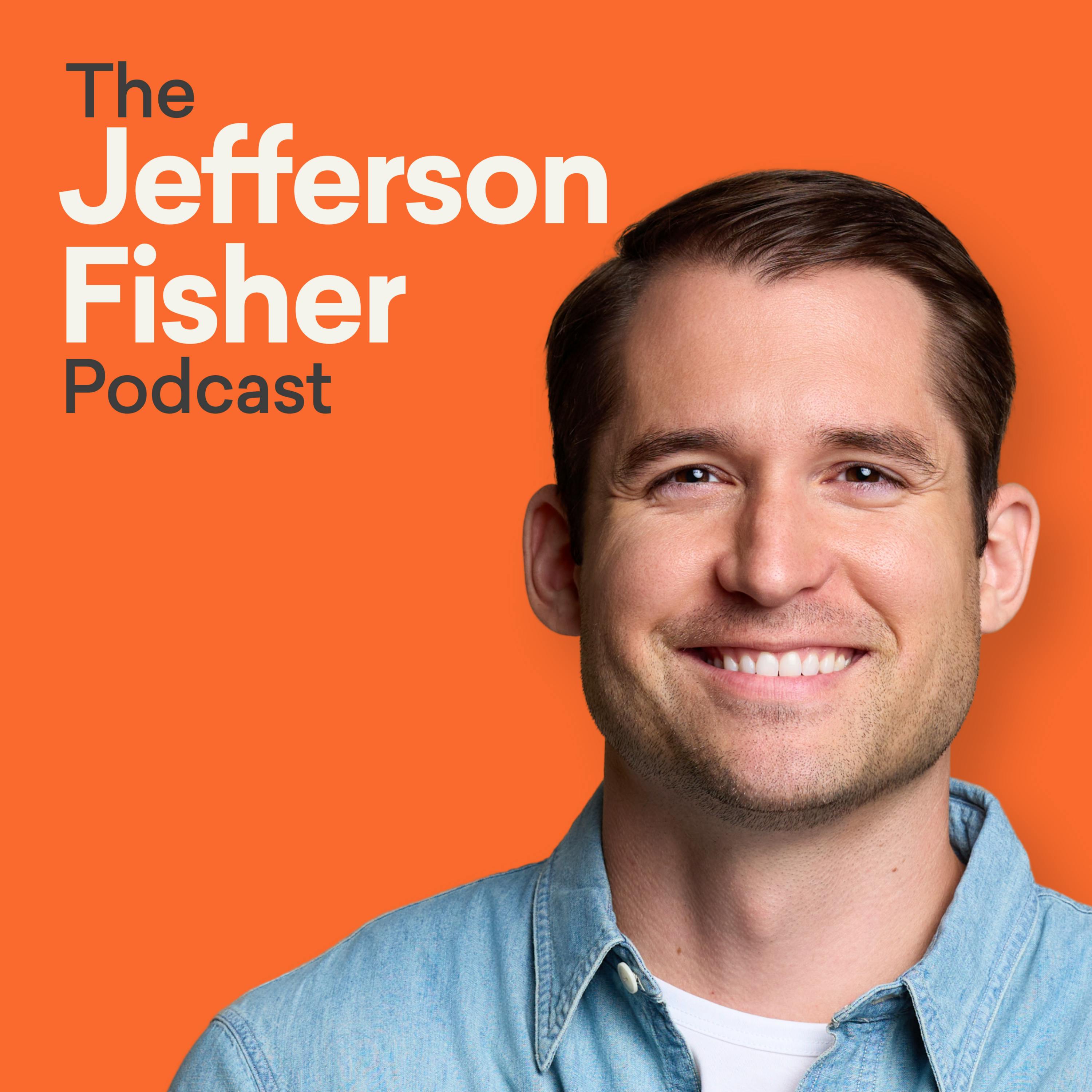
Pod Insights The Jefferson Fisher Podcast How to Handle Nervousness Before a Big Conversation About this episode Let’s talk about nerves. I say this all the time—it is totally normal to feel nervous before a conversation. In fact, it's a good thing. It means you care. But what you do with that nervousness can completely change how the conversation goes.
In this episode, I’m sharing three techniques I use myself and teach often—especially when people ask me how to stay calm, confident, and connected when it matters most. Whether you’ve got a big conversation coming up or just want to communicate with more ease, this one’s for you.
This episode is sponsored by Cozy Earth. Upgrade Your Every Day. Get 40% off at cozyearth.com/jefferson or use code JEFFERSON at check out.
Order my new book, The Next Conversation, or listen to the full audiobook today.
Also, come meet me on my book tour!
Like what you hear? Don’t forget to subscribe and leave a 5-star review!
Suggest a topic or ask a question for me to answer on the show!
Want a FREE communication tip each week? Click here to join my newsletter.
Join My School of Communication
Watch my podcast on YouTube
Follow me on Instagram
Follow me on TikTok
Follow me on LinkedIn
Learn more about your ad choices. Visit megaphone.fm/adchoices
Transcript Speaker names marked ? are inferred from speaking time and the show’s known hosts — they are not voice-verified.
0:00 Speaker 00 Welcome to the 50th Hunger Games.
0:01 Speaker 01 Witness the beginning of the revolution. Hey Mitch, you've been trying to take down these games from Star. Filmed for IMAX. Make them remember you. The Hunger Games: Sunrise on the Reaping, November 20th, rated PG-13.
0:15 Jefferson Fisher? It is normal, in fact, it is natural to be nervous before a conversation. But how do you handle that? What do you do to be less nervous? Or what do you do to make the conversation go more smoothly? Well, I have some ideas and we're going to talk about that. You already know what podcast this is. Welcome to an early morning episode. This is during the book tour. I'm doing this early before my kids wake up. So if my face looks like it's still waking up, it is. Just go to audio only if it's not, not working for you because I'm trying to wake this thing up. Here's the thing, you listen to this podcast and it means so much to me.
1:00 Jefferson Fisher? And what I have found is that so many people listen, but they do not subscribe or follow the channel or whatever it is, or they don't rate it or review it. That really makes a big impact on me. And let me tell you why. Because when you subscribe or you follow, it tells that platform, hey, this is good content. People like this. So if you find value in my mission of trying to help people improve their conversation, I'm going to ask you to please subscribe or follow this. It's not a, it's not a big commitment. It's not a anything. It is just a click, a touch of the thumb. If you ever want to unsubscribe later, you can do that. Not a problem. It means so much to me when you rate it or leave a review. It, it really does.
1:41 Jefferson Fisher? I read them all and it's a part of my daily routine, making sure that I am delivering what you want because I am so passionate, passionate about what we're doing. Thank you very much. I appreciate that. Also, funny little story. I, at one of my book signings, I was standing there signing books. It was wonderful, wonderful time with everyone. And somebody asked me, they go, are you wearing Cozy Earth? And I said, yeah, I actually, I actually was. Cozy Earth, as you know, is a sponsor of this podcast and I wear their stuff all the time because it is so dog uncomfortable. I fly in it and that's what I was wearing at the time. And people know from listening to my podcast, if you enjoy clothes that are
2:25 Jefferson Fisher? comfortable, go to Cozy Earth. All right. I promise you, you will not be disappointed. Go to CozyEarth.com/Jefferson. Use the code Jefferson for 40% off. CozyEarth.com/Jefferson for 40% off. It made me laugh so much that they, that was the question. She came up to me and whispered, are you wearing Cozy Earth? I was like, yes, I am. They're awesome. I have a membership that I run, an online membership that I started about two months ago, but I haven't been blasting it out and let people know because I just want it to grow organically. And it has been a, so much fun. It's been so much fun. And I had a question in it yesterday. See, I have, every month I do two coaching calls and a masterclass with this group. And
3:08 Jefferson Fisher? if you ever want to be part of it, you'll find the links there in the show notes to be part of the membership. And I love to have you. Or the newsletter, I give a lot of the tools right to your inbox weekly. You can find all those tools and links down in the show notes. The question in the membership was, how do you handle conversations when you're nervous before them? It's totally part of our fight or flight, our fight or flight of what do you do when you're nervous? And here's what I want you to remember. This is what I want to go through in today's episode. Tell them. Tell them whatever feeling you're feeling, get it out. So let's break it down into a traditional one, two, three, right?
3:51 Jefferson Fisher? We like those. I like those. Number one, whatever you are feeling, whether it's nervousness, whether it is anxiety or frustration, tell them. Listen to me. Tell them that. What happens when we try to keep our emotions in, whether it's defensiveness, frustration, anger, resentment, nervousness, when you try to keep all your cards close, like you don't want to show them what they are, what, what you might have heard the term keeping your cards close to the vest or to the chest. It is, it's a term of I'm wanting to hide something and not give them to you. I want you to download this into your brain right now.
4:35 Jefferson Fisher? The more often you keep your cards close and you do not show them, the more frustrated you're going to be and the more contempt you're going to have for other people and the more of a victim mindset you're going to have of that they should understand me. They should already know. I shouldn't have to show them my cards. That is a recipe for poor communication. That is a recipe for a poor relationship. Get in the habit of telling people how you're feeling in the moment. When you can say, okay, this is how I'm feeling. Here's this card. Here's this card. Here's this card. The other people, the person you're talking to will also naturally say, well, this is what I'm feeling. And this is what I'm feeling. And this is what I'm feeling. And they start to lay their cards.
5:20 Jefferson Fisher? I'm not saying you need to divulge your secrets. No. I'm not saying you need to just be a complete waterfall of information. No. In fact, if you know that you follow my content, that I suggest don't be a waterfall of information. You be a well, something to where of how you're feeling, you share it at one at a time, one at a time. So what does that sound like? Me making sure that I'm sharing my cards. I teach that if you claim it out loud, you control it. And I say that because it's true. We talked about this in the membership and I love talking about it now. And I'm going to have a story for you in a second. This is what it sounds like. When you say, I can tell, I can tell.
6:04 Jefferson Fisher? That means when you go into this nervous conversation, I want you to think in your mind. This will be helpful. Think in your mind right now. Maybe you're walking on a treadmill, you're driving, wherever you are. Think in your mind of a time you've been nervous before a conversation. Heck, I'm guessing maybe, just maybe you're listening to this because you're feeling nervous about a conversation coming up right now. And if that's true, this is what I want you to do. As soon as you sit down for this conversation, or maybe it's on a phone call, or maybe it's a text, I prefer it not be, but if it's a phone call or a meeting someone, begin with this phrase. I want you to say, I can tell blank. I can tell I'm feeling blank. This is what it sounds like even more.
6:47 Jefferson Fisher? I can tell I'm nervous talking about this. I can tell I'm feeling upset. I can tell I'm feeling anxious. I can tell I'm feeling unsteady. I can tell I'm feeling distant. You see how you're saying what you're feeling rather than acting upon what you're feeling? And that gives you the power to control it. It does two things. One, it gives you the power to control it, meaning you get it out and the other person knows about it. You're showing that card, they're going to show their card. And you feel like you have a little bit more control over the conversation because you said it. There's a difference between me saying, let's say I'm feeling defensive about a situation. And all of a sudden I just go, that's not true. That's not what I mean.
7:32 Jefferson Fisher? Well, but wait, you think that, and I start getting defensive. That's me acting on it. True power says, I can tell I'm getting defensive. As if I'm taking that emotion, that card, and I'm putting it on the table. And I'm pointing the person to that, that card on the table and say, that right there? That's, that's what I'm feeling. It's not what I am. I'm not acting out loud. I'm not raising my voice. I'm not drawing out the spikes. I am with emotional intelligence, pulling that card out, putting on table and saying, that's the card that I have right there. What's your card? And that's, that's what people do. They naturally want to reciprocate that every time. This is what I mean by reciprocate.
8:13 Jefferson Fisher? Have you ever, for anybody who's a parent, in, in, in any situation, you've talked with a child. A child comes to you and they're running and they're upset. You can tell they're upset about something. Do you as a parent go, what's, what's wrong with you? Stop that, stop that right now. What are you, what are you doing? Like you don't even know the situation yet. You're just going, what are you doing? Get out of here, go, I don't want to see this. No. I hope you're not that way. I hope nobody's been with you that way. Most of the time what happens is you lower your guard and you go, what is it, baby? What about wait, what is it? What's going on? What is telling you upset? Tell me like you naturally all of a sudden want to regulate your system to match theirs. That's what happens in everyday conversation.
8:57 Jefferson Fisher? When you can tell them the, I can tell I'm feeling nervous. Does the other person go, good, I hope you are nervous. Yeah. No, they don't. The natural reaction is no, it's okay to be nervous. What's, what's going on? What happens? What, what do you, what do you have? It's okay. See, they naturally regulate their system. They will mirror how you're feeling. There is a attorney that I know. And I, I know it's not a strategy, but it's brilliant and it works. And I've seen it is he is not an attorney of, he's not very tall. He's a smaller guy. And when he gets in front of people, he gets extremely nervous. Yet it makes him incredibly effective in the courtroom.
9:40 Jefferson Fisher? When he goes in and you might have, I've seen it where somebody else he's against is big, grandiose, taking up lots of space. He takes up very small space. When he goes up for an opening argument, this is what he says first. He, he kind of almost shakes in his voice, which of course you, you know, this happens to a lot of people. Is he'll go, hey, everybody, I, I just want to let you know, I, I get, I get very shy and, and nervous in front of other people. And, but that's not going to stop me from representing my client. You hear how everybody in the room starts to root for that guy. Everybody in the room starts to root for that guy. We as humans love to root for the underdog. Don't we?
10:23 Jefferson Fisher? When you see somebody performing and you can tell that they're nervous. Everybody in the whole crowd just kind of starts to cheer for this person and root them on. That's what happens in little bitty moments of conversation is we want them to do well. It's okay. Get it all out. Let's, let's talk about it. So when you can say, I can tell I'm feeling nervous about this. Nine times out of 10, I'd say even more than that, the other person will regulate their system and you'll have a much smoother conversation and it's just more open. It's way more open. Well, you can say, "I can tell." I had a very good friend of mine, one of my closest friends, she had a call with a teacher
11:03 Jefferson Fisher? for her son's school and she used the exact same technique that I have talked to her about previously of, "I can tell I'm nervous about this. I can tell I'm nervous about this conversation. I'm uneasy about this conversation." And you know what the person on the other line said? They said, "No, it's okay. No, no problem. Yeah, let's just talk it out. No problem." It's like everybody starts to roll up their sleeve and say, "Okay, hey, let's, let's just, let's just talk about this." And it pulls down their defensive. You see how that's way different than all of a sudden acting on that nervousness? Much more powerful. Number two, that I really want to leave you with is this idea of when you try to use this
11:45 Jefferson Fisher? phrase right here, when you say, "I don't want you to take this the wrong way," but whenever you say that, "I don't want you to take this the wrong way," but it is guaranteed they're going to take it the wrong way. It is guaranteed they're going to take it the wrong way. Hey, I don't want you to take this the wrong way, but I can promise you they are. I can promise you they are. What I want you to do is flip that to saying, "You're probably going to take this the wrong way." And they won't. Here's the magic of that. When you try to come out of the gate with information that you're nervous about and you're afraid they're going to react strongly to, there's this feeling that we have to
12:29 Jefferson Fisher? say, "Hey, I don't want you to be offended by this. I don't want you to take this the wrong way. I don't want you to think I'm being rude, but..." You use that word "but." "But" just has a way of deleting everything you said before. Like, "I love you, but I can't do this." Like, it just erases everything. Whenever you say, "I don't want you to take this the wrong way," but they will take it the wrong way. It's all they're doing is, it's telling their system of, "You should take this the wrong way." But when you tell them this phrase, when you begin the sentence with, "You're probably going to take this the wrong way," In their mind, they go, no, I won't.
13:09 Jefferson Fisher? Like, we are so wired in our brain to contradict what you're telling me. I will want to think the opposite. If somebody says, this is gonna be a really difficult problem or difficult conversation. We naturally go, no, it's not. I'm gonna, well, I'm gonna make sure you know that it's not. I'm going to want to disprove whatever you say. We love the contradictory. We love to correct people. We love to prove that they're wrong. We like to show them that is differently. And whenever you say, you're probably gonna take this the wrong way. They naturally in their head think, no, I'm not. I'm not gonna take it the wrong way because I'm gonna prove you wrong that I'm not. I promise you, it works. Because it takes advantage of that natural reaction that we have to wanna correct people
13:54 Jefferson Fisher? and wanna prove them wrong. When somebody says, you can't do that. What's the first thing you think of when somebody says you can't? Oh, yes, I can. Just wait. Just watch. You will change your whole life trajectory if somebody says you can't do something just to prove them wrong. Prove to them that you can. And sometimes it's yourself. I did this to prove myself that I can do this. It's funny how defiant we are. And when you can use what we have naturally to your advantage and leverage in the conversation, not in a bad way, but just knowing that's how a, that's how you can better set yourself up. Instead of this, hey, I don't want you to be offended by this.
14:36 Jefferson Fisher? It's guaranteed they're going to be offended by this. But when you say, you're probably gonna take this offensively, or I, I, I know this is going to offend you. They won't. They won't. They will find another way in their mind of going, no, this is, I'm, I'm going to disprove it to you and find that it's not. Cool? So that's another little technique that I really like. Number three, what I want to have the takeaway for any time you're having conversations where you're nervous about them is because you are not breathing enough.
15:11 Jefferson Fisher? I know I talk about breath and communication because it is part of communication. It is not separate from it. It is all expression and air that comes out of your lungs and out of your mouth. That is part of communication. Make no doubt about it. It is part of communication. A pauses breath, it may be the absence of words. It is not the absence of communication. You know this, when somebody goes, makes just a big exasperated sigh, what does that cue into you? Exasperation, frustration. Somebody just lets out a breath, rolls their eyes. That is all part of communication. Whenever you're feeling nervous, that one, it's a good thing.
15:55 Jefferson Fisher? Let me, I want to make sure I tell you this. Nervousness is a good thing because it means that you care. It means that you care. Often it's the feeling of, I want to make sure that they still like me. That means you're gonna lead that conversation with, I'm nervous about telling you this. I'm afraid that you're not gonna like me at the end of this conversation. You see how, I know it's vulnerable, but it is incredibly powerful. Because the person even make sure that they say, no, no, no, no, we can, we can continue to talk this out. When you lower their defenses, they will regulate their system to match your frequency. Whenever you are forthcoming and honest about it. Using your breath is a way to make sure that you take
16:40 Jefferson Fisher? those feelings of nervousness and release those into your body. And remind yourself, I'm saying this kind of stuff because I care. That's why. And even when you lead with that, it is, it is as simple as that. I'm telling you this because I care. I'm telling you this because I want to have a good relationship with you. I'm telling you this because, that's the phrase. I'm telling you this because. I'm telling you this because I love you. I'm telling you this because I'm a, I am your friend. I'm telling you this because I care about you. You see how that's so much more honest and more putting your cards on the table?
17:22 Jefferson Fisher? Than this idea of, look, I, you know, I love you, but.
17:29 Jefferson Fisher? Oh, hey, look, I know, I think you and I are good, but blah, blah, blah, blah, blah. Build them up in conversation to where they are on level footing to meet you eye to eye. And sometimes that means bringing them down. Nothing wrong with that. So next time you are in a conversation that you're feeling nervous about, I want you to understand it is totally natural and normal. All right, number one, you're going to use the phrase, I can tell, I can tell I'm feeling nervous. That will naturally pull them down. Two, do not use phrases like, um, you're, you may take this the wrong way, but, or don't take this the wrong way. I don't mean this is disrespect.
18:10 Jefferson Fisher? I don't mean this is rude, but all you're doing is just making sure they are. Instead, label it as their own feeling, like their projection. You're probably going to take this the wrong way, or you probably think I'm being rude. That right there is going to make sure that they don't. And three, use your breath. Use your breath and say, I'm telling you this because, I'm telling you this because I care. I'm telling you this because I care about this company. I care about your leadership. I care about this organization. I'm your friend. I love you. Whatever it is, you're telling them why is laying that card down on the table. And when you do that, more often than not, they're going to start laying down theirs and you're going to have a better conversation.
18:55 Jefferson Fisher? Cool? All right. Try that and as always, you can follow me.
19:00 Speaker 00 Welcome to the 50th Hunger Games.
19:02 Speaker 01 Witness the beginning of the revolution.
19:05 Speaker 03 Hey Mitch, you've been trying to take down these games from the start.
19:07 Speaker 01 Filmed for IMAX. Make them remember you. The Hunger Games: Sunrise on the Reaping, November 20th, rated PG-13.
Previous How to Stay Calm When You’re Disrespected Next The Best Way to Shut Down a Narcissist Page updated November 3, 2026 · transcript and summary are machine-generated