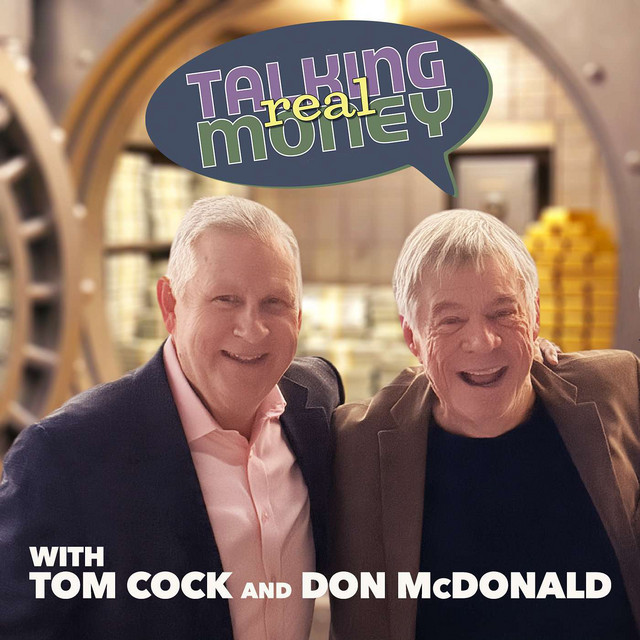
Pod Insights Talking Real Money - Investing Talk Ep. 1956: The House Takes a Cut About this episode Wall Street can promise dazzling returns, but private equity’s fees, illiquidity, and tax drag may leave investors with far less than the headline number. Don and Tom unpack research showing how ordinary index funds and municipal bonds can deliver comparable after-tax results with much less risk. Then a startling poll claims many Americans believe stocks only help the richest—and that gambling may beat investing. The hosts push back with the math, then tackle when taxable brokerage accounts ...
Transcript 0:07 Speaker 00 There's a line in the fine print they don't want you to read. There's a hand in your pocket you can't see. They smile and they nod and they promise you the moon. And they never say a word about the fee. So tell it to the people honestly. No hidden hands, no secret fee. Just two good men who tell it free. It's dog and real money.
0:42 Speaker 01 Little 60s protest music there, sort of.
0:46 Speaker 02 Teach your children well, right?
0:48 Speaker 01 It's no, it's not. I didn't even use it. In fact, it doesn't sound like Crosby, Stills, Nash & Young.
0:53 Speaker 02 That's to me, for some reason.
0:54 Speaker 01 Does it? Well, it's okay. Maybe it has that feel, but I was going for the 60s, 70s protest folk rock group, which is what CSNY was, when you think about it. That's what they did. I mean...
1:05 Speaker 02 Ohio, wasn't that them?
1:06 Speaker 01 Yeah.
1:08 Speaker 01 Four did it. Anyway, um, I always loved them, though. I loved their harmonies. Loved their harmony.
1:14 Speaker 02 Fantastic.
1:15 Speaker 01 Yeah. In fact, I listened to them just recently on my AirPods Max. I had those on my...
1:20 Speaker 02 Do you do that when you lay in bed, or do you just walk around the house with it?
1:23 Speaker 01 Sometimes.
1:24 Speaker 02 My daughter does that, walks around the house. I'll be, "Hey, what about..."
1:26 Speaker 01 My daughter lives under her AirPods Max. Lives under them 24/7.
1:31 Speaker 02 Wow.
1:31 Speaker 01 Always has them on. Every time she FaceTimes me, it's like headphones, because she's using the mic on the AirPods. She loves it. She loves. She's always in her music.
1:41 Speaker 02 You've got to. That's something you need to fix for me. Now, my computer, when I do these Zoom meetings and the like, the microphone's horrible. It sounds all...
1:51 Speaker 01 What are you wearing? What are you talking to? What are you... No, I don't. What you're wearing, yeah, your little Santa Clara clothes. What are you using for the meeting? The computer mic?
2:02 Speaker 02 Yeah. It's horrible. And you need to get me a new one.
2:05 Speaker 01 Dude, you have a mic right there.
2:07 Speaker 02 No, that's not in my office, though. That's down the hall in the studio.
2:10 Speaker 01 You have two of those.
2:12 Speaker 02 One's in the home and one's, one's in the home studio, one's in the office.
2:14 Speaker 01 Let me tell you, all it takes is picking it up from the studio next door.
2:20 Speaker 02 Carrying it down there?
2:21 Speaker 01 Into your office, it's next door.
2:23 Speaker 02 I got a torn rotator cuff in my right shoulder.
2:25 Speaker 01 It weighs 2.3 ounces.
2:27 Speaker 02 I know, that's the problem. You can't, ow, anything over the head.
2:30 Speaker 01 Okay, buy another one then.
2:32 Speaker 02 Okay, send me another one, would you please? I appreciate it.
2:34 Speaker 01 I'm not, no, because then I have to do all the accounting and the invoicing.
2:37 Speaker 02 You know, when you sound, when you do this, you sound kinda grumpy. I'm just putting it out.
2:40 Speaker 01 I am. You make me buy stuff for you.
2:44 Speaker 02 Come on, man.
2:44 Speaker 01 He doesn't, the dude doesn't even know how to use Amazon. Now this is sad.
2:50 Speaker 02 Okay, that, that we all know is not true. If there's one place I do spend money, it would be there.
2:54 Speaker 01 Well then, buy a, buy a mic.
2:56 Speaker 02 Okay.
2:57 Speaker 01 You're looking right at it. Can you see what the brand is? What does it say?
3:00 Speaker 02 Uh, some Austrian thing.
3:02 Speaker 01 Austrian Audio.
3:03 Speaker 02 Isn't there an American-made microphone I can use instead?
3:06 Speaker 01 No, no.
3:07 Speaker 02 It has to be this.
3:08 Speaker 01 No, I, I don't, I don't even know if that's made in Germany. It's probably just designed in Germany and made in China.
3:12 Speaker 02 Just so you know, it's a different place than Germany.
3:14 Speaker 01 I'm sorry, Austria. It's, well, it used to be once the same.
3:17 Speaker 02 I'm gonna let you say that, cuz they're not gonna be very happy to hear it. I'll put it that way.
3:24 Speaker 02 An schlossbreth, they're not gonna love you for that, so.
3:26 Speaker 01 Oh, now, that's really curious. Hey, can, yeah, you, am I at the bottom of your screen or at the top?
3:31 Speaker 02 You're right in the middle.
3:33 Speaker 01 No, no, okay. Are you above me or below me? Oh, you were side by side.
3:36 Speaker 02 You know, I'm way above, I'm way above you.
3:38 Speaker 01 It's so funny, your mic cable actually connects to my mic cable on the two screens. It makes it look like it's one.
3:44 Speaker 02 Okay, that's just getting weird now. All the other things, let's not, yeah.
3:48 Speaker 01 Oh, we gotta talk about the topic.
3:50 Speaker 02 There's that.
3:51 Speaker 01 Here's the topic today.
3:53 Speaker 02 This is why we should never record a show on Saturday. I'm just not as serious on Saturday.
3:55 Speaker 01 They'll promise you anything to get your money.
3:58 Speaker 02 Will they ever?
3:59 Speaker 01 That really is the rule of...
4:00 Speaker 02 That's the theme of Wall Street.
4:01 Speaker 01 It is the theme of Wall Street. It's the theme of banks and insurance companies.
4:05 Speaker 02 Anybody.
4:05 Speaker 01 They will promise you anything to get your money, and lately, we've talked about this before, private equity products have been hot. Lot of money pouring into them primarily because of their popularity with college endowments several years ago. Everybody said, oh, well, if they're doing it, we should be doing it. And while they've posted decent returns, I mean, in average, they haven't been...
4:27 Speaker 02 Not crazy.
4:28 Speaker 01 Not crazy, I just said decent. Just pretty, stock market decent, pretty close.
4:32 Speaker 02 Yep.
4:34 Speaker 01 Somebody forgot to to mention the downsides of which there are many.
4:40 Speaker 02 There are many. There's a lack of liquidity. There's generally the higher cost.
4:45 Speaker 01 Yeah.
4:45 Speaker 02 All those things, but the part that this piece makes clear is your partner with all these, not not the partner running the investments. We're talking about the government, the federal government of the great United States of America.
4:57 Speaker 01 Oh, you mean taxes?
4:58 Speaker 02 Yeah.
4:59 Speaker 01 Yeah, this is from a piece from the Wall Street Journal recently by Jason Zweig, our bud.
5:04 Speaker 02 Yep.
5:05 Speaker 01 And Jason kind of breaks down the numbers and says, "These may look good on a gross return basis, but net returns..."
5:15 Speaker 02 And think it through. It makes sense, right? Because these are products that have generally high turnover, right? They buy something, they sell something, right?
5:23 Speaker 01 Right. They don't want to, they don't want to keep them in their portfolio. They're flipping.
5:26 Speaker 02 They're, they have short-term gains there for, so that's even spendier. And then for the, the, the firms that they do buy that turn out great, there's, you know, big taxes on those, right? So, so he went and looked at a couple of studies, actual studies of how these products do after tax, right? And you mentioned something very important, by the way, that colleges and other institutions have been investing in these kind of things for a long time. So they can look back and say, "What are the returns been?" Um, so they have a simulated endowment portfolio, the last 10 years, ending at the end of March, that they say, uh, 8.6% pre-tax return annually, but after tax...
6:06 Speaker 01 Wait, pre-tax, that's your gross return?
6:08 Speaker 02 That's your gross return, yep.
6:09 Speaker 01 After fees?
6:10 Speaker 02 Yep, after tax. That's the 8.6, I imagine, is after fees.
6:15 Speaker 01 Yeah, that's after fees, but before tax.
6:16 Speaker 02 Before tax. After tax, 6.6% a year.
6:22 Speaker 01 Wow.
6:23 Speaker 02 That's quite a hit.
6:24 Speaker 01 That's a pretty substantial, like, 20% reduction.
6:28 Speaker 02 It is. Uh, and by the way, to, one thing... I don't love the product anyway. I don't want private credit. I don't want private real estate venture. I don't want any of that stuff, but most of this is now being pitched in your retirement plan. So you wouldn't face this issue, right? In your retirement plan per se, because that's growing.
6:44 Speaker 01 Tax deferred.
6:45 Speaker 02 Right. Yeah. So, but this is a product you're just never going to want in a taxable account that's being sold. The number was astounding from this article. There's a, there's a group that studies how people are investing their money, the actual dollars that go in. They believe alternative investments of $2 trillion will be sold in the next five years. $2 trillion in the next five years. But it's just another reason you should never have them in your taxable account. But study number two shows in a hundred year period, I don't know how they come up with a hundred years of looking at all this, but they did.
7:14 Speaker 01 They have a hundred years of data on private equity. I guess they would. Yeah, sure. There, there have been deals going on for thousands of years. Sure.
7:21 Speaker 02 10.5% of your sound a lot like the stock market publicly traded.
7:25 Speaker 01 Almost identical.
7:26 Speaker 02 Yeah. Where you can get your money every day, but after tax, 7%. 10 and a half grows 7% after tax.
7:34 Speaker 01 Thirty plus percent reduction there.
7:35 Speaker 02 Yeah. I mean, remember you're going to pay taxes on interest. You're going to pay taxes on capital gains. You're going to pay taxes on distribution, all those things that make it very tax inefficient.
7:44 Speaker 01 But how does that compare though with like owning stock funds that you're going to have to pay taxes on dividends?
7:50 Speaker 02 Yep.
7:51 Speaker 01 And you're going to have to pay taxes on capital gains when you sell.
7:54 Speaker 02 That's right.
7:55 Speaker 01 So you're still going to pay taxes, right?
7:57 Speaker 02 You're still going to pay taxes. Um, it ends out, according to Jason, two index funds plus a municipal bond fund. In the last 10 years, the return has been almost identical.
8:09 Speaker 01 Okay. So, yeah. So they match the private equity with less risk.
8:13 Speaker 02 Well, I was getting to that.
8:14 Speaker 01 Way less risk.
8:15 Speaker 02 Wait, wait, wait, wait, wait. Not even on the same spectrum. Cause those are publicly traded.
8:20 Speaker 01 Does he have how they end up after taxes?
8:23 Speaker 02 It says same after tax return.
8:24 Speaker 01 Same after, yeah. Because you're going to pay taxes one way or the other.
8:27 Speaker 02 Oh yeah, for sure. Yeah. It's just that these are horribly tax inefficient.
8:31 Speaker 01 In the present tense.
8:33 Speaker 02 Correct. Yeah. Right. The, the, all the stuff they're paying, as I already mentioned. So again, this is just another reason again, that I I know, I know you're gonna be tempted. I know just what you just said at the beginning.
8:45 Speaker 01 Well, because we're getting questions on these things all the time. The ones that are advertised on, you know, TV and the radio and uh, these really dangerous real estate deals and debt deals. Uh, you know, there was one, I can't remember what the name of it was. I just did it in a podcast that I recorded. Uh, it was all defaulted student loans.
9:06 Speaker 02 Oh yeah, let's throw my money at that. Sure. All defaulted. Are you kidding me? Really?
9:11 Speaker 01 Seriously. They're buying them at a discount.
9:14 Speaker 02 Whatever. Yeah, right. And then you're.
9:15 Speaker 01 And then hoping that they manage to get these dead beats to pay up, which they won't.
9:20 Speaker 02 So you get to go door to door and see.
9:22 Speaker 01 I guess.
9:24 Speaker 02 Uh, so um, this to me is just another reason this is a product that should be ignored. If you didn't already ignore it, you should ignore it now.
9:33 Speaker 01 We have put so many nails in the coffin of private equity and yet people keep buying this stuff.
9:39 Speaker 02 Yeah, they do.
9:40 Speaker 01 Because it is not, as a matter of fact, it's not. It's not even really your fault. These things are not bought, they are sold. They are pitched. They are pushed hard by commissioned salespeople, by advertisements. They're, they're gonna tell you things that sound so enticing. They're, they're, they're promising you these 10, 11, and 12, 13, 15% returns that can't be sustainable and certainly can't be low risk. So uh, these are just best avoided. Now I have to ask Tom a question.
10:12 Speaker 02 No, no questions. I'm asking you a question.
10:14 Speaker 01 You want your jingle theme?
10:16 Speaker 02 I love that old jingle theme. I get up, I play it every morning now.
10:20 Speaker 01 Your little Q and A theme because it has your name in it?
10:22 Speaker 02 Yeah, it makes me feel very special.
10:24 Speaker 01 Does that make you feel special? So you want me to play the Q and A theme? I'll tell you what, I'm gonna surprise you with a new one.
10:38 Speaker 02 Great questions. Okay, we get a lot of them here. So, and this one's kind of an unusual one, Don.
10:42 Speaker 01 Oh, good.
10:43 Speaker 02 It's more of a comment. They want a comment from us. Nate from Indianapolis, uh, provided a poll that was done by a very well-known polling outfit called Harris, and then the results were published by The Guardian.
10:59 Speaker 01 Yeah, it was done for The Guardian, right?
11:01 Speaker 02 Yes, done for The Guardian by Harris, which has been a polling company been around for, gosh, I don't know, 70 years, a long time. Uh, and the headline is the part that the, that I think that Nate wants us to respond to, which is, "Two in five Americans," two in five, right? That sounds like 40%.
11:21 Speaker 01 Good math.
11:21 Speaker 02 Is it 40% more powerful number than two in five?
11:24 Speaker 01 I think it is, personally.
11:26 Speaker 02 I think it's 40, but anyway.
11:27 Speaker 01 Okay.
11:27 Speaker 02 Uh, "Believe the stock market only benefits the top 1%."
11:33 Speaker 01 That's what the question says, "Only benefits the top 1%." So, 40% think there is no benefit
11:40 Speaker 02 Right.
11:41 Speaker 01 to investing in the stock market.
11:45 Speaker 02 And part of that has to do with, you know, who owns the, who owns it? They, they point out that half of the stock market, half, 50% is owned by the top 1%, while the bottom 50% of, of wealth only owns 1% of the market.
11:59 Speaker 01 Okay, that makes sense, though, because the top 1% control a lot of money. I mean, they're rich. I mean, the top 1% has about $27 trillion in stocks. Well, Elon Musk alone is worth 1 trillion of that 27 trillion. So, there's some serious wealth concentration, and they invest in stocks because stocks... Why do you think the 1% invest in stocks?
12:30 Speaker 02 They want to make money with their money that they've already money on.
12:34 Speaker 01 Right, they believe, oh, wait, okay, this is how this, the, the results, the, the folks who are taking this poll are just foolishly counterintuitive. They're saying it only benefits the top 1% because they have all the money in the, in the stocks. Well, why? They believe that the stock market is one of the best places to make money on your money, and they're rich. Huh, you're poor.
13:02 Speaker 02 And you're not investing in the stock market.
13:03 Speaker 01 And you know better than they do?
13:05 Speaker 02 Yeah, no, okay.
13:06 Speaker 01 Oh, and here's the one that gets me, though.
13:08 Speaker 02 Please.
13:08 Speaker 01 Oh, this one really bugs me. I mean, okay, I get that they don't, they don't understand the stock market, all that.
13:14 Speaker 02 Boy, that was a, I don't even want to go there because that is harsh.
13:18 Speaker 01 But here's the thing. One-third of everybody in the country, this is all adults, including us old people, folks. One-third believe they could make more money gambling than by investing in the stock market.
13:35 Speaker 02 So they must be great poker players, they know how to bet on high line.
13:38 Speaker 01 And what's really interesting is that forty, that's forty-six percent of millennials. Almost half of millennials think gambling is better than investing, and forty-four percent of Gen Z. Wow, what did we do as parents to mess you guys up mentally? You're not even using your, you're not using the brain, your brain at all, apparently. You, the TikTok has sucked all the gray matter out from your eyes. What is wrong with you?
14:08 Speaker 02 That's, um, and let's, we, maybe we do a show on investing versus gambling again.
14:14 Speaker 01 We've done it, but.
14:14 Speaker 02 To talk about the key differences, but.
14:16 Speaker 01 I mean, the fact that, the fact that one-third, more than a third.
14:20 Speaker 02 That's, that, that's a shocking number, maybe more shocking than.
14:22 Speaker 01 Will buy lottery tickets, I mean, what?
14:23 Speaker 02 Forty percent think that only benefits. By the way, um, what the takeaway, I think, should be what you just said, because I think what Nate is saying, well, should we be investing because it only makes the rich richer?
14:36 Speaker 01 No, it makes the poor richer.
14:38 Speaker 02 Yeah, if you can save and you can invest in stocks the right way, not gambling, then you're generating wealth for you and your family and others that may survive you. So the poll is, I find it disturbing.
14:52 Speaker 01 Tell me a better, uh, use your brain, use math, use a calculator, use your capability to research on the internet, you guys know how to use the internet, right? Apparently you do. Go do some research and tell me what the average annual return is for, uh, any casino game or lotteries or anything else that is, you know,
15:19 Speaker 02 or prediction markets.
15:19 Speaker 01 Kalki or whatever the heck it is.
15:21 Speaker 02 Yeah, right.
15:21 Speaker 01 Tell me what the average annual return is for that versus the average annual return over a hundred years for stocks. Go look that up. Oh wait, you don't have to. The average annual return for gambling is negative. Negative, always negative. The average annual return for buying the stock market has been over the past 100 years, about 10% per year before taxes.
15:47 Speaker 02 When you gamble, the odds are against you. When you invest properly, the odds are in your favor. No question.
15:55 Speaker 01 It's a fact. How can you deny a fact? Absolute mathematical fact. Just because you believe something does not make it right.
16:05 Speaker 02 The question is where they would be getting that belief that stocks don't make you money.
16:09 Speaker 01 It's gotta be from that thing that suck their brains out through their eyes. That's social media idiocy. I've heard some stupid things on social media about investing. And I can't think of more.
16:23 Speaker 02 Maybe we should do another show on that. Maybe we should go to Insta and look around and see what people are saying today.
16:27 Speaker 01 Dumb stuff. My daughter once in a while sends me something. It's like, gosh. Yeah. Just because they're your peers doesn't mean they're smart.
16:36 Speaker 02 Hey, word, Wisconsin. Nick writes, hi, Don and Tom. My question is if I have savings in Roth and regular, I'm assuming he means traditional, retirement accounts, at what point should I start concentrating and putting money into a taxable brokerage account? Should this be a priority? Or should a saver simply try to max their tax favored retirement accounts first? And move on to brokerage when those have been maxed? Should the goal be to have a third in each type of account when retirement begins? Or is there some other way of looking at this? Thank you for keeping up the good work.
17:07 Speaker 01 Max the tax advantage. Max the tax advantage. If you haven't, let's start at the very beginning. Max your match.
17:17 Speaker 01 Always invest up to.
17:18 Speaker 02 Some might say save up to the match.
17:21 Speaker 01 Save up to the match. Make sure you get all the free money you can. If somebody was, was walking down the street, handing out hundred dollar bills, would you say, I don't think I'm gonna take one? No.
17:34 Speaker 02 I don't want to walk half a block for that.
17:36 Speaker 01 Your, your company is giving you free money. Take it. Then max out your Roth. While you're not making high dollar amounts generally, then max out the traditional stuff, then start going to the taxable stuff.
17:51 Speaker 02 Yeah, I would say however, still on back to your starting place, get the match, but if you can do beyond that.
17:57 Speaker 01 Oh, take more.
17:58 Speaker 02 All the way, you know, which is, I forget the totals now, thirty-three thousand, five hundred for people over the age of fifty, twenty-four thousand, something like that. It's a lot of money.
18:09 Speaker 01 And then go for the seventy-five hundred in Roths and, you know.
18:12 Speaker 02 And eighty-six hundred if you're over the age of fifty. So yeah, you should be doing all that first, then would be brokerage. Is it great if you get to retirement and you have money in all three places? Sure. Is it that important? No. I think it's okay either way.
18:25 Speaker 01 Yeah, um, you know, I just, I want to admit something to all of our lovely listeners out there. I just realized something.
18:32 Speaker 02 You're sounding kind of grumpy today.
18:33 Speaker 01 Going, I was gonna say, going back to the last question about the polls.
18:38 Speaker 02 Yeah.
18:38 Speaker 01 Yeah, I, I, I did sound grumpy.
18:41 Speaker 02 You sound kind of, uh, you sound old.
18:45 Speaker 01 I was curmudgeonly. Yeah, uh huh, I was.
18:47 Speaker 02 And by the way, we should be on that point. We should be jumping up and down, yelling and screaming, waving our arms, setting off fireworks, because that is what, what, what happens with that, if, if people truly do believe, which apparently they do, is it's costing them their future. It's costing them their retirement. It's costing them thousands, hundreds, whatever number you want to put on it.
19:08 Speaker 01 There's no question.
19:10 Speaker 02 Expensive.
19:11 Speaker 01 They're, they're, they're sentencing themselves to a life of near poverty from their stupidity.
19:18 Speaker 02 For sure poverty, because if you're out gambling, we already said the net, net result is negative. Are there a few people that make some money? Sure. But the most, no, they lose for whatever bet they make. So you're, you're, I, the stridency, sure, it's, it's legit in this case. Sometimes you get worked up for things shouldn't be worked up, but in this case, yeah.
19:37 Speaker 01 Very worked up over this stuff. Mm-hmm, I was. Got any more questions?
19:41 Speaker 02 I got a couple more, yeah. Uh, from G. G. in Kay'sville, Utah.
19:47 Speaker 02 If you had a simple three fund portfolio of US stocks, foreign stocks and bonds, at what point would you consider adding international bonds?
19:59 Speaker 01 I wouldn't. Wouldn't be a big rush. I mean, in a very large sophisticated portfolio, there are some teeny, teeny weensy potential tiny diversification advantages, currency diversification and things like that. But they are so miniscule in bonds.
20:17 Speaker 02 In our portfolios, we do them.
20:18 Speaker 01 Wait, yeah, but that's, that's, that's a portfolio with 10 funds in it or more.
20:23 Speaker 02 Yeah, it takes time. It takes work.
20:25 Speaker 01 And if you have a three fund portfolio, the, you're serving all the really useful purposes. You've got your US growth covered. You've got your international growth covered because those markets definitely don't move in lockstep and they can be dramatically different from each other. And then you've got the bonds for stability. You don't actually gain much stability, much, you don't gain addition, much additional stability from internationals. It's so small, it's to make it not worth the trouble. And the higher fees generally.
20:57 Speaker 02 Yeah. So you could do BND and BNDX, I believe, if you had to.
21:01 Speaker 01 But I wouldn't do BNDX.
21:02 Speaker 02 Okay.
21:03 Speaker 01 I mean, I don't do BNDX in my own portfolio. I do not do it. I don't see the point.
21:09 Speaker 02 Okay. Again, small amount, not a big deal. I think that's legit. Southern Valley, California, Gregory writes, when is it time to pay for qualified college expenses with a 529? I'm the owner, daughter's the beneficiary. Is it better to have the 529 pay the school, me or my daughter? Thanks. Love the show. More dad jokes and anti crypto warnings. PS, is there a way to get a signed copy of the line uncrossed?
21:36 Speaker 01 Huh.
21:37 Speaker 02 He's saying, should, should the money come directly from the 529 to him and then he pays, blah, blah, blah. No, in today's world, it just goes right from the 529 to the institution. Very easy to do.
21:48 Speaker 01 It has to.
21:49 Speaker 02 No, it doesn't have to, I don't believe, but, but it makes the sense.
21:54 Speaker 01 Okay.
21:54 Speaker 02 I think you could get the money and then turn around and write a check to the institution.
21:58 Speaker 01 Okay.
21:59 Speaker 02 Um, but in today's world, as a guy who's just starting to pay that bill again, uh, it's very simple and it's all available, of course, online and all the people know the people who know the people. So you can send it from XYZ 529 to XYZ institution and then keep sending and send them more and maybe send a little more after that if you can. That'd be great.
22:23 Speaker 01 Yeah. Um, yeah, you're still, but you as an individual are going to get the 1099 thingy ma Bob or something.
22:31 Speaker 02 It's better to, it's better to do direct institution to institution for sure.
22:35 Speaker 01 Yeah. Okay. Uh, but the question about signing the book, I'm trying to figure out how to do that.
22:41 Speaker 02 Yeah.
22:42 Speaker 01 It involves a lot of postage and things.
22:46 Speaker 02 Well, here's what we could do. Um, I have still some books. We're going to give out some more books at our client event.
22:51 Speaker 01 You're going to forge my signature?
22:53 Speaker 02 No, I am not going to do that. Not anymore. Not because your signature is really not worth anything. When back in the day when it was, then sure, I'd sign everything. It's like crazy.
23:01 Speaker 01 I am just trying to figure out how to make that happen. You know, it's funny. One of the ways I've seen people do that, authors, is they sign little, um, little sticky things. I can't remember what they're called. They go inside the, the cover of the book.
23:15 Speaker 02 Yeah.
23:16 Speaker 01 And it's got the author's signature on it and then they stick it in the book. Um, I guess.
23:20 Speaker 02 It's not nearly as cool. To Bob from Don.
23:23 Speaker 01 Yeah, I know.
23:23 Speaker 02 Thanks for reading.
23:24 Speaker 01 Trying to think about how to do it. I can't.
23:28 Speaker 02 They could come to your house.
23:29 Speaker 01 No.
23:31 Speaker 02 They can come to Chick-fil-A. Bad idea. Meet you at Chick-fil-A. You could have a signing at Chick-fil-A.
23:36 Speaker 01 Where, where, that person was from California, Tom.
23:38 Speaker 02 Yeah, I, that's okay. They got planes and cars and all kinds of stuff.
23:42 Speaker 01 Oh yeah, that's certainly worth it to, to save $10 in postage.
23:46 Speaker 02 Disney World. It's a major attraction. It's right next to your house.
23:49 Speaker 01 They're in California. They have Disneyland.
23:50 Speaker 02 Oh yeah. No, no question. I prefer, but, um.
23:54 Speaker 01 Why do you prefer Disney? It's smaller.
23:56 Speaker 02 Cause I'm a west coast guy.
23:57 Speaker 01 You are really strange.
23:59 Speaker 02 Uh, okay. So, no, thank you for asking, but no.
24:03 Speaker 01 I can't figure out how to do it. I'm sorry.
24:05 Speaker 02 Uh, yeah, there really is no way. Until Don has a book signing. Well, okay, here's a way.
24:10 Speaker 01 What?
24:11 Speaker 02 If it happens, retire me 2027. If it happens, you could do one there.
24:15 Speaker 01 If we have a retire me, you're right. I could, I could do a book signing there.
24:18 Speaker 02 That's true. Okay. So we could do that. So, stay tuned.
24:22 Speaker 01 If, but then you still have to fly up from California. So.
24:25 Speaker 02 There's people already coming that want to come from Mississippi. So.
24:28 Speaker 01 I guess. All right. Here's what I'm gonna do. Let me think about this for a minute because here's what I'm thinking. I do have a way to sell books myself directly.
24:40 Speaker 02 Oh.
24:41 Speaker 01 Um, and I could have them come to me. You could buy the book from me. And I could mail it to you.
24:53 Speaker 01 Yeah.
24:54 Speaker 02 Pandora, your box has been opened. Good luck.
24:57 Speaker 01 Think, let me think about this. Now here's what you have to do. You have to continue always listening to the podcast.
25:02 Speaker 02 Every show, because you never know.
25:05 Speaker 01 Damn, I just made audience, the audience stickier than ever before.
25:09 Speaker 02 Or, or repelled them very quickly.
25:13 Speaker 01 Uh, well, I think that does it for another exciting episode of the Talking Real Money Podcast. Thanks for being a part of it. Keep sending in those questions at TalkingRealMoney.com. If you actually like to use your voice, just click the microphone button in the lower right corner. If you want to type, I don't know why you want to type, but if you want to type.
25:32 Speaker 02 Send more critiques. I love the one yesterday. It was so funny. Really good. If you have not heard.
25:37 Speaker 01 Yesterday.
25:38 Speaker 02 Show that aired the last day of July.
25:40 Speaker 01 It was the show that aired the last day of July.
25:42 Speaker 02 Really good. The guy's comments were just spot on. He just nailed it. It's really, really, really good.
25:48 Speaker 01 Tom loves it when I get criticized. He hates it when he gets criticized. Hates it.
25:52 Speaker 02 Referee, so what can you say?
25:53 Speaker 01 Hates it. Can't take it.
25:55 Speaker 02 Oh.
25:56 Speaker 01 You know, when he's a referee, he can hand out red cards to people. No red cards in talking real money world. No. I would hand one out to that listener. Anyway, send in your questions, talkingrealmoney.com. If you want to meet with a, an Appella advisor, fiduciary advisor, and you don't want to pay anything, you just need some questions answered, or you want somebody to take a pretty good look at your portfolio that probably hasn't been done in ages. Go to talkingrealmoney.com, click on the button that says meet an advisor, set up an appointment. No sales pitch, no cost, no obligation, no stuff. It's just comfortable information. Thanks for listening. We really do appreciate you. And remember, we are here almost every darn day.
26:40 Speaker 03 The opinions and views expressed in this podcast were current on the date recorded. Opinions, estimates, forecasts, and statements of financial market trends that are based on current market conditions constitute our judgment and are subject to change without notice, including any forward-looking estimates or statements which are based on certain expectations and assumptions. Although information and opinions given have been obtained from or based on sources believed to be reliable, no warranty or representation is made as to their correctness, completeness, or accuracy. Information presented on the podcast is not personalized investment advice from Appella Wealth. The views and strategies described may not be suitable for everyone. This podcast does not identify all the risks, direct or indirect, or other considerations which might be material to you when entering any financial transaction. Past performance does not guarantee future results, and profitable results cannot be guaranteed. We hope you realize that the information provided on Talking Real Money is for informational,
27:24 Speaker 03 educational, and hopefully enjoyable purposes only. The podcast is not trying to get you to buy or sell any financial products or securities. Instead, the program is provided as a public service by Appella Wealth, a fee-only registered investment advisor. Please see Appella Wealth's ADV Part 2A on our website for information regarding Appella's fees and services. Appella Capital LLC, DBA Appella Wealth, is an investment advisory firm registered with the Securities and Exchange Commission. The firm only transacts business in the states where it is properly registered or excluded or exempt from registration requirements. Registration with the SEC or any state securities authority does not imply a certain level of skill or training. Appella does not provide tax or legal advice, and nothing either stated or implied here should be inferred as providing such advice. Thanks for listening, and please visit talkingrealmoney.com for more information and important
28:06 Speaker 03 disclosure related to performance of any specific index or fund quoted in this podcast. And the lawyers get richer.
Previous Ep. 1955: The $315K Fork Next Ep. 1957: RMDs Without the Fire Sale Page updated November 14, 2026 · transcript and summary are machine-generated