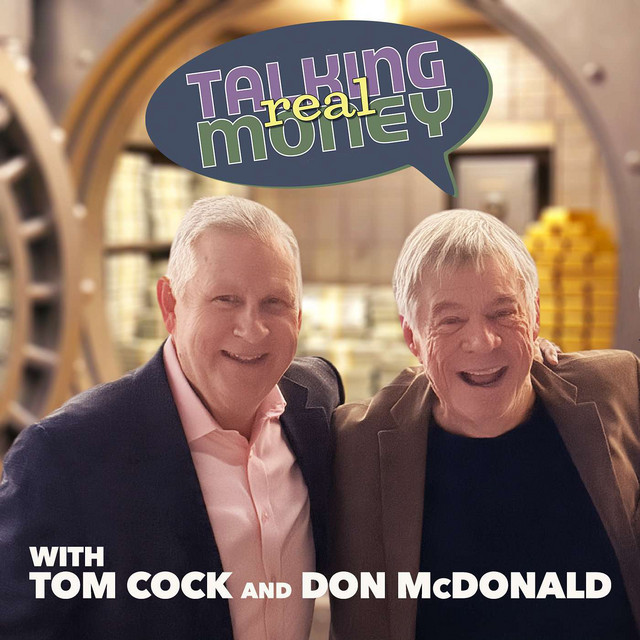
Pod Insights Talking Real Money - Investing Talk Ep. 1925: You Can't Beat 'Em About this episode Don and Tom tackle the blurry line between free speech and market manipulation after the conviction of prominent short seller Andrew Left. They debate whether financial influencers should be allowed to profit from public stock recommendations, discuss why members of Congress continue trading individual stocks despite widespread public opposition, and explain why ordinary investors should avoid trying to outsmart people with superior information or influence. The conversation then shifts into ...
Transcript 0:05 Speaker 00 Your guides to a really great financial future. Tom and Don are talking real money.
0:12 Speaker 01 Wow, we're coming up on the 250th anniversary of these United States of America from the signing of that Declaration of Independence, July 4th, 1776, to the Constitution to today. And there's one thing that we've sort of had that whole time, it's kind of interesting. There's a money angle to this, you'll see in a minute, and that's the freedom to speak pretty much as we want to speak. But it does have limitations. And where are those lines and how do they affect you as an investor? Well, we're going to address that question, or those questions. Hey, everyone, welcome to the Talking Real Money Podcast. I'm Don McDonald, that guy over there is Tom Cock.
0:55 Speaker 01 And we're here pretty much every day to make money make more sense and possibly entertain you just a tad with bad humor. And hopefully, one of these days, you're going to go, wow, look, these guys actually helped out. The proof, though, is we still, we get calls from people who said, I started listening to you like 30 years ago and I'm doing really well. Okay, worked. So, anyway, let's talk about free speech. How free is free speech? Recently, a gentleman by the name of Andrew Left, a relatively well-known short seller who runs a company called Citron Research.
1:34 Speaker 02 I think right there, you should say again, describe short selling.
1:38 Speaker 01 Short selling means you sell a stock you don't own because you expect it to go down. Now, that is perfectly fine. Anybody can short sell anytime, anyplace. But some people short sell, and they have the money and the soapbox, and then they write articles slamming the companies that they're short selling. This has been done, this has been done for a long time. Bill Ackman did it. You know, there's a lot of this. Well, Andrew Left recently, in the last few weeks, was convicted.
2:13 Speaker 01 Of manipulating the stock market for profit and guilty of 13 charges where he slammed companies like Roku and Nvidia and Tesla and made about 20 million dollars. Now he faces about a million dollars a year in jail.
2:33 Speaker 02 25 years. So according to the Justice Department, he made bold public calls on stocks, often using social media, and then exited the trade minutes or hours later.
2:46 Speaker 01 Right.
2:48 Speaker 02 Making little moves in the stock market.
2:51 Speaker 01 Is if you have followers, followers tend to what well, what is it's built into the word, they tend to follow. And so followers would sell the stocks that he had already shorted.
3:04 Speaker 02 Yep.
3:04 Speaker 01 And so what it's in some parlance, it's called front running.
3:09 Speaker 02 He would influence the future price of that security because he's telling people, get out of this.
3:14 Speaker 01 Yeah. And then he gets out of it before they realize that they need to get out. So is this legal or illegal? Hmm. That's the question. Tom and I actually have very different opinions on this.
3:27 Speaker 02 Fascinating.
3:29 Speaker 01 I think that it should be illegal. Pretty much across the board. There's a limit to free speech. And if you are, and he knew, see, here's the thing, it's intent and knowledge. You know, he wasn't just a guy who had a position in his portfolio and wrote an article about it. Although even if you do that in the media, you're supposed to say, I have a position in this company. That is a legal requirement. You're supposed to say that. But I think this exceeded that. It's not just free speech, in my opinion.
4:02 Speaker 02 Is this yelling fire in a, in a movie theater?
4:05 Speaker 01 Kind of. No.
4:07 Speaker 02 Okay.
4:08 Speaker 01 No, because it's not, it doesn't rise to that level of danger. But what he did do was use others.
4:17 Speaker 01 To make him a prophet, knowing full well that these others would do what he told them to do because they'd done it before.
4:24 Speaker 02 But he said to do X and he did Y in some cases.
4:28 Speaker 01 Well, no, he did X first. And then he told them to do X.
4:33 Speaker 02 Yep.
4:33 Speaker 01 And then when they did X, he did Y.
4:37 Speaker 02 Yeah.
4:37 Speaker 01 Because, cause and effect, he knows.
4:40 Speaker 02 So, in his mind, he says the criminal case is an effort to regulate financial influencers.
4:49 Speaker 01 Mm-hmm. Okay. You can be a finfluencer all you want, as long as you're not playing the stocks you're talking about. If I said here, wait a minute, we've got an audience of thousands and thousands of people, tens of thousands of people, alright?
5:04 Speaker 02 Yep.
5:05 Speaker 01 If I bought a stock today, today, and I went on this show and I said, "Oh my God, this is an incredible stock, you gotta buy it," and you know, because 10,000 people put in buy orders, I'm watching the price and it goes up like 15%, boom, like that, and I sell. Is that, should that be legal?
5:29 Speaker 02 If disclosed, I think you could say yes, right?
5:32 Speaker 01 I, I even think it should be no.
5:35 Speaker 02 Fascinating, yeah, that we're on the opposite, it's... So, he made overly false statements.
5:42 Speaker 01 I know I'm using you, I know I'm using you, the listeners, to make me money. And manipulating the market to do so, I think that's wrong. Am I naive?
5:52 Speaker 02 I don't know, because that, in that same vein, then in some way, short selling itself should be illegal.
6:00 Speaker 01 No, I disagree. If I don't believe, like, I think Nvidia's overpriced, and I'm not saying I do. And I short sell it, and it goes down, I'm lucky. That's fine. I didn't tell you that I thought it was gonna go down and rely on you selling it to make my trade work. That's the difference.
6:22 Speaker 02 Yeah, and the witnesses they had against him said his words carried special weight because traders thought he had skin in the game.
6:31 Speaker 01 You got it.
6:32 Speaker 02 And that's why they said, "Oh, well, if Andrew's in on this, I'm in." But he had, in many cases, sold out of the position.
6:42 Speaker 02 As you said, kind of along the way or before, whatever it is to profit by it and then used other people's trades, you know, they're on their own, they're going against where he actually was at that moment. It's tricky.
6:54 Speaker 01 And let me ask you this. You are, I know you are a huge advocate of laws that would not allow government employees and members of Congress to trade stocks, correct?
7:08 Speaker 02 We'll talk about that, those numbers, which I think are far more shocking than this.
7:11 Speaker 01 Yeah, I want to get to those numbers in a minute, but let me, but let me, the question though is, the implication, the reason we don't want our representatives and our government officials to own stocks and to buy stocks on their own, is because they have knowledge that we don't have and therefore they could and of course are, we're not naive, I mean, we're not that stupid. If these guys are making thousands of stock trades, some of them, a year, they're making it on knowledge that they got somehow, because they're doing really well, they're doing better than your average stock pickers. How is that different? How is that different from the short selling guy?
7:49 Speaker 02 Yeah, but they aren't doing a head fake with the public, right? They're not saying...
7:55 Speaker 01 Well, kinda. They're kinda doing it, they're taking advantage of knowledge they have before the public gets it.
8:02 Speaker 02 Well, that's, that's a separate issue to me, because that's insider. What he's really doing is using his influence to convince people to do a certain thing and then going against that.
8:11 Speaker 01 But he's kind of an insider, though. I mean, in the fact that...
8:14 Speaker 02 Is he an insider?
8:15 Speaker 01 He can move, that he can move money, he can move markets.
8:18 Speaker 02 Can he?
8:19 Speaker 01 It's been proven he did, I think.
8:20 Speaker 02 Because listen to the numbers, he, the trades he was making were relatively small, I think I read 20 million or something.
8:28 Speaker 01 Relatively small?
8:30 Speaker 02 Yeah, in a market where the daily trading is a one trillion dollars.
8:34 Speaker 01 Yeah, but still, that's a, 20 million here and 20 million there, pretty soon you're talking real money.
8:39 Speaker 02 Yeah, there are 70 to 75 million trades a day, roughly, daily trading volume somewhere around a trillion dollars around the globe.
8:48 Speaker 01 Mm-hmm.
8:49 Speaker 02 So, I think his impact is pretty, I'm not saying he's innocent, but I think when I read it, I was like, I think this will get overturned on appeal.
8:58 Speaker 01 All right, but those, those 75 million trades are in how many stocks?
9:07 Speaker 02 Well, I don't know how many.
9:08 Speaker 01 Ten thousand?
9:08 Speaker 02 Yeah, let's say 10,000 for sake of argument.
9:11 Speaker 01 Okay.
9:11 Speaker 02 Yeah.
9:12 Speaker 01 He's making 20 million on trades in one day on one stock.
9:17 Speaker 02 Yeah.
9:19 Speaker 01 It puts it in a much, much brighter light, in my opinion.
9:23 Speaker 02 Yeah, but since you brought it up, I think a far bigger issue is exactly what is according to Common Cause, in 2025, members of Congress made 13,324 trades totaling $630 million. Um, that's shocking.
9:45 Speaker 01 Well, although how many? Wait a minute. Okay, I'm gonna get in a little bit of political trouble. This has nothing to do with, I, I am not deranged for all of you who support the.
9:55 Speaker 02 Slightly deranged.
9:56 Speaker 01 I, I am not deranged. I am opinionated, but not deranged. Um, so you said it was 13,000 trades?
10:03 Speaker 02 13,000 trades, that's right.
10:05 Speaker 01 In what period of time?
10:06 Speaker 02 A year.
10:08 Speaker 01 How many trades were made in Donald Trump's personal brokerage account?
10:13 Speaker 02 I think we knew this because we talked about it once. Was it 3,000 or something or 4,000?
10:18 Speaker 01 Yeah, it was about 3,000. Gee, that seems to me that's about 25% of what the entirety of Congress did.
10:26 Speaker 02 But his is in a blind trust.
10:27 Speaker 01 It's not a blind trust. That's the thing. It's not a blind trust.
10:31 Speaker 02 Oh, boy.
10:32 Speaker 01 It's not. No, but it literally is not a blind trust. If it was, yeah, it's not.
10:38 Speaker 02 Typically, it would be. The president would have it in a blind trust.
10:40 Speaker 01 Right, but not in this case.
10:42 Speaker 02 No. But just to finish my thought on the congressional situation. By the way, Senator Blumenthal, congratulations, you're number one. 406 trades totaling $76 million. Apparently, they don't read much because traders generally. Don't end up with much money as people that just buy.
10:59 Speaker 01 And by the way, Mr. Blumenthal is a Democrat and I find what he does appalling.
11:03 Speaker 02 It's shocking.
11:04 Speaker 01 It is.
11:05 Speaker 02 You didn't let me finish the thought. In a world, as I was saying.
11:09 Speaker 01 In a world.
11:10 Speaker 02 Where eighty-six percent of the public.
11:12 Speaker 01 Percent of the public.
11:14 Speaker 02 Supports banning Congress from trading.
11:16 Speaker 01 Yeah.
11:17 Speaker 02 Eighty, I mean, nine out of ten people say you shouldn't do it, we should make it illegal. And when it comes up, they always have these excuses like, well, that's not fair to a member of Congress. I think, well, don't they have mutual funds and exchange traded funds they could put the money in? Not pick individual stocks? I think Nancy Pelosi said that when they brought it up last time. It's like, oh, well, that's just unfair to us.
11:37 Speaker 01 No, it's not. Buy a dang index fund.
11:40 Speaker 02 I know, but insider information, as you just mentioned, conflicts of interest, over the top.
11:47 Speaker 01 And I find it appalling that Democrats and Republicans are doing it. I hate it with a white-hot passion. And by the way, I just checked. Trump's assets are held in a trust managed by his children.
11:59 Speaker 02 That's right. So it's not blind. He can sit down every night after work.
12:02 Speaker 01 He can look, he can pull up the numbers. They're right there in front of him.
12:05 Speaker 02 Yeah.
12:06 Speaker 01 A blind trust requires an independent trustee and the office holder is not informed about the investment decisions or the holdings until after the fact.
12:17 Speaker 02 Yeah, and you imagine what that'd be like too? You finish the presidency like, how did I end up doing this last four years? Oh, well, sir, I made a really bad bet. I.
12:25 Speaker 01 Actually, it's probably, it would probably be better. Unless, of course, there is some nefarious behavior. And the reason we don't like this kind of trading on the part of members of Congress and the executive branch is because there is
12:45 Speaker 01 a whiff of potential impropriety.
12:51 Speaker 02 Well, you already said there was improper, there has to be.
12:54 Speaker 01 Right. In some cases, we, in some cases, we know of trades that were, that happened prior to a war breaking out, for example.
13:04 Speaker 02 There were some oil trades that have been suspicious here the last few months.
13:08 Speaker 01 They happened right before a war started that nobody was supposed to know about because it was, I don't know, top secret?
13:17 Speaker 02 Classified?
13:19 Speaker 01 Congress, Wall Street, the president.
13:25 Speaker 02 Wake up.
13:25 Speaker 01 Other officials. You need to act better than everybody else.
13:35 Speaker 02 I agree.
13:35 Speaker 01 You need to set a better example for the world, and if you keep doing what you're doing, the example you're setting is that, well, if you can't beat them, cheat them.
13:47 Speaker 02 And what you're saying about where we started with this, about Mr. Left, is that this is unfair. And by the way, if it is, and he is convicted, he's been convicted.
13:58 Speaker 01 He's been convicted of 13 counts.
14:00 Speaker 02 If it holds, I want an investigation of every finfluencer, all these people that are on the internet, etc., promoting this or showing us whatever.
14:09 Speaker 01 Yep.
14:10 Speaker 02 I want to see their trading record.
14:12 Speaker 01 I think we should, but it's a, it's a huge job, and it would require a, a massive effort, and I don't think we're willing to do that. But there's a moral, though, to this whole story. No matter what side of it you're on, no matter what you think of the parties involved, there's a moral to this story. And this is a moral that we have carried throughout this program since it, since its inception. And that is, you can't beat these guys. They have too much power for you, a person sitting at home or sitting in your car, listening to this podcast, without a big audience.
14:52 Speaker 01 You can't beat them. You don't have the edge and you probably don't want to cheat. Do you? Maybe you do. I don't know. It sure seems like a lot of people do. Members of Congress. It's cheating. It's cheating. You're just, you don't want to admit it because you're greedy. You're just greedy. How much money do you need, really? Any of us. Anyway, I've granted enough.
15:27 Speaker 01 Send us your questions. And by the way, okay, if you want to give us a bad review for something we said, you listen to the show. You know, it's not a one star show. At least if you don't like what we say, put in three stars. You know, I kind of like the show, but sometimes I don't like what they say. If you're gonna do that, okay?
15:47 Speaker 02 But don't make it one star.
15:49 Speaker 01 One star means you absolutely hate the show. Then if you absolutely hate the show, why are you listening? I don't understand. Anyway, moving on. Well, at least it wasn't crypto today.
16:04 Speaker 02 What was it today?
16:05 Speaker 01 No, we had a little politics, but no crypto.
16:07 Speaker 02 Oh, no crypto on the show you meant today?
16:09 Speaker 01 No crypto on the show. Crypto, crypto always gets us into trouble. It's so funny. It's so funny to read the reviews and find that there are two things. There are, if we ever say that the president is wrong about anything, even though I've said, even though I've said Biden was wrong about things, I've certainly said the Clintons were wrong about things. Uh, I, there were some things Obama did that I did not like. You know, I have criticized every president that has come down the pike since I was a, I was able to critique. I mean, I remember with Nixon, I had fights with my mother about Nixon. And then I became a Republican. After that, I don't know how that happened. Oh, money, probably.
16:51 Speaker 01 Uh, selfishness. That's why I became a Republican. You wanted it to truth. It's the truth. I wanted lower taxes for me. Selfish me.
17:01 Speaker 02 And that's pretty much everybody wants lower taxes for moi.
17:04 Speaker 01 Oh my gosh. And speaking of lower taxes, this is an aside, but what the heck? It's a podcast.
17:12 Speaker 01 The Florida legislature a few weeks ago passed a constitutional amendment to slash property taxes in Florida.
17:26 Speaker 01 Dramatically with the goal to eventually, hopefully, they want to eliminate property taxes in Florida. We don't have a state income tax. I don't know how they think the local governments are going to pay their bills, but kind of interesting and it's going to be on the November ballot.
17:43 Speaker 02 Oh, it is.
17:44 Speaker 01 Mm hmm.
17:45 Speaker 02 And people are just, yeah, sure. I don't want to pay that all.
17:47 Speaker 01 I don't want to know. I bet it passes. I bet it. It needs 60% by the way, to become a constitutional amendment.
17:53 Speaker 02 Getting 60 on anything is tough.
17:55 Speaker 01 I still think because because people vote their self-interest. I mean, I looked at it and went, holy cow, this could save me like $1,000 a year. Initially, the first round.
18:12 Speaker 02 Yep.
18:12 Speaker 01 And I'm going, so do I vote my self-interest? Or do I vote what I believe is better for my community?
18:22 Speaker 01 I haven't, I don't know. What should I do? I'm going to ask the listeners.
18:26 Speaker 02 No, you're going to vote what's right for your community. Come on, I know you.
18:29 Speaker 01 I probably.
18:30 Speaker 02 You're involved in your community. So, all right. Should we get to the questions?
18:33 Speaker 01 Okay. By the way, questions came in at talkingrealmoney.com, talkingrealmoney.com. Uh, these are the ones that you typed. If you type them, they go on the Monday through Thursday shows. If you go and hit the record button in the corner, the mic, and you speak them, they go on the Friday Q and A show. So here are some of those typed ones that Tom just loves ruffling, riffing, riffing between his fingers.
18:54 Speaker 02 Riffing between the fingers. Ah, from Hartcell, Alabama. Jamie writes, in the latest episode.
19:01 Speaker 01 Hartcell.
19:02 Speaker 02 Oh, I was wondering about that. Yeah.
19:03 Speaker 01 Yeah, it's not Hartcell.
19:04 Speaker 02 Hartcelli, Hartcelli. How about that? Uh, in the latest episode, if you, you asked if anyone's employer matches with the Roth contribution. My employer's 401ks with John Hancock and they do match 50% of my Roth 401k contribution. In other words, we had, we had, first I didn't even know that people, that that was legal. So I'm chose you how out of time I am, and I didn't know anybody doing it. So a few people have written and said, yeah, my employer matches with the Roth, a Roth contribution rather than a pre-tax one. This has changed in the last few years. So that's, that's really great. Uh, but then Jamie went on, since I'm already here.
19:42 Speaker 02 A little weird, but you're not actually here. But since you're already writing a question.
19:45 Speaker 01 Yeah, he's kinda here. He was there at the, he was there in the moment.
19:49 Speaker 02 Okay. Says, I'm 54, started a Roth IRA with Fidelity this year and plan to max it out each year. If I retire in the year I turn 59, could I go ahead and take distributions from it without penalty, even if I'm not 59 and a half?
20:06 Speaker 01 Kinda.
20:07 Speaker 02 You can take the contributions out.
20:09 Speaker 01 Yeah, you could take the contributions out. You can't take the earnings out.
20:12 Speaker 02 Yeah.
20:13 Speaker 01 Or the gains, the, the increase in value.
20:16 Speaker 02 But if you did a conversion, you could not. But, um, so yeah, you can, you can go, I, I, why would you do that though? Why would you save for the next five years and then start taking the money out? That doesn't make sense to me.
20:25 Speaker 01 I, I don't think, see, that's not taking advantage of the biggest benefit that these accounts provide, which is tax-free compounded growth.
20:35 Speaker 02 Yep. So I would leave that there and probably pull money from another, another place. Says, thanks for all you do. Enjoy the podcast and hope to get Don's Civil War book soon. I ordered it today.
20:47 Speaker 01 Oh, he ordered it today?
20:48 Speaker 02 Yeah.
20:49 Speaker 01 I thought you, I was gonna say you ordered it a while ago. You ordered a bunch of them. You ordered 15 of them.
20:54 Speaker 02 I know. I've been giving them away. They're hotcakes here in the office.
20:56 Speaker 01 He skewed, he skewed my sales numbers.
20:58 Speaker 02 Popped them right up there. I love it.
21:00 Speaker 01 For, for that one day. It was a good day.
21:02 Speaker 02 I gotta find somebody else to do 15 tomorrow.
21:04 Speaker 01 15, 15 books. How much did I make on that? I made like 70.
21:08 Speaker 02 Wait, I gotta get a re, how much?
21:09 Speaker 01 I made about $70.
21:11 Speaker 02 Wow. Okay. Well, every 70 bucks helps. Um, from Blacksburg, Virginia. Isn't that the home?
21:16 Speaker 01 Oh, the home of the hokeys.
21:19 Speaker 02 Yeah.
21:19 Speaker 01 Do the hokey pokey and you turn yourself around.
21:22 Speaker 02 Spouse went there.
21:23 Speaker 01 I'm a, I am what they call, and at, at Virginia Tech in Blacksburg, I am what they call a spokie.
21:30 Speaker 02 Cause you're a spouse of a hokey?
21:32 Speaker 01 Of a hokey. I'm a spokie.
21:33 Speaker 02 I never heard that before. Armando, Armando writes.
21:36 Speaker 01 Blacksburg is a beautiful town, by the way. Gorgeous little town.
21:39 Speaker 02 Uh, hi, Don and Tom. Great show. And you're the rock stars of financial podcasts, bar none. Well, Armando, pretty much we're gonna do anything you say after that. You know that. So, um.
21:49 Speaker 01 You're right about everything and thanks for writing.
21:51 Speaker 02 Thank you. I was listening to one of your podcasts from 2021. Wow, we did this podcast in 2021?
21:58 Speaker 01 Were we? We were. Um. Doing it then?
22:01 Speaker 02 Yeah, we've done it for a long time. About Roth conversions and you advised your caller to let his traditional individual retirement account grow forever. And when he passes the kids, the money, when he passes, the kids can take care of the taxes due on his IRA and they can enjoy the free money. Do you still maintain the same belief? In other words, many people want to convert everything over to Roth, pay the tax so their kids get money tax free. Um, since I'm trying to decide.
22:27 Speaker 01 Then that hurts you and your retirement that you've been working, unless you're just so rich.
22:31 Speaker 02 Well, listen to the numbers.
22:32 Speaker 01 I just have so darn much money that I, I don't need it.
22:35 Speaker 02 You may think that when I tell you what our Mendo's got. Sickie 69 hub or pardon me, it's a she, I do apologize. She's 69, hubby is 72 and they have 3.6 million in IRA, 670,000 in Roth, 215,000 in brokerage. And about 112 in cash or cash equivalents.
22:52 Speaker 01 Nope, they're not that kind of rich.
22:53 Speaker 02 22% bracket.
22:54 Speaker 01 They're not that kind of rich.
22:56 Speaker 02 Sorry?
22:56 Speaker 01 They're not that kind of rich where you just like can willy nilly convert Roth IRAs. So your kids don't have to pay taxes over 10.
23:04 Speaker 02 That's not the reason to do it.
23:06 Speaker 01 No, it's a terrible reason to do it. If you're doing it for you.
23:09 Speaker 02 Situation over time, sure. If you're doing it because you want to stay in the 22% bracket for a period of time and you don't want your RMDs, then maybe that does make sense to fill it all the way up there. Do that. But just to do it for your kids, I have the same opinion.
23:24 Speaker 01 No, like, okay, they're, they could take it out over 10 years.
23:29 Speaker 02 Right.
23:29 Speaker 01 And pay the taxes over 10 years. And that means that, you know, they, for every hundred dollars, they end up with 75 after taxes, basically.
23:40 Speaker 02 Yeah.
23:40 Speaker 01 Good for them.
23:41 Speaker 02 And it might bounce them into another bracket and say, okay, still, I don't think that's a big deal. Um, by the way, Armando adds, hey, Tom, keep up the soccer talk, especially now with the World Cup just days away. So this was sent before the World Cup started, which is now started. I know we're all sitting around our sets every day watching numerous games, debating VAR calls, trying to decide whether it really was offside or not. Don's been
24:05 Speaker 01 I don't even know. I, to this day, Tom, Tom has taken me to some soccer matches.
24:09 Speaker 02 That's true.
24:10 Speaker 01 We've gone to several and I try to understand how that was offside and that wasn't.
24:17 Speaker 02 Well, the first problem you have, there's no S at the end of it. It's just offside.
24:21 Speaker 01 So. Oh, oh my gosh. You mean there's only one side?
24:24 Speaker 02 The laws of the game, then you'd be okay with it.
24:26 Speaker 01 And here's the other problem I have with football.
24:29 Speaker 02 Yes.
24:29 Speaker 01 Is that they don't call them rules. They're so pretentious, they call them laws.
24:33 Speaker 02 That's right.
24:35 Speaker 01 It's almost biblical, you know, it's like Moses came down from the mount with tablets, establishing soccer.
24:44 Speaker 02 Yeah.
24:45 Speaker 01 Yeah. He did the 10 commandments and the FIFA laws.
24:49 Speaker 02 We put it back together for him.
24:50 Speaker 01 Who, who, who decides what the laws are? Who is the law giver in the soccer world?
24:56 Speaker 02 I thought that was back to Congress. I thought that was their job. So I don't know. Uh, yeah.
25:02 Speaker 01 I try, you know, dude, I try so hard. I have MLS. I have the MLS thing on Apple.
25:08 Speaker 02 I know, I know.
25:09 Speaker 01 I've gone to the Orlando City games.
25:12 Speaker 02 You've gone to, you've seen the US men's national team play. I was there with you.
25:16 Speaker 01 I, I have. I've watched the Seattle Sounders play.
25:19 Speaker 02 That's true. You've been there at Lumen Field.
25:21 Speaker 01 I've watched games on the telly.
25:23 Speaker 02 You were a luminary at Lumen Field. I just thought of that.
25:26 Speaker 01 And you know, watching them on the telly is actually easier than watching them on the real pitch thing.
25:32 Speaker 02 How's that?
25:33 Speaker 01 Look, I called it a pitch because the field is so damn big.
25:37 Speaker 02 Yeah. How do you think I feel running all over that field, huh?
25:39 Speaker 01 Oh my God, I don't know how you do it. And then I watched this 3D thing on my Apple Vision Pro about Barcelona. Was it Barcelona? No, it was Real Madrid. Real Madrid.
25:50 Speaker 02 Yeah.
25:51 Speaker 01 About their stadium and their team. Their stadium is so amazing.
25:56 Speaker 02 The burn bow?
25:57 Speaker 01 Strips of the field move up and down. They
26:00 Speaker 02 Oh, that's right. Yeah.
26:01 Speaker 01 They hide them down below where they nurse them into perfection. They actually have a dude who, who, who, who rolls balls on it to make sure it's perfectly level and flat. There's it's an obsession.
26:15 Speaker 02 Yeah, well, there's big money involved in all this, as you may know. So speaking of.
26:19 Speaker 01 You know, that'd be like seeing some greenskeeper on an NFL field down there with a pair of scissors snipping the little.
26:25 Speaker 02 That one's quarter inch too tall.
26:27 Speaker 01 Yeah, that's what they do it in soccer, apparently.
26:30 Speaker 02 Yeah, well, it's very important. Ball has to go.
26:32 Speaker 01 Cause it's not just rules, it's laws. You could go to jail if the field is bumpy. It's a law.
26:39 Speaker 02 It's a law. Pay attention to the law.
26:42 Speaker 01 All right. Uh, look at the time. Oh, I think that means we have to end.
26:47 Speaker 02 I think it does.
26:48 Speaker 01 We try to keep these somewhere between 20 and 30 minutes.
26:51 Speaker 02 About the average dog walk, because it seems like that's where most people are doing their listening.
26:55 Speaker 01 Dog walk commute. A lot of people commute with us, you know, it's, it's, it's like, it's like, I'll give you an analogy and a plug. Um, it's kind of like an audio book. Audio books are nice. They're good. You're on a long trip or whatever, but, but short stories. Our audio short stories are so much nicer for short trips and, you know, standing in line and that kind of stuff. Which is why I do all these short story podcasts.
27:26 Speaker 01 That need more listeners, by the way.
27:28 Speaker 02 Oh, okay.
27:29 Speaker 01 They do. I was looking. Well, no, this is a, because here's, here's the thing. There's a guy. And I'm not going to say who he is, but he does a short story podcast. He does like two a week. And he's got so many listeners. And I tried, I've listened to him and I try to listen with a critical ear. He's horrible. He's a terrible narrator.
27:56 Speaker 02 But he does two a week.
27:58 Speaker 01 And yet he has more listeners than I do, and it bothers me.
28:01 Speaker 02 I could get that impression.
28:03 Speaker 01 It, it bothers me.
28:06 Speaker 01 Lots more listeners.
28:07 Speaker 02 Yeah.
28:09 Speaker 01 I work really hard on my short stories. I even write some of them, so go check out. If you want to find them all, here's the easiest way. Go to shortstoryversus.com or just go on Apple Podcasts or Spotify and look for me. Just look for me.
28:23 Speaker 02 Picture just pops up there.
28:25 Speaker 01 Does it real? Well, you know, now I better, oh, hold on. I may be wrong. Before I say that, I'm, I'm gonna check, see if my name does come up. It may not be me. Let's see, Don McDonald. No, it really doesn't. Uh, so look for lit reading or short story.
28:40 Speaker 02 L I T, not L I P, by the way.
28:43 Speaker 01 Lit reading. I might have to change the name.
28:45 Speaker 02 I did confuse, confusing.
28:46 Speaker 01 Cause it bothers Tom.
28:48 Speaker 02 Yeah, it doesn't bother me. It's just a branding guy. It's kind of a concern. That's all.
28:52 Speaker 01 It means reading literature.
28:54 Speaker 02 I understand. Reading literature. So I get it.
28:59 Speaker 01 We gotta go now. We're done. We're total. Apparently we are done. Talking Real Money.
29:04 Speaker 03 The opinions and music expressed on this podcast were current on the date recorded. Opinions, estimates, forecasts, and statements of financial market trends that are based on current market conditions constitute our judgment and are subject to change without notice, including any forward-looking estimates or statements which are based on certain expectations and assumptions.
29:17 Speaker 04 Although information and opinions given have been obtained from or based on sources believed to be reliable, no warranty or representation is made as to their correctness, completeness, or accuracy.
29:27 Speaker 03 Information presented on the podcast is not personalized investment advice from Appella Wealth. The views and strategies described may not be suitable for everyone. This podcast does not identify all the risks, direct or indirect, or other considerations which might be material to you when entering any financial transaction. Past performance does not guarantee future results, and profitable results cannot be guaranteed. We hope you realize that the information provided on Talking Real Money is for informational, educational, and hopefully enjoyable purposes only. The podcast is not trying to get you to buy or sell any financial products or securities. Instead, the program is provided as a public service by Appella Wealth, a fee-only registered investment advisor.
30:00 Speaker 04 See Appella Wealth's ADV Part 2A on our website for information regarding Appella's fees and services.
30:05 Speaker 03 Appella Capital LLC, DBA Appella Wealth, is an investment advisory firm registered with the Securities and Exchange Commission. The firm only transacts business in the states where it is properly registered or excluded or exempt from registration requirements. Registration with the SEC or any state securities authority does not imply a certain level of skill or training. Appella does not provide tax or legal advice, and nothing either stated or implied here should be inferred as providing such advice. Thanks for listening, and please visit TalkingRealMoney.com for more information and important disclosure related to performance of any specific index or fund quoted in this podcast.
30:36 Speaker 03 Oh, I think I need a nap.
Previous Ep. 1924: Cash Can Be Trash Next Ep. 1926: Another Money Quiz Page updated November 14, 2026 · transcript and summary are machine-generated