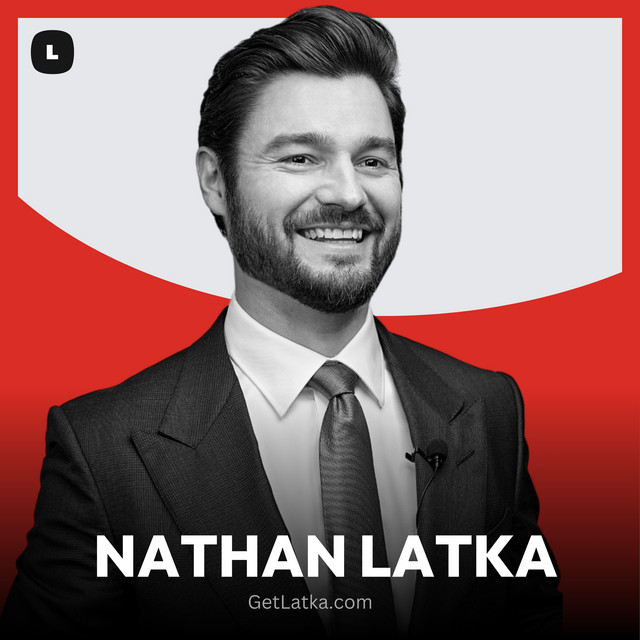
Pod Insights SaaS Interviews with CEOs, Startups, Founders How TitanX Hit $9.7M ARR After Buying IP for $200K About this episode How do you turn $200K into a $9.7M ARR SaaS company with a $100M valuation by buying IP instead of building from scratch? Joey Gilkey is the founder of TitanX, a sales intelligence platform generating $9.7M ARR after launching in 2024. The company serves enterprise sales teams with contracts ranging from $24K to $250K annually, with its largest deals exceeding seven figures. What makes TitanX interesting is its approach to building a moat. Instead of competing as another data provider, the company sits between data sources and execution layers, using proprietary signals and AI to improve outbound performance. The business scales through high ACV sales, expansion revenue, and strategic acquisitions. You'll learn: How Joey turned a $200K IP purchase into a $100M company Why buying IP can be faster than building SaaS products How TitanX structures pricing from $24K to $250K ACV The role of proprietary data in building defensibility How inbound, outbound, and referrals drive pipeline Why expansion revenue is core to growth strategy How acquisitions accelerate ARR growth The credit-based pricing model and consumption dynamics How TitanX uses AI to improve outbound performance The logic behind raising $27M and taking secondary cash Joey started in enterprise sales before launching multiple businesses and eventually betting his entire net worth on TitanX. After acquiring the IP in 2023, he shut down a profitable services business to focus fully on SaaS, scaling from zero to $9.7M ARR in under two years. This episode is for SaaS founders thinking about capital allocation, high-ACV sales, and building defensible data products. It's a practical breakdown of how to scale quickly using acquisition, pricing, and distribution strategy. Watch this episode on YouTube: https://youtu.be/mxiCodnXo6U?si=zebVllHlOY7UlVqO Connect with Joey: https://titanx.io/ Connect with Nathan: https://founderpath.com/
Transcript 0:00 Speaker 00 What did you spend on the IP?
0:01 Speaker 01 1,200 grand upfront, 800 grand seller note.
0:03 Speaker 00 What's revenue today at TitanX?
0:05 Speaker 01 Today, we're sitting, at the time of recording this, we're at 9.7 million ARR.
0:10 Speaker 00 What's your largest customer pay you per year today?
0:12 Speaker 01 One just expanded to 406 ARR, three-year contract.
0:16 Speaker 00 Oh wow, okay, so it's a 1.2 million dollar contract. Did you get creative on this acquisition? Was it 10 million acquisition, a million upfront? Or how did you structure it?
0:22 Speaker 01 It was a 13 million dollar acquisition. We put 7 million upfront. We went growth equity. So we raised 27 million and then 10 million went in our pocket as secondary cash.
0:31 Speaker 00 Zoom, if Henry Shuckett's Minfo came and offered you 200 million dollars all cash today to sell the company, do you take it? Hey folks, my guest today is Joey Gilkey. He's a serial entrepreneur and the founder of TitanX, a sales intelligence platform that created the phone intent category. He famously bet his entire net worth on the company, shutting down three other cash flowing businesses to focus on a proprietary model that predicts who will actually answer your cold call. Under his leadership, it's grown to millions of revenue and they just recently raised a Series A. Joey, you ready to take it to the top?
0:58 Speaker 01 Let's do it, brother.
0:59 Speaker 00 All right, so tell me first, how did you get into this space? Are you an ex-sales guy or when did you launch?
1:03 Speaker 01 Yeah, man, I've been in the enterprise sales world my whole career. So I started off in the Fortune world.
1:08 Speaker 00 Okay, so tell me about that. When did you acquire that piece of IP? What year?
1:12 Speaker 01 That was August of 2023 and I acquired it for a different reason than it turned into. So I seemed like a brilliant, more just like a brilliant idiot. Thought how I was going to use it was I was going to build it for my fractional business. It was going to be the moat around that services company. We started using it in like a licensing model at the fractional company. And then I realized pretty quickly that it was like dark magic that was heavily expensive and very slow. And if I can get my hands on it, I can throw money in R and D and optimize it. Plus, I knew where a lot of the bodies lived when it comes to where does unique telco data live? And fraud detection data, all that kind of stuff.
1:49 Speaker 00 So what did you spend on the IP? Was it millions of dollars or?
1:53 Speaker 01 1 million on the dot.
1:55 Speaker 00 Cash?
1:56 Speaker 01 200 grand upfront, 800 grand seller note. So I turned 200,000 dollars into what is currently valued at 100 million.
2:04 Speaker 00 Okay. Well, now we have to like, I gotta figure out where to jump around. I'm just curious about so many things. So I guess, why did you feel like you needed to buy the IP versus just build it from scratch? And were the million bucks just bought you so much time?
2:15 Speaker 01 Uh, it bought me a ton of time for one. For two, uh, a lot of my competition, again, the goal is to, to both build the moat and pull the drawbridge up from competition. So a lot of folks in my space were starting to, to look at it, see it, use it a little bit. And there were some big behemoth competitors like Memory Blue, Abstract Marketing and things of that nature on the like outsourced sales development world that were starting to get their hands on it. And I was like, if I'm going to protect this and have a unique value prop, I gotta own it and I'm going to dictate who can use it.
2:45 Speaker 00 What was, I mean, I interview a lot of folks that tell me they have proprietary data. And then when you dig into the hood, all they're doing is buying other people's data. They're running an ETL process on it and then selling it back to customers. What was the actual proprietary data set here? Was it a process or an actual data set?
2:58 Speaker 01 It is both, right? So, and it's been built upon dramatically at this point. So when I bought it, it was a tech-enabled service. So there's a lot of like technology enabling humans in the loop to power it. And so for us, it was more about how do we make this scalable without having a deprecation of the quality of the outcome? So if anything, it's actually gotten faster, it's gotten cheaper, uh, it's, we can do it at scale at this point. And, uh, it's more effective in terms of the, the data we're able to find now.
3:23 Speaker 00 So fast forward to today, you've grown this thing. You bought it for 200K cash plus 800 sellers note. What's revenue today at TitanX?
3:30 Speaker 01 TitanX is sitting, we just did a, a small acquisition. Uh, we paid low aid figures for that. And that is in the dialer space. So we acquired a company called Frontspin at the time of this going out. That will be very public. So Frontspin was built for high velocity dialing, not a very sound business, but an incredibly sound and scalable technology can scale to a million users. And we've been, uh, power users of Frontspin in a lot of different ways. It actually powered the call center in the early days. So that's how we know so much about it. It excels in call deliverability. So anyways, uh, today we're sitting at the time of recording this, we're in early 26, we're at 9.7 million AR.
4:06 Speaker 00 That's post-acquisition, right?
4:08 Speaker 01 Post-acquisition, they're contributing about 2 million. So formerly, or excuse me, wow, old school, TitanX is sitting at about Seven point, uh, seven point two, seven point four and uh, front spin's at two point one.
4:20 Speaker 00 And did you get creative on this acquisition? If it's, you know, was it a 10 million acquisition, a million upfront? Or how'd you structure it?
4:25 Speaker 01 Yeah, it was a $13 million acquisition. We put 7 million upfront. We went growth equity. So we raised 27 million, uh, 10 of which, uh, is primary. So that's for growth, a little bit more than 10. Uh, 7 million went towards the, uh, acquiring front spin. 6 million of that from front spin CEO got rolled in. And then 10 million went in our pocket as a secondary cash.
4:46 Speaker 00 Cause I wanna, first off, it's very rare to find a founder that's as transparent as Joey. So I'm gonna really push on this. One of the things that I see founders, they're just making a mistake right now is, you know, when you go out and raise external capital, people say, Nathan, you just hate VC. That's not the, that's not true. What I actually am saying is if you're gonna go give up control, take cash as well. Don't give up control and cash. So like Joey gave up some control here with the series A, but he also got paid. He got his first bite. I mean, I don't know Joey, what your personal net worth is, but I imagine 10 million secondary is meaningful for you.
5:13 Speaker 01 Yeah. I mean, it certainly adds some padding. I mean, I've done well in my career, but it, I did bet my net worth on this, this. So, uh, I'm basically just replenishing a lot of capital at this point, but yeah, it helped.
5:23 Speaker 00 So let me ask you a question. You raised the 27 million at what valuation?
5:28 Speaker 01 Uh, just under 190 something, 92. Um, but since then we've grown, we've added, we've added about a million two in the past month. Since the acquisition finished. So we're well over a hundred.
5:41 Speaker 00 The reason I'm bringing this up is this is a really cool arbitrage here. Mostly public companies do this, but you're doing it in the private markets. What I mean by that is when you did the 27 million round at what is called a hundred million post money. And you're doing 7 million of ARR. That's about a 14.3x multiple. At the same time, you use that money to go buy front spin, which was 2 million of revenue. Right? For call it, uh, I think you said 7 million, right? That's, right? Is that right?
6:04 Speaker 01 13.
6:05 Speaker 00 4x 13. Oh, 13. Okay. Still, you're still in the money.
6:08 Speaker 01 And so I wanted to give them a piece, put them on the cap table. Obviously it's earned. Um, and so I had a lot of criteria. I want to control. I wanted to steer the ship. Don't touch my culture respectfully. Go F yourself if you want to. And they were like, cool. We believe in that. It was great.
6:24 Speaker 00 Guys up in, you know, Founder Path by Man Gave, it looked very supportive of Joey's deal. I'll just put it that way. So up to you'd also, I guess Joey say good things about Updata.
6:31 Speaker 01 Oh, they're awesome. You know, that was the biggest thing is I need a partner that believed in our vision, knew our market. Like when they showed up for the first management meeting, they'd interviewed customers, done deep market research, like became prepared.
6:43 Speaker 00 Whenever you're ready, though, I will convince Trey and eventually you to take a $5 million term loan from Founder Path with a, with a four-year IO period and an all-in interest rate in the 12% to 14% range. No warrants, no PGs, no nothing. Click that. There we go. All right. Hey, so where do you, do you keep running this playbook over and over? I mean, you effectively could buy your way to 100 million bucks of revenue just doing the same thing over and over.
7:04 Speaker 01 Yeah. I mean, I look at, again, just the buy versus build risk quadrant for me. It's, it's more along, uh, what's the timeline? What's our goals? When's our recap timeline and when we're going to actually recap this thing again? I plan on rolling this thing two, three times, um, in terms of rolling equity over. I just really believe in the vision. It's always going to be about the partner. It's going to be about the valuation clearly and what the secondary looks like on those deals. But we have, you know, with where TitanX lives today, we are an intelligence layer that lives between where people get their data from. So think ZoomInfo, Klay, Apollo, Cognizant, and where they dial that, right? So that goes through Salesforce, SCPs, and then eventually it makes it to Nooks and Orem and now Frontspin.
7:45 Speaker 01 Well, we, we captured the bookend there on Frontspin, um, with, with having the, the dialer and the intelligence layer built in. What is, what I do believe is the future, I don't want to be a data provider in the sense of I'm not trying to compete with ZoomInfo and those guys. I think data is a commodity, but it's how do we manipulate that data? How do we use AI to really help inform better decisions? How do we close the full feedback loop of here's how I built the list? Here's how it scored with TitanX. Here's how I performed in the dialer. What does that tell me about the next list for my reps? So I think we'll probably play an AMA play there. Um, I've got a couple of targets in mind. I can't necessarily talk about it. I know you're going to ask. On that front end of the bookends.
8:23 Speaker 00 How do you know? How do you know I'm going to ask? Will you listen to the show?
8:26 Speaker 01 I haven't listened. I've read your book back in the day, actually, when I was broke.
8:29 Speaker 00 Oh, nice.
8:30 Speaker 01 Yeah, that was, yeah, dude, I actually arbitrage a few things. I arbitrage the Chrome extension back in the day off your.
8:34 Speaker 00 Yeah.
8:36 Speaker 01 I went and bought a Chrome extension, look at terrible reviews. Yes, the unique part about us is there's, if you think about our whole model, we've got 70-plus signals that we're pulling in our sources. Uh, most of which are either compliantly scraped in some ways or purchased on the private markets, um, or it's public data. And then there's, there's human elements to what we do that's impossible for added touch. Outbound dialing is regulated by FCC's TCPA guidelines. So you can't touch that. And that's a very small micro thing, but we have a lot of other things.
9:08 Speaker 00 No, I think it's extremely relevant though. I mean, you just give a perfect example. When, when someone comes to me and says, Nathan, you should, you should invest in the company. We have proprietary data. If they can't give me an answer like you just gave, I say, guys, like the foundation models are just going to scrape this and anyone can get this easily. What's your IP? So that, that makes a ton of sense. It's super interesting. Guys, remember I am not just a YouTuber. I'm investing in my third fund. We've deployed $250 million into 550 software companies so far. Again, at founderpath.com. If you're interested in capital, I would love to cut you a check because I know you're investing in your education. You watch my show. So sign up at founderpath.com. And when you get the onboarding email, I reply and I see all those. Just reply and say, Nathan, I found you through YouTube and I'll make sure to prioritize you. I would love to cut you a check. Check out founderpath.com.
9:53 Speaker 00 The question I've got for you, how are you getting customers today? Because when I put TitanX and Ahrefs, there's like no traffic. I think you maybe did a recent rebrand, but how are you getting customers today?
10:01 Speaker 01 I would say right now we're 45% inbound organic or about 9%.
10:05 Speaker 00 Wait, where is that though? Look, I'm not seeing any, I'm seeing very little inbound organic here.
10:10 Speaker 01 Uh, that's.
10:12 Speaker 00 Is it a different website you're getting traffic from?
10:14 Speaker 01 No, titanx.io is correct. I mean, we get about 9,000, 10,000 uniques a month.
10:19 Speaker 00 So he's maybe Ahrefs is just full of it.
10:22 Speaker 01 It's full of it. Yeah.
10:23 Speaker 00 Interesting.
10:24 Speaker 01 No, we probably, we probably generate, you know, in our average tick, we have different customer bands, right? So we have three to 10 reps, 10 to 30 reps, 30 to 50, 50 plus. Those kind of correlate to a price range of 24K, 50K, 90K and 250K. 45% is coming through inbound organic. That's about 140 meetings a month, just from the website with the high ACV. Uh, outbound's our bread and butter. Clearly we use our own product. And so about 38% comes through outbound sourcing, uh, phone only. And then I would say the rest is a mix of paid, uh, referrals and affiliates. We're building the referral affiliate market right now. It's, it's a really underutilized channel for us, but it's powerful.
11:01 Speaker 00 What's your height? What's your largest customer pay you per year today?
11:03 Speaker 01 Hmm, we're sitting at, uh, well, one just expanded to 406.
11:11 Speaker 00 1,600 a year.
11:12 Speaker 01 Three year contract. Yeah.
11:14 Speaker 00 That's great. Okay, so 406 per year over that three years?
11:17 Speaker 01 ARR, one year, each year.
11:20 Speaker 00 Oh, wow. Okay, so it's a $1.2 million contract.
11:22 Speaker 01 Yeah, we have one right now. They're a publicly traded company. They're currently at a quarter million, but they're about to expand like 1.5 ARR in a three year.
11:30 Speaker 00 What makes your sales team be able to drive that upsell revenue? Is it number of dials, number of seats, product-based upselling, something else?
11:35 Speaker 01 Yeah, so we're unique in the sense, not unique, we're consumption-based, so it's a credit model. And so we're very hands-on account management, technical account management, technical solution consultant. We have a VP of Customer Strategy that comes from the space. And so when we jump into an org like the one I'm talking about, we got in at 250. We've only got one team currently. There's six teams I can expand to. So a lot of it's moving to different teams and therefore adding credit consumption. Their credit allotment goes up, but then there's also different plays. You can go up, down, sideways. You can get into their partner side. You can get into their go-to-market inbound side. So six is the outbound side, but then you have other channels or other departments we can crawl our way through. Three are over-consuming, therefore it's an expansion opportunity. The under-consuming, it's a churn flag. And then we're just looking for different ways.
12:19 Speaker 01 And now naturally that we've acquired the dialer, now we have all of their product line that I'll be able to add on. It gives a whole nother level of intelligence and signals for how they're using platform.
12:27 Speaker 00 Interesting. If, as we wrap up here, finish your revenue story. You launched in 2023 with a co-acquisition of IP. What was 2024 ending ARR?
12:34 Speaker 01 Well, we didn't have one because I didn't launch this till June of '24. So I acquired in '23 as the IP to be the moat around the services company. I made the decision in early '24 to sunset the services company. Again, it was doing mid-seven figures. And then June, June 1st of '24 is when we took our first dollar, beta launch, 200 users. It was like, we're trying to do a PLG model, like the first month or two, I realized that's for the birds.
12:58 Speaker 01 And so we ended up going 0 to 1.4 million at the end of '24. And then 1.4 to whatever six-ish, six something, uh, end of 25. And then now we're with the combined acquisition and the growth of 26 so far, about 9.7.
13:16 Speaker 00 Really fascinating. And, and all that early, again, going from zero to six minute revenue that quickly, I just want to make sure I'm not missing any learnings from you. Was there any like customer acquisition strategy you used during those early days?
13:26 Speaker 01 Yeah. I mean, like, one, we do have a superpower in our tool. It's like why we have higher retention is why our NRR is out the roof. It's why our magic number is a 4.1 the last quarter.
13:34 Speaker 00 What's NRR?
13:34 Speaker 01 Uh, net revenue retention.
13:36 Speaker 00 Oh, what's the number? What is your, I know.
13:37 Speaker 01 1.36.
13:38 Speaker 00 Come on, you know me, you know I know what NRR means, but you're at 136? Okay.
13:42 Speaker 01 Yeah. Gross dollar retention is a little low. It's like 92. Um, we're fixing that. And then our, our magic number was 4.1 Q4 versus.
13:51 Speaker 00 Why do you say you're fixing the 92? I mean, that's not terrible in this segment of 92 gross, but 136 net.
13:55 Speaker 01 I want to see us at 97. It's my goal.
13:57 Speaker 00 Yeah. Interesting. All right. Very cool. Well, hey, finish up with the prediction here. What do you guys think you'll finish 2026 with?
14:02 Speaker 01 2026, 18.7.
14:04 Speaker 00 If someone came, if zoom, if Henry Shuckett's info came and offered you $200 million all cash to sell the company, do you take it?
14:09 Speaker 01 Absolutely not. That's way too low.
14:11 Speaker 00 That was so quick.
14:12 Speaker 01 Well, I have, you know, part of my growth equity deals, I threw in some kickers I need.
14:15 Speaker 00 Tell me what you mean by that.
14:16 Speaker 01 Uh, if we 2.5X, I get something back. If we 3X, I get something back. If I 3X on a certain timeline, I get something, something, something back.
14:23 Speaker 00 Like you set up an ESOP pool and that gets distributed to you at certain revenue targets?
14:27 Speaker 01 Yeah. Bonus structures, I get equity back, points back, so on.
14:31 Speaker 00 Super smart. This is awesome. I've learned a ton here. Joey, if people want to follow, uh, follow you online, learn more from you, where can they find you?
14:36 Speaker 01 Uh, I'm pretty active on LinkedIn, LinkedIn.com slash iron slash Joe Gilkey and Ty next.io.
14:42 Speaker 00 Guys, really interesting founding story. Had a seven-figure agency in 2023. He said, you know what? I'm using this one tool. Let me go buy the IP. It's called Phone Ready Leads. Spent about a million bucks to do that 200K cash upfront. Rest was a seller note. Ultimately took that 200K and turned into a $9 million ARR business, 9.7. Now today, it started off with 200 beta users and call it June 2024. He then killed that model, moved towards enterprise and broke 1.4 million bucks at the end of 2024, scaled to 6 million end of 2025. Again, now today scaling nicely, just did a series A of 27 million bucks at around 100 million post-money valuation, of which there's a large secondary component of 10 million. The rest went to his first or second really acquisition of a company called Frontspin. Doing 2 million of ARR, bought it for 13 million bucks. Creative deal structure there as well. Now focused on break in, call it 14, 15 million bucks here in 2026.
15:26 Speaker 00 Titanx.io. If you're doing outbound and you're using phone numbers, test them out. Joey, thanks for taking us to the top.
15:32 Speaker 01 Thanks, Matt. Appreciate it.
15:33 Speaker 00 You won't believe this CEO's revenue. Click here to watch the next episode right now.
Previous How TeamSupport Reached $10M–$25M ARR With 1,000 Customers | Grant Stanis Next How Allo Reached $10M Revenue With 5,000 Customers Page updated November 6, 2026 · transcript and summary are machine-generated