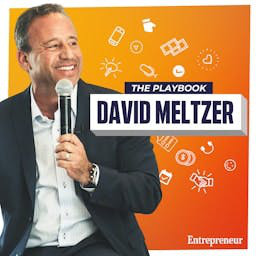
Pod Insights The Playbook With David Meltzer This One Simple Rule Would Have Saved Me $100 Million Dollars About this episode In today’s episode, I sit down with Chris Nichols of The Nichols and Dimez Show, where he uncovers the unique intersections of tech, sports, and business. We talk about the strategic role of venture capital and the importance of building quantitative value into every pitch, a skill that became my cornerstone as I transitioned from tech to CEO of a global sports agency. Chris and I also explore the differences between being a founder and a CEO, the unexpected lessons from past mentors, and the power of leveraging relationships. From sports to startups, we dive into the mindset that creates lasting impact and growth.
Transcript 0:00 Speaker 00 David Meltzer, what's going on?
0:02 Speaker 01 You know, it's always great to be here at the greatest stadium ever built. And now I have all the best people in the best place. And it just makes my day to have you here. So thanks for having me.
0:11 Speaker 00 Well, thank you so much for having me. And what a smart idea to have a media day. You just get people coming through SoFi Stadium to knock out a whole bunch of content and you're helping people out. You're helping younger creators who are getting things going and I really admire you for doing that.
0:27 Speaker 01 I appreciate it. Yeah, we um, hold court a lot around the country where I do free meetups. I hold court where I do this at a hotel, for example, and I bring in all the young entrepreneurs, investors, and I use media as a bug light because a lot of people want to do content with me or the people that I know. And it's amazing what happens when you bring a bunch of great people together. And I've been doing this for years, so it's amazing what outcomes have already occurred from these media days.
0:58 Speaker 00 Yeah, absolutely. Well, it's uh, you know, we're gonna, we're gonna jump right into it. We could chat and chat. I usually do a longer format, but I'm
1:07 Speaker 01 Most people do.
1:07 Speaker 00 Yeah, no, but I like this because it's something new and I think we're gonna knock out some good stuff in an efficient amount of time. So one thing that sticks out to me about your story is your intersection between tech and sports. My background is in tech, mostly cybersecurity and software. And I have a podcast, Nichols and Dimes Show, which is focused on entrepreneurship in the world of sports, health, wellness and fitness.
1:32 Speaker 01 Nice.
1:32 Speaker 00 So yeah, it's kind of a cool overlap there and you turned up as like the perfect guy to be on my podcast.
1:38 Speaker 01 It's funny you say that because a lot of people wonder how I got the job running the most notable sports agency in the world. And they think somehow that I went to law school to be a sports agent, that I worked in sports for years and years and years. And then by evolving the skills, knowledge and desire in the business of sports agentry, that Lee Steinberg pick and chose me for one of the highest, most highly competitive positions in the world.
2:02 Speaker 00 Right.
2:02 Speaker 01 Which was CEO of Lee Steinberg Sports Entertainment. But what really occurred is I developed my technology skill. My business acumen, but also my skills in venture capital. And so although I have a law degree, although I have worked as a customer in sports, in sponsorship, endorsements, speaking engagements, appearances. But the reason Lee Steinberg hired me beyond my normal business acumen, which people have better, beyond my law degree, which people have better, uh, was he couldn't find someone at the highest level that had worked in technology and venture. And so it's actually ironically, as you sit here in technology and sports, that it was
2:47 Speaker 01 the technology background and the venture capital background that I had that attracted Lee to hire me as the CEO of the most notable sports agency in the world.
2:57 Speaker 00 That is interesting. Do you think it was because of the transition in the world to become more technology focused and then the sports agency was trying to make that move?
3:05 Speaker 01 Yeah. So Lee had told me later on that he, early on, one of the first as a maverick in sports agentry, saw the importance of two things in the future of sports, which have held true now here so many years later. One, technology and two, venture capital. And if you look at where people really make the most money in sports, it's in technology of sports and venture capital.
3:30 Speaker 00 Right. So you kind of jumped into the CEO role, right? When you were at Samsung.
3:35 Speaker 01 Lateral move, correct.
3:36 Speaker 00 Yeah. And because you, you had a good first gig in tech where you, you call yourself an intrapreneur. I'm a huge fan of that word and I'm currently.
3:44 Speaker 01 Highly suggested for people, especially young people.
3:46 Speaker 00 Yeah, absolutely. Cause you do get sort of some founder experience, even if you're not a founder, but you work so closely with one or a CEO.
3:54 Speaker 01 And you get equity and you get health benefits. There's so many things that entrepreneurs that don't know what it's like to be an entrepreneur, don't realize.
4:01 Speaker 00 Yeah.
4:01 Speaker 01 There are always the grass is greener on the other side until you stop working for your big company with your big salary, your equity and your healthcare.
4:09 Speaker 00 Yeah. It's so, it's so true. How did you pitch yourself to be a CEO out of not having done that before?
4:17 Speaker 01 Well, um. It was having confidence where I shouldn't have confidence. I always say that practice articulating the quantitative value of what you're asking for to exceed what you're asking for. So throughout the years, I learned how to ask, which is a great skill set because most people don't have that.
4:35 Speaker 00 Right.
4:36 Speaker 01 But I also learned how to articulate my ask in value to exceed what I was asking for. So the mathematical equation in my head was not only do you have to have, excuse the language, the cojones to ask, which is really not cojones. To me, it's wisdom and faith is all that's required to ask.
4:55 Speaker 00 Yeah.
4:55 Speaker 01 But more importantly, from sports, I got this. I needed to practice the ask so that I was articulating more value than I was asking for. And so I called that the 120 rule, where if I was going to ask you for $20, I was going to be able to articulate within the context of my ask, $100 of value, because no rational person, if I said, hey, bro, let me trade you $100 for 20, would say no. Right? And so that's what got me my first CEO and continue job and continues to get me everything I would desire in life, is that I actually do the work to articulate the quantitative value to exceed what I'm asking for.
5:37 Speaker 00 I mean, it sounds like it's just the the master sales skill.
5:41 Speaker 01 It is, and it really is. And I teach people within the context of perceived value, bottom line, timing and risk tolerance, how to thrive, how to create a community of people that are buying from you and selling for you for life. And it doesn't necessarily mean product, service, solutions. It could be your personal brand, or it could be other relationships or other objectives in your life. So I do not just simply qualify with under the context of selling a product, service, or solution. There's so much more that you can do with this context and framework.
6:10 Speaker 00 Absolutely. Yeah. And so just going back to what we were just talking about CEO versus founder, you made that transition when you founded Sports One Marketing, right? So you had been CEO multiple times and then you became a founder. What would you describe as the the biggest growing pains or differences you you experienced personally when you founded the company?
6:29 Speaker 01 Two things. Employees. And overhead.
6:34 Speaker 00 Employees that always comes up.
6:36 Speaker 01 Employees and overhead mean completely different things when you're a CEO compared to when you're the founder.
6:42 Speaker 00 Yeah.
6:43 Speaker 01 And there's a huge difference and I joke around, but halfway serious, if I don't like somebody, the biggest way that I can curse them is to compliment them. And what I mean by that is if I meet someone that I don't like, I was like, man, I wish you all the success in the world. I hope you have thousands of employees and millions of square feet of office or warehouse, because I have just cursed him with the curse of the founder.
7:13 Speaker 00 Oh, man.
7:16 Speaker 00 That's good. That's.
7:17 Speaker 01 And they thank me for it. Oh dude, thank you so much. Anything I can do to help you, man.
7:23 Speaker 00 Amazing. That's clever.
7:24 Speaker 01 Thank you.
7:26 Speaker 00 Okay, I want to transition into sports a little bit.
7:28 Speaker 01 Good.
7:28 Speaker 00 One thing.
7:29 Speaker 01 Good place to do it, right?
7:30 Speaker 00 Yeah, I know.
7:30 Speaker 01 We've got the Chargers in the logo, not the Lions. That's good.
7:33 Speaker 00 Yeah, which is, yeah, it's funny. I grew up a huge Chargers fan. I'm a San Diego guy.
7:36 Speaker 01 I like you already. So am I. Patrick Henry, hi.
7:38 Speaker 00 I, it did kind of switch when they came up here, unfortunately, but.
7:42 Speaker 01 Yeah.
7:42 Speaker 00 You know, still deep in the heart, right? I had a good talk with Shawn Merriman a few weeks ago.
7:47 Speaker 01 Lights out.
7:47 Speaker 00 Yep. Oh, yeah. So one thing you said that was interesting about being a sports agent, or at least the evolution of it, is that they had a more focus on being a lawyer back in the day, and it transitioned into becoming more of a business person. And you, you were kind of the perfect intersection of that with your law background and then your business experience. How do you describe how that this has changed from, say, 20 years ago to today?
8:12 Speaker 01 Yeah, we're coming full circle. So sports agentry didn't exist till Lee Steinberg coined the frame as a super agent. And then the Jerry Maguire movie came out based on Lee, and then agentry became a really popular thing to be. But originally, you were just a sports lawyer and what you really were, were a labor lawyer.
8:31 Speaker 00 Yeah.
8:32 Speaker 01 Right? Understanding collective bargaining, contracts, negotiation, employment contracts. That's all you were. And we moved towards these sports agents being salespeople, sponsorship, endorsement, NIL, venture, all the different, the sports agents do some financial advisors. So many different things, which now in the world of specialty, the most great sports agencies.
9:02 Speaker 01 Hire sports lawyers to simply do the contracts and be a sports lawyer. So we're coming full circle that there's going to be more of a need just to be a labor lawyer.
9:14 Speaker 00 Yeah.
9:14 Speaker 01 Uh, to deal with the cap, the collective bargaining and the contracts. And the majority of the revenue though, will be generated from the business acumen, marketing, sales, digital marketing, business development, venture, technology, a variety of different things, not just for professional athletes, obviously, but the wild, wild world of NIL.
9:35 Speaker 00 Right.
9:35 Speaker 01 College in amateur sports.
9:37 Speaker 00 Yeah, which is a whole nother conversation, but it basically the way you answer that, it sounds like it's just the evolution of how much more marketable these athletes have become with all the different opportunities to promote a personal brand with social media or the internet or what have you, right?
9:53 Speaker 01 I mean, look at Caleb, he came in wanting ownership in the team.
9:56 Speaker 00 Yeah, wow.
9:57 Speaker 01 Right? That's ridiculous.
9:59 Speaker 00 Yeah.
9:59 Speaker 01 And so, but there's also other nuances that you never had before, you know, you take The Rock, who's one of the first that I knew that said, you know what, you give me a hundred million dollar endorsement deal, but I'd rather have stock in Under Armour, knowing that if I am endorsing Under Armour, the stock's going to double in price. And if you give me a hundred thousand dollars of stock, I'm going to, a hundred million dollars of stock, I may end up with a half a billion dollars.
10:28 Speaker 02 Whoever said good things come to those who wait, never shopped Black Friday early at Lowe's. Right now, get up to 50% off select major appliances. Plus, get free delivery, free hallway and free basic installation and parts when you spend $896 or more on select major appliances. Shop Black Friday early in store and online now at Lowe's. Valid through 12/2 while supplies last. Selection varies by location. See associate on Lowe's.com for details.
10:57 Speaker 01 Because of my influence on the stock.
10:59 Speaker 00 Yeah.
11:00 Speaker 01 And so there's so many variances and distinguishments in technology, venture and sports, business entrepreneurship in sports. Remember, sports is very similar to what you see behind me here, and it's almost analogous to my life. Sports has always been the backdrop of everything else that I wanted to do. Because it's a, I call it a bug light.
11:23 Speaker 00 Yeah.
11:23 Speaker 01 It attracts everything. I want better with that backdrop. In fact, the irony of it is that Jerry Maguire, which was based off of Lee Steinberg, which I was the CEO of Lee Steinberg, sports entertainment. People will tell me it's my favorite sports film. And I'll say it's not a sports film. Like, what are you talking about? I go, it's a love story. That's why it's so popular. Great writing, by the way.
11:47 Speaker 00 Yeah.
11:47 Speaker 01 Great lines. But it's really a love story in the backdrop of sports. This is a business mindset podcast.
11:55 Speaker 00 Yeah.
11:56 Speaker 01 But it's really super cool because it's in the backdrop of SoFi Stadium in sports.
12:01 Speaker 00 Exactly. Wow. Well said. That's, that's a cool parallel. Yeah, that's a good one. When you look at all the athletes you've worked with, is there one that sticks out to you as someone who's been the most impactful in your growth, in your learnings? It doesn't have to be your favorite, but someone who is really impactful.
12:20 Speaker 01 Obviously Warren Moon, because he's my business partner, best friend. But beyond that, because that's such an intimate, obvious relationship, it was Dr. J.
12:29 Speaker 00 Wow.
12:30 Speaker 01 And then Tony Gwynn. And I'll tell you why Dr. J, though, and this is probably my most popular video telling this story. But when I was 12 years old, I dreamed of being a ball boy with the San Diego Clippers. They practiced at the San Diego Jewish Center on 54th and Alcoa.
12:46 Speaker 00 Wow.
12:46 Speaker 01 And my mom's best friend's husband was the head of sports for the Jewish Center. And the Clippers practiced at the Jewish Center. So I asked him almost every day, being the asking kid, I want to be a ball boy, I want to be a ball boy. And he came through and Mike Shemensky, the trainer of the Clippers, gave me a job as a ball boy. My very- First game was the Lakers Clippers and I'm in the visitors locker room. And Kareem Abdul Jabbar, who's extremely intense, I screwed something up. It was my first day and he screamed at me and called me boy. And I went home crying to my mom saying, I don't, I want to quit. My mom says, we don't quit anything. Yeah, we start until the end of the season.
13:26 Speaker 00 How old were you?
13:26 Speaker 01 Stick it out 12. I was told actually by, they just ran in the NBA news. I was 14. They date checked me. I remember being 12, but I must have been 14 because I know you had to be over 13. So I was 14. Anyway, here's what's so cool. A week later. I'm forced to go and the Sixers are in town working on and I'm gun shy. Because I think all superstars are assholes.
13:49 Speaker 00 Oh man.
13:50 Speaker 01 And there's Dr. J beelining it towards me, holding some socks. And he puts his hand on my back, which was the size of my back. And he, and I'm shaking, almost pissing my pants, right? And he said, son. In the calmest, nicest voice, son, do you know why they gave me so many pairs of socks? And I was like, no, they told me to give you six pairs. He goes, oh, how many feet do I have? And I said, two. He said, oh, he goes, you have any brothers or sisters? I said, yeah, five. What are their names? And he signed each pair. And then he says, grab that basketball. I grabbed it.
14:34 Speaker 01 He signed it. He said, I'm gonna save this for you.
14:38 Speaker 01 They put it in his locker. He said, I want you to take it after the game. Now, Dr. J and Kareem Abdul Jabbar, when I was 14, had no idea the influence that I would have in sports and sports media. The most common question still today that I am asked about sports is who's the coolest? Most impactful sports person you've ever met?
15:03 Speaker 01 They didn't know that.
15:04 Speaker 00 Yeah.
15:05 Speaker 01 It's not Kareem Abdul Jabbar, is it? Dr. J.
15:09 Speaker 00 Hmm.
15:10 Speaker 01 He represents exactly what I teach people, which is be kind
15:16 Speaker 00 Yep.
15:16 Speaker 01 to your future self. He didn't know what influence and impact I would have someday. He was just being kind to his future self by doing good deeds.
15:30 Speaker 00 Yeah.
15:30 Speaker 01 By being kind. And Tony Gwynn and Dr. J were those guys in my life. Tony Gwynn, from the time I was 12 at the San Diego School of Baseball with Alan Trammell, gave me time, attention, and intention. When I worked with Major League Baseball, gave me time, intention, and intention. Became a friend. I helped him with his own bankruptcy, with his own brand, and helped build him. And was always kind. When I was 12 years old and he left, he had a Betamax machine, looking at pitches in the San Diego School of Baseball, and he would take a break and come and help me with my swing.
16:05 Speaker 00 Yeah.
16:06 Speaker 01 He has no idea that we'd be doing this video and I'd be telling millions of people that Dr. J and Tony Gwynn had the most impact of any athlete that I've been with.
16:16 Speaker 00 That's huge. Huge. And Tony Gwynn was my favorite player as a child as well, so.
16:21 Speaker 01 I got his bat, by the way. Number 11, my lucky number of 394, when Tony Gwynn batted 394.
16:27 Speaker 00 Oh, man, that's incredible. Wow. Okay, so I have a couple of signature questions I'd end the show with.
16:33 Speaker 01 I got signature answers.
16:36 Speaker 00 Yeah, we know you do. We know you do. One is, if you could pick an entrepreneurial life hack that goes against the mainstream belief, that you could share, what would you pick?
16:47 Speaker 01 Ask for help.
16:48 Speaker 00 Okay.
16:49 Speaker 01 I think most entrepreneurs don't think humility is in asking for help. And so for me, I seek the wisdom and the faith, and I illustrate that by finding other people who already have the answers, already sit in the situation, and I ask them for help. If I had learned that humility when I was young, I wouldn't have lost over $100 million when bankrupt. All I simply had to do is find someone that sits in that situation, and then also, of course, be in that situation as well. My prayer every morning is may God put at least 10 people in front of me that I can help, and at least 10 people that could help me.
17:25 Speaker 00 Wow. Amazing. Well, I hope I can be both.
17:28 Speaker 01 You are. Thank you for being here.
17:30 Speaker 00 Yeah. And the last one is just within the interest of Jeff Fenster's Relationship Capital preach that he does.
17:38 Speaker 01 Which he learned from me, by the way.
17:40 Speaker 00 I bet he did, yeah.
17:41 Speaker 01 I taught him that term. He, and look, my mission is to empower others, to empower others. My wife gets upset from all the repetitious parroting that Jeff Fenster gives. And so I gotta give you props, brother. I just thought you would be more original than actually to repeat the exact terms that I have. But fair enough. My mission is to empower others. If you can't think of something with your own wording, use mine to help other people. So, yes, Relationship Capital's been very important to me.
18:07 Speaker 00 Amazing. Well, on that note, is there one person you would recommend from your network that I should have on my show?
18:13 Speaker 01 That you should have on your show? Let me just be fair. I have 10 recommendations.
18:18 Speaker 00 Okay.
18:18 Speaker 01 So, you know, some of the best people for me to interview that may or may not know. In sports, is that good for you?
18:27 Speaker 00 Yeah.
18:27 Speaker 01 Like, Michael Chandler. Have you had Michael?
18:29 Speaker 00 He'd be incredible.
18:30 Speaker 01 James Maslow is another one. Marshall Falk, have you had your San Diego guy?
18:35 Speaker 00 Yeah.
18:35 Speaker 01 Have you had Marshall?
18:36 Speaker 00 Uh, no, but I'm, he's on the list.
18:39 Speaker 01 Good. Uh, so, uh, Drew Brees, Fenster can help you with. CJ McCollum, Monique Billings. These are all great ones. I got many more. Dr. J.
18:50 Speaker 00 Amazing.
18:51 Speaker 01 You know, I can't recommend Tony Gwynn, unfortunately.
18:55 Speaker 00 I know.
18:56 Speaker 01 Alicia you could have for Tony Gwynn Jr.
18:58 Speaker 00 Yeah.
18:58 Speaker 01 Dave Roberts, Dodgers, uh, coach.
19:01 Speaker 00 Oh, yeah.
19:01 Speaker 01 He's a great interview as well, local here. So, I'm trying to think of guys that are local. You know, like I said, I got 1,950 episodes of the playbook. So, be, feel free. I'm here to be of service to look down my list and say, Dave, can you make an introduction? There's some entrepreneurs here. Marshall Jones, Dr. Sean Gill, Joe Wallace, professional basketball player. He's here. John Garcia, huge venture capitalist. So, there's guys in our backyard. Bucky O'Neal and Leah Notariani.
19:31 Speaker 00 Okay.
19:32 Speaker 01 They're great interviews as well. So, hang out at Dave Meltzer Media Day.
19:35 Speaker 00 Yeah.
19:36 Speaker 01 I promise you, you will make a lot of money, help a lot of people, and have a lot of fun. Thanks for joining me.
19:40 Speaker 00 That's amazing. Thanks so much, David.
19:41 Speaker 01 You got it, Chris.
Previous The Path to Long-Term Wealth with Ryan Pineda Next My Flexible Framework for Adapting and Thriving Page updated November 15, 2026 · transcript and summary are machine-generated