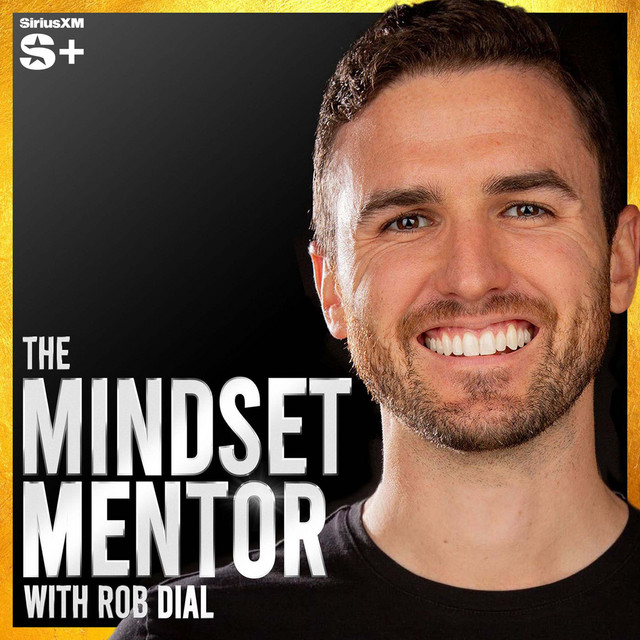
Pod Insights The Mindset Mentor | SiriusXM Podcasts+ Do it Now! About this episode Is "later" costing you the life you want? In today’s episode, I break down why putting things off is more dangerous than you think—and how to shift into action before it’s too late. I'll show you how to stop delaying, start moving, and build real momentum toward the future you actually want. Feeling stuck? It's time to take back control. If you're ready to master your mind and create real, lasting change, click the link below and start transforming your life today. 👉 http://coachwithrob.com The Mindset Mentor™ podcast is designed for anyone desiring motivation, direction, and focus in life. Past guests of The Mindset Mentor include Tony Robbins, Matthew McConaughey, Jay Shetty, Andrew Huberman, Lewis Howes, Gregg Braden, Rich Roll, and Dr. Steven Gundry. Hosted by Simplecast, an AdsWizz company. See pcm.adswizz.com for information about our collection and use of personal data for advertising.
Transcript 0:00 Speaker 00 What do I gift my mom and nieces?
0:01 Speaker 01 Walmart has top brands you know, like Ninja, Disney, Lego.
0:08 Speaker 00 Oh, Dad loves music.
0:09 Speaker 01 Sonos can bring his songs to life with sound that hits just right.
0:16 Speaker 00 And my coffee-obsessed bestie?
0:17 Speaker 01 Delongi Brew's coffee, right for morning's extra bright.
0:21 Speaker 00 All those great brands at Walmart? Who knew?
0:23 Speaker 01 We knew, now you do too.
0:26 Speaker 02 Shop gifts no love at Walmart.
0:31 Speaker 03 You know you don't have to wait to shop Black Friday at Lowe's, right? Save up to $150 now on select power tools, equipment, and accessories. Got gifts to get? We've got plenty under $50. Plus, MyLowe's Rewards members get same-day delivery for free. Shop Black Friday deals before the rush at Lowe's. Valid through 11/18. $25 minimum and loyalty membership required. Order eligible items by 2 P.M. Subject to weight and size restrictions and availability. Terms at Lowe's.com/shippingterms.
1:00 Speaker 04 Confidence. It's listening to your gut. It's moving forward even when the path ahead is unclear. For nearly 160 years, Pacific Life has helped people keep their promises, building confidence for generations. Whether you're confident in your financial future or just beginning to envision it, we're here to help. Ask a financial professional how. Pacific Life, the power of a promise. Pacific Life Insurance Company, Omaha, Nebraska, and in New York, Pacific Life and Annuity, Phoenix, Arizona.
1:38 Speaker 05 Welcome to today's episode of the Mindset Mentor Podcast. I am your host, Rob Dial. If you have not yet done so, hit that subscribe button so you never miss another podcast episode. And if you're out there and you want to take my new identity quiz and figure out who you are and why you are the way that you are, and then how to work with that, you can go to identityunlockquiz.com. Once again, identityunlockquiz.com, and you can take that for free right now. Today, I'm going to be talking about how to stop procrastinating, how to take action, and how to get past your fears. And today, we're going to be diving into Something that sounds so simple, but honestly, it's what separates the life you talk about to the life that you actually live. And what we're going to be talking about is the mentality of do
2:20 Speaker 05 it now. And it's a mindset that moves you from dreaming about life to doing, from planning to progress to productivity. What it boils down to is just getting yourself to take action when you need to take action. When I was writing my book, Level Up, I asked myself like, what do I do? When I look at the grand scheme of everything that I do, what exactly do I do? And a good portion of what I do in this podcast and coaching people is help you understand yourself psychologically and neurologically, so that you can understand how you hold yourself back. And then, when you understand how you hold yourself back, then you can start to actually take action. Because you
3:01 Speaker 05 will not have the life that you want if you don't take action. Maybe there's life after this, maybe there's not, maybe we become worm food, maybe we go to another place. I don't know, but I do know that this life that I'm living right now, I have. And I want to get everything that I possibly can out of it. And here's the truth that's going to sting a little bit. The word later is probably the most dangerous word in your vocabulary. It's the kind of word that it sounds innocent, like, it's like a soft pillow that you can land on, right? But later is where your dreams go to die. You don't lose all of your dreams at once. You lose them slowly. And
3:44 Speaker 05 it's one postponed decision at a time throughout your entire lifetime. So let's dive into it. Let's talk about this whole myth of later, because I've, I've been a victim of this many, many times in my life. How many of you out there have said something like, oh, I'll start my business later, or I'll spend more time with my kids later, or I'll follow my dreams and start that business when life starts to slow down. But here's the thing that you need to understand. Time doesn't slow down. You slow down. You get older. You get slower.
4:19 Speaker 05 Later makes you feel safe because you can stay in your comfort zone right now. And it's like, yeah, okay, I'll do it later on down the road, but you know, and I know you don't do that shit later. Right? So later just makes you feel safe because it keeps you in your comfort zone right now. It's a thief. It steals your momentum. It steals your energy. It steals your connection. It steals all of this time that you'll never get back and it steals all of your dreams from you. The scariest part about all of it is you can build an entire life on laters. Some people listening right now are 40, 50 years old and you've built an entire life on laters.
4:57 Speaker 05 And then you're looking around and you're like, well, this isn't the life that I wanted. And some people build an entire life on laters and then they don't notice it until it's too late. So if you're listening to this podcast right now, it's not too late. And this whole thing is backed by psychology as well. There's something that's called temporal discounting theory. And so there's a study that was published in cognitive psychology that showed that humans tend to devalue future rewards in favor of immediate rewards. It's what's known as hyperbolic discounting. And so we overestimate the value of doing something right now. And we underestimate the cost of what's going to be coming later on down the road. Which is important because that's the cost of inaction.
5:40 Speaker 05 And so when you look at the cost, the important part to understand is every single thing. Everything that you do, every decision that you make has some sort of a cost. Most of the costs you don't see right now. You see it later on down the road. And so we can act like we're blind to it, but it's going to be coming eventually. There's a cost to doing something. There's a cost to effort. And energy. And risk and putting yourself out there and coming into, you know. Into to view with like your biggest insecurities when you decide to put yourself out there and do something. There's a cost of doing something. It's hard. It really is hard to build the life that you want. But there's also a cost to not doing it. There's
6:22 Speaker 05 regret. There's missed opportunity. This slow decay of life that you have. And we usually measure the cost of action. And we say, well, yeah, I do want to do this thing. But like, what if I fail? Or what if it's not perfect? Or what if I'm not ready? Or what if people judge me? So we usually measure the cost of action right now, which makes us delay. But we rarely ask, like, what's the cost of me not doing it? Think about that. What's the cost of waiting another year? What happens if I never do this at all? What if I get to the end of my life, and I'm filled with regret? Those
7:03 Speaker 05 questions should scare the shit out of you. And sometimes, change doesn't happen until the pain of staying the same is more painful than the pain of change. The graveyard is the richest place in the world. It's full of people who pushed off their dreams with a bunch of laters. The cost of inaction is always higher later on down the road. Way higher. There was a study that was done at Harvard, and it was in adult development. It's the longest running study in happiness ever. It started in 1938, and it's still going right now. And what they found was that regret about missed relationships and
7:45 Speaker 05 unlived dreams was one of the most painful emotional experiences that people carried with themselves later on in life. It's not failure that people regret. It's inaction that people regret. And then they're on their deathbeds, and they're like, Damn, I could have brought out more potential. I could have had a more fulfilling life. I could have impacted myself, the world, my family more. And I said this many times in the podcast, life is either hard now and easy later, or easy now and hard later. Most people in this world choose easy now, but eventually the cost is going to make their life harder later. You can decide that you want to choose hard now, which will make your life easier later. There will be hard at some point in time in your life. Either you choose it now, when you
8:29 Speaker 05 are the youngest that you'll ever be, or the universe is going to smack you in the face with it somewhere down the road. Let me make it personal to you. When you look at it, not telling your spouse how you really feel, what's the cost of it? Costs you connection, costs you intimacy, costs you maybe your relationship completely if it goes too long down the road. Starting a side hustle, there's some cost with it. Yeah, but what's the cost of not starting it? Well, costs you potential freedom, being stuck, working a job that doesn't fulfill you for the rest of your life, the place where you're going to spend the majority of your waking hours, not prioritizing your health, costs you years off of the end of your life. And so here's the
9:08 Speaker 05 deal. You can pay now in discipline, or you can pay later in regret. Either way, you're writing a check. Would you rather pay in discipline or regret? It's like Jim Rohn says, he says, discipline weighs ounces, but regret weighs tons. And it all comes down to this idea of instant gratification versus delayed gratification. You know, if we get psychological for a second, instant gratification, which we usually choose now, which is sleeping in, which is scrolling instead of taking action and building the business that you want to do, which is eating a pop tart now versus something that's healthy for you. Instant gratification feels good now, but it weakens you long term. Yeah, when you have that little bit of scrolling instead of
9:53 Speaker 05 taking action, you get a hit of dopamine. When you eat that pop tart, you get a little hit of dopamine. And so you get this dopamine in this instant gratification. Delayed gratification feels hard right now, but it strengthens you. It strengthens your future self, which is you creating and moving and choosing something that's challenging and doing something that you don't want to do, but you know that you should do. You know, if you look at like success and fulfillment and deep connection, all of them live on the other side of delayed gratification, not instant gratification. And so you've got to ask yourself, like, are you raising your dopamine levels? Or are you raising your standards in life? And we will be right back.
10:34 Speaker 06 Ever notice how every new AI tool asks you to explain your business to it all over again? Google Workspace with Gemini skips that. You get Google's AI built right into the premium versions of Gmail, Docs, Sheets, and more. No new tools, no extra logins, just one subscription that gives you personalized AI right inside your actual workflow. Make work less work. Try Google Workspace with Gemini at G O O dot G L E slash Workspace with Gemini.
11:03 Speaker 00 What do I gift my mom and nieces?
11:05 Speaker 01 Walmart has top brands you know, like Ninja, Disney, Lego.
11:12 Speaker 00 Oh, Dad loves music.
11:13 Speaker 01 Sonos can bring his songs to life with sound that hits just right.
11:20 Speaker 00 And my coffee obsessed bestie?
11:21 Speaker 01 The Longy Brews Coffee, right for mornings extra bright.
11:25 Speaker 00 All those great brands at Walmart? Who knew?
11:27 Speaker 01 We knew, now you do too.
11:30 Speaker 02 Shop gifts, no love at Walmart.
11:33 Speaker 04 Confidence. It's listening to your gut. It's moving forward even when the path ahead is unclear. For nearly 160 years, Pacific Life has helped people keep their promises, building confidence for generations. Whether you're confident in your financial future or just beginning to envision it, we're here to help. Ask a financial professional how. Pacific Life, the power of a promise. Pacific Life Insurance Company, Omaha, Nebraska. And in New York, Pacific Life and Annuity, Phoenix, Arizona.
12:05 Speaker 05 And now, back to the show. You've probably heard about the famous marshmallow experiment, which was done in like 1972. And it was where they had children come in and they offered them one marshmallow right now. Or if they waited 15 minutes, they could get two marshmallows. And so they put one marshmallow and they said, hey, if you want to eat it now, you can. They walked out of the room and they said, but if you wait 15 minutes, when I come back, I'll give you two marshmallows. Most kids took one marshmallow now. I've heard this study before, but I didn't realize this. There's another layer to the study. The kids who chose delayed gratification and waited 15 minutes and got two, they followed up with them later on in life. They grew up with higher SAT scores, better health and greater
12:46 Speaker 05 emotional control. So that basically that the study proved that your ability to delay gratification predicts long-term success and happiness in life. And so you have to understand time is always working, like time is always passing. As we're sitting here and you're listening to me, time's passing and it's either working for you or it's working against you. And I've said this many times in podcasts before, but time is either your best friend or it's your worst enemy. It's either your best friend, either you fast forward 10 years from today or 20 years from today and you're like, damn, I'm so glad that I did everything that I did for the past 10 years or 20 years and it's your best friend. Or you chose bad decisions and in 20 years, it's going to be your worst enemy, but time always wins. It always catches up. So if you invest into your
13:31 Speaker 05 skills and your relationships and your habits and, and getting your money right, all of it will be better. But if you waste your time, if you wake up, you know, just not taking action, not doing what you want to, delaying it with a whole bunch of laters, yeah, time's not going to be your best friend later on in life. So you've got to choose because time doesn't lie. Time just reflects.
13:54 Speaker 05 That's the best part about it. It just reflects. You gotta check the scoreboard of life. How's it looking for you? Are you stacking all the wins in your category? Is there more wins in your life? Or are you stacking in the losses category? There was a book that's called Your Brain is a Time Machine and it's by neuroscientist Dean Banumanu. And he explains that the brain's internal clock is constantly comparing timelines. And this is how it works. When we procrastinate, we're literally tricking our brain into feeling like our future self, who we know exists in the future, but we're tricking our brain into thinking that our future self is a stranger, which explains why we abandon what we say we want.
14:37 Speaker 05 It's not laziness, it's acting like your future self doesn't exist. You've got to become aware like, oh my God, if I do this, this is what my future will be. If I do that, this is what my future is going to be. And you've got to make the right decisions from there. It's acting like your actions don't have long-term consequences and then going, you know what? They actually do. My future self does exist. I'm going to meet them one day. I'm going to look in the mirror and I'm going to meet my future self in 10 years. What are they going to look like? What are they going to feel like? What is their, what is their entire life going to look like? You're going to meet them, don't act like they're not there. And so when you look at do it now, and this idea of do it now. What I want you to do is I want you to start thinking about, because we all know when there's something that you need to do.
15:22 Speaker 05 There's something that you're like, I've got to do this. I really don't want to do it. When we have that feeling, do it now. It's just like, I gotta do it now. When I have the feeling of wanting to delay. When I have the feeling of wanting to push it into later.
15:37 Speaker 05 Do it now. Boom, you just got to do it. And what happens is you start to actually train the muscle of taking action.
15:46 Speaker 05 If you're not taking the action that you want to in your life, the reason why most of the time is because your do it now muscle, your action muscle is really, really weak. Your instant gratification, not taking action, backing away from fear, staying in your comfort zone. That muscle, really, really strong. So if you stop going that direction, that muscle will weaken. If you start going with the do it now muscle, then taking action is going to actually start to become a habit for you. But it doesn't happen in like a week, it doesn't happen in two weeks. Habits take anywhere between 60 to 100 days on average to create. And so if you just think to myself, every time I think I'm going to delay, I'm just going to do it now. Every time I think I'm going to delay, I'm just going to do it now. You'll start to build the muscle of actually taking action. And so here's what you want to do.
16:32 Speaker 05 Number one, you want to call out your laters. Write them all down, write all the laters that you've been whispering to yourself. I'll take care of my health later. I'll reach out to them later. I'll start my dream project later. And then circle the one of the laters that hurts the most. Like the one where you're like, mm. This one needs to happen, but I keep delaying it. That right there is your entry point. That's the one wherever you feel any sort of actions you need to take with that one. Just do it. Do it now. Do it now. Do it now. Second thing you need to do is you need to decide right now, like choose your pain. There is the pain of discipline, which happens today. In the moment when you take the action.
17:13 Speaker 05 And then there's the pain of regret, which is tomorrow or five years or 10 years down the road. Both of them cost something. You need to make the decision, which one are you going to choose? Choose your pain. It's either the pain of discipline or the pain of regret. Which one do you want? So there was a study that was done at Stanford University by Kelly McGonagall. I just butchered that. I wasn't even close. McGonagall. I don't know. Sorry, Kelly, I'm destroying your name. And it was called the willpower instinct. And it showed that self-control is finite, which means you don't have self-control all day long. And you get less and less of it throughout the day. But it's a trainable resource.
17:55 Speaker 05 And the more that we choose disciplined action, the easier it becomes. Because we're literally rewiring our brain's default response. So if you're the type of person that delays your default response over the course of your lifetime has been to delay. And so the more that you do it over and over and over again, you can take disciplined action, the easier it becomes and you actually rewire your brain's default response to taking action. Next thing, just be messy. Take one messy step after another. Don't try to be perfect. Don't try to be pretty. Just move forward. Send the email. Make the call. Create the damn Canva post and put it on Instagram.
18:38 Speaker 05 Sit with your kid and actually be there and put your phone away. Done is better than perfect every single time. Just do something. Get your ass up and start moving. And so let me leave you with this, okay? Later is the most seductive form of self sabotage. It tells you that you have time, when in reality, you really don't. It tells you that it'll be easier later, when it won't. It tells you that you're not ready, when you never will be. You just have to take action. So your new mantra needs to be, if it matters, I do it now. If it matters, I do it now. If it matters, I do it now. It's not hustle culture. This isn't like, I'm gonna work myself to the bone. More than anything else, it's self-respect.
19:22 Speaker 05 Because you're saying, I want this life. I deserve this life, and I believe in my future self so much that I'm gonna do the hard thing right now. That's one of the highest forms of self-respect and self-love. That's how you do it now. So that's what I got for you for today's episode. If you love this episode, if you think anybody that follows you on Instagram or anywhere in the world would benefit from listening to it, please do me a huge favor. Share it. The only way that we grow is from other people like you, sharing it so that people who have never found it before can find it and also listen to it. So if you would do that for me, I would greatly appreciate it. And with that, I'm gonna leave you the same way I leave you every single episode. Make it your mission to make somebody else's day better. I appreciate you, and I hope that you have an amazing day.
20:01 Speaker 00 What do I gift my mom and nieces?
20:09 Speaker 00 Oh, dad loves music.
20:17 Speaker 00 And my coffee obsessed bestie?
20:22 Speaker 00 All those great brands at Walmart? Who knew?
20:27 Speaker 02 Shop gifts, no love at Walmart.
20:31 Speaker 04 Confidence. It's listening to your gut. It's moving forward, even when the path ahead is unclear. For nearly 160 years, Pacific Life has helped people keep their promises, building confidence for generations. Whether you're confident in your financial future, or just beginning to envision it, we're here to help. Ask a financial professional how. Pacific Life, the power of a promise. Pacific Life Insurance Company, Omaha, Nebraska. And in New York, Pacific Life and Annuity, Phoenix, Arizona.
Previous How to Speak to Your Children Next How to Learn from Pain Page updated November 7, 2026 · transcript and summary are machine-generated