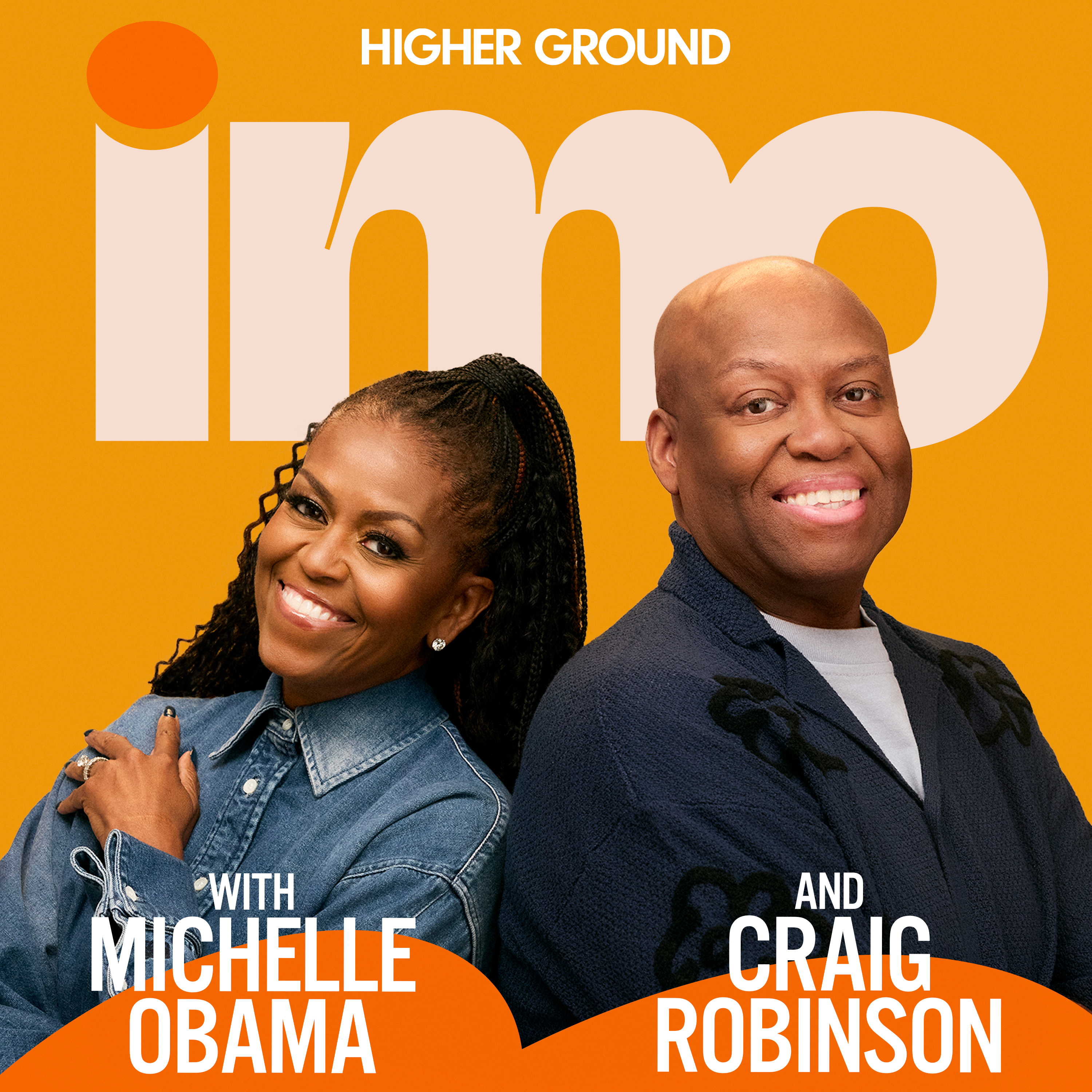
Pod Insights IMO with Michelle Obama and Craig Robinson Trust Your Kids with Mara Brock Akil About this episode On today’s episode, Girlfriends and Forever creator Mara Brock Akil joins Michelle and Craig to talk about her incredible career, and how her children have inspired her current projects. The group discusses navigating the teen and early adult years, giving their teenagers more freedom, and figuring out how to build and improve on your personal foundation. Plus, Mara spills on the possibility of a Girlfriends movie!
Have a question you want answered? Write to us at imopod.com http://imopod.com.
See Privacy Policy at https://art19.com/privacy and California Privacy Notice at https://art19.com/privacy#do-not-sell-my-info.
Transcript 11,394 words · 4 speakers
Speaker names marked ? are inferred from speaking time and the show’s known hosts — they are not voice-verified.
0:00 Michelle Obama? Well, there are a lot of young black people that they get into college and they don't, they've never had.
0:06 Speaker 01 They've never, I don't think that's healthy.
0:07 Michelle Obama? A boyfriend or girlfriend.
0:08 Speaker 01 I don't think that's healthy.
0:08 Michelle Obama? I totally agree with you.
0:09 Speaker 01 I don't think.
0:10 Michelle Obama? And a lot of that comes from being in all white environments as a black kid.
0:15 Speaker 01 Not to be felt like someone who likes you, even if it's for a week.
0:19 Michelle Obama? Yes.
0:20 Speaker 01 There's no memory of a mutual desire and how to negotiate those feelings. There's no place for them to even practice those practices we're talking about.
0:30 Michelle Obama? I always thought that black boys had it easier. This is my ignorance because I grew up with daughters.
0:41 Michelle Obama? This episode is brought to you by Rivian.
0:47 Michelle Obama? You got on your island wear.
0:48 Craig Robinson? I got my Vineyard wear on.
0:50 Michelle Obama? Well, howdy doody.
0:51 Craig Robinson? How you doing?
0:52 Michelle Obama? I'm good, I'm good. We are in this beautiful barn.
0:57 Craig Robinson? On Martha's Vineyard.
0:58 Michelle Obama? Up Island in Chillmark and it's just a beautiful, beautiful place to record.
1:06 Craig Robinson? And would you do me the favor of explaining up island like you explained it to me? Because I was thinking up meant over, but up actually means up.
1:15 Michelle Obama? This is the higher elevation of the island. So you have more rocky cliffs over the ocean. If there are beaches, they are rocky and sandy. Whereas, you know, down island where Edgar Town, Opluks are, it's flatter. It's more, you know, the elevation is closer to the ocean. So, you know, it's sort of the sandier beaches are there. So we are up island.
1:41 Craig Robinson? Well, speaking of up island and all the rocky roads, this is the perfect place to test out the Rivians that we were given by Rivian.
1:52 Michelle Obama? This is the perfect terrain for Rivian owners. It is the perfect lifestyle.
2:00 Craig Robinson? Yes.
2:01 Michelle Obama? Because you have beaches, you've got the back roads. You need to be able to lift that vehicle up, lower it down. And I have driven my Rivian. In here.
2:10 Craig Robinson? I am.
2:11 Michelle Obama? The ones we were gifted.
2:12 Craig Robinson? I'm so excited about.
2:14 Michelle Obama? Yeah.
2:14 Craig Robinson? Getting a chance to drive there. It's really nice, isn't it?
2:17 Michelle Obama? It's really nice. It's really easy to drive. And when you're going over these bumpy roads, you really don't feel it in the car because it sits up so high. So I really love it. So.
2:27 Craig Robinson? We're excited today.
2:29 Michelle Obama? Yeah, we've got a great guest, um, somebody that I have been watching from afar, uh, hoping to get to spend some time with. So I feel like, you know, this is the fun thing about this podcast. I get to meet people that I have admired from afar and spend some time with them.
2:46 Craig Robinson? And unlike, uh, well, like you, I've admired her from afar, but just through her work.
2:50 Michelle Obama? Yeah.
2:51 Craig Robinson? And, uh, she is, um, the mastermind behind some iconic shows. So, uh, let me get right to her bio. Mara Brockakil is a television writer and producer credited with 400 episodes of television, including one of my all time favorites girlfriends that I'm, I hope we can dig into a little bit here. The game, Being Mary Jane, and, and in most recent fan favorite and critically acclaimed, and a, and a new Robinson favorite. So our whole family watched this whole series together forever.
3:35 Craig Robinson? So without further ado, Mara Brockakil, come on out.
3:39 Michelle Obama? Mara.
3:42 Speaker 01 Welcome to my MO. Thank you. Oh my gosh, I am so happy to be.
3:48 Michelle Obama? You are here. You are here. You are here. Yes, girl. Yes.
3:53 Speaker 01 Oh my goodness.
3:54 Michelle Obama? Welcome, welcome.
3:56 Speaker 01 You've been watching me from afar. I don't want to be your friend forever.
3:58 Michelle Obama? I have. I just, you know, I'm, I, first of all, you're beautiful.
4:02 Speaker 01 Oh my goodness.
4:03 Michelle Obama? You know.
4:03 Speaker 01 Thank you. Right back at you.
4:05 Michelle Obama? And I'm just like, who is this badass, beautiful woman who is involved in everything? And just sort of killing the game. So I have really been a fan. And we actually got to meet a couple of days ago.
4:23 Speaker 01 Yes.
4:23 Michelle Obama? Because a good friend of our mutual friend Tracy brought you to Barack's Birthday Bash here. He always, we celebrate his birthday and have a little barbecue. So I was just thrilled when you walked in the door.
4:36 Speaker 01 Oh, my goodness. It was so, it was, it was, it was quite a moment for me. I had to, you know, so much respect for you and your family. And to be that close proximity and, and how loving I was, you know, it was a beautiful time. And you're like, oh, you know, you guys are who you are. But I, what I love mostly is that you are a family first.
5:02 Craig Robinson? Yeah, that's true.
5:04 Speaker 01 And just regular, regular people having a good time, having a good barbecue, some good food.
5:08 Michelle Obama? Doing a little electric slide, the babies dancing in the middle of the floor.
5:12 Speaker 01 But you do, you come in first. And there was a moment that I really just, I just thank God. I love being there. I love being there for what it represents. But then we take that breath. You're like, oh, yeah, we're just here together, having a good time on the Vineyard.
5:26 Michelle Obama? Well, that's what the Vineyard represents.
5:29 Speaker 01 Yeah.
5:29 Michelle Obama? To us, and I know to you, you were a long time.
5:32 Speaker 01 Been coming for 14 years.
5:34 Michelle Obama? For 14 years.
5:35 Speaker 01 And my first, well, technically 15 years. My, I talk about Ralph Farquhar all the time.
5:41 Michelle Obama? Yeah.
5:41 Speaker 01 But, you know, it's important to have.
5:43 Michelle Obama? Talk for our listeners, so people know who he is.
5:45 Speaker 01 So Ralph Farquhar is a, an amazing storyteller himself, known as a showrunner. But he has, I, I met him when he was. Well, he was my boss on Moesha.
5:57 Michelle Obama? Mm hmm.
5:58 Speaker 01 So then back up on South Central.
6:00 Michelle Obama? See, you've had so many shows.
6:01 Speaker 01 Exactly.
6:02 Michelle Obama? He's like, whoa, whoa, whoa.
6:03 Speaker 01 Well, yeah, whoa, whoa, whoa. He's had so many shows. I think his career started in Happy Days. And he's talking about this place called Martha's Vineyard. And black people descend upon the island. What? I was like, we're like birds. We're migrating over here or something. And the way he talked about it, I just wanted to see it, touch it, feel it. And I came, and I'll never forget this because music is, it guides my work, but it guides my life and my memory. And Jay-Z's Reasonable Doubt had just dropped.
6:32 Michelle Obama? Uh huh. So you can remember by this, what dropped?
6:35 Speaker 01 Yes.
6:36 Michelle Obama? And it's like the summer playlist.
6:38 Speaker 01 It's the summer. It was interesting too, because it was in July. And it was a younger, it's a different August, it's a different island in July than it is in August.
6:49 Michelle Obama? It definitely is.
6:50 Speaker 01 And it was younger people hanging out together, partying a lot.
6:54 Michelle Obama? How old were you on your first?
6:57 Speaker 01 I'll leave it there.
6:58 Michelle Obama? If we do the math, how old?
7:00 Speaker 01 I was 20 and I was 26. So that was my first time. So then later, when we came on the island, it was right after jumping the broom. And just wanting to be here and learning the legacy, learning about the island more historically and not just from a party perspective.
7:22 Michelle Obama? Yes.
7:22 Speaker 01 It was just, this is where we needed to be. In fact, vacationing sometimes, was just tired to be in the only black family sometimes in these beautiful places. But to come to this island and see each other and get the rest restoration, the joy, the laughter, the food, the safety.
7:41 Michelle Obama? The safety.
7:41 Speaker 01 In numbers, but in, but also you can chill out.
7:45 Michelle Obama? But it's a place where kids and little black boys and black girls, they can find love and they can stand in groups and not be bothered. They can loiter like kids should be able to do and feel safe and parents don't have to worry.
8:01 Speaker 01 They can see themselves in others as well. You know, can feel that freedom together, can have those memories of what your nervous system feels like when it feels safe. So you actually know the difference.
8:15 Michelle Obama? Yeah. And we'll talk more about this when we get into our favorite show.
8:21 Speaker 01 Oh, I love how you guys say that. Truly, truly, forever we are talking about, but we're gonna talk more about that.
8:29 Craig Robinson? And before we dig into the show, you know, I wanna know what was your relationship with your older brother like?
8:37 Speaker 01 Oh, my goodness. Shout out to my brother. I lost him a few years ago. Thank you, thank you. I, we had a very passionate sibling relationship. We talked a lot, we argued a lot.
8:53 Craig Robinson? And what's the age difference?
8:54 Speaker 01 He, um, he's three years older.
8:57 Craig Robinson? Okay.
8:57 Speaker 01 He's three years older.
8:58 Craig Robinson? Similar.
8:58 Speaker 01 You know, I wanna say this too, cuz I really believe it. Our relationship is still thriving and growing. I feel his energy around me all the time. We have an angel number that lets me know that he's nearby. And a hundred times I'll ask him, "Yo, where are you? Because I need you right now." And one of the things that we often talked about, he really wanted to be, um, he was the only, um, sort of, he was the only man in our family for a very long time, in a family full of women. And he felt such a responsibility to being the man and making it financially successful.
9:40 Speaker 01 And, um, and I think about him a lot in his, in his, you know, just compassion for, for what he was going through. And he didn't need to put that pressure on himself. You know, I think about that sometimes. But now, I experience him, I feel his COO presence on me. I was like, "Come on, let's go help me build, help me." And I hope I don't sound, you know, I'm not gonna own that. I know I don't sound weird. I really believe in the spiritual connection still. He's not in body anymore, but he is in spirit with me. But are we, he was my big brother, you know? Even if we argued, you couldn't argue with me, though. See what I'm saying? You know what I'm saying? Sounds familiar.
10:25 Speaker 01 You couldn't argue with me, you know?
10:27 Craig Robinson? Yeah.
10:28 Speaker 01 Back up, you know? It's like, that's my, you know, that's my sister. It was funny cuz we went, there was- We had one overlap in school together and he let me have, oh, I have another funny story. He let me have my, my space, you know, kind of vibes. But I always loved when I passed him in the hallway. He, I always wondered, is he gonna talk to me because he's a senior and I'm a freshman? And he always, he always said, hello, how you doing? Everything good? And he was, he was kind of had this formality to him that I really loved. I'm, I'm good.
10:56 Michelle Obama? And isn't there, you know, I, I never tell Craig this to my face, but when you have a big brother that you adore, there is a certain energy, you know? Like, I would just get excited knowing he was in the same space.
11:10 Speaker 01 Safe.
11:10 Michelle Obama? Even though, safe, yeah. Even though I was trying not to be the little sister because we were raised not to be up under each other. My mother and father wanted to make sure that he didn't feel like he had to protect me.
11:22 Speaker 01 Right.
11:22 Michelle Obama? Because he, like your brother, is a worrier. He was the one that took on just naturally a lot of stuff. And so my mom was like, your little sister is fine. Don't worry about her. So I tried to give him his space.
11:37 Speaker 01 So he could have a little life too, not, not having to be.
11:39 Michelle Obama? Not to feel like when I'm around, it's like, how's, how's she doing? Is everything okay?
11:43 Craig Robinson? But I did it anyway, you know? It's just, just who, who I was and she was just so cute and I didn't want anything to happen to her.
11:51 Speaker 01 But you know, I found like that's really interesting too, because the birth order is beautifully, um, if we believe in God's majesty and, and the dynamic nature of our lives, your being born the big brother is a part of the dynamic that is needed. Taking that on that when you came into the world, you were loved not by just two people, but by three people. You know what I'm saying? And, and a very, and I think that's a beautiful way to think about siblings. You, that, this is part of your role. And it's funny with our two boys, you know, I often also let Nasir know Yaseen is our oldest and Nasir is our youngest. And Nasir is a.
12:36 Speaker 01 They're both, you're a great little brother and you're a great big brother. In your dynamic, I always, and so I just feel like that's also unique in that part of that responsibility. You know, but to your point, not to overdo it, but that's, you said, that's just who you are. The sibling relationship is one of the most special relationships. And I tell them that, you know, we're gonna be out of here. And you guys are gonna, you guys are gonna be left in it together. So how are you going to move together? How are you gonna support each other? These are the times in which those, those bonds need to, you know, to anchor in.
13:20 Speaker 01 And here's the other thing too, when I think about love, what really is love? What is it? And I feel like it's the witnessing of another.
13:31 Speaker 01 Through the good, the bad, the mundane, the in-between. And who gets the VIP courtside, all the special VIP bracelets in your life? And that's a, that's a privilege. You know what I'm saying? Think how much we, we wanna be in the party. Well, you wanna be in someone's life like that. Well, a sibling has it from, all of your dreams and memories are packed into each other. And for someone to sort of, and to lose that bond over time is just, it would be unfortunate.
14:13 Craig Robinson? Boy, this has been a terrific trip to Martha's Vineyard.
14:17 Michelle Obama? Yeah, it's been so nice having you and young Aaron with us. We've had such a ball having you here.
14:24 Craig Robinson? Yeah, it's, it's been really nice. And, and look, we topped it off with a party at the end of the visit.
14:29 Michelle Obama? I know, it was a good jam with a DJ. I heard you were doing a little electric slide.
14:35 Craig Robinson? Yeah, the old man electric slide. So just from here, here.
14:38 Michelle Obama? More slide than electric.
14:40 Craig Robinson? More slide than electric, yeah. Yeah, but check this out. You know I'm an Airbnb guy now, right? Well, you remember the photographer who was there?
14:49 Michelle Obama? Uh huh, yeah.
14:49 Craig Robinson? Got him on Airbnb.
14:51 Michelle Obama? No way.
14:51 Craig Robinson? You can.
14:52 Michelle Obama? Wait, wait, what do you mean?
14:53 Craig Robinson? You. Or ordered.
14:54 Michelle Obama? But he was a professional photographer.
14:57 Craig Robinson? A professional photographer. You can order services through Airbnb.
15:02 Michelle Obama? Oh, as part of this new Airbnb extra amenities. What do they call the program?
15:08 Craig Robinson? Airbnb services.
15:09 Michelle Obama? Airbnb services.
15:10 Craig Robinson? And you can order a chef. You can order all kinds of stuff. I was like, let's order a photographer so we don't have to worry about taking pictures. He'll, he took all the pictures and will send them to us on a.
15:22 Michelle Obama? You know, now that's a great idea because if, I am so horrible at even thinking about taking pictures and while you've got a great phone and everybody's good at that, it's so nice to have somebody that follows you around like we did in the White House. We had a White House photographer.
15:38 Craig Robinson? Right, right.
15:38 Michelle Obama? So it's sort of like Airbnb services lets you have your own White House photographer that can follow you around and just get all these great candid shots. That is so cool.
15:48 Craig Robinson? And it was very similar to being at a wedding where you don't even know he's there, but you're going to have this whole album of pictures.
15:56 Michelle Obama? That's so great. This generation would love that. That is a phenomenal amenity. I can't wait to see the pictures.
16:04 Craig Robinson? I'm just a little worried he might have caught me doing the non-electric slide, so.
16:10 Michelle Obama? Well, if he's any good, he definitely caught that.
16:13 Craig Robinson? So we want our listeners to definitely check out Airbnb services on the Airbnb app or website. You'll love it.
16:27 Michelle Obama? It sounds like you and your brother, like Craig and I, we weren't competing with each other. That, I know that I was his biggest cheerleader, still am. And I know I try to make, I've tried in my parenting of Malia and Sasha to make sure that they never felt like they were competing with each other. I think you've done a great job because I've been able to witness your children outside in the world and they feel like friends. They, they, they have become friends. Individuals, not even locked, it's, we're sisters, holding hands, moving down.
17:04 Speaker 01 But they're, they feel like friends respecting each other.
17:09 Michelle Obama? Well, and if you talk about the lives that they've lived in such a short time, you know, they are the only two people who really relate to the unique blend of crazy that was their life growing up together. And I think that that's helped. But I've also tried to make sure that they appreciate their individuality.
17:32 Speaker 01 Yes.
17:32 Michelle Obama? And that we see it.
17:34 Speaker 01 Yes.
17:34 Michelle Obama? Like, it's not like be like your big sister, or look at your little sister. Like, I made it a point not to talk about grades at the dinner table, just because, you know, it's like, let's talk about school.
17:47 Speaker 01 Yeah.
17:47 Michelle Obama? But when we talk about grades or scores, you know, I was always sensitive. What if the, what if the other one's not doing great? And we are rewarding and cheering an A when the other one might be getting a C? And that's, you know, and then you set up, you know,
18:04 Speaker 01 Competition.
18:05 Michelle Obama? Some kind of,
18:06 Speaker 01 Measure.
18:07 Michelle Obama? Measure unintentionally. I know Craig and I didn't have that, and some of that, I think, is because we were opposite gender. But I feel like that's something that, you know, a lot of parents, you know, they think that, you know, for the big one, be like your big.
18:26 Speaker 01 Well, it's interesting you say that, because I remember my brother was really good. And grades, we didn't talk about that, but I knew he was good. So there was this, I think, healthy competition around that. I, you know, I liked when he talked about his A's, I'm like, okay, well, look at mine. I mean, so I remembered that feeling. But that's an interesting intentional idea that you're saying that you didn't bring to the table. I want to mention one that you did, that you offered to us as a nation, and I believe probably maybe the world, is the rose and the thorn.
19:00 Michelle Obama? Yeah.
19:01 Speaker 01 We use that a lot. We did use that a lot. And one of the things, how it's morphed for me is I'll ask Nassir now, who's still at the dinner table, Yaseen is in college, he's at NYU, but the, I'll ask, when did you laugh today? And what did you laugh about? And that has gotten a lot of results.
19:22 Michelle Obama? That's a good question.
19:23 Speaker 01 Yeah, that was a good one. And then I kind of get some insight into his friends and what they're laughing about, what they're talking about. I think storytelling is, even if it's like little snippets, those are the things that I find that I like most at the dinner table that I think allows for a relationship to blossom in real time, even amongst, you know, we don't just caught up and just, we just eat together, right? What are we talking about while we're eating together? A lot of debate is happening at the, you know, I think even for young men, for them to be able to express their opinion clearly. I mean, children in general, but for us, but like express themselves, but then also be able to witness your children
20:06 Speaker 01 and how they are able to get their, their opinion across and, and be able to sort of watch them before they launch out into the world. Yes, yes.
20:14 Craig Robinson? And I will share with you what our family always did. It was really interesting when we had family gatherings, it was never kids in the other room. Our family always allowed us to be in the room and hear the adult conversations. And when you were ready, you could chime in. Now, it couldn't be any mess and it had to be well fought out and serious or you would be pummeled with ridicule. But in a way that would keep you wanting to come back. And I always thought that helped my ability to navigate communication in the world. Was exactly what you said, I had a safe place to practice. It's like a sport.
21:00 Craig Robinson? I got to practice in the, in this comfort of our own home. And, and then when we both were old enough to sort of give back, you know, give as good as we got. That's when she passed me up.
21:17 Craig Robinson? Because she got really good at arguing and debate.
21:21 Michelle Obama? I think one of the things you point out, Craig, is the practice. And as parents, as parents raising kids, kids of color, I think we underestimate the importance of setting our kids up for practicing their voice and their emotions.
21:36 Speaker 01 I think sometimes I have doubled down. I'm like, okay, well, how'd that make you feel? Mom.
21:40 Michelle Obama? It's like, I don't feel anything right now. I feel annoyed.
21:43 Speaker 01 Yeah, yeah, yeah, I feel annoyed. Great.
21:46 Craig Robinson? Boys are different from girls. They'll tell you how they feel when they're 30. They will.
21:50 Speaker 01 They will.
21:50 Craig Robinson? Eventually.
21:51 Michelle Obama? Yeah, but there's still the practice of, I think you tap into that sooner because you, you were also encouraged just to talk.
21:59 Craig Robinson? Yeah, I'm being a little facetious there. I'm making the point that, that, girls just are more advanced. We have one girl and three boys, so she's ahead of all, she was ahead of all of them emotionally when she was eight.
22:16 Speaker 01 See, I, okay, I want to get into this. I actually think there's a lot of emotional intelligence in boys.
22:22 Craig Robinson? Yes, there is.
22:23 Speaker 01 But they hold it in their bodies.
22:25 Craig Robinson? Right.
22:26 Speaker 01 I'm just sort of witnessing it.
22:31 Speaker 01 And when they're ready, actually.
22:33 Michelle Obama? When you say you're witnessing it, what are you seeing?
22:36 Speaker 01 Boys hold a lot in, and I know, I think that's a societal idea as well, put upon boys that I don't think that we allow for places for them to emote, but I think it is expressed in their, in their physical movement. And so in that, I find the days that sort of my sons have exerted themselves in the things that they want to do. The car ride or the tuck in at bed is where there's a lot of conversation.
23:08 Craig Robinson? The best discussions I've had with my, the three boys have been rearview mirror discussions. When they're in the backseat.
23:16 Speaker 01 Yes.
23:17 Craig Robinson? And I can look to just see what they're doing, but I'm not looking directly at them. And it made me think about forever. Because we watched forever with our two younger boys, like our oldest son is 33, so.
23:31 Speaker 01 Okay. He's got his own Netflix account.
23:35 Craig Robinson? Finally, he has his own Netflix account. I don't think our daughter does, she's 29, but he's got his own. But we watched it.
23:43 Speaker 01 We need those numbers.
23:44 Craig Robinson? And now that, when I knew you were coming on, because when I'm watching this whole thing and I didn't know your background then, now when we were doing the research for this, you had two sons, I wanted to know, how did they influence that whole storytelling? And I, and, and I'm asking for myself, but I'm asking for my, my kids because after you talk, I'll share with you their reaction.
24:06 Speaker 01 I really want to know. Well.
24:10 Speaker 01 A lot of my storytelling ethos is I tell the truth through fiction.
24:19 Craig Robinson? Okay.
24:19 Speaker 01 And so a lot of times, my heart locks in on something, or I'm locked in on something. In real time, as a mother, I'm locked in on my boys. At a time where I was concerned about just their rite of passage, their coming of age. What are they gonna get, miss, and you're trying to fill in the gaps, right? I had a place to pour all these feelings I was having about my parenting, about my sons, what I'm witnessing into this coming of age story about firsts, which is one of the biggest things I was concerned about. Yes, they're getting a great education in the private white institutions, but at what cost? And the social things were really starting to creep up.
25:02 Speaker 01 And I was concerned that he was not my eldest son, who is pioneering the family in a lot of ways. I didn't feel as though he was getting some of the social experiences I think children need while they're in the home, while they're in this stage of life.
25:20 Michelle Obama? What was he missing and why?
25:22 Speaker 01 You know, I think he deserved to be felt crushed on.
25:29 Speaker 01 And mutually felt. I felt like there was his, a lot of his classmates who, you know, you do the catch-ups with the moms, right? Oh, they're on their third girlfriend. I'm like, oh, wow, I haven't had that experience.
25:44 Michelle Obama? Well, there are a lot of young black people that they get into college and they've never had.
25:50 Speaker 01 They've never, I don't think that's healthy.
25:51 Michelle Obama? A boyfriend or girlfriend.
25:52 Speaker 01 I don't think that's healthy.
25:53 Michelle Obama? I totally agree with you.
25:54 Speaker 01 I don't think.
25:54 Michelle Obama? And a lot of that comes from being in all-white environments as a black kid.
26:00 Speaker 01 Not to be felt like someone who likes you, even if it's for a week.
26:03 Michelle Obama? Yes.
26:04 Speaker 01 There's no memory of a mutual desire and how to negotiate those feelings, those conversations, those opportunities maybe to come to mom or dad for advice, or aunt and uncle, or village. There's no place for them to even practice those.
26:22 Michelle Obama? See, I always thought that black boys had it easier. This is my ignorance, because I grew up with daughters.
26:28 Speaker 01 You know, I'm not in every household, but when I look at it from, I think there's a time in which black boys, they're really cute from kindergarten to 4th grade. And actually, Dr. Jawaz Akjufu has a book about the conspiracy to destroy black boys. And it's typically, society starts to pull away from them. They're, imagine, being so cute. Yeah. And then suddenly so threatening. Yeah. So then you start to see the, they, and we're trying to give them language around this, and you're watching this. So there can be a separation where now you are a threat.
27:11 Speaker 01 And as your body gets bigger, your physical self gets bigger.
27:17 Speaker 01 It, all the things that we're still trying to work on in our country, all that race, whether it's conscious or unconscious, it is starting to form about who's gonna kiss, those ideas. If you're crushing on someone, another step is a kiss. And we understand those ideas that are still embedded in our, in our country. And I don't think, and again, I'm not saying that people are leading with this, but I am saying that he's, he's a, he's handsome, he's dynamic. I've seen pictures of your sons. They are gorgeous. Yeah, it's like, where, where are the flood, where are the flood?
27:58 Speaker 01 And again, you, when you sort of do the math, is it, is it because he's the only black boy in the class? And then as a parent, I'll be honest, you know, my guilt sort of comes up about it. Selena and I talk about it all the time, and we, we check in and all the time. So what, so, and, just going back to the vineyard. Hey, we got, we need to get to the vineyard just so he can see. Maybe, maybe one little flirtation on Circuit Avenue might help us get through the rest of the year. [laughing]
28:32 Michelle Obama? Just hold on to that.
28:33 Speaker 01 Just hold on, babe. Just hold on, hold on. We're gonna get two weeks, three weeks out of this.
28:36 Michelle Obama? But Mari, you make a good point about,
28:40 Michelle Obama? you know, and Craig, I'd love to hear how you think about this as being one of those cute little boys that grew into maybe a threatening young man.
28:49 Speaker 01 Overnight.
28:50 Michelle Obama? Overnight. When we know that overnight, they don't change internally.
28:54 Speaker 01 Oh, my God, they're wobbly.
28:56 Michelle Obama? They become, I call them baby giraffes.
28:58 Speaker 01 They really, oh, my God. That's a great term.
29:00 Michelle Obama? You know.
29:01 Speaker 01 And they're up and down.
29:02 Michelle Obama? And I call them baby on a stick, you know? Because it's like the same little baby face on top of this big, huge man body.
29:08 Speaker 01 Six feet plus.
29:09 Michelle Obama? And just the body grew, but they're still the same cute little boy in themselves, but they're walking out.
29:15 Speaker 01 And then I'm gonna add before it. They add the mask of what they think black masculinity is. So even like when you're trying to take a picture, everybody's happy and then everybody mean mugging in the shot, you're like, guys, guys, guys.
29:27 Michelle Obama? It's like, why can't we smile?
29:29 Speaker 01 Yes.
29:29 Michelle Obama? What is this?
29:30 Speaker 01 And making room for that because they're trying to protect themselves. And again, trying to protect, I think, what we keep overlooking and missing and not built to hold for them.
29:50 Craig Robinson? This episode is brought to you by our friends at Rivian and their fully electric, full-sized SUVs and pickups that are designed for all of life's adventures. I really enjoy driving around in the R1S that Rivian outfitted our family with. I can't believe there's a full-size, all-electric SUV that actually fits someone as tall and long as I am. You know, we've done a lot of travel in the Midwest this summer, and a couple of the features that I like are, number one, they're easy to find charging stations. The Rivian app helps you with that. And here's something that's really cool. If you're not in your vehicle, there are cameras that record any movement around your car.
30:32 Craig Robinson? What's also really exciting is that Rivian just launched its all-new R1S Quad. It's Rivian's fastest, most capable vehicle yet. Four motors, one per wheel for precision and performance on any terrain. Engineered for sharp corners, wild trails and maximum adventure. From distinctive accents and badging to exclusive new wheels, Quad is built to stand out wherever it takes you. So when you get a chance, go check out the all new R1S Quad and all of Rivian's amazing vehicles now at rivian.com. This episode of IMO is brought to you by Progressive Insurance,
31:13 Craig Robinson? who help people move forward and live fully. Owning a home can be one of the most powerful ways to build financial security. But for many, especially first generation buyers, it can feel out of reach. That's why I appreciate what Progressive is doing. In 2024, they contributed over $7 million to help individuals and families break the cycle of renting by providing support, offering educational resources and developing tools to build long-term financial stability through homeownership. Their work goes beyond just insurance. They're opening doors. Through their newly created
31:55 Craig Robinson? up payment program, Progressive is helping first generation homebuyers move closer to the dream of homeownership by offering eligible applicants a chance to receive a down payment assistance grant. You know, owning a home for me made me feel grounded and also set me up for the future. And as a coach, when your life is dependent on wins and losses, it's really important to have the comfort of a really nice home to come home to, especially for your family. Homeownership is one of the biggest investments you'll ever make, and Progressive wants to help more people take that life-changing step. Learn more today at progressive.com/openedthehouse.
32:40 Craig Robinson? This episode of IMO is brought to you in part by Acorns. Back when I was coaching basketball, I saw firsthand how powerful consistency can be. With Acorns, it's the same Play, show up, stay steady and let time do the rest. Acorns is a financial wellness app that makes it easy to start saving and investing for your future. You don't need to be rich. Acorns lets you get started with the spare money you've got right now, even if all you've got is spare change. You don't need to be an expert. Acorns recommends a diversified portfolio that can help you weather all the market's ups and downs. You just need to stick with it and Acorns makes that easy.
33:23 Craig Robinson? Acorns automatically invest your money, giving it a chance to grow with time. This reminds me of the consistent steps it took for me to go from a player into the business world and back into coaching. Sign up now and join over 14 million all time customers who have already saved and invested over $25 billion with Acorns. Plus, Acorns will boost your new account with a $20 bonus investment. Offer only available at acorns.com/imo. That's A C O R N S dot com slash I M O to get your $20 bonus investment today. From Acorns, mighty oaks do grow. Investing doesn't have to be complicated.
34:09 Craig Robinson? Acorns makes it easy to invest for your future, plan for tomorrow and spend smarter today. Paid non-client endorsement compensation provides incentive to positively promote Acorns. Investing involves risk. Acorns Advisors LLC, an SEC registered investment advisor. View important disclosures at acorns.com/imo.
34:36 Craig Robinson? Well, I will say for me, you're growing up. If you, I know you remember this, but you wouldn't know this. I went to an all-boys high school.
34:46 Speaker 01 Oh, how was that?
34:47 Craig Robinson? And it was, uh, talk about storytelling. I could tell a bunch of stories about that, but it, it took the pressure off of having to perform every day in order to attract girls. That's what, in looking back, at the time, I didn't realize this.
35:09 Speaker 01 Right.
35:09 Craig Robinson? At the time, I was like, geez, this is a lot of dudes around here. And it was a Catholic school, so it was very rigid, so. Any social reaction, any, any social interactions were, were intentionally put upon us with dances with the girls school. Right, right, right, right. So inevitably, there was enough people there where you could actually go ask somebody to dance. If you wanted to ask a black girl to dance, you could. If you wanted to ask a white girl to dance. There were, it, it was like the proportions were about the same.
35:45 Craig Robinson? And so I didn't feel like I was missing out on anything. But did you feel like a threat as you grew? Could you feel society change its reaction to you? I did not feel that. And I don't know when I started to, I, I, I didn't really feel like I was a threat until I was, had gone away to college and then come back. Because I was a little bit more able to perceive slights toward me where I don't think I could in high school. You were just oblivious, you think? I was, I was either oblivious or I didn't run into it because I was an athlete. To, to, to your point about.
36:29 Craig Robinson? Well, yeah, there is a, there is a privilege that comes with athletes. An athlete and not even a good athlete. All you have to be is on the team and people treated you differently. And, and my, my Catholic school was mostly white. So there were, and, and there were, there was the odd slight, you know, the, the one teacher who thought, okay, you shouldn't apply to Princeton because you won't get in. Right. That kind of thing. But we were used to that. Seems like there's a lot of those in the counseling department.
37:02 Craig Robinson? We were used to that. But when I, when I really think back on, on feeling like I.
37:10 Craig Robinson? I didn't feel like I was a threat until I started driving around. The first time I felt like I was a threat when I got pulled over just for driving a car. Yeah, driving while black and but I was prepared for that, right? I was prepared for it. Doesn't make it right, but I was prepared for it. But I so and now when I think about my sons and I think about you, I'm listening to you talk to your sons and we're watching forever and you know, this was when they were 14 and 12. Now they're 15 and 13, so they were they were young and thanks to Malia, because we were no R rated stuff until you get to 16.
37:51 Speaker 01 You need a big cousin.
37:52 Craig Robinson? You need a cousin to put the pressure.
37:54 Speaker 01 She ripped that.
37:55 Craig Robinson? She ripped that Band-Aid off and Kelly and I were like, ooh. So we we watched it and there were some, as you know, there were some scenes and we were like, we're shaking more than the boys were and.
38:07 Speaker 01 But it forces communication, absolutely.
38:10 Craig Robinson? Good discussion about these things.
38:12 Speaker 01 Yes, and we should. And I think that's what I would hope that Forever can do. So when I hear about families watching it together, I feel like it's just that opportunity, not only to talk about sexual health, but talk about their emotional health in to themselves, to their friend group and to their their significant other and to their household. And and ultimately to their future, because that's what we're really trying to protect is that, yes, you should go through this rite of passage, but how do you get it? How do you get through it in a healthy way of sound mind and body?
38:50 Craig Robinson? Yeah.
38:50 Speaker 01 That's the goal, right?
38:52 Craig Robinson? That's what it did for us.
38:53 Speaker 01 And it's gonna and it is uncomfortable to think about this for any child, but it's gonna happen eventually. And I think the privilege and the joy is it to happen while they're under our roof. That we can witness them.
39:09 Michelle Obama? Yeah, so agree.
39:10 Speaker 01 And and not that we want our children to fall, but if but if they're gonna fall, let them fall and come home and let them fall right there. They can see themselves.
39:21 Michelle Obama? Well, then, Mar, this is what you're saying about black kids. You want them to have enough social experience. And I'm talking to my brother, too, you know, because there's a balance of you worry about them being out and being in the wrong house. And the parents aren't this and they aren't that. You know, but that's coming, you know, they're gonna.
39:40 Speaker 01 With or without.
39:41 Michelle Obama? In high school, sophomore, two, three years, it's going to happen.
39:46 Craig Robinson? When we're having our discussions during and after the show, I asked the boys, so what is the thing that comes to your mind when you're watching this?
39:58 Speaker 01 Oh.
39:59 Craig Robinson? And you know what they said?
40:03 Craig Robinson? We compare your parenting to their parenting.
40:08 Speaker 01 Wow.
40:09 Craig Robinson? Isn't that something?
40:09 Speaker 01 So who are you?
40:11 Craig Robinson? Well, of course, I'm the dad.
40:15 Craig Robinson? But I'm not as cool as. I'm not, I'm not that cool. But they were, they were really focused in on comparing the show's parenting style to our parenting style.
40:33 Speaker 01 Wow.
40:33 Craig Robinson? And in the middle, we'd be watching it and it's like.
40:36 Michelle Obama? Well, because the truth is.
40:38 Craig Robinson? They'd be like, mom would never do that. Or, oh, that's exactly what mom would do.
40:43 Speaker 01 Yeah.
40:43 Craig Robinson? Or dad, you'd never, you'd never let us do this. Or, you know.
40:47 Michelle Obama? But that's why I love the show because it checks, it helps to check parents. Because we are so afraid.
40:55 Speaker 01 We are so afraid.
40:57 Michelle Obama? So many parents, out of deep love. It's not, it's, it's deep love. You don't want, you don't want your baby. I mean, the thought, that's why we're as happy as our least happy child. That's saying every parent knows it, every parent feels it. You know, but sometimes we don't realize that we parent out of our fears.
41:16 Speaker 01 Of course.
41:17 Michelle Obama? We parent out of our desire not to feel the hurt. And we couch it in terms of I'm doing it for them.
41:25 Craig Robinson? Yes. It, I mean, there was a whole lot of stuff going on in the Robinson household. So it was really cathartic for our family.
41:35 Speaker 01 That's what I'm hearing, that there's a big sigh.
41:40 Speaker 01 A big, deep breath, another regroup. Okay, everybody, let's, let's figure this out on all sides.
41:47 Michelle Obama? And they also need to see our flaws. It is so, it is so helpful for them. I mean, I think one of the biggest reliefs was when, about it, yeah, I thought my parents were perfect. Because, you know, and not perfect in some ridiculous way, I just, you know, I couldn't see their flaws. But you, there comes a point, you know, and I was in college and I'd gone off and studied sociology and psychology. And then I could bring all those theories back and, you know, pick apart my parents.
42:19 Speaker 01 Yes.
42:20 Michelle Obama? Right? But that, that was sort of a necessary thing to realize, oh, my, my father's relationship to his MS is not healthy. You know, the notion that he, we, we would applaud the fact that our father just caught up and he went to work and he never sacrificed for anybody and he never took a day off. This is a man who had MS.
42:42 Speaker 01 Oh, my God.
42:43 Michelle Obama? And as I got older, I was like, why aren't, why aren't we looking at therapies?
42:48 Speaker 01 Right.
42:49 Michelle Obama? Why isn't he going to the doctor more? Why are we bragging about the fact that he?
42:54 Speaker 01 Never stops.
42:55 Michelle Obama? Never stops. When MS is a disease that is so debilitating that there's sometimes he needs to stop. What is it about him? What is it about my mother? You know, where we've created this heroic, you know, paradigm that is not healthy at all.
43:15 Speaker 01 That's the beauty of progress, right? Sometimes it takes, you don't like, sometimes how long it can take because of the different, you know, constraints on us. But I think, you know, as a storyteller, sometimes I have to keep going back to the origin of things. And you realize, oh, that's why he didn't stop. He didn't stop because. Stopping meant something different to us a few generations ago. You two may not be here if other generations didn't stop.
43:45 Michelle Obama? There's no food on the table.
43:46 Speaker 01 There's no. But at some point, to your point, where are we at the tipping point? Where it's going to kill us in other ways if we don't think about how we
43:58 Speaker 01 take care of ourselves and as we fight continuously for our humanity. And it comes with sometimes the ability to rest and reflect, to look at the patterns, to look at, to examine. I'm going to apply these, this knowledge I have at some of the best institutions we have in our country, and I'm gonna take it back to my family. That's what I would love that we can do. You know, and that, and that excites me in a lot of ways, even though there's a lot of work still to be done.
44:29 Michelle Obama? Oh, for sure.
44:37 Craig Robinson? My kitchen has never quite felt completely put together, like it's always felt like something is missing. And then Kelly and I found these striped linen cafe curtains on Wayfair, and the effect has been perfect. Once we realized we wanted some curtains, it was just a matter of typing our ideal item into Wayfair's search bar. And of course, they have what we want plus 10 other options. Their inventory truly cannot be beat. I especially like being able to look through customer photos and reviews before I decide. That's what sealed the deal for us with our new curtains, as well as all of the other amazing pieces we have from Wayfair in our house right now. Wayfair has more than 20 million verified five-star reviews,
45:22 Craig Robinson? so you can actually see how something looks and works in real people's homes. Find pieces made for real life and get even more value with Wayfair Rewards. Join Wayfair Rewards today to get 5% back on every purchase. Head to wayfair.com to shop all things home. That's W A Y F A I R dot com.
45:47 Craig Robinson? Sometimes you just need a little boost. Nothing wild, just something to help you stay steady through the day. Between shuttling the kids to sports, recording the podcast, and even traveling out here to DC for recordings, I like having something easy to keep my energy up. That's why I go with Well With All Energy. It keeps me feeling good and energized while I'm on the go.
46:21 Craig Robinson? Mmm. Wow, that's good. It's lightly sparkling, has natural caffeine from tea with only 45 calories. Made with real fruit and vegetable juices. No artificial colors, no artificial flavors. Just good stuff for some good energy. And you know what I really like? Well With All is black owned and they give 20% of their profits to support black, brown, and underserved communities. That means a lot to me. Three great flavors, super easy to grab on Amazon. And if you use the code IMOPOD10 on Amazon, you'll get 10% off.
47:10 Michelle Obama? I really want you to talk a bit about your staying power in this industry. You know, you were one of the youngest showrunners, black showrunners.
47:24 Speaker 01 Yes.
47:24 Michelle Obama? I mean, you have put out hit after hit after hit. And in a business where it doesn't happen, you got a season two on Netflix.
47:33 Speaker 01 My love for it. I, um, accepting that I, accepting my purpose in my life, I think, is my staying power. And actually, as much as I want to make hit after hit after hit, I really enjoy making. I love the stories of us. I just see so many, so many opportunities that were missing at the time that I came in the industry. It felt like, guys, there's so many stories. I did have to develop, how do I sell those? Which can be very challenging at times.
48:07 Michelle Obama? Can you talk more about that?
48:08 Speaker 01 Well, it's interesting, honestly.
48:13 Speaker 01 It's akin to how Black people have succeeded in America throughout. Is that oftentimes, America will ask of us to come in when things are in chaos or in turmoil.
48:28 Michelle Obama? Oh, I feel that.
48:32 Speaker 01 You know, a little something about that?
48:36 Speaker 01 Think about that. Think about that moment when we don't know what to do. Then now, maybe.
48:42 Michelle Obama? Here you go.
48:42 Speaker 01 There could be a first Black president. So when girlfriends came about, UPN, the network, was in trouble. Nobody would touch that network. And I took all the legacy, I treated it as of value, and found other people who also saw this opportunity as valuable and led from that place. So typically, if you go back in the pattern of my career, I have made leaps when the industry was changing in a way that felt like, you know, a little bit of the sky is falling kind of vibes. So that was one way.
49:27 Speaker 01 And the third part that's very important to me is job creation. I know that if I'm able to take this idea that's floating out here in my heart, and I can land it on the page, and it becomes a lighthouse for other talent to come and join me, I also know that is feeding families. And that, my staying power is not just about my own need to tell stories, right?
49:56 Michelle Obama? Well, and you're doing this in real time, not just from your programs, but you are mentoring the next generation of creatives. Can you talk a bit about that?
50:07 Speaker 01 Oh, thank you. It's a, you know.
50:11 Speaker 01 I have produced over 400 episodes of television. And with that, it has inspired a lot of young people who typically are the, their families are saying, please go to be a doctor, go be a banker, go be a lawyer.
50:31 Michelle Obama? Again, because it feels safe for us as parents.
50:33 Speaker 01 Because it feels safe as parents. But we have inspired them to want to be storytellers, which I personally believe is the most valuable asset we as humans have is our story. The challenge is that the industry changing and it looked like a gold rush yesterday. It doesn't feel like that today, but there's a long line of people who want to tell, who are now inspired to tell their story. And I can't pretend I don't see it. And so the way I thought is that I would have a writer's colony. And I built a res, it's been four years. It's, it's a place to write. It's a place to belong and a place to find your voice. What we don't need, we don't need another Mara.
51:17 Speaker 01 We need what it, there's something in you that you and God want to get out as a, as sort of like a co-creation idea. You need to get that out, but where are you going to get your foothold? And even signal to family who's helping to typically all artists, they're supported by someone and typically it's the family. So the first venture capitalists are family, you know, family and friends, a family and friends round, right?
51:43 Michelle Obama? That's right.
51:44 Speaker 01 And so the signal to even the writer themselves and the family that's supporting them, what it, what could be created so that it feels like they can actually get into this institute, into this industry and thrive. And the reason why you do need a community of peers, mama and daddy and auntie and grandma and uncle, they're going to love your script, but you need.
52:10 Michelle Obama? I know, right?
52:11 Craig Robinson? You need objectivity.
52:13 Michelle Obama? Oh, baby.
52:15 Speaker 01 I mean, first of all, people are just blown away that you can write 100 pages of anything. And I think the communication around the expectations from family, if you just sort of meet it with real conversations, hey, this is what I'm doing. This is what I understand the industry is. This is my strategy. Literally, I would mass my life so that I protected the ability for me to write.
52:38 Michelle Obama? Well, this might be a good time to.
52:41 Craig Robinson? Whoa, look who's.
52:42 Michelle Obama? I'm sorry.
52:43 Craig Robinson? No, go ahead. No, no, do that. No, go ahead.
52:45 Michelle Obama? For our listener question.
52:46 Craig Robinson? Yes, it's perfect.
52:47 Michelle Obama? It kind of ties into a lot of what we're talking about.
52:50 Craig Robinson? And it's our, it's IMO's attempt to be sort of communal, you know? So we get a question from our listeners.
52:58 Michelle Obama? Okay.
52:58 Craig Robinson? And this question is from Julia, who happens to be from Los Angeles.
53:03 Michelle Obama? Okay.
53:04 Speaker 03 Hi, Michelle and Craig. My name is Julia. I'm the daughter of immigrants, went to Princeton on scholarship where I felt like an outsider, and then took a job in finance, which I hated, before pivoting to teaching, which I still do now. I know both of you went to Princeton and then took jobs in lucrative fields like law and finance, before pivoting to less lucrative but more fulfilling careers. People of color and immigrant kids often feel extraordinary pressure to go to the best schools and get the best, highest-paid jobs because of the sacrifices and suffering of their parents, even if these schools and jobs are not the best fit. My parents, for example, worked at a fast-food restaurant that burned during the L.A. uprising.
53:44 Speaker 03 I'm now the parent of teenagers, and I wholeheartedly believe they do not need to go to an Ivy League school or have a highly-paid job in medicine, law, or finance in order to be happy, quote, "successful" human beings. But I also know I have so much more privilege than my parents ever did, and that my kids don't need these fancy degrees and jobs in the way I felt I did. What advice do you have for these kids and also for their parents?
54:07 Michelle Obama? Oh, my goodness. This is the perfect question, and we started talking about this.
54:12 Speaker 01 Yes.
54:13 Michelle Obama? Yeah, so I didn't want to get too far into it.
54:16 Speaker 01 Too far, because it kind of just led.
54:18 Michelle Obama? Right.
54:18 Speaker 01 I would think first is acknowledge that you, the awareness is beautiful.
54:26 Speaker 01 She already knows, Julia already knows, that is different. I think, and I think, I know I go to therapy a lot, but she might need to sort of work on that guilt.
54:41 Speaker 01 That, meaning.
54:46 Speaker 01 They're still embedded in the question, am I doing something? Did I do something right? And by nature of her, the privilege for her to pivot, her parents applaud them. That they got a child to Princeton through that experience into a career and have the presence of mind that this is not for me. That is the progress. That is the victory. That is it. And if theirs can be made peace, I don't know if the diet, what that not knowing the full dynamic. But I hear a little bit, and maybe I, of guilt, perhaps.
55:31 Speaker 01 And by letting that go, will free up parents who have journeyed through something themselves to then not bring that guilt into the parenting of the next generation. So the awareness is a beautiful step. And maybe that next step would be there. But it sounds like Julia's doing a great job of awareness and knowing that she needs to parent different. I think communication, which is hard sometimes, and it's interesting, we talked about that from the beginning, that what we as parents are pouring into our kids to allow them, I think you were talking about even at the when you were, what can you offer back to the community when you were ready to, your debate skills
56:14 Speaker 01 and your communication skills. Kids being back at that dinner table, having the support to add new ideas to the family, to grow the family. Our children have a lot of good ideas. And likely in Julia, Princeton, her, even though she felt like an outsider, she probably was a good witness to a lot of good information that she could bring back to her family, to herself, and thus to her family, her growing family. But the kids do have things to offer. And I think we need to make room for them. They know themselves, especially when they are raised.
56:57 Speaker 01 I think that's whatever the dynamic of the family, and they can help lead that new conversation. I'll tell you one. When I first was, you know, in Northwestern, I'm at, I'm in LA making the little bit of money that I was making.
57:15 Speaker 01 But my grandmother kept sending me articles about teaching in LAUSD. Because we had LA, my family had LAUSD on lock. That's the Los Angeles United School District.
57:29 Speaker 01 And at first, it broke my heart. And I'm like, do they understand what I'm trying to do? What I'm trying to do? I'm out here trying to do the thing. And then I thought, no, they don't. And not only do they not understand it, Mara, you haven't fully let them know, while you're still trying to figure it out. But this has hit me like a ton of bricks. They can't help you. There's no phone call they can make to say, look out for my baby.
57:51 Michelle Obama? Right. You're going down a path that...
57:53 Speaker 01 Can they get an interview? Can they just, can somebody read the script?
57:57 Michelle Obama? Yes.
57:57 Speaker 01 There's nobody to call.
58:00 Michelle Obama? The baby's out in the desert.
58:01 Speaker 01 Yes, there's no community we can put around, no extra eyes on them. And then for me, what's my accountability as a child? To help relieve some of that burden because, and then the check in, this is what I'm doing. This is what I'm at. Or, or even, I gave myself two years. At the end of those two years, I sat down with Gina Prince-Pithwood. Shout out to my friend, you know, Woman King, you know, Old Guard, all those things. But we were, we were, this is after South Central. There was an unemployment phase before Moesha in my, in my gap. And I said, I, I, and so I tasted it, right?
58:46 Speaker 01 I tasted it and I didn't feel like I was going to be able to keep going. And I thought, well, teach for America. I can maybe go to, I wasn't going to teach. I was like, you know what? If I'm going to teach, I'm going to teach out in another country. At least I'll get some travel out of this. And she said, stay, stay an extra month. I later found out she only said that because she didn't know what else to say. And that's when Ralph Farquhar called me and said, hey Mara, I got this show called Moesha.
59:11 Speaker 01 And so you, the timing of life too, and the community. I was also able in that communication. Ralph only knew that because I had gone to his office when I had $50 in my pocket. And I was trying to be his assistant, just to stay in. And he looked, he goes, "Ma, you're not an assistant, you're a writer." Great compliment, does not help my math problem.
59:34 Michelle Obama? I gotta eat.
59:36 Speaker 01 I gotta eat. So I feel communicating also what your needs are in your community. Being vulnerable enough to say, "I have $50 in my pocket." "I don't know what else to do."
59:50 Craig Robinson? Yeah.
59:50 Speaker 01 And somebody else offering something, whether it's not just encouragement, or a meal, or something to keep us going. That matters who's around us.
1:00:02 Craig Robinson? That's so, that's so perfect. And I'm just gonna try and sum it all up. But you got another point?
1:00:08 Michelle Obama? I do have one other, one other thing that I wanna say is, just like you learned with your son, that the next generation has a vision and a voice. I think it's incumbent upon our generation of parents to realize that we, we don't know their future.
1:00:25 Speaker 01 We don't.
1:00:27 Michelle Obama? So we can't always have a strong opinion because the world will be very different for them.
1:00:33 Craig Robinson? Right.
1:00:34 Michelle Obama? For our kids today, especially for your kids who are younger.
1:00:37 Craig Robinson? Yep.
1:00:38 Michelle Obama? And they're living in it. Yes, they're the ones living through it. They're the ones who are out there in school, surveying the land, understanding whatever industries they're in. And we're bystanders.
1:00:50 Speaker 01 Yeah.
1:00:51 Michelle Obama? So there's gotta be some, I wanna reemphasize, the trust.
1:00:55 Craig Robinson? Yes.
1:00:56 Michelle Obama? In the fact that you, you, you give your kids tools.
1:01:00 Speaker 01 Yeah.
1:01:00 Michelle Obama? You give them the best education that you can afford, which is not always a guarantee to anything. But like you say, you give them love. You give them, you know, you know, unwavering support, you know? Not without criticism. And then at some point, you got to let them.
1:01:23 Michelle Obama? Try out this new thing.
1:01:24 Craig Robinson? This process.
1:01:25 Speaker 01 And I think in parenting too, sometimes if we get out of our own way, we can see them. And in seeing them, we can help them while they're in our daily care.
1:01:35 Michelle Obama? Yeah.
1:01:36 Craig Robinson? Yeah, I, I, I'm not gonna add anything other than sort of
1:01:41 Michelle Obama? Okay.
1:01:41 Craig Robinson? summing it up because I love your math problem example. But I think when we're, what we don't do is we don't, we have our own math equation and we impose it on our kids rather than teaching them how to create their own math problem.
1:02:02 Speaker 01 Right.
1:02:03 Craig Robinson? So when we look at our kids, we see this gigantic algebra problem.
1:02:08 Speaker 01 Yes.
1:02:09 Craig Robinson? And they've got a arithmetic problem. And that's all they need to survive is make their arithmetic work. We're looking at it as if they're in our orbit. So I would say to Julia, take into consideration this math problem. And your math problem isn't their math problem.
1:02:28 Speaker 01 No.
1:02:28 Craig Robinson? Let them figure out what their math problem is. And then to your point, you, both of you all's points, help them with their math problem.
1:02:34 Speaker 01 Yes.
1:02:34 Craig Robinson? And then the other thing that was big there for Julia is don't impose your fears on your kids. And we all do that.
1:02:44 Michelle Obama? Yes.
1:02:44 Speaker 01 Oh, my gosh. That's why you need the good girlfriends and they get it out and they get it out in your community. Don't take it off.
1:02:50 Craig Robinson? Have it in the chair of anger, the girlfriend thing, you just have it. Talk about it and then keep your mouth shut and let, and, and wait for the kids to need help, then help them.
1:03:00 Speaker 01 Yeah.
1:03:00 Craig Robinson? Don't try and help them before, so.
1:03:03 Michelle Obama? Well, I think.
1:03:04 Craig Robinson? It's a lot.
1:03:04 Michelle Obama? Yeah.
1:03:05 Speaker 01 It's a lot.
1:03:06 Michelle Obama? But, uh, you know, the, the work that you do, Mara, you know, just to bring these stories to light and with, with, with humor.
1:03:17 Speaker 01 Thank you.
1:03:17 Michelle Obama? With truth. It, it really helps get the conversation going in so many ways. And that's why Forever is such a success, along with everything else you're doing.
1:03:28 Speaker 01 Thank you.
1:03:29 Michelle Obama? I just wanna know, uh, what, what's, uh, what's going on with girlfriends?
1:03:35 Speaker 01 I do, you're gonna ask, love it that you asked you.
1:03:38 Craig Robinson? You know, you know.
1:03:39 Speaker 01 I want to say, are we gonna get through this without asking about girlfriends? I love this.
1:03:44 Craig Robinson? I wanted to be William. I wanted to be William.
1:03:47 Speaker 01 Oh, my gosh.
1:03:48 Michelle Obama? Well, you sort of are. You're kind of the good guy.
1:03:51 Speaker 01 That's my brother's name. I named him after my brother.
1:03:54 Craig Robinson? That was my dude back in the day, and I was like, man, he's.
1:03:57 Speaker 01 You know why I put him there? Because back in the day, we were talking about, we need to find a good black man. And then some of my criticism of us, myself included, we were overlooking a lot of good brothers. And William spoke up for, he was like, we, I'm him.
1:04:12 Michelle Obama? I'm sitting around all y'all complaining. Here I am.
1:04:15 Speaker 01 I'm standing right here. I'm right here, and you looking over because you think you gotta have a little edge, little bad boy, a little this, little that. Okay, I, okay, so, okay, great. But girlfriends, thank you for bringing, you know, you know, this is our 25th anniversary.
1:04:28 Michelle Obama? We know.
1:04:29 Speaker 01 25th anniversary. It is not, I keep my heart open, actually Tracy, Persia, Jill, Golden, and Reggie. We've all, we desire to do it. But I, as, but what is important to me is that we be able to tell the story with the proper resources. There's a, there's a way we tell stories in our business. And it is time that we don't have to scratch and survive to tell this story. We have given 172 episodes, eight years, eight seasons of a lot of love and value. This story is four generations deep now. The 16-year-old thinks I'm a rock star. I'm like, oh, my God, I love it.
1:05:13 Speaker 01 But it's been global. So this is a ripe, valuable story. And so my conversation with God is, I'm here, I'm ready to go. But it needs to be lined up with the right financial resources and support that it's going to treat it as a global success.
1:05:35 Michelle Obama? And we're talking about girlfriends, the movie.
1:05:38 Speaker 01 The movie. I only want to do a movie. To be honest with you, I think that, you know.
1:05:44 Speaker 01 I have a fresh pen for the girlfriends. Like, I think why Girlfriends was so successful. I was living that life. I was 29, as Joan was 29.
1:05:56 Speaker 01 And those, and those, I was, I was in the issues of the day. I think that's kind of why my journalism aspect, my truth through fiction, because I was living it, or at least in proximity with my friends. I was, I was able to understand what we were going to, going through in real time. And I, I, I would love a fresh pen for a new Girlfriends of Tomorrow in a series, but for Girlfriends, the movie. I feel the, the, the, the audience deserves the ending. Those characters deserve.
1:06:28 Michelle Obama? We deserve an ending.
1:06:30 Speaker 01 The characters deserve, I agree. I'm with you.
1:06:32 Michelle Obama? And I'm with you.
1:06:33 Speaker 01 I'm with you, so I, I, yeah, so I'm, yeah, so.
1:06:37 Craig Robinson? So make the check right.
1:06:39 Speaker 01 Somebody got a check.
1:06:40 Michelle Obama? Yeah, make the check. And I love that you say that. Make the check right.
1:06:44 Speaker 01 Make the check right.
1:06:44 Michelle Obama? Don't come nickel and diming. This is worthy, it, it has an audience. You have an audience. It is not a favor.
1:06:53 Speaker 01 It is real beautiful business. And I think, and I'm excited for the day. I know it's coming, I'm gonna let it show up. Oh my God, I got to cry. Oh my God, sorry.
1:07:05 Michelle Obama? But let it show up.
1:07:08 Speaker 01 Yeah, so I'm now curious.
1:07:10 Michelle Obama? Yeah.
1:07:11 Speaker 01 How it's gonna show up. Oh my God, you guys, I have a hot flash.
1:07:16 Craig Robinson? Okay, all right. That's the way to end the episode right now.
1:07:20 Speaker 01 Wow, okay, okay, wow. I mean, look, can you see it?
1:07:23 Craig Robinson? Yes, I feel them.
1:07:24 Speaker 01 Oh my gosh.
1:07:25 Michelle Obama? That means it's coming, it's coming. And I think there's, there's some prophecy here in this barn.
1:07:29 Speaker 01 Yes.
1:07:30 Michelle Obama? I think maybe we're generating, I'm looking around at my team.
1:07:33 Speaker 01 My brother's here, I told you.
1:07:35 Michelle Obama? He's here, he's here.
1:07:36 Speaker 01 You, yeah, we just, oh my.
1:07:38 Michelle Obama? He's here, he's like, this is, these are some, some signs, yeah. Well.
1:07:43 Craig Robinson? It's wonderful.
1:07:44 Michelle Obama? We are excited. I personally am excited. This has been amazing.
1:07:49 Speaker 01 This is amazing for me.
1:07:50 Michelle Obama? It's been as amazing, if not more amazing than I thought.
1:07:53 Speaker 01 I don't know about you.
1:07:54 Craig Robinson? I am just sitting. Now I'm starting to get goosebumps.
1:07:59 Craig Robinson? No, this has been a real treat. Thank you so much for being with us.
1:08:03 Speaker 01 Thank you so much for having me.
1:08:05 Craig Robinson? And thank you so much for everything you're doing, because it is uplifting a whole lot of folks. You don't even know it.
1:08:11 Speaker 01 Thank you, Mara. Thank you so much. Thank you.
1:08:34 Craig Robinson? This episode is brought to you by Cologuard. I knew that I shouldn't delay screening for colon cancer, and Cologuard has made that process one million times easier for all of us. I just answered a few questions about my age and medical history. And once their licensed clinician determined I was eligible, they issued the prescription, and the Cologuard Plus kit was sent right to my home. No doctor's office visit necessary. For me, there was just immediate relief in getting it done. It cost me $0 with my insurance. It took me truly 15 minutes. And now I can rest easier knowing I screened properly. Plus, if you get a negative result, you generally don't need a repeat Cologuard test for three years.
1:09:18 Craig Robinson? If you're 45 or older and at average risk, it's time to screen for colon cancer, even if you feel perfectly healthy. And Cologuard Plus gives you an option you can use right at home. Talk to your health care provider about screening for colon cancer with Cologuard or request it online today at Cologuard.com, where they have an easy telehealth option. Don't wait. Cologuard products are intended to screen adults 45 and older at average risk for colorectal cancer. Do not use if you have had a personal history of colorectal cancer or polyps, have inflammatory bowel disease, a family history of colorectal cancer or certain hereditary syndromes, or a positive result from another colon cancer screening method within that test-recommended screening interval. Cologuard results should be interpreted with caution as false positives and false negatives do occur. Available by prescription only.
Previous Introducing Fela Kuti: Fear No Man Next Share the Shine with Kenan Thompson Page updated November 1, 2026 · transcript and summary are machine-generated