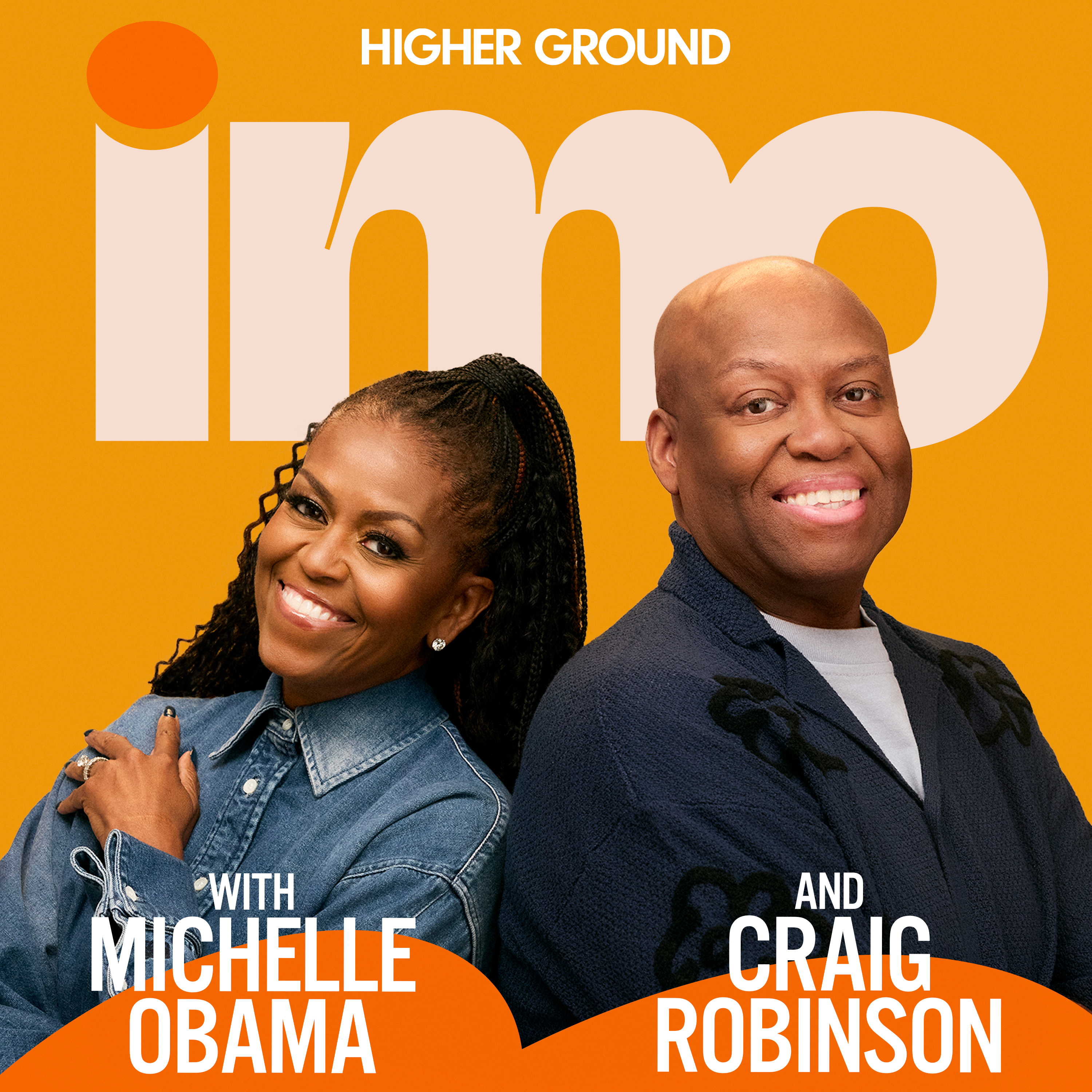
Pod Insights IMO with Michelle Obama and Craig Robinson Tell Your Story with Jonathan Capehart About this episode Pulitzer-Prize-winning journalist and MS NOW host Jonathan Capehart joins the show to discuss his memoir, Yet Here I Am. Michelle and Craig turn the tables and learn more about how Jonathan ended up in journalism— from his childhood shuttling between New Jersey and North Carolina, to his early career in the New York, and his experience as a gay Black man in media.
Have a question you want answered? Write to us at imopod.com http://imopod.com.
See Privacy Policy at https://art19.com/privacy and California Privacy Notice at https://art19.com/privacy#do-not-sell-my-info.
Transcript Speaker names marked ? are inferred from speaking time and the show’s known hosts — they are not voice-verified.
0:00 Speaker 00 The formal name was Main Street. The colloquial name was White Street. And so my mother would make that right. And I never understood why. I was like, Mom, you just go down there and go. But, you know, driving down south in your brown 450SL Mercedes.
0:17 Michelle Obama? Which I was like, stop there.
0:20 Michelle Obama? Stop there, Mama Cape Heart.
0:24 Michelle Obama? With your bins.
0:25 Speaker 00 I know, with her bins.
0:26 Michelle Obama? She was like, and we going down White Street in our bins.
0:28 Speaker 00 In our bins. And as I write in the book, it was like her. It was a slow motion protest at 15 miles an hour.
0:35 Craig Robinson? Right.
0:41 Michelle Obama? This episode is brought to you by Theraplu.
0:47 Michelle Obama? How are you?
0:48 Craig Robinson? I, I am really well. I got a good night's sleep last night. And I have, I have the beds at the Airbnb to thank for it too, because.
0:56 Michelle Obama? Oh, that's right, yeah. You, you've got, so the beds are comfy, comfy where you're staying?
1:00 Craig Robinson? And you know, not everybody, not everybody has the same mattresses, right? But this one is on a platform. And so it's not like a box spring and a mattress. This is just the mattress on a platform. But it feels like I'm on a regular bed.
1:16 Michelle Obama? Oh, well, that, there you go.
1:17 Craig Robinson? Yeah.
1:18 Michelle Obama? That, that's a good tip off.
1:20 Craig Robinson? Enough about my night.
1:22 Michelle Obama? Uh huh, yeah.
1:23 Craig Robinson? Let's, we, we have a guest here.
1:25 Michelle Obama? We do, but one of the things we said, we, we wanted to do.
1:28 Craig Robinson? Yes, yes, yes.
1:29 Michelle Obama? Today, because we, you know, we want to officially welcome back Natalie, our producer.
1:39 Craig Robinson? Who's been off.
1:40 Michelle Obama? Been on maternity leave. And she is a new mommy of a beautiful baby girl. Remind me of your daughter's name, Leona. And she's back. Welcome back. And, uh, you know, we also have to say.
1:54 Craig Robinson? And we also want to say thank you to Julia, who substituted in your stead and did an excellent job. So Julia, thank you so much.
2:05 Michelle Obama? Welcome back to Natalie and thank you to Julia.
2:08 Craig Robinson? We got them both working.
2:09 Michelle Obama? I know. Do we get both of you now all the time? Okay.
2:14 Craig Robinson? So we, we have a friend of yours and I, I, I met him many years ago during the first administration in the White House. But I told him I, it was so many people I met and I probably, it was, I was still coaching, so I probably had lost the game and didn't wanna.
2:30 Michelle Obama? I don't know how you can not know Jonathan Capehart. I mean Jonathan Capehart is like, he's, he's a fixture in so many homes.
2:40 Craig Robinson? Yeah, I know of him, of course.
2:42 Michelle Obama? But you didn't remember whether you meet him.
2:44 Craig Robinson? But I didn't remember meeting him. And, um, you know, Jonathan is a Pulitzer Prize winning journalist. He's also the co-host of the morning edition of The Weekend. He's an analyst on the PBS NewsHour.
2:58 Michelle Obama? This man's got a lot of jobs.
3:00 Craig Robinson? I know, I know. Capehart was previously associate editor at The Washington Post where he was also an opinion writer. His memoir, Yet Here I Am, was published earlier this year and was an instant New York Times bestseller.
3:15 Michelle Obama? Yes, it was.
3:16 Craig Robinson? And it is a really nice read.
3:19 Michelle Obama? It's a beautiful book.
3:20 Craig Robinson? It's a beautiful book and I'm looking forward to talking to him about it, so.
3:25 Michelle Obama? Without further ado, Jonathan Capehart.
3:28 Speaker 00 Here he is. Hi, hi, hi. Hey, it's good to see you. Thank you for having me.
3:35 Craig Robinson? Thanks for being here, man.
3:36 Speaker 00 Great to see you. Nice to see you again.
3:39 Michelle Obama? Jonathan, Jonathan, welcome to IMO.
3:42 Speaker 00 Thank you very much.
3:43 Michelle Obama? We did this, we concocted this, uh, this visit because of your bestselling book. We talked about it a bit. I was like, why don't we talk about it on IMO?
3:54 Speaker 00 And I was thrilled, thrilled that you wanted to have me on and, and talk about the book and I'm looking forward to these deep. Do you understand how weird this is? I'm the journalist.
4:06 Craig Robinson? Yeah, I, I can imagine.
4:07 Speaker 00 I'm the one who asks the questions and try to find ways to get you to not get off your talking points and now I'm getting it from you guys?
4:16 Craig Robinson? This is gonna be funny, honey.
4:18 Speaker 00 I don't know, you say that now.
4:19 Michelle Obama? But this is what I love about the book. It's a beautiful book. It's. You know, it's a wonderful journey through your life. But I love it because in telling your story, we get to see all of Jonathan Capehart. It gives us a real connection to you as a human being, as a man. Your journey is beautiful and it's beautifully told in this book. So congratulations.
4:43 Speaker 00 Thank you. Thank you very much.
4:44 Craig Robinson? It's a nice read. It really is. And I didn't, I didn't become a reader until I was an adult. Now I knew how to read, but I didn't.
4:53 Michelle Obama? I know the way you say that. I was like, whoa, I missed that part.
4:57 Craig Robinson? I only read for school. And I've told the story many times that the first book that got me to be a reader was Firestarter by Stephen King. And so I try to, I have this pattern of I have to read two nonfiction books in order to get to read one fiction book. And yours, of course, is a nonfiction book. So it was a nice one. So thanks for doing it, man.
5:22 Speaker 00 Sure.
5:23 Craig Robinson? I feel like now I feel like I know.
5:25 Speaker 00 I mean, if you don't, if you don't know me by reading that book. I don't know what book you read.
5:32 Craig Robinson? So how, tell us about the process of it and how, it sounds like it was wonderful, but I want to hear from you. So what was it like writing it?
5:42 Speaker 00 So during the first Trump administration, I decided to, you know what? This is a little intense. I'm gonna get off this merry-go-round and all these stories that I had in my head from my summers as a kid, you know, spending them in North Carolina with my maternal grandparents. I'm finally gonna get them out of my head and onto the screen. And I spent the entire, an entire weekend just writing what I started calling the down south chapter.
6:08 Craig Robinson? Wow.
6:08 Speaker 00 Writing about how, the prominent thing is my, I went to Catholic school in the north and then would go down south to North Carolina and spend the summers with my Jehovah's Witness grandmother.
6:19 Michelle Obama? That was, that, that stood out. Because I don't think I knew of your connection to Jehovah's Witness faith. And I didn't realize that your grandmother was such a devout witness. Are they called witnesses? Yeah, yeah. So you had started, you've been going down south since.
6:39 Speaker 00 Yeah, since I can't even remember the first time I went down. But, you know, I went basically every summer until I was 12.
6:46 Michelle Obama? Yeah.
6:47 Speaker 00 And so going down south, being in the heat, the humidity, the mosquitoes, their thunderstorms, the rain hitting the tin roof, all of that, just, I mean, those memories, the smells of the of the summer never left me. And especially going witnessing with my grandmother. It was this woman, she only had a fourth grade education. She knew how to read, she knew how to write, and she was such a devout Jehovah's Witness that we would go witnessing on these country roads in North Carolina.
7:22 Michelle Obama? That's a trip. If I'm just picturing this old lady and this well-dressed little man in the back. Talk about what, you know, talk, help us paint that picture for us.
7:35 Speaker 00 Grandma or Sister Alamein.
7:37 Michelle Obama? Sister Alamein.
7:38 Speaker 00 Sister Alamein and I made for quite a pair. Now, we'll put aside my my fashions for a moment. My grandmother, she liked to dress and she would get a simplicity. She would look through that, wasn't there a book or something?
7:53 Michelle Obama? Simplicity, buttermilk. There were, there were tons of catalogs, catalogs for patterns and.
8:00 Speaker 00 Right, so she would flip through and then she would see, she would see a pattern. And then we'd go into town, Murfreesboro, and go find the pattern and then bring it back home. And Grandma would make her dresses right there on the kitchen table. I could still hear the scissors crunching on the metal tabletop. And then she would sew them, she'd get behind her little Singer sewing machine. And then on Sunday, you couldn't tell her nothing. She put, just slipped that sack dress on over her head, put her faux pearls on, cocked that wig on just right. And put her, you know, purse in the crook of her arm, Queen Elizabeth style.
8:37 Michelle Obama? Yes.
8:37 Speaker 00 And you couldn't tell Sister Isla May Kendrick, not a thing. And so then there's me, you know. So my family calls me Todd. Everybody in my family calls me Todd. So there I am, little Todd, or Todd.
8:52 Michelle Obama? Todd.
8:52 Speaker 00 And I see myself in khaki pants, a little shirt.
8:59 Michelle Obama? Button down.
9:00 Speaker 00 Little button down.
9:01 Michelle Obama? Blue, white?
9:03 Speaker 00 I don't remember. I mean, I, I do remember like a khaki pants and a red, like a red polo of some sort. I like to look good because of my grandmother, but also my Aunt Annie, Aunt Annie Branch. She's like, I, I like it when you dress up. You look nice. And so it was all about looking good for Aunt Annie, looking good for Grandma. And of course, you're going to Kingdom Hall on Sunday. You gotta look your, your Sunday best. So it stuck.
9:33 Michelle Obama? So you're pulling up to somebody's house. I'm sorry.
9:36 Speaker 00 No, I'm just gonna say, we didn't go down south as often as you did. You went every summer. We went like a couple of times, three times maybe in our childhood.
9:47 Michelle Obama? Yeah. So you all, you and Grandma all dressed up, you go down a country road to witness. And you're going to all kinds of folks' house, white folks, black folks. Oh, I wasn't sure. Because one of her friends.
10:03 Speaker 00 Yes, Miss Betsy.
10:04 Michelle Obama? Miss Betsy. Tell us about Miss Betsy, because that story was very sweet.
10:10 Speaker 00 So I don't remember how Grandma met Miss Betsy, but Miss Betsy was a true character. True, true character. Jehovah's Witness, but her husband didn't know.
10:25 Speaker 00 Her best friend was my grandmother. Her husband, according to Miss Betsy, was just this out and out racist. So could never know that, one, she was a Jehovah's Witness, and two, she was cavorting with black people. And so whenever we would have to go, not to Kingdom Hall on Sunday during the daylight, she could make her way. But if they went witnessing or, you know, in the evening or Bible study. Ms. Betsy would call.
10:54 Michelle Obama? Mm hmm.
10:55 Speaker 00 And the phone would ring and we would go, I'd go get the phone. Hello? And then there would be silence on the other end. And that was like, oh, this is Ms. Betsy. It's time to move. Right, so I would wait to listen and then she would whisper into the phone like, I'm on country road, Route four. By the big tree across from the house on the bend. I'll be in the, hiding in the ditch. You just, you hawk your horn when you get there. Like, okay, hang up the phone. I'd run in. Okay, I know where Ms. Betsy is. I'd tell Grandma and Grandma.
11:33 Speaker 00 Driving really slow.
11:35 Michelle Obama? I'm just picturing Ms. Betsy in the ditch, wondering, where is she?
11:38 Speaker 00 No, she knew. She knew. So we, we pull up in this one instance that comes to mind. And, you know, it's pitch black. The brights are on and Grandma beeps the horn and we just sit and we wait. Because, you know, what if we were followed? What if her husband's following us? And then out of nowhere, Ms. Betsy would pop up out of the darkness. And she's this white woman in her own sack dress. Purse crook in the crook of her arm, Bible in the other hand.
12:07 Michelle Obama? The white version.
12:08 Speaker 00 Right, the white version of Grandma. And she would come running. You know, old lady Wally running to the back. Ms. Betsy would dive into the backseat and get on the floor. And then we would drive away in case her husband was following us, which he never did. And then she would get up.
12:25 Michelle Obama? Yeah.
12:25 Speaker 00 We'd be laughing and she was just wet. She was always just stopping.
12:29 Michelle Obama? Well, after laying in the ditch and then running in a sack dress. I mean, I'm like, I bet, I bet she was sweaty.
12:36 Speaker 00 Humidity, like she would kiss us and give us hugs and kisses, cheeks all wet. I hate that to this day, but it was so sweet. It was really, really sweet.
12:44 Michelle Obama? I mean, it's, it's a sweet story, moving, touching on so many levels. But it's, it spoke to the challenges of a deeply still segregated South.
12:56 Michelle Obama? And you witnessed, you grew up in that. I mean, like Craig said, our experiences in the South were intermittent. But you going down there every summer and living it. And talk about what it felt like to be a black boy in the segregated South.
13:18 Speaker 00 I mean, I didn't know what it felt like until, you know, decades later. And particularly when writing this book, understanding, well, wait, well, what were those summers like? Oh, Severn, North Carolina is a Jim Crow relic of a southern town. You know, my mother, I read about how my mother, when driving down south, when you're coming down the road, the first right will take you down Main Street. The second right further down will take you down the street where she was born and raised. But my mom always took that first right down Main Street. Main Street, wide, paved boulevard, double yellow line. The street was lined with these big houses.
14:01 Speaker 00 And the formal name was Main Street. The colloquial name was White Street. And so my mother would make that right. And I never understood why. I was like, Mom, you just go down there and go. But, you know, driving down south in your brown 450 SL Mercedes.
14:20 Michelle Obama? Which I was like, stop there. Stop, stop there, Mom, Cape heart.
14:27 Michelle Obama? With your bins.
14:28 Speaker 00 I know, with her bins.
14:29 Michelle Obama? She was like, and we going down White Street in our bins.
14:31 Speaker 00 In our bins. And as I write in the book, it was like her, it was a slow motion protest at 15 miles an hour. You know, the black, the black, you know, daughter of Severn is back in town. She's announcing, I'm here. I don't have to honk my horn, let the car do the talking. And I'm home, I'm here with my northern address and my education, and I'm bringing my kid. And so, but then you get around the bend in those early years in Severn.
15:02 Speaker 00 That street wasn't paved. It was a dirt road. And that, and it had no name. And one summer we came back and it was paved, but it was paved in sort of like tar and those pebble rocks. So when the sun was beating down on the summer, it would bubble up in tar. So my feet would be covered in tar because I'm running around. You know, I'm a kid in the summer, running around in the street and on the grass and everything.
15:31 Speaker 00 Again, no formal name until they named it South Street. But it was, it's still known to the same colored street.
15:37 Michelle Obama? Yeah.
15:38 Speaker 00 Wow. We were the first generation in our family that didn't have to pick cotton. And we were sort of the first generation of sort of, quote unquote, post civil rights movement kids. I was born exactly three years to the day after the enactment of the 64 Civil Rights Act, less than two years after the passage of the 65 Voting Rights Act. So at, you know, five, six, seven years old, I'm the first child, we're the first children in our family to live in deurea freedom in the United States. And I'm doing it there in this, you know,
16:19 Speaker 00 where segregation is still kind of, still kind of around us.
16:26 Speaker 00 It is, it is among the many memories in writing the book where I realized just how much those summers shaped my, my worldview, my view of this country, my view of myself, Ms. Betsy.
16:48 Craig Robinson? This episode of IMO is brought to you by Theraplu. Theraplu, makers of fast-acting cold and flu relief, believes everyone deserves the right to rest and recover when they're sick, no matter where they live or how much money they make. When I was coaching, if I got sick, I found it hard to choose between taking time for myself to rest and heal and showing up for my family and my team. Luckily, I had the ability to take paid sick time when I really needed it, but not every American has that option. In 2021, Theraplu launched the Rest and Recover Fund, and they've committed more than $1 million to provide micro grants to families and individuals, helping offset the cost of taking a sick day
17:33 Craig Robinson? for those that don't have coverage. Everyone should be able to prioritize their health without risking their ability to put food on the table. That's why Theraplu is committed to keep fighting, because rest and recovery is a right, not a privilege. Learn more or help someone apply for the fund at theraplu.com/righttorecover. This episode of IMO is brought to you by Indeed. Typically, your college major is unlikely to be your profession, and that's certainly the way it was for me. So it's really important to be extremely flexible and open-minded about what you're willing to pursue. Think broadly in your search. That's why it's important to think outside of the box
18:17 Craig Robinson? and tap into your skills for your next career move. Indeed Career Scout can help you land your next role fast, leveling up your job search process with personalized recommendations and support. Being open to change helped me explore roles I hadn't imagined, which made my career richer and more fulfilling. Indeed Career Scout can help you do the same by connecting you to opportunities you might not have considered based on your skills and interests. It's like a personal career coach that makes every part of the job searching process easier. It can tailor your resume for specific applications, match you with new opportunities, and even help you practice your interviews.
19:01 Craig Robinson? Indeed's mission is to empower people to use their skills to find better work, and Career Scout is their latest innovation to help you do that. The future of job searching is here, and it's called Indeed Career Scout. Try it today in the Indeed app.
19:25 Michelle Obama? Your mom, I want to talk about your mom too, because just a lot of things you said in describing your time down south. Number one, a southern girl comes back after with an education, a beautiful car, successful. But your mom was a single parent and she did all that on her own. And I just want you to talk a bit about Margaret, who, by the way, I would want to have here because Margaret is actually my favorite Capehart.
20:00 Speaker 00 You know, she is gonna dine on that forever.
20:05 Michelle Obama? Well, tell us about your mom's story, her journey, and, you know, how she pushed through and what she like as a mother to you? All of that good stuff.
20:18 Speaker 00 So, a few things, foundational, foundational facts.
20:22 Michelle Obama? Yes, I know you know how to do this.
20:25 Speaker 00 My mother and father married two years before I was born. Right. They moved to Brooklyn, to Park Slope, and then moved to Newark. My father died when I was four months old. He had a blood clot that went from his legs to his lung, lungs to his heart. I found out from my godfather years later that the doctors told him he needed to have his legs amputated. And so, my father apparently said to them, well, I like to dance. So you are not taking my legs. I was born with two legs, I'm gonna die with two legs. And my godfather told me that from that moment,
21:09 Speaker 00 he decided to live life the way he wanted to live it. And unfortunately, that meant he left his pregnant wife.
21:22 Speaker 00 You know, before I was born. And so when he passed away in 1967, my, no one called my mother to tell her that he had passed away. Oh, I left out a key point. All, when he left, he moved in with. With the girl. With another woman. Yeah. No one called her to tell her that he had passed away. She would call daily the hospital to check in on him because my mother is, is a nurse. Was it, she's now retired, a nurse. And they said he passed away. And then she told me a guardian angel called, came to the, came to the apartment in Newark and said, you need to get over to Capehart's place now and get his legal papers.
22:07 Speaker 00 Go and get all of them. My mother said, you know, he always, he, he always traveled around with an entourage. And so she goes over to the house with police officers. And she said, you walked in and there were just people sitting around. Any of these jokers are gonna like call his wife because he didn't divorce her. She got the legal papers and then another person, another guardian angel, as she described them, told her that you know, you're entitled to veterans benefits for the rest of your life. And it's those two guardian angels who changed the trajectory of our lives.
22:48 Speaker 00 I would also say that, you know, Willie Capehart changed the trajectory of our lives by not divorcing my mother because as a result, we were able to avail ourselves of those things. So my mom, you know, she worked her butt off, double shifts. She taught me how to iron, how to do laundry, how to, how to, okay, mom even knows this. She's not a great cook. But, but she did teach me how to boil water to make pasta. She taught me things so that way.
23:24 Speaker 00 As she said, you don't want to have to rely on anybody else. You want, you have to be able to depend on yourself. And, you know, there's some upsides to that. There are also some downsides, some downsides to that. But she instilled in me.
23:40 Speaker 00 And independence that she knew I would need. She sheltered me as much as she could from the slings and arrows of life, particularly when it comes to matters of race. And we left Newark and moved predominantly white towns. First day of school, she would say, um, okay, two things. One, anybody calls you the N word, you let me know right away. And two, don't let them put you in vocational education. They're always trying to push us into voc at you are going to college and you should be in college, college prep courses. Like, yes, ma'am.
24:15 Michelle Obama? And did she intentionally move into a neighborhood where she felt you would have? How did she think about education? And, you know, and the fact that she lived in a predominantly white community. I think you said she made choices about where she was gonna live to ensure that you got.
24:31 Speaker 00 Oh, sure. Now, it wasn't as like today, folks like, hey, what is the elementary school? What are their scores? And, you know, their placement in, within the state? No, mom was like, we gotta get out of Newark.
24:44 Speaker 00 And we gotta go someplace where it's not Newark. So the first place was North Plainfield. Lovely, not ideal. We only lasted two years. And then we went further south to Monmouth County to this town called Haslett, New Jersey. And we were only there for four years, but to me, that was an incredible lifetime. And, you know, another predominantly white school, white town, where I just dove, I just dove in. I ran for student council. Became student council vice president at Beer Street Elementary School. And then did the same at Raritan High School. Like dove right on in.
25:23 Michelle Obama? And you felt accepted? Did you have issues of, of race, um, teachers, uh, lowering your expectations? Did you have any of those kind of challenges?
25:35 Speaker 00 When I got to Raritan High School, you know, I was like looking forward to, you know, going to homeroom with my fellow nerds. And instead, my homeroom was the shop.
25:45 Michelle Obama? Yeah.
25:46 Speaker 00 You know, sitting.
25:46 Michelle Obama? They tracked you.
25:47 Speaker 00 Sitting around this giant wedge table with the, what is that, that, what's that thing called?
25:53 Michelle Obama? The vice.
25:53 Speaker 00 The vice. Yes, that vice thing. Smell the turpentine and wood. And oil. And metal and, and stuff.
25:59 Michelle Obama? Jonathan's like, where am I? This isn't Kansas anymore.
26:05 Speaker 00 What is, what is, they're gonna get dirty.
26:09 Speaker 00 How dare they?
26:10 Craig Robinson? But Jonathan, I want to go back because I think there are a lot of mothers who are like Margaret. Single mothers who are raising black kids. And somehow, she gave you the confidence to walk into these spaces and be okay, fit in, not feel intimidated. How did she do that?
26:36 Speaker 00 That is a great question.
26:40 Speaker 00 I mean, I think it's a combination of her parenting, but then also just sort of the way I was. I took it upon myself to be like, hi, I'm here. Let's be friends. Also, you're an only child. You want to go make friends. So it was just perfect. My mother, I'll never forget, she, again, her admonition was if anyone drops the N-bomb, you let me know. Well, it happened one day in Haslett, right outside our apartment. And it was a kid who was not part of our crew, but he dropped it. And I ran in screaming to my mother.
27:21 Speaker 00 It happened. He said it. He said it. Mom. She comes running out.
27:27 Craig Robinson? Halfway won to see what would happen.
27:29 Speaker 00 Right. So mom comes down and she breaks it up and says, my little friend's home. And then she says, Todd, come here. We have to talk. Sit down on the sofa. And Skip, my next door neighbor, was also my very best friend. And she says, now, listen, you and Skip right now, you're equals. You're right here. But as you get older and you move through life, Skip is going to climb higher.
28:02 Speaker 00 And he's gonna climb higher because he's white.
28:05 Michelle Obama? Hmm.
28:05 Speaker 00 I, I was screaming at the tops, tops of my lungs. How can you say that? That's not true. You're lying. Why are you doing this? I really, like, she tore my heart out. This conversation. Tears. I, I screamed myself hoarse. And I remember just the look on my mother's face in hindsight was one of
28:31 Speaker 00 sorrow.
28:34 Speaker 00 Yeah, sorrow is the way I would put it because just think about it. She has had to have this. She knew this conversation was coming. She probably, knowing me, she knew what my reaction would be. And you can steel yourself against that and prepare yourself for that as much as you can. But when you see your child respond in that way, how could that not be heartbreaking? But also heartbreaking because you know, at some point, that same child is going to come back to you decades later and say, you were right. I was naive. In a lot of ways, I still am that naive little boy.
29:17 Speaker 00 But it was that naivete that gave me the blinders to plow ahead, to walk into rooms where people would look and like, who's this black kid? Who does he think he is? And also, you know, back to my mother, my mother always made a point of ensuring that your education was front and center. We would go out to the mall and she would say, don't even think about going into Toys R Us, KB Toys, not going, not buying you, not buying you a damn thing. But we go into Barnes and Noble because mom would always go into the bookstore. You, I'll spend whatever, whatever you want on any books.
29:59 Speaker 00 She said, you are going to college and if you are 18 and not in college, you are not living here because I'm not taking care of a grown man.
30:06 Michelle Obama? Yeah.
30:07 Speaker 00 So I was always going to college. It was all, it was just a matter of getting. And where I would, where would I go?
30:14 Craig Robinson? So, speaking of college, I want to delve into the Carlton College. Because you write about knowing that you were gay since you were 10 years old. But you did not feel comfortable until you got to Carlton. Can you talk about that? Because I'm just fascinated by that. Because I'm a Midwesterner and I think people in the Midwest are nice. What was it about Carlton that made you feel comfortable enough to sort of be yourself?
30:41 Speaker 00 Well, two reasons. One, Carlton is a very nurturing environment, one. But two, it boils down to a person. And his name is Matthew Brooks. And he was a year behind, behind me in college. And we met my sophomore year, his freshman year, and it, in Goodhue Hall. And he was gay. He didn't tell you he was gay. You could just, he's gay. He didn't run away from it. And in fact, he took over, took over. He, you know, became part of the leadership of the gay group on campus.
31:15 Craig Robinson? Okay.
31:16 Speaker 00 Moved it from the basement of the chapel to the second floor of the student union. And just symbolically, bringing it out of the shadows, putting it someplace where, you know, yeah, people might see you, but guess what? You're not hiding. This is not something to be ashamed of. And so, you know, coming out at Carlton was easy. I mean, relative, relatively easy.
31:44 Michelle Obama? And what was going on with you internally in this process? I mean, you know, you're, you're having this awakening at Carlton on so many different levels. But you're doing it away from home. And there was the Jonathan at Carlton. But then there was this whole Todd back.
32:06 Speaker 00 Oh, back home?
32:07 Michelle Obama? At home. And how did, how, how did you feel as you were coming into your own? What did that, what did that do to you? Did you, was it frightening? Did you worry about, you know, what this would mean?
32:22 Speaker 00 I never feared that my my mother would disown me.
32:26 Michelle Obama? Yeah.
32:26 Speaker 00 Um, that my family would kick me out and, you know.
32:30 Michelle Obama? Why is that?
32:31 Speaker 00 Things.
32:32 Michelle Obama? Why did you know that for sure?
32:33 Speaker 00 I just did.
32:34 Michelle Obama? Mm hmm.
32:35 Speaker 00 I just did. And also, I'm of the, even then, I'm of the mind that, um, you're gonna kick me out of the family because this is who I am? Okay, well.
32:46 Michelle Obama? Bye.
32:46 Speaker 00 Bye. Exactly. Bye.
32:50 Speaker 00 So when I was at Carlton, sure, you know, you're dealing with these things. You're struggling, like, who am I? Is this me? What's going on? How will my friends react? And then, but there's a liberation there. But then you go home. And now you're under the roof of your mom and me at the time, my stepfather. But, um, but you get home and now you have to go back into the closet. Yeah. Uh, and so finally, when I came out to my mother, it was, you know, it was a relief.
33:26 Michelle Obama? Mm hmm. Was she, was it a surprise to her? Was, did she, was it sort of like, mm, I was just waiting for you to tell me?
33:34 Speaker 00 It's a yes and no.
33:35 Michelle Obama? Yeah.
33:35 Speaker 00 All moms know. You know, I maneuvered, I maneuvered the conversation so that she would ask me. Cause so many times I came up to the line of saying, Mom, I'm gay.
33:46 Michelle Obama? Yeah.
33:46 Speaker 00 And, and chickened out. So I'm back from, I'm back from Carlton. I graduated and stayed a year to work as assistant to the president of the college. Back home in my childhood room in Haslett, which suddenly feels a whole lot smaller. Yeah. Now, right? That happens. I'm sitting on the futon and my mom, she's, she's mad because I corrected her on some of her language. About things. College boy. Right. And she said, ever since you came back from college, you've, you've become so, so liberal.
34:21 Speaker 00 It's like, ooh. Snap me in the face. Tear you. And I said, well, what are you talking about? And so we go back and forth and I said, you know, I just somehow made the way to, you know, gays and lesbians. They're always talking about, you know, wanting to be accepted and blah, blah, blah. Well, they're doctors and lawyers and journalists. And all these things. You are part of the mainstream, blah, blah, blah. And my mother, standing at my door, she's like this, well, are you gay? And right then, I'm sitting on my futon. Feel like this beam of light, like I'm in my own one man show.
35:07 Speaker 00 And it was a moment of truth. And I said, yes. The first thing she said, first she goes, why? And I said, I don't know. And then. She says, why? Oh, that's sweet. And then I said, it's not your fault. It's not your fault. It's, it's just me. It's just who I am. And then the next thing she said to me was, don't tell anybody.
35:30 Speaker 00 You don't want to, you don't want to ruin your career. And I looked at her and I said. Too late. I'm not gonna go out and tell, you know. It's nobody's business. I'm not gonna lie. You know, and also, besides, have you seen? I got a big, there's a, there's a, there's a gay bar in, I don't know if it's still there in Minneapolis, called the Gay Nineties. And it has a big neon sign that says Gay Nineties. And then it has like these rainbows that come down in neon lights. Like this. And I said, I've got this neon sign over my head. Gay Nineties.
36:07 Speaker 00 So, I mean, if you got your eyes open, you know. You already know. So, but I'm not, I'm not going to lie. And, you know, this was a part of the tension between my, my mother and me. She's. From the older generation where you don't talk about these things. You don't put yourself out there like that. You don't make risks like this. And I'm from the new generation, the post civil rights generation. I'm still that kid. I'm free. And the world is, the world is changing. While it's not changing as much or as fast as I think it is, or that I hope that it is.
36:47 Michelle Obama? So the truth is still somewhere in the middle.
36:50 Speaker 00 Yep.
36:59 Craig Robinson? You know, January always feels like that moment to hit reset, to finally stop saying, maybe one day, and actually start becoming who you're meant to be. And that's why I love Shopify. If you've got a dream, whether it's a side hustle you've been sitting on or something bigger, Shopify makes that first step simple. So let me ask you, what's the one thing you've always wanted to build but kept putting off? And how different could your year look if you just started now? If 2026 is your year, go to Shopify.com/IMO and make your move. This episode of IMO is brought to you by Progressive Insurance, who help people move forward and live fully.
37:43 Craig Robinson? Owning a home can be one of the most powerful ways to build financial security. But for many, especially first generation buyers, it can feel out of reach. That's why I appreciate what Progressive is doing. In 2024, they contributed over $7 million to help individuals and families break the cycle of renting by providing support, offering educational resources, and developing tools to build long-term financial stability through homeownership. Their work goes beyond just insurance. They're opening doors.
38:21 Craig Robinson? Through their newly created up payment program, Progressive is helping first generation homebuyers move closer to the dream of homeownership by offering eligible applicants a chance to receive a down payment assistance grant. You know, owning a home for me made me feel grounded and also set me up for the future. And as a coach, when your life is dependent on wins and losses, it's really important to have the comfort of a really nice home to come home to, especially for your family. Homeownership is one of the biggest investments you'll ever make, and Progressive wants to help more people take that life-changing step.
39:02 Craig Robinson? Learn more today at progressive.com/openedthehouse. This episode of IMO is brought to you in part by Acorns. You know, one of the most valuable pieces of money advice I've ever gotten is that financial wellness isn't about how much you make. It's about making the most of what you have. That's something I've carried with me from my time on Wall Street to today, and that's why I love Acorns. Acorns is a financial wellness app that makes it easy to start saving and investing for your future. You don't need to be rich. Acorns lets you get started with the spare money you've got right now, even if all you've got is spare change. You don't need to be an expert. Acorns recommends a diversified portfolio that can help you weather all the market's ups and downs.
39:47 Craig Robinson? You just need to stick with it, and Acorns makes that easy. Acorns automatically invest your money, giving it a chance to grow with time. The best advice I've gotten was from my father, and that was to pay yourself first. So sign up now and join over 14 million all-time customers who have already saved and invested $25 billion with Acorns. Plus, Acorns will boost your new account with a $20 bonus investment. Offer only available at acorns.com/imo. That's A-C-O-R-N-S dot com slash I-M-O. To get your $20 bonus investment today. From Acorns, mighty oaks do grow. Investing doesn't have to be complicated.
40:31 Craig Robinson? Acorns makes it easy to invest for your future, plan for tomorrow, and spend smarter today. Paid non-client endorsement. Compensation provides incentive to positively promote Acorns. Investing involves risk. Acorns Advisors LLC and SEC Registered Investment Advisor. View important disclosures at acorns.com/imo.
41:01 Michelle Obama? Now Margaret was your protector. I mean, in so many, at so many stages of your life, she was, she was being honest with you, protecting you from the truth, preparing you, making sure that you, she was taken care of. And the reason why I want to talk about her, her second marriage. Your stepfather became one of the voices that could have made you think that you weren't worthy.
41:25 Speaker 00 He was someone, you know, we can learn lots of lessons from people.
41:31 Michelle Obama? Yes.
41:31 Speaker 00 You know, good people and bad people.
41:33 Craig Robinson? Yeah, absolutely.
41:33 Speaker 00 Good lessons and bad lessons. And I learned from him what not to do.
41:40 Michelle Obama? Yeah.
41:40 Speaker 00 How not to be.
41:41 Craig Robinson? Yeah.
41:42 Speaker 00 Uh, how not to treat people.
41:44 Michelle Obama? Yeah.
41:44 Speaker 00 And so if he did it or said it, or I knew, you know, this is not, this is not right. This isn't kind. This isn't how you should treat someone. Or at least that's not how I'm going to treat someone. And especially when I had someone like my Uncle McKinley branch.
42:03 Michelle Obama? Yeah.
42:03 Speaker 00 Who was the complete opposite of him. I had, I had the counterbalance. And he had been in my, Uncle McKinley had been in my life since birth.
42:13 Craig Robinson? Right.
42:14 Speaker 00 My favorite aunt and uncle, Annie McKinley. And from him, I learned what it meant to be, you know, a good dad, a good person, a good man. He was so caring and loving of his, of his wife and his son, of the family writ large. I mean, Annie McKinley, they were, they were like William and Kate in our family. They came down, when they came down south.
42:40 Michelle Obama? And you spent time with them, too.
42:42 Speaker 00 Yeah, a lot of time.
42:43 Michelle Obama? When did you come out to them?
42:45 Speaker 00 Oh.
42:46 Michelle Obama? And how?
42:47 Speaker 00 I was going to bring my first long-term partner down south for Thanksgiving. Grandma was still alive. But my, and my grandmother said, yes, come on down. I wanna.
42:59 Michelle Obama? And she knew, she.
43:00 Speaker 00 Yeah.
43:01 Michelle Obama? Wonderful, yeah.
43:02 Speaker 00 Oh, yeah, I wanna, I wanna meet him. And then I got a phone call from my grandmother about a week before Thanksgiving, or two weeks, saying, um, um, I can't have that in my house.
43:15 Michelle Obama? Oh.
43:16 Speaker 00 And I said, excuse me? Um, you know, I was talking to so-and-so and, and I can't, I just can't have that in my house. And I said, are you talking about Giuseppe and I can't come down? And she said, no. And so I was heartbroken. And, and Grandma, we were close.
43:39 Michelle Obama? Yeah.
43:39 Speaker 00 Super close. I didn't talk to her for a good two years after that. And it was Uncle McKinley who said to me, he called up and he said, um, something like, I heard what happened and I want you to know, Annie and I want you to know that we love you. And, um, you know, you are always part of the family. And, you know, and, and Giuseppe. And it was all just, it was loving and affirming. And he didn't have to do that.
44:11 Michelle Obama? Yes.
44:13 Speaker 00 But he did.
44:14 Michelle Obama? Yeah.
44:14 Speaker 00 And, you know, an African American man.
44:16 Michelle Obama? Yes.
44:17 Speaker 00 Picking up the phone.
44:18 Craig Robinson? Oh, yeah.
44:18 Speaker 00 And calling to tell me that.
44:21 Craig Robinson? Yeah.
44:21 Speaker 00 Told me everything that I needed to know. Well, one, I already knew this about him. But the fact that he called me just sort of showed that this is a guy who pays attention. And knew that I would be hurt by this.
44:38 Craig Robinson? Yeah.
44:39 Michelle Obama? He knew you.
44:39 Speaker 00 And called and wanted to make sure that I knew.
44:42 Craig Robinson? Yeah.
44:43 Speaker 00 That, you know, don't don't get it twisted. That we are here for you.
44:49 Craig Robinson? That's kind.
44:49 Speaker 00 We, we love you. And then I go and talk to Grandma and I finally talk.
44:54 Michelle Obama? Yeah, I was gonna ask.
44:55 Speaker 00 After a couple of years of not talking. Come to find out, she was fine. It was my Aunt Dorothy.
45:05 Craig Robinson? It's always.
45:05 Speaker 00 Not Dot.
45:06 Michelle Obama? Dot, Aunt Dot.
45:08 Speaker 00 That's always that Aunt Dorothy. Got in the grandma's ear.
45:11 Michelle Obama? You don't want none of that down here. She's like, maybe I don't.
45:14 Speaker 00 Right.
45:15 Michelle Obama? But it was good that you found out your grandmother's intent.
45:19 Speaker 00 Oh, yeah.
45:20 Michelle Obama? You know, where, where her heart was. I mean, I'm sure, you know, you, you, you can't win them all. And, and people will be who they are. But I just sensing you,
45:31 Michelle Obama? you know, just an internal security that isn't always there in, in young people as they are dealing with their sexuality. And you've continued to hold on to that. It's, it's a reasonable man approach to things.
45:47 Craig Robinson? Yeah. And particularly a young, particularly a young black man. Because I, you know, I'm a little bit older than you. But in black families, being gay is tough. Because we're tough on gay folks. And your level of security in yourself, young people should look, look at that. And, and our, our mom always said, you know, just be yourself, never be afraid to be yourself. People will like you or they won't like you.
46:15 Speaker 00 Right.
46:16 Craig Robinson? But all the people who care about you will, it won't matter. They're gonna like you no matter what, so.
46:21 Speaker 00 As you get older, you, you soon realize, what, you don't like me?
46:25 Craig Robinson? Yeah.
46:25 Speaker 00 Great.
46:26 Michelle Obama? Yeah.
46:27 Craig Robinson? One less.
46:27 Speaker 00 I don't care.
46:28 Craig Robinson? One less person to deal with.
46:29 Speaker 00 Seriously.
46:30 Michelle Obama? That's a good seg, time to move into our.
46:35 Michelle Obama? Our listener question.
46:39 Michelle Obama? Thank you, Jonathan.
46:40 Speaker 00 Thank you.
46:41 Craig Robinson? Yeah, yeah, we're not done yet.
46:43 Speaker 00 Oh, OK.
46:43 Michelle Obama? Yeah.
46:44 Speaker 00 I'll settle back.
46:45 Michelle Obama? Yeah, Natalie will read it for us.
46:47 Craig Robinson? And this is from Dominic from Washington DC.
46:51 Speaker 03 I'm writing as someone who is hurting and feeling deeply frustrated. As the only openly gay man in my family, I often feel isolated, especially when spending time with my brothers. One is a professional athlete, and our social outings usually revolve around straight bars or environments where I feel like I can't fully be myself. Recently, I invited them to join me at a gay bar for the first time after going to multiple straight bars, and they wouldn't even come inside. They stood outside and waited. I ended up crying, feeling rejected and unseen later in the night. Am I wrong to feel frustrated? How do I keep showing up for my family who don't always show up for me? Dominic in Washington DC.
47:36 Speaker 00 Wow. Dominic, I have so many reactions.
47:41 Michelle Obama? Please.
47:41 Speaker 00 So many, so many emotions. One, I wonder how many, where does Dominic fall? In, in, among the, among the siblings? Is he older? Is he younger? Is he in the middle? Is like, is he the Jan Brady of the family? Two, and this gets back to something that I said earlier
48:02 Speaker 00 about family.
48:05 Speaker 00 And maybe this is because I'm an only child and an only child of a widow who taught me to be self-reliant.
48:12 Michelle Obama? Yeah.
48:13 Speaker 00 And it's, you're being taught self-reliance to the point where it is not hard for me to even say to family members,
48:24 Speaker 00 you're not going to treat me that way. This is who I am. This is what I am. On a whole range of issues. And if you don't like it, well, you will not have the pleasure of my, of my company. And I wonder, Dominic.
48:42 Speaker 00 At a certain point, you are going to have to stand up for yourself. Family or no family, sometimes I think family uses the family tie to keep you, to keep you in place. Um, and sometimes, you know what? If family's not treating you right, in the same way that friends aren't, or strangers aren't, at a certain point, family needs to learn who you are. And so those brothers of yours, I don't know how close the relationship is. It must be close if they're at least gonna come to a gay bar and stand outside. I don't know what that's about.
49:21 Craig Robinson? Right, right.
49:22 Speaker 00 But, um, if they don't want to, you know, see you, you know, the full you by coming inside the gay bar. But at a certain point, you're just gonna have to, like, where is your, your chosen family? At a certain point, the real family has to give way to the chosen family. Because as you get older, family ties can be corrosive, toxic, not right. Uh, and sometimes it's difficult, but you're gonna have to say, you know what? You're not treating me right. I treat you with all the love and respect because you are my brothers.
50:07 Speaker 00 You are my family. But if you are not going to give as much as I give, well, I'm gonna have to go and take care of me, what makes me happy. Um, and if that means we don't spend as much time together because I'm with my chosen family where I am seen, where I am respected, in the end, that's what this is about, family or no family. Are you seen? Are you respected? Do people, do people really care about you? And that's what you, you should feel. You shouldn't feel guilty in demanding that. Certainly of family. Definitely of family.
50:52 Michelle Obama? Do you think Dominic's potentially afraid of losing that connection? Because, again, you were an only child. Connection was different. What do you say to the kids out there who are, you know, do have, they feel like, well, this, you know, yes, I have a chosen family, but I don't want to lose this relationship to my brothers.
51:17 Speaker 00 No, and I understand that and recognize that as an only child, I don't know what it's like to have brothers and sisters with all the teasing and the joshing and the talking over each other.
51:31 Michelle Obama? Yeah, it gets old sometimes.
51:36 Speaker 00 Yeah. Yes, it does, girl.
51:41 Speaker 00 But, you know, in the end, I think what I'm trying to get to is, Dominic, when you know who you are, when you are just firm in your belief, like, this is who I am,
51:55 Speaker 00 then everything else should flow from that. And that should dictate and determine how you relate to your brothers, how you relate to the rest of the family. I'm not saying, oh, just give up on them, dump them, you know, tell them bump you, I don't ever want to talk to you again. That's not what I'm saying. In the end, what I'm saying is, Dominic, learn who you are. And then, once you know who you are, and by that I mean,
52:28 Speaker 00 what do you like, what don't you like, what will you put up with, what you won't put up with, just as a human being, from people, regular, everyday people.
52:40 Speaker 00 But also from family. And just because they're family, that does not give them a pass to not treat you with respect or the way you want to be treated. And so whether you are an only child, or you are the middle of five, or the oldest of five, or the youngest of five, or however many, as long as you know who you are, then you will know how to navigate, navigate this and never, never stray from that. You'll all, you will always be safe and secure when you know exactly who you are.
53:13 Michelle Obama? How old did Dominic's, is Dominic, did he say?
53:16 Speaker 00 Oh, yeah.
53:17 Michelle Obama? He didn't say? Yeah. Yeah, well, that's.
53:19 Speaker 00 It strikes me as young.
53:20 Michelle Obama? Yeah.
53:21 Speaker 00 Like in maybe in his twenties. Still not self-assured yet. Right. Right? Yeah, but you know, life has a way of seasoning you.
53:28 Michelle Obama? Right, right. I mean, in the end, it's, it's all about boundaries.
53:32 Speaker 00 Yeah.
53:32 Michelle Obama? You know, and it takes a while to learn what your boundaries are and then learn how to protect them.
53:42 Michelle Obama? And that, that takes some practice. And if Dominic, if you are young and you're just learning it, that's what, you know, you're, you're, you're gonna have to figure that out in, it's, it's for so many levels of your life. Because if you're not able to do it with your, your brothers, you're probably not doing it on the job, you may not be doing it with your chosen family and friends. And that's, that's work that, you know, at some point, you can't avoid that. Right?
54:13 Speaker 00 There's sacrifice. There's sacrifice in, when you set boundaries, you then learn who your, who your friends are. And really, sometimes who your family, who your family is. And with that sacrifice, so you have to be comfortable in the sacrifice. I know because of the boundaries I've drawn and the things that I won't do, that I've probably limited opportunities for myself. And you know what? I am just fine.
54:40 Michelle Obama? Just fine with that.
54:41 Speaker 00 Just fine with it. You have to be just fine.
54:44 Michelle Obama? Yeah.
54:44 Speaker 00 With the known sacrifices that come with setting those boundaries.
54:56 Craig Robinson? My kitchen has never quite felt completely put together, like it's always felt like something is missing. And then Kelly and I found these striped linen cafe curtains on Wayfair, and the effect has been perfect. Once we realized we wanted some curtains, it was just a matter of typing our ideal item into Wayfair's search bar. And of course, they have what we want plus 10 other options. Their inventory truly cannot be beat. I especially like being able to look through customer photos and reviews before I decide. That's what sealed the deal for us with our new curtains, as well as all of the other amazing pieces we have from Wayfair in our house right now. Wayfair has more than 20 million verified five-star reviews,
55:41 Craig Robinson? so you can actually see how something looks and works in real people's homes. Find pieces made for real life and get even more value with Wayfair Rewards. Join Wayfair Rewards today to get 5% back on every purchase. Head to wayfair.com to shop all things home. That's W A Y F A I R dot com.
56:03 Speaker 03 Wayfair, every style, every home.
56:11 Michelle Obama? And on the other end of that, those boundary settings, there's room for new, better, more.
56:19 Michelle Obama? Because if you free yourself up from the things that don't serve you and bind you down, you'd be surprised, Dominic, that there's room for something really special in there. I mean, you talk in your book, Jonathan, about your chosen family, this beautiful New York, you know, life that you've built for yourself. And, you know, having that attitude, you know, led you to what felt, as you described it, this amazing community of support, full of diverse people who accepted you and the dinners that you all would have together, the travel, the what that all did to expose you.
57:04 Michelle Obama? You, you know, you, you developed a love for other countries. And because you created some boundaries that opened up opportunities to bring other people into your world.
57:16 Speaker 00 And also with this New York family, as I read, I met these people. Through a friend who said, "Come to this party." And then he didn't come to the party. But I walked into this room that felt like just a giant hug. Because in the room were other nerds, other black nerds. They're not gonna like that I call them that. But these were-
57:39 Michelle Obama? They're special.
57:40 Speaker 00 Right, but these were African-American, mostly, not all, but young professionals to whom I didn't have to explain anything. They knew, they understood where I was coming from, with similar backgrounds. You know, we all watched Soul Train Saturday morning. We all knew the music and the songs and we bonded over that from disparate parts of the country. And here we are in New York, young black professionals, and we have this common language. And we have these common aspirations.
58:22 Speaker 00 We came to the city to do stuff, to make names for ourselves, to just forge a life on our own. And when you realize that you, especially for an only child of a widow who had this destination with no roadmap, doing all this stuff on my own, and I walk into this room and I'm surrounded by people who are all doing the same thing, generally speaking, but come from different backgrounds and different sized families. And we all have this common cultural ancestry. I mean, just the shoulders come down. I mean, that's why Martha's Vineyard is such a-
59:07 Michelle Obama? It's special, yeah.
59:08 Speaker 00 Such a special place. That is-
59:10 Michelle Obama? A place where shoulders come down.
59:12 Speaker 00 Come down. That is my New York, that, this family was formed in the mid 90s in New York. And then, you know, come to Martha's Vineyard in my tender age, you know, late, early 50s. And again, it's that place where the shoulders come down. I am with, I am with friends who I know from outside the vineyard, but we're there and we- Don't have to explain a lot.
59:37 Michelle Obama? Yeah.
59:38 Speaker 00 If anything.
59:39 Michelle Obama? Yeah.
59:39 Speaker 00 And sometimes we just, we need to have those, those places.
59:44 Michelle Obama? And I would encourage Dominic to focus his energy on building that, that place. You, you call it the chosen family. And it's not to replace the current family, but we all have a chosen family. I mean, I love my brother, but he's not coming to the venue.
1:00:03 Speaker 00 I come to the venue. I come to the venue.
1:00:06 Michelle Obama? Thank God for my chosen family because my actual family is not choosing me.
1:00:11 Craig Robinson? Dominic, just, just hit your brothers one at a time. One at a time. Take them out one at a time.
1:00:21 Craig Robinson? Find out which one is the leader and which one you can pick off and then slowly get them into your chosen family.
1:00:27 Speaker 00 That's actually a good point. Why are you doing all this stuff with all the brothers? Which one are you closest to? And just go and just...
1:00:37 Craig Robinson? Hang out with him and, and, and do that with each one. And I think, I think, you know, it's, life is, is individual relationships.
1:00:47 Speaker 00 Yep.
1:00:49 Craig Robinson? Jonathan, thank you.
1:00:51 Michelle Obama? Jonathan, you are a beautiful storyteller and your life is, it is rich. And thank you. Thank you for your willingness to share it. And thank you for being out there on the front lines, fighting for our democracy. It is sometimes thankless work, but you do it with grace.
1:01:12 Speaker 00 Thank you. It's a calling.
1:01:14 Michelle Obama? Yes, it is. It has been a calling from the time you read in the National Geographic.
1:01:21 Speaker 00 It's a little kid.
1:01:22 Michelle Obama? Little B kid.
1:01:24 Craig Robinson? Appreciate the truth.
1:01:25 Michelle Obama? It is, it is.
1:01:29 Michelle Obama? It is such a pleasure.
1:01:30 Speaker 00 Oh, thank you. This was fun.
1:01:52 Craig Robinson? This episode is brought to you by Cologuard. I knew that I shouldn't delay screening for colon cancer, and Cologuard has made that process 1 million times easier for all of us. I just answered a few questions about my age and medical history, and once their licensed clinician determined I was eligible, they issued the prescription and the Cologuard Plus kit was sent right to my home. No doctor's office visit necessary. For me, there was just immediate relief in getting it done. It cost me $0 with my insurance. It took me truly 15 minutes, and now I can rest easier knowing I screened properly. Plus, if you get a negative result, you generally don't need a repeat Cologuard test for three years.
1:02:36 Craig Robinson? If you're 45 or older and at average risk, it's time to screen for colon cancer, even if you feel perfectly healthy. And Cologuard Plus gives you an option you can use right at home. Talk to your healthcare provider about screening for colon cancer with Cologuard or request it online today at Cologuard.com, where they have an easy telehealth option. Don't wait. Cologuard products are intended to screen adults 45 and older at average risk for colorectal cancer. Do not use if you have had a personal history of colorectal cancer or polyps, have inflammatory bowel disease, a family history of colorectal cancer or certain hereditary syndromes, or a positive result from another colon cancer screening method within that test-recommended screening interval. Cologuard results should be interpreted with caution as false positives and false negatives do occur. Available by prescription only.
Previous Follow your Instincts with Henry Winkler Next Your Turn Will Come with Carol Burnett Page updated October 31, 2026 · transcript and summary are machine-generated