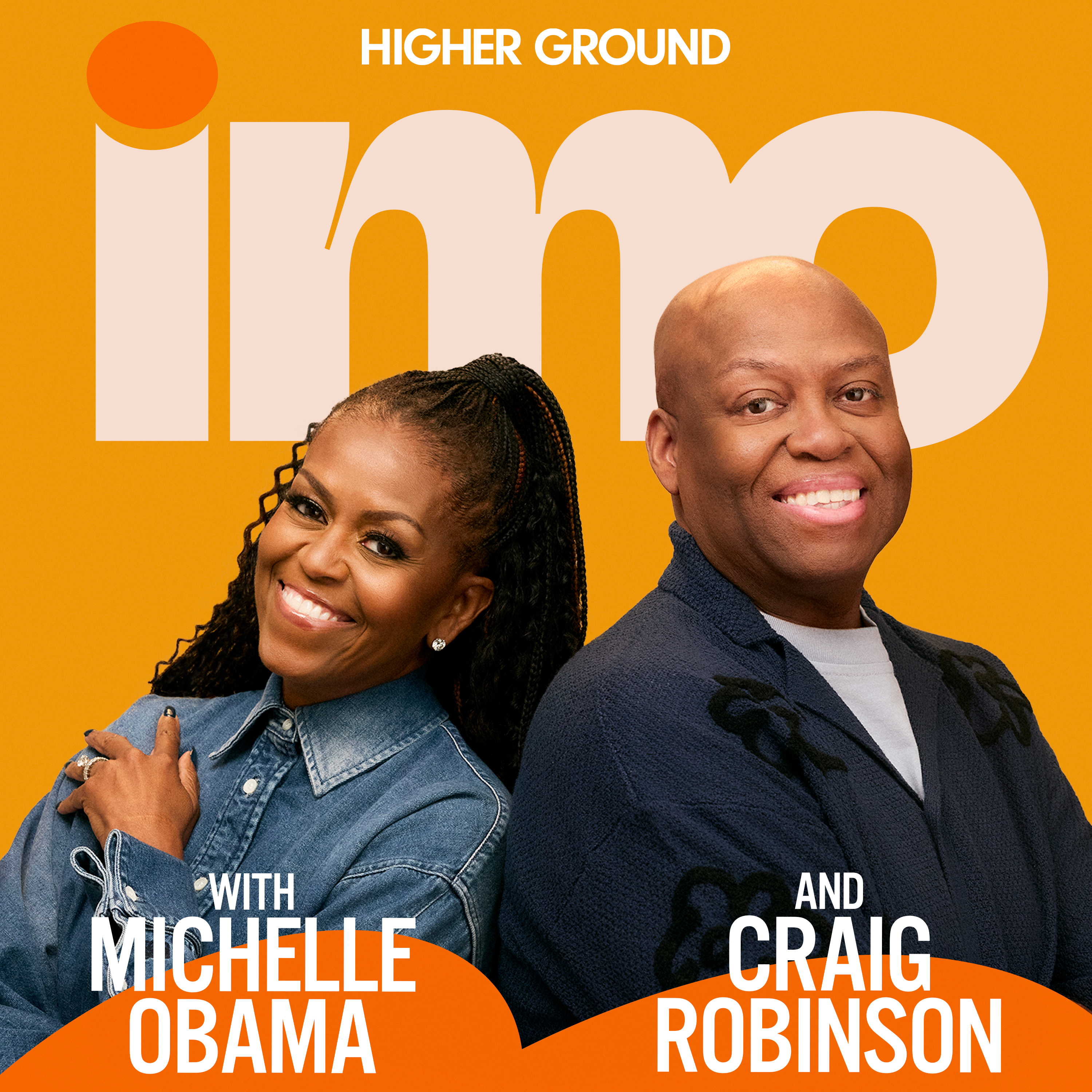
Pod Insights IMO with Michelle Obama and Craig Robinson Focus On What’s Right About Young Men with Barack Obama About this episode Former President of the United States Barack Obama sits down with Michelle and Craig to answer a listener’s question about raising emotionally intelligent young men. President Obama shares how being raised by a single mother impacted his definition of manhood and how a formative experience in Indonesia taught him about self-sufficiency. Michelle and Craig reflect on the example of masculinity their own father set, and the group shares why community is key to raising boys in today’s day and age. Plus, he shares why he’s optimistic about the next generation.
Have a question you want answered? Write to us at imopod.com http://imopod.com.
See Privacy Policy at https://art19.com/privacy and California Privacy Notice at https://art19.com/privacy#do-not-sell-my-info.
Transcript 12,045 words · 4 speakers
Speaker names marked ? are inferred from speaking time and the show’s known hosts — they are not voice-verified.
0:00 Craig Robinson? This woman came up to me and she was so nice. She was like, can I have a picture? Yeah, yeah, yeah. And then, so you know how you you get the side hug? And she's like, what did he do?
0:10 Speaker 01 And you knew she was gonna say what?
0:11 Craig Robinson? Say he.
0:12 Speaker 01 And I was like. It wasn't like, what happened to him?
0:15 Michelle Obama? That is so terrible.
0:17 Speaker 01 How'd he mess up?
0:18 Craig Robinson? How'd he mess up? And and I said, well, what makes you think he messed up? Why couldn't it have been her?
0:23 Michelle Obama? Why didn't you just say, no one messed up?
0:25 Craig Robinson? Well, because I wanted to. I wanted to. I wanted to keep this conversation going so that I can tell you about it.
0:31 Speaker 01 Oh, Lord.
0:38 Michelle Obama? This episode is brought to you by Rivian and Chase Home Lending.
0:43 Craig Robinson? Hey, little girl.
0:44 Michelle Obama? Welcome to DC, my brother.
0:47 Craig Robinson? I am so happy to be here once again.
0:50 Michelle Obama? Yeah, it's good to have you in in our town.
0:53 Craig Robinson? It is.
0:54 Michelle Obama? How's it going? You had a little little flight delay today.
0:56 Craig Robinson? I had a little travel issue, so but I'm not gonna complain because we have been doing this for a little bit now.
1:02 Michelle Obama? I know, it's always a little dicey when you have to travel.
1:06 Craig Robinson? Somebody's gotta travel. And, you know, I'm not, I'm traveling in these streets like a regular person, so I gotta be careful. But it's not, so we, for those of you, it was a little bit of a weather delay.
1:21 Craig Robinson? Couldn't fly into DC.
1:22 Michelle Obama? Yeah.
1:23 Craig Robinson? Had to divert our plane to Pittsburgh. I ended up staying in lovely Pittsburgh for about five hours. And I got here in one piece about midnight.
1:34 Michelle Obama? Always grateful.
1:35 Craig Robinson? And I was able to head over to my Airbnb without bothering you. I didn't have to wake you up at one in the morning.
1:42 Michelle Obama? We miss having you stay with us, though. You're such an Airbnb devotee.
1:46 Craig Robinson? I am, I've really, I've really changed my behavior, but.
1:51 Michelle Obama? How's this one?
1:52 Craig Robinson? This one's really nice. It, it, you know, it actually, this one's really nice because it's just ordinary. It's like an ordinary spot.
2:00 Michelle Obama? Are you in a neighborhood this time?
2:01 Craig Robinson? I'm in a neighborhood, can walk around and right across from a church.
2:06 Michelle Obama? How far, are you close to us?
2:08 Craig Robinson? I'm about two miles from here. So it took me like 20 minutes to get here this morning.
2:12 Michelle Obama? That's good.
2:13 Craig Robinson? It's, it's really in the.
2:14 Michelle Obama? It's good to have you here.
2:15 Craig Robinson? It's good to be here.
2:16 Michelle Obama? And we've got a very special guest today.
2:19 Craig Robinson? You know, I, that, this is.
2:21 Michelle Obama? Very, very, let me stop saying very, very special. Someone near and dear.
2:27 Craig Robinson? This is the episode that everyone's been waiting for.
2:31 Michelle Obama? Bada doo.
2:33 Craig Robinson? With bated breath. Because we have my brother-in-law, your husband.
2:40 Michelle Obama? My man.
2:41 Craig Robinson? The former president of the United States.
2:44 Michelle Obama? He made time in his busy schedule to come on I Am Oh. We are just so grateful. We have the former president of the United States. We are honored.
2:54 Craig Robinson? To have Barack Obama join us.
2:58 Michelle Obama? Barack Obama, can you, can you join us on our set? Welcome to I Am Oh, look at you.
3:07 Craig Robinson? Wait, you guys like each other?
3:09 Michelle Obama? Oh yeah, really, huh?
3:10 Craig Robinson? That's so nice.
3:11 Michelle Obama? The rumor mill. It's my husband, y'all.
3:14 Craig Robinson? She turned me back.
3:19 Michelle Obama? Now, don't start.
3:20 Craig Robinson? I can't. It was, it was touching, y'all. It's so nice to have you both in the same room together.
3:27 Michelle Obama? I know, because when we aren't, folks think we're divorced.
3:31 Craig Robinson? Let me, let me tell you, first of all, see, I, I, I'm, I'm in Wichita, Kansas, for Austin's tournament. And you know, this podcast has made me quite popular. You're a big shot. And people come up to me all the time. This woman came up to me and she was so nice. She was like, can I have a picture? Yeah, yeah, yeah. And then, so you know how you, you get the side hug? And she's like, what did he do?
4:01 Speaker 01 And you knew she was gonna say what he did. You know, it wasn't like, what happened to him?
4:07 Michelle Obama? That is so terrible.
4:08 Speaker 01 How'd he mess up?
4:09 Craig Robinson? How'd he mess up? And I said, well, what makes you think he messed up? Why couldn't it have been her?
4:14 Michelle Obama? Why didn't you just say, no one messed up?
4:16 Craig Robinson? Well, because I wanted to, I wanted to, I wanted to keep this conversation going so that I could tell you about it.
4:23 Speaker 01 Oh, Lord.
4:23 Craig Robinson? I was like, what, what? And she's like, he did something, didn't he? I was like, it's, don't worry, everything's fine. And let me tell you, she was so happy, you would have thought I gave her a Christmas gift.
4:37 Speaker 01 These are the kinds of things that I just miss, right? So I don't even know this stuff's going on.
4:42 Craig Robinson? Right.
4:43 Speaker 01 And then somebody will mention it to me and I'm all like, what are you talking about?
4:46 Craig Robinson? Yeah.
4:47 Michelle Obama? There hasn't been one moment in our marriage where I thought about quitting, um, my man. And we've had some really hard times, so we had to have had a lot of fun times, a lot of adventures. And I have become a better person because of the man I'm married to.
5:08 Speaker 01 Okay, don't, don't make me cry now. Right at the beginning of the show.
5:12 Craig Robinson? Oh, isn't that sweet?
5:13 Speaker 01 Don't, don't let me start tearing up now.
5:15 Craig Robinson? And welcome to IMO.
5:16 Michelle Obama? Welcome to IMO. Get you all teared up. See, but this is why I can't talk. See, you can take the hard stuff, but when I start talking about the sweet stuff, you're like, stop, no, I can't do it.
5:27 Speaker 01 No, no, I, I, I love it. I'm enjoying it.
5:30 Michelle Obama? But thank you, honey, for being on our show. Thanks for making the time. We got, that's great.
5:35 Speaker 01 You guys are doing good. Of course I've been listening.
5:38 Michelle Obama? Yeah, what, any tips, any, you know, any, any?
5:41 Speaker 01 You know, I, uh, Craig can tighten up a little bit.
5:48 Speaker 01 You're doing great.
5:50 Michelle Obama? Thanks, honey. And that's why we're married for.
5:55 Craig Robinson? I got you, girl.
5:57 Michelle Obama? I thought so.
5:59 Craig Robinson? See, now that's what a brother-in-law is for, folks.
6:04 Speaker 01 Absolutely.
6:06 Craig Robinson? Well, we've, we've got a question today from a listener in San Francisco named Emma.
6:13 Speaker 01 Okay, I want to hear from Emma.
6:14 Craig Robinson? And let's hear from Emma so we can dive into this topic.
6:17 Speaker 03 Hi, Michelle and Craig. I have three younger brothers and I'm a new mom to a one-year-old little boy. What can we do to change the fact that we raise our girls and we love our boys? There is so much dialogue on raising strong, independent women, but how can we raise emotionally intelligent, competent men? I am deeply concerned by the ideology promoted to my younger brothers online. I want to raise a young man who sees through those ideas. How can we energize the discussion around raising young men that want to change these oppressive and even violent dynamics?
6:46 Craig Robinson? Now, before we dig in.
6:48 Speaker 01 Yeah.
6:49 Craig Robinson? You two have raised two wonderful daughters and have taught them numerous lessons. And I just want to hear from Barack. How you approached raising your daughters, because this was obviously before you got to the White House. So you were just like the rest of us, just the regular dad who's having kids and going to work and trying to make time. What was your strategy?
7:20 Speaker 01 Well, first of all, the most important strategy, whether it was a boy or a girl, was having the right partner. And now that I'm not. That's. That I say even behind her back. Yeah. Every one of my young male staff members, when they talk to me about dating and, and relationships and what to look for, I say, look, the starting point is this person is going to raise your children alongside you. And so I'll be honest with you, Michelle
8:02 Speaker 01 being Malia and Sasha's mom, that made all the difference. And then I, and I do think. For whatever reason, we had similar strategies in the sense that I think we both believed that you give unconditional love to kids, but you also give them structure. That you're always there for them and keeping them safe, but you're also saying as early as two or three, no, you can't do that. Mm-hmm. No, you can't have that. We'd explain, we believed in explaining why, but we also believed in being firm.
8:47 Speaker 01 We had bedtimes and bath times and, you know, you had to eat your vegetables even if you didn't like them. Right, right. And you couldn't act stupid in public. Yeah. And couldn't do it.
9:03 Michelle Obama? Couldn't whine.
9:04 Speaker 01 Couldn't whine.
9:05 Michelle Obama? For what you did.
9:06 Speaker 01 Tantrums. And, and, and so we had, I think, a shared vision of how to, you know, what, what your mom always used to talk about, you're raising adults. Right. And, and so you're starting off saying to them, your consequences for your actions, here's responsibilities that we think you can handle. Make mistakes and learn from them. So we had that.
9:34 Michelle Obama? And let, and let me just say too, just so that people understand the kind of father Barack was from the beginning, is that he was an engaged father from the minute they were born. And he wasn't the kind of man that was like, I don't do this, I don't change diapers, I'll hand them to me when they talk and I can, you know, and I can relate, they make me feel comfortable. You know, we, as, when, when Malia was a baby.
10:05 Michelle Obama? We shared 50 50. Yeah. I took the night shift. He took. Cause I'm the night owl. He's the night owl and that helped me because I wasn't sleep deprived because I pump while I was breastfeeding, which wasn't for a long time. And I would go to bed at a reasonable bedtime and I could hand my baby, and I will say my, cause she was my baby, over to this guy and. This stinky man. And know that she would be alive in the morning.
10:36 Craig Robinson? Right.
10:37 Michelle Obama? You know, um, and he relished that time, but I also had to let go, right? I had to say, you know what, whatever is happening between eight at night and five in the morning, I can't, I can't micromanage that relationship. They're gonna be okay. She's a baby. He was the one who got her sleep trained because I wouldn't have been able to handle letting my baby cry it out. But over the course of a week, I think. Three days. It was three days. It wasn't even a long time, at five months. So, once he did that, so we had kids who slept through the night from the time they were five months old.
11:16 Michelle Obama? So, because we shared that responsibility and Barack owned a huge part of the girls as infants, it established a relationship between him and them.
11:27 Craig Robinson? Yeah.
11:28 Michelle Obama? That, you know, carries through even today.
11:31 Craig Robinson? You know, that, that brings me, what you said, what you both have said brings me to a question that I'm gonna ask, but I'm gonna contextualize it with the fact that when, after you guys became famous, people would ask me about you guys meeting and, and how you came about and the origin story and all of that. And what I always talked about.
11:58 Craig Robinson? And it warms my heart to this day is that Barack's background is so different from our background. I mean, it's so different. And everybody know it's, it's, and I used to say, in spite of the fact that we were raised so differently, somehow you developed the exact same values that we did.
12:22 Michelle Obama? So much of Barack reminded us of our dad.
12:24 Craig Robinson? Our dad and the, the, the stuff he said, stuff you said, and it was like.
12:29 Michelle Obama? His consistency, his honesty, his, you know, his humor.
12:34 Craig Robinson? His, your authenticity before people were using that word, authenticity. Your calmness.
12:43 Craig Robinson? And it just, I, I, I brought that up because I think people who haven't asked me that question should know that, and, and probably want to know, how did, how did that evolve?
12:59 Speaker 01 Yeah, you know, it's interesting, because this relates to how I was thinking about fatherhood too, right?
13:06 Speaker 01 I, as, as I think most people now know, you guys certainly know, I did not know my dad.
13:12 Craig Robinson? Right.
13:13 Speaker 01 He was in Kenya by the time I had memories, you know, he left my mother and I when I was two. I met him once. And so I'm really raised by my mom and my grandparents for about four years, my stepfather when we were in Indonesia, who was a very kind man.
13:36 Speaker 01 Maya's dad, my sister's dad, and, and I have, I have very fond memories of him. But one of the reasons it worked was he didn't pretend like.
13:49 Speaker 01 Our relationship was more than it was. He was like, look, I'm married to your mom. I love you, I'm gonna take care of you, but I understand, you know,
14:00 Speaker 01 you know, we're, we're different. And, and then my grandfather was older. He's white, generationally different.
14:12 Speaker 01 A, a good heart, but he was troubled in a lot of ways and, and, and had, had issues.
14:21 Speaker 01 So I didn't have like the obvious role model, the way you did of, all right, here's how you are a dad.
14:28 Speaker 01 Um, and I didn't really have a bunch of uncles around or, or other immediate family father figures. So I'm kind of piecing it together and
14:37 Michelle Obama? Which is true for so many. That's the story for so many boys growing up these days.
14:43 Speaker 01 I, I, I mean, in that sense, I think as unusual as my background was, that part of it isn't that unusual, right? It was kind of typical. And I think a couple of things happened. Now, I, I was loved and that's a starting point, right? But the, the people who were around me cared about me and I never felt an absence of that.
15:08 Speaker 01 And the second thing I think you learn to do when you're in that situation is, all right, I, I gotta sort of, I have to adopt role models. I, I gotta piece them together and get a sense of, all right, what does it mean to be a man? Now, later on, as I got older, I'd, you'd start recognizing that some of the ideas about manhood that were being given to us back in the seventies and the eighties, not all of them were great, right?
15:42 Michelle Obama? Can I ask you both to talk about what that, what manhood meant for you? Um, you know, what, what it meant for you when you were little boys coming up? What you thought it was and what you then came to understand it to actually be?
16:00 Speaker 01 I don't remember maybe when I was a really young child, other than the idea that guys were strong, they didn't whine, they were tough.
16:16 Craig Robinson? They were expected to go to work.
16:18 Speaker 01 They worked.
16:19 Craig Robinson? And provide.
16:21 Speaker 01 Right.
16:22 Craig Robinson? And protect.
16:24 Speaker 01 Yes.
16:25 Craig Robinson? I mean, and I think back about that, I think when I'm thinking about dad as a role model, I remember the fact that here you have a man who has MS and he's getting up and he's going to work absolutely every day.
16:40 Speaker 01 Right.
16:41 Craig Robinson? And he is not complaining. That's another thing. Men didn't complain.
16:44 Speaker 01 You don't complain, you're stoic.
16:46 Craig Robinson? You were, I love that word stoic. Coach Carmody used to use that all the time, stoic. But our dad never complained. He never got up. He had a sense of humor. That was another thing that you learned from guys is that you needed a sense of humor. And but the most, one of the most important things that I remember is that you got along.
17:11 Michelle Obama? Got along.
17:11 Craig Robinson? You got along.
17:12 Michelle Obama? Period.
17:13 Craig Robinson? Period. You got along with the other guys you were with. You got along with your teammates. You got along with your coworkers. Nobody wanted to be considered a jerk.
17:27 Speaker 01 That is true. Some of the definitions of manhood, I think, were negative, right? You don't whine, you don't cry.
17:35 Michelle Obama? No emotion.
17:36 Speaker 01 You're not a jerk. I do like the thing you brought up, though, about being a protector. Because for some reason, that part of it, I think, appealed to me. And at its best, it then counterbalanced the idea of being strong, right? Like, you're strong, not to pick on people.
18:01 Michelle Obama? Yeah.
18:01 Speaker 01 Right? Not to be a bully, not to dominate others. Instead, it's strength in order to protect, right? And for me, a lot of being a man was being self-sufficient.
18:17 Speaker 01 The idea of I can handle myself and make my way through the world.
18:24 Speaker 01 And.
18:26 Speaker 01 I tell this story, you've heard this story, and sometimes people kind of freak out. Fairly early on, because I was
18:36 Michelle Obama? I do freak out over this.
18:37 Speaker 01 Because I was living in Indonesia. I'd fly from Hawaii to Indonesia on my own if I was visiting my grandparents, even the B8. And it was cool because stewardess was there, she'd grab you and it put you in the seat and give you a little, if it was Pan Am, you know, they'd have a little
18:59 Michelle Obama? Little flight pin.
19:00 Speaker 01 Little pin, flight pin. You know, give you a soda pop and so I felt very grown up. I didn't mind. So I was, I was used to traveling pretty far distances alone. And coming back from Jakarta, Indonesia, when I was at this point, probably 10, maybe 11. My mother, who was working there and was about to go into the field, dropped me off. I had my little suitcase and she gave me a hug, "Love you babe."
19:42 Speaker 01 And then took off and she was about to actually leave the city.
19:47 Michelle Obama? Didn't, didn't walk them to the gate, just at the airport.
19:51 Speaker 01 We were there. Yeah. And, and come to find out, she'd forgotten to give me my passport. Oh, wow. So, and I didn't really kind of find this out until I'm about to go through customs. And so I'm problem solving a little bit here and I'm thinking, okay. Jakarta is a city of like eight million people. Yeah, right. It's not a small airport. This is like being in New York or something, being in LaGuardia.
20:18 Michelle Obama? And there's no cell phones.
20:20 Speaker 01 And there are no cell phones back then and whatnot. So I'm thinking, okay, I think she had to stop by her office first before she left town. I asked the, you know, steward to leave the bag with him. I go outside, there are these little rickshaw type things called betjaks. And I say, can you give me a ride to where my mom's office is? And I don't have any money, but I know if I get there. Hopefully I catch her, get there. She's just about pulling out. I tell her, Mom, you forgot the passport.
21:03 Speaker 01 Oh, by the way, I got this driver. We gotta pay. And get back in time and make my flight.
21:12 Speaker 01 And when Michelle hears this story, right? Yes, right. She's horrified. And I'm sure Kelly, if she heard this story, would be horrified as well.
21:22 Speaker 01 I have to say that for me, it was like, oh, I can handle this. And I didn't, I don't remember feeling scared or worried or neglected. I just remember thinking, okay, how do I figure this out? And I felt good about the fact that I'd figured it out. And I do think that that element of being a man, for me, was important. Now, keep in mind, my mother was 18 when she had me, right? So around this time, she's not much older than Malia. And in that sense, I think I felt more protective towards her and didn't feel as if somehow
22:08 Speaker 01 that I needed to, that I needed to or should depend on her in order to make sure that I'm handling my business. And
22:17 Michelle Obama? Well, there's a, you know, there's a spectrum of parenting. I mean, they label it now. You know, there's the helicopter and then there's the, what is the jungle parent or the free willing? They call it something, free range parenting.
22:30 Speaker 01 Free range.
22:31 Michelle Obama? Right.
22:31 Speaker 01 Yeah, my mother was definitely in the free range category.
22:34 Michelle Obama? Category.
22:35 Speaker 01 Loved me to do.
22:36 Michelle Obama? You know, but they are, you know, the story you tell is the story of probably most kids.
22:42 Speaker 01 A lot of kids.
22:43 Michelle Obama? Across the country. If, you know, you're a single parent, you don't have somebody at home. You know, a lot of kids are, you know, they gotta get up, make their own breakfast, find their way. They're doing that every day because there isn't an alternative.
22:59 Speaker 01 Correct. And figuring out what that balance is.
23:02 Michelle Obama? That's exactly the point. What is the balance?
23:05 Speaker 01 Is tough.
23:05 Michelle Obama? Which is very different from how we parented our kids, how Kelly is, and you and Kelly are parenting your younger sons now.
23:16 Speaker 01 But part of it, don't you think part of it was also time specific? In the sense that when we were coming up.
23:23 Speaker 01 You know, um, the idea of kids just being out and having adventures and just getting home in time for dinners, you know, especially during the summers, right? Part of what happened, and I maybe affected boys a little more than girls, I don't know, is that freedom, that sense of being able to build up resilience and a sense of competence and a sense of I can manage the world around me because the stakes weren't so high. When I think about kids now on the South Side, same neighborhoods where you guys grew
24:04 Speaker 01 up, but the chances of possibly getting shot or the chances of, you know, some other terrible thing happening are higher. And I think that affected everybody's parenting and it affected how we handle kids, right? So that now suddenly, instead of just saying, all right, get out of here and come back for dinnertime, now it's a playdate. And where are you? And do we know the parents where you're playing? And so on and so forth.
24:38 Michelle Obama? We see a good example in it in one of my favorite shows on Netflix that has become the topic of conversation amongst a lot of people, particularly in black homes, is this series Forever, which is a beautiful story of young love in a black neighborhood. And it is not traumatic and bad things don't happen.
25:04 Speaker 01 It's just regular kids.
25:05 Michelle Obama? It's just regular kids that reflects all of our lives in real ways. And I know you watched some of that and Barack, you are well aware of it, but you know, it's the show has created a lot of conversation in terms of how do you raise emotionally intelligent boys and what we get right and what we get wrong, not just among boys, but kids in general.
25:27 Craig Robinson? Yeah, we watched it as a family. We watched the whole series as a family and enjoyed it a lot. And it was really fun.
25:41 Craig Robinson? To hear the boys talk about, oh, you guys would have done that. Or you guys wouldn't have done that. That was, that was eye opening as a parent.
25:50 Michelle Obama? Yeah.
25:50 Craig Robinson? You know, because.
25:52 Speaker 01 They're evaluating.
25:53 Craig Robinson? They're evaluating.
25:54 Speaker 01 They've got the little checklist.
25:55 Craig Robinson? They're evaluating our parenting, or they're evaluating their parenting based on their own.
26:01 Speaker 01 That's, that's a crazy, that's a crazy thing dad would do.
26:05 Craig Robinson? Yeah, yeah. And it's so, so, but this brings me back to Emma. Emma's trying to raise these boys. And so she's trying to be somewhere between forever. And then the other show that people are talking about, Adolescence, which I haven't watched yet. Which, um, it gets into sort of the misogyny that, that, that young boys are exposed to.
26:30 Michelle Obama? And the online, you know.
26:32 Craig Robinson? The, the manosphere.
26:33 Michelle Obama? They're getting their parenting.
26:35 Craig Robinson? They're getting their parenting.
26:36 Michelle Obama? They're getting their notions of manhood from, from extreme.
26:40 Speaker 01 Extremists.
26:41 Craig Robinson? Yeah, extremists.
26:42 Speaker 01 Well, let, let, let, let me ask you this.
26:45 Craig Robinson? Yeah.
26:45 Speaker 01 Cause, because let's go back to the original question. All right. Emma's trying to figure out how to raise boys.
26:51 Speaker 01 I think we did a pretty good job of raising our girls, but I've said often that I think I would have had more difficulty raising a son.
27:00 Michelle Obama? I agree.
27:01 Speaker 01 Because I think I might have been more judgmental, harder, and, you know, I would have tried to. I'd like to think I would have been more self-aware enough to combat that. But I just think father-son relationships, for me particularly, if I don't have a dad around to, to show it to me, might have been more difficult. So, talk about Craig, just how you thought about it. Was it just, you took what your dad had done and you said, I'm going, I'm going to do this. I'm going to try the same thing.
27:38 Michelle Obama? Were there things you didn't want to do?
27:40 Speaker 01 Did it change over time?
27:40 Craig Robinson? It, it, it was a little bit of everything, but, but, but what you're both saying. Initially, I thought, okay, I'm gonna take what I learned from dad, all the things that I thought were positive. And then the couple of things that I thought were negative, I was gonna try and repurpose.
27:58 Speaker 01 Right.
27:59 Michelle Obama? What were some of the positives?
28:01 Craig Robinson? Well, I mean, it's just kind of the stuff that I named before. The willingness to get up and go to work every day. Taking me with him to see what it was like to have male relationships, either at work, at the barber shop. You know, he didn't go to the gym, but in places where men hung out.
28:22 Speaker 01 Right.
28:23 Craig Robinson? The record store, we would go to the record store every now and then. And he'd have a bunch of friends there. That sounds like an old.
28:30 Michelle Obama? I know.
28:31 Craig Robinson? Idea, going to the record.
28:32 Speaker 01 Oh, it's comeback.
28:33 Michelle Obama? It's comeback.
28:34 Craig Robinson? Oh, has it? Okay, good.
28:36 Speaker 01 It's retro.
28:38 Craig Robinson? But, but those were some of the positive things. But you know, how to walk with mom when you're walking down the street. Always walk on the outside. And holding the door and opening the door for her, allowing her to go in. It was just things like that. And then, and then I, you know, I'd have to really work at thinking of something negative that dad did, but.
29:03 Michelle Obama? Well, what about, let me, let me ask this, though. I mean, you know, dad also came home, put his feet up, you know? He didn't always cook, or he didn't do dishes, he didn't do.
29:16 Craig Robinson? But, but you have to remember that I was thinking at the time, that was okay, because he was at work all day and he needed to rest and mom was always cooking. So, but that's a good one. That's a good, that's a good potential negative.
29:30 Speaker 01 Gender roles, very clear.
29:32 Craig Robinson? Very clear gender roles.
29:34 Michelle Obama? Very clear.
29:35 Craig Robinson? And I thought, okay, I'm gonna do the positive things and then sort of expose Avery, who's my oldest, to less of the negative things. And, and you have to remember Avery's 33. So he didn't have to worry, we didn't have to worry about social media. There was very little internet stuff. You know, we, we really focused on how to behave out in public as a guy. Or I should say. Um, how to, how to get along, how to, how to treat girls, how to have conversations. But with Austin and Aaron, it's more of how do you deal with social media? Yeah.
30:18 Craig Robinson? And which was, which was in forever.
30:21 Michelle Obama? Mm hmm.
30:22 Craig Robinson? The, the whole premise of the show, uh, what are you supposed to say when you do that? Spoiler alert. Spoiler alert.
30:29 Michelle Obama? Yeah.
30:30 Craig Robinson? Was a video that got leaked. Hmm. So we were constantly talking to them about that. Um, and now I, I have even more things to draw from because I raised Avery. Right. And there were some things that I, I was like, I wish I hadn't done that. I could have done that better. I could have done that better. Whether it was sort of teaching them how to drink. I mean, if, if you don't know how to, you could end up in a bad situation. Right. Um, you know, more direct conversations about the first time you were with a woman intimately.
31:15 Michelle Obama? Mm hmm.
31:16 Craig Robinson? Do you mean sex, Craig? I do, I do mean sex. And it's funny how I, I was, I was. Craig got a little.
31:24 Michelle Obama? I was gonna let him do it too, right?
31:26 Craig Robinson? I feel like I'm, I'm on television.
31:29 Michelle Obama? You made me nervous. I was just like, let me just let him get through this.
31:32 Craig Robinson? But, but.
31:41 Craig Robinson? Hey, everyone. It's your boy Craig Robinson here. And if you've been listening and watching our show, you will know that I have become an Airbnb guy. And I used to be a nonstop hotel guy. But I gotta tell you, I really enjoy finding a nice place using the guest favorites feature.
32:04 Craig Robinson? On the Airbnb app. And the reason why I like it is because people just like you have visited many of these places and have rated them as their favorite. And it makes it easy for me to make a decision when I'm planning my trips. Just take this trip that I'm on right now. I'm here in Washington DC knocking out a bunch of episodes for IMO. And I am staying in a nice Airbnb in a wonderful neighborhood in walking distance to great restaurants, to great coffee shops, to the park. And it's, it's really getting warm in DC. And this place has a really nice back porch. I can sit outside in private and, and enjoy the weather.
32:49 Craig Robinson? Relying on the guest favorites feature is, is, has made picking a place for me to stay even easier. So the next time you're planning a trip, why don't you try the guest favorites feature on the Airbnb app? This episode of IMO is sponsored by Chase Home Lending, helping you navigate the journey to your new home with confidence. Chase Home Lending understands that buying a home can feel overwhelming, especially when balancing career and family demands. They're committed to supporting you every step of the way, offering personalized guidance and flexible solutions to fit your unique needs.
33:32 Craig Robinson? This reminds me of the story when my wife Kelly bought her first place before we got married. You know, once she decided to buy a place, we knew that that was stressful enough on its own. Then came the actual execution of the idea. We talked about the stress of the size of the transaction, the money needed for the down payment. But just as important was gathering all the documents needed by the bank. It didn't have to be that stressful. Whether you're a first time home buyer or looking to upgrade, Chase's home lending experts and smart digital tools can guide you through the process, providing necessary support for informed decision making. Dreaming of a home?
34:13 Craig Robinson? Connect with a home lending advisor at chase.com/start to get started. Member FDIC, equal housing opportunity.
34:24 Craig Robinson? This episode of IMO is brought to you by Progressive Insurance. Financial security isn't just about the here and now, it's about the future. That's why we love what Progressive is doing to help people attain, maintain, and build wealth through homeownership. For over 80 years, Progressive has led with the belief that insurance should do more than just protect. It should propel people forward. Their commitment to not only helping more first-generation homeowners stay protected, but also support communities through Progressive's Down Payment Assistance Program, the Up Payment Program, which will help drive real impact,
35:06 Craig Robinson? making the dream of homeownership more attainable for everyone. You know, my wife Kelly and I are currently in the process of redoing our bathroom. We just started out and haven't done the demolition yet, but we know that this will add to the value of our house. So, thank you Progressive for helping families plan ahead and for sponsoring our show. Visit progressive.com/OPENTHEHOUSE to learn more.
35:39 Speaker 01 I love what you were talking about earlier. And this was part of my thinking about being a man and being a protector, was the little things, you know, getting somebody's chair, opening a door, you know, helping, you know, standing up if you're on the bus.
36:01 Craig Robinson? Yeah.
36:02 Speaker 01 And giving your seat to somebody else, right? A lot of the basic things that also just had to do with being thoughtful, right?
36:10 Michelle Obama? Being kind.
36:11 Speaker 01 Being kind. I mean, this was male expressions of kindness and consideration.
36:16 Craig Robinson? It used to be called common courtesy.
36:17 Speaker 01 Common courtesy.
36:19 Michelle Obama? Can I, can I ask, as you guys are talking about these characteristics and traits, again, a lot of it is how to behave, the external. Part of you, but I think what I hear that gets missed and it was missed in you guys growing up and definitions of manhood was the internal self.
36:39 Craig Robinson? Yes.
36:39 Michelle Obama? Right, because all Stoicism is external manners, common courtesy. It's all external, protecting, it's all outward. It's like, how do you appear? I don't want you to get arrested, so you have to behave in a certain way. I want you to be polite because I want you to be safe.
36:56 Craig Robinson? Right.
36:57 Michelle Obama? And there's, there's not a lot of conversation at this table about, well, how do you, how do you feel? And how, how are boys being taught to help sort through their internal selves? And it's almost like you're supposed to pretend like you don't have an internal self, an internal emotion of hurt or fear or all the things that are natural of any human, but definitely, you know, fears and emotions that young boys, adolescent men, grown men are feeling. But there's, there's no talk in any of these conversations about being anyone, father present,
37:39 Michelle Obama? father not, helping boys guide through that piece of it. It's almost as if we are raising boys and pretending like their outward selves are the only things that matter and therefore who they are internally, how they process, you know, how they deal with fear and hurt. Like that, that's not even on the list of.
38:03 Craig Robinson? No, I, I would agree with you. It's not on the list because it, I don't know about you, but during my upbringing, that what, nobody talked about that.
38:13 Michelle Obama? Yeah, so that you, you couldn't even have that for yourself.
38:16 Craig Robinson? I, I, I wouldn't even known how to have it, right? I would have, I would have, I'm, I'm just trying to think about the times when I felt insecure, that's internal, or I felt fear, or I felt some sort of way.
38:33 Craig Robinson? I could always go to dad and say, "I'm feeling this because of something that took place." It wasn't, I didn't even know that I could be feeling this just inside and not manifesting itself. It was always a discussion on something that, it was some issue that had come up.
38:55 Speaker 01 And so it was a problem solving conversation?
38:57 Craig Robinson? It was always a problem solving conversation.
38:59 Speaker 01 Well, look, I do think that is part of the culture we grew up in, was not that you didn't have feelings, but you ascribe them to a certain situation. You know, somebody's messing with you. You're getting bullied at school. You didn't make the team. How should you deal with this? Right? And then there would be real conversations, but it very much was around, all right, stuff happens in the world and you've got to deal with it. And it goes back to the whole notion of being strong, self-reliant, don't be a baby, et cetera.
39:40 Speaker 01 I do think that one of the differences for me was being raised by a teen mom and, you know, young mother, was she would talk to me a lot about how she was feeling and in turn I could talk to her about how I was feeling. And so I do think I developed some internal vocabulary around this. And frankly, and I know this, you know, you know, conforms to my nerdy reputation that my wife likes to tease me about, but books taught me a lot about.
40:26 Speaker 01 Emotions, right, like reading and movies and TV shows, et cetera. But but getting that sense of, oh, this is what people go through and developing kind of an inner monologue about situations, how are other people feeling, how am I feeling? I tried to kind of piece that together and it was imperfect. But at least there were avenues in which I could have those conversations. Craig, I am interested in what you described in terms of your relationship with your dad. So did that then carry over to how you interacted with your friends coming up?
41:11 Speaker 01 And was there a point in time where you thought, okay, when I'm dealing with Avery or Aaron or Austin, I need to maybe have a different approach. I need to share more of my emotions so that they feel like they can come to me and talk about theirs. What was that process?
41:31 Craig Robinson? So the process was this. I felt like once I had kids, I had to reevaluate everything, which included my relationships with my friends and family and work and the whole thing. And I realized when Avery was born, I needed to cut down my circle of friends to the serious ones because I've got some serious business of raising this kid, these kids when Leslie came along. And it was about that time that I was, it is probably the first time where I had really
42:16 Craig Robinson? deep conversations with my male friends.
42:21 Craig Robinson? Where you started to understand, okay, something's going on with this person. Let me find out what it is. Right. Something's going on with me. Let me share it. Right. That's the hardest part, at least for me.
42:33 Michelle Obama? One of the things you've both been good at is having male friend groups. And studies show that the rate of loneliness among young men and older men has gone up, which pushes them into these manosphere spaces because it's the only place they're going to find community or to talk to one another. Can you guys talk about how you both have managed to maintain friendships? What do you think is different about the way you guys have lived lives? I mean, Barack, you've maintained your friends through being in the White House, but there are a lot of men out there in the world who say that they don't have more than a couple of friends, if that.
43:15 Speaker 01 I was in high school, mostly being raised by my grandparents. And I ended up making a bunch of friends, a lot of them who were basketball players, but not all.
43:34 Speaker 01 And it wasn't until later that I realized, actually, they were all kids of divorced parents. So they're all being raised by single moms. It was almost like we kind of created our little tribe of found community, a found family. And you now know them all. Bobby Tickham and Greg Orm and Mike Ramos. And they were an opportunity for me, actually, to learn how to share.
44:17 Speaker 01 And what that did teach me was that having...
44:24 Speaker 01 Male friends I could talk to and count on was important to my life. And it turns out, actually, what we've learned is our families, our nuclear family, was healthier and happier precisely because we had a bunch of friends. And we had, essentially, non-blood aunts and uncles and cousins.
44:50 Michelle Obama? Play cousins.
44:51 Speaker 01 Play cousins and all that, who were around all the time, right? But even with my close male friends, there was a phase, you know, when we were in our 30s and into our early 40s. First of all, we just didn't have that much money. So, and they were living in different places, so we couldn't see each other all the time. But we did stay in touch and what I figured out and that lasted through the White House as I collected other friends in Chicago and in college was just being intentional with
45:34 Speaker 01 your friendships, making the investment, knowing it's important, letting them know they're important to you, your friends, small gestures. All that stuff mattered. And I do think that guys sometimes don't do that. Like, the idea is, all right, well, if you're around, we can hang out. If it happens, it happens. But...
46:09 Michelle Obama? Yeah, I know so many men who don't call each other. They don't talk on a regular basis. They're just friends. And it's like, well, I saw him three years ago. He's my best friend.
46:21 Speaker 01 Right. And so I think I have gotten better about this. And, you know, one of the things that got me through the White House was that those same three friends that I knew,
46:35 Speaker 01 you know, from high school, I saw them all the time. Yeah. And Bobby Titkin became a, you know, was during most of the White House was a commercial fisherman in Hawaii. And Greg Orm was managing a yogurt plant in, in, in Oregon. And Mike Ramos was an accountant. And, and, but the sense of trust and the memories we shared and them having our backs and them loving our daughters. And, you know, we set
47:15 Speaker 01 up this thing, Michelle did this, one of the best gifts I ever got for my birthday was my 50th. And it was a rough time. I was getting my butt kicked in the presidency. And she organized my 50th birthday, brought all these friends from all my different walks of life to Camp David for a weekend. And of course, being boys, we just started competing. It was organized competition. And, and we had so much fun that we made it into an annual thing that we started calling Camp Athlon, even after it was no longer in Camp David. And, you know, you
47:59 Speaker 01 get these, you know, 12, 15, middle aged men running around. The numbers have grown. You know, bowling or.
48:08 Craig Robinson? I've witnessed it.
48:10 Speaker 01 Ping pong. You've seen it. Quite the spectacle. It's quite the spectacle.
48:13 Craig Robinson? Yes.
48:13 Speaker 01 But the point is, just creating some, some structures where guys can get together. And then in the, in stride, in the flow, now, a whole bunch of stuff is shared, talked about, etc. That, that turned out to be something that, that mattered a lot to me. But, but what, what's been your secret to, to maintaining your friendships and?
48:40 Craig Robinson? It, it's been your last, your last point of being intentional.
48:44 Speaker 01 Right.
48:45 Craig Robinson? And to Misha's point.
48:49 Craig Robinson? I would say in the last, let's call it, seven years. So that's not long at all. Right. I have, because of these kinds of discussions, I have picked up the phone and called my friends more often than I had done in the past.
49:16 Craig Robinson? This episode is brought to you by Rivian and their fully electric, full-sized SUVs and pickups that are designed for all of life's adventures. The folks at Rivian lent me an R1S to drive around while I'm here in LA and it has been awesome. You know, I'm 6'6" and there is plenty of legroom and headroom for a guy like me. In addition, there's also great cargo space for my luggage. So learn more right now at rivian.com. This episode of IMO is brought to you by Cologuard, a non-invasive colon cancer screening test. As it stands, colon cancer is on the rise in people under 50, which is why the American Cancer Society recommends
50:00 Craig Robinson? that if you're at average risk, you begin screening at 45. Even if you live a healthy lifestyle and don't have symptoms, no one is at low risk for colon cancer. We want to make sure our listeners know that colon cancer can be treatable in nine out of 10 people. But the key here is that it has to be caught early. With the Cologuard test, you can take control of your colon cancer screening through a prescription-based test with none of the prep that's required of a colonoscopy. Not only is the Cologuard test effective for colon cancer screening, but it can even detect precancer. And in addition to its convenience,
50:45 Craig Robinson? the Cologuard test is also affordable. Most insured patients find they pay nothing out of pocket. With zero downtime, no special preparation, and a screening test that's delivered right to your door, don't let your health take a backseat. So if you're 45 or older and at average risk, ask your healthcare provider about screening for colon cancer with the Cologuard test. You can also request a Cologuard prescription today at coliguard.com/podcast. The Cologuard test is intended to screen adults 45 and older at average risk for colorectal cancer. Do not use a Cologuard test if you have adenomas,
51:30 Craig Robinson? have inflammatory bowel disease, and certain hereditary syndromes, or a personal or family history of colorectal cancer. The Cologuard test is not a replacement for colonoscopy in high-risk patients. Cologuard test performance in adults ages 45 to 49 is estimated based on a large clinical study of patients 50 and older. False positives and false negatives can occur. Cologuard is available by prescription only. This episode of IMO is brought to you by Indeed. And you know, one skill that has helped me over my years is adaptability.
52:13 Craig Robinson? You know, I started out as a college basketball player and was fortunate enough to get drafted. And I went to try out, got cut, had to make a pivot. I went from being at an NBA camp to an overseas camp. And I played over there for a couple of years and then came back to the United States and made another pivot. And I got into the investment business, which was a brand-new experience for me. So I had to be adaptable. And I went from there, uh, back to business school. And I had to be adaptable yet again and be back into learning mode. And subsequently, after spending 14 years in the investment industry, I came back to basketball as a coach.
52:57 Craig Robinson? And it's really important that I, I let myself learn, continue to learn, be adaptable, and be willing to pivot. Being open to change helped me explore roles I hadn't really originally planned for, which made my career richer and more fulfilling. Indeed helps people do the same by identifying their existing skills and connecting them to new opportunities. Through Indeed, people can find better work that fits their skills, even if it means shifting career paths or trying something new. Just like my own adaptability has opened doors for me, Indeed's mission is to empower everyone to leverage their skills for better work.
53:42 Craig Robinson? Whether adaptability is a skill you have or not, Indeed can help connect the skills you have to new opportunities. When people feel confident in their skills and open to change, the world truly can work better.
54:02 Michelle Obama? I do want to talk to Emma as a mother, because she's a mother trying to figure this out. And I do think there's a question, like the original question of why do we love our sons and raise our daughters? And I think that's something worth sort of talking through among mothers, because sadly, many mothers are parenting alone, which is a huge problem. I think Scott Galloway, there are other researchers out there who say that one of the challenges that boys face is that there just aren't enough men in their lives. You know, the men have disappeared, whether through divorce or fatherhood. There are small numbers of male teachers in high schools.
54:45 Michelle Obama? They, you know, boys are growing up in an education system where it's, they're mostly surrounded by women. You know, Barack, you talked about the fact, you've talked about the fact that the entire education system isn't even designed to recognize boys and what they need.
55:02 Michelle Obama? So, you know, what do we say to Emma? You know, because again, we don't know whether she's parenting alone or whether she has a husband. But I do think that mothers struggle to figure out what do their sons need? And so they wind up operating out of their own fears and their own instincts, which is to love unconditionally. I think mom was like this. She raised me to be tough because I think she knew what it was like to be a woman. In her mind, she knew what she was preparing me for. The insults, the limitations, the whatever you
55:39 Speaker 01 The sexism, the biases.
55:41 Michelle Obama? The biases. So she knew you have to have a mouth. You have to be able to speak up for yourself. With you, she wanted you to be nice so that you wouldn't get in trouble or you wouldn't get arrested. But was that who you were? So what do we say to the Emmas of the world? How do we sort of start thinking as a society about helping mothers raise sons because they're doing it alone? And we're being told that we don't have what it takes to give boys all of what they need?
56:12 Speaker 01 Well, look, I think you started hinting at it. As somebody who was raised by a single mom, not perfectly, but you know, that unconditional love as a start is the right one. I do think, though, thinking about raising boys in the same way you're thinking about raising daughters, which is how do you make them good, responsible people? Who know how to function and know how to understand themselves well enough that they can navigate this really complicated world and setting high expectations. So there are a lot of these things that apply to boys and girls.
56:56 Speaker 01 I do think that there are some particular issues with boys that as a society, we're not addressing. I do think as a society, we have to create more structures for boys and men to have.
57:13 Speaker 01 Guidance, rituals, frameworks, encouragement.
57:21 Speaker 01 To be able to meet a wide range of role models so that whatever their inclinations, they can see a path to success that isn't just sports or money.
57:35 Speaker 01 Making a lot of money. And so that's on all of us together. What I would say to Emma would be in your community.
57:47 Speaker 01 Even if you have a wonderful male partner who's in the house, I think it still would be good to find assets in the community, people in the community, friends in your community.
58:06 Speaker 01 Places of worship, community organizations, what have you, where there are a bunch of men who can be sort of elders to boys. And so they're not just looking at one particular role model, but many. And one of the things I, when Michelle and I first started dating and I'd go over to your guys' house, one of the things I loved was just, you know, seeing all your uncles and your cousins. And there were a bunch of different kinds of men. You know, there were men that were kind of soft spoken and then there were men that
58:44 Speaker 01 were loud and there were men who were engineers and then there were men who were, you know, Police officers. Police officers or they drove, you know. A jetty cab. Right? And that's one of the things that I think a lot of times boys need is.
59:07 Speaker 01 Not just exposure to one guy.
59:12 Michelle Obama? One dad.
59:12 Speaker 01 One dad. No matter how good the dad is.
59:15 Michelle Obama? Dad is. He can't be everything.
59:16 Speaker 01 He can't be everything. And then that, that boy may need somebody to give, give the boy some perspective on the dad.
59:23 Michelle Obama? Yeah.
59:24 Speaker 01 One of the most valuable things I learned as, as a guy was I had a gay professor in college. At a time when openly gay folks still weren't around. Who became one of my favorite professors and was a great guy and would call me out when I started saying stuff that was ignorant.
59:52 Speaker 01 You need that. To show empathy and kindness. And by the way, you need that person in your friend group so that if you then have a boy who is, who's, who's, who's gay or, or non-binary or what have you, they have somebody that they can go, okay, I'm not alone in this.
1:00:09 Michelle Obama? Yeah.
1:00:10 Speaker 01 Right? So, so that I think is creating that community. I know it's corny, but that's what they need.
1:00:16 Michelle Obama? And we talk a lot about what we had with our mother and father. Right? And, you know, a lot of times, but we really did have a big community of people in our lives. I mean, that, we don't talk a lot about that on this show. We allude to it, but we, Craig and I, we grew up in a huge community of extended aunts and uncles and cousins and all types of male role models, which helped in broadening out and filling in where our mother and father were limited.
1:00:52 Craig Robinson? So for, for Emma, I'm, I'm picking up a couple of things. Community, big.
1:00:58 Michelle Obama? Huge.
1:00:58 Craig Robinson? Not just.
1:01:01 Michelle Obama? A single mom.
1:01:01 Craig Robinson? A single mom or, or mom and dad, but a broad community. And I, I can appreciate you using our family as an example, but uncles, but not necessarily blood. But men who can, who can give a kid or kids some contextualization of who their parents are.
1:01:22 Speaker 01 Right. And also, and can model.
1:01:25 Michelle Obama? Yeah.
1:01:25 Speaker 01 There are a lot of ways to be a responsible, respected, strong man. And you don't have to be rich and you don't have to be a professional athlete.
1:01:37 Michelle Obama? And you don't have to go find it on the internet among
1:01:40 Speaker 01 Correct.
1:01:41 Michelle Obama? A group of unclear influences, you know, and this is a thing that parents, Emma has to understand if that, if their, if their, her sons aren't getting it.
1:01:52 Speaker 01 They'll find, they'll look for it.
1:01:53 Michelle Obama? They're gonna look for it because this is, because boys need this.
1:01:57 Speaker 01 Right.
1:01:57 Michelle Obama? Whether they think that they're happy playing video games on their own, and we haven't even talked about how the, you know, the rise in video games has sort of left kids feeling like, well, this is who I am. I'm alone, or I'm interacting through a game.
1:02:14 Speaker 01 Virtually.
1:02:15 Michelle Obama? Virtually, but I don't have any in real life friends. Kids are gonna seek out some kind of community. So, big, big community, I would emphasize, because they need to have other outlets. They have to be able to learn how to be more than just the sport that they care about. And they, and while they get great skills in sports and they learn a whole lot of traits.
1:02:38 Speaker 01 Teamwork.
1:02:39 Michelle Obama? It isn't, it isn't music. It's not language. It's not, it's not social in certain ways.
1:02:45 Speaker 01 Right.
1:02:46 Michelle Obama? And so I think we owe it to our boys to be very deliberate about saying enough with sports and let's try some other things.
1:02:56 Speaker 01 Or at least encouraging them and exposing them to it in a way, look, sports was scaffolding for me to, to pull myself into manner. But even as I was doing that, though, my mom was still dragging me to art museums.
1:03:10 Michelle Obama? Yeah.
1:03:12 Speaker 01 And I was still being taken to, you know, waiting for Godot. Like, I remember my mom took me to a Samuel Beckett play when I was like 12. And I'm kind of sitting there.
1:03:27 Michelle Obama? Like, what is this about?
1:03:29 Speaker 01 But, but you know what? I kind of got it after a while. I thought, that's interesting. I mean, it wasn't necessarily the thing I would choose to do, but the fact that I did it meant later, when I was 17, 18, all right. I, there's something there that, you know, may be interesting. So, so sometimes it's just a matter of, you know, given, saying to our boys. You being interested in art? And you being interested in, you know, theater? That's cool.
1:04:03 Michelle Obama? I would also.
1:04:04 Speaker 01 Boys hearing that.
1:04:05 Michelle Obama? Yeah.
1:04:05 Speaker 01 That's cool.
1:04:06 Michelle Obama? Those are good things. So that, and, and I would tell Emma, you know, don't assume who your son is gonna be based on some male stereotypes, what you think he should be.
1:04:18 Speaker 01 Right.
1:04:19 Michelle Obama? Really pay attention to who he's showing you he is.
1:04:23 Speaker 01 Right.
1:04:31 Craig Robinson? This back to school season, spend less on your kids with Amazon. I remember when my wife Kelly and I would be running around to a million different stores, chasing down spiral notebooks, lunchboxes, and that one specific calculator that somehow every math teacher requires. And look, I love my kids, but I do not love fighting over the last pack of highlighters in a crowded store at 7:00 PM on a Tuesday. That's why I love Amazon. Amazon has everything for back to school. Backpacks, pencils, clothes, snacks, and even those dry erase markers the teachers secretly hoard.
1:05:14 Craig Robinson? All delivered fast, right to my doorstep. One click, no stress, boom. And the best part, I can shop from my couch. With my now 15-year-old and 13-year-old, I grabbed their school supply list and I'm all set. Now, instead of running around town stressed out, I get to actually spend the last days of summer with my kids. We're doing movie nights, bike rides, and even, dare I say, back to school fashion shows in the living room. Parents, do yourself a favor. Go to Amazon.
1:05:54 Craig Robinson? Get your back to school checklist done in like five minutes while saving a few bucks. So remember, with Amazon's low back to school prices, just spend less on your kids. Because every dollar you don't spend on them is a dollar you haven't spent on them. I love this time of year, but hosting during the holidays can be a bit of a challenge. So Kelly and I have collected a few hacks to make it a little bit easier. One of our favorite moves is an extendable dining room table. It's this great walnut color and it's mid-century modern, so it looks awesome in our space. And it even has extra storage in the legs.
1:06:39 Craig Robinson? When we don't need the middle panels, we just slide them out and our space is back to how it was before. For all things hosting, Wayfair delivers high-quality, customer-trusted products for your home so you can host and celebrate without distress. Use filters, customer photos, and more than 20 million verified five-star reviews to confidently find the right fit for your home. When refreshing your home this holiday season, Wayfair delivers exactly what you need. Head to wayfair.com to shop all things home. That's W-A-Y-F-A-I-R dot com.
1:07:25 Craig Robinson? So we're giving Emma those two things, the community and the diversity in sports. But I want to go back to a third thing that you brought up early on is we have to help them be self-aware of their own internal feelings. Is that how you? Yeah. Rather than, you know, when we're talking about all the traits who are all external. That's one. I like that one. I like that one for Emma. Do you like that one? I like that one for Emma. Okay, I'm glad you like that one.
1:08:00 Speaker 01 And Michelle's right that I think girls, it comes more organically to them in their social groups. But the way I describe it, and I talked to Malia and Sasha about this is... Figuring out how to have a good conversation with yourself and being open and kind to yourself and figuring out, all right, I'm not feeling great here. And what's going on and how can I share this and how can I talk about it? I mean, I think that's something you want to teach all kids.
1:08:42 Michelle Obama? But that takes time.
1:08:43 Speaker 01 But that takes and it takes some practice and encouragement.
1:08:47 Michelle Obama? And I would say to Emma and all parents, period, sons, that it requires some slowing down on the part of the parent because that stuff, that's not science. That's art. You can't schedule that. It's not a formula. You have to create space.
1:09:10 Speaker 01 And it's not always efficient.
1:09:11 Michelle Obama? And it's not efficient. It will never be efficient because kids, you know, they don't open up on time. You know, they're not always going to have a feeling at dinnertime when you're ready. So you have to create enough space, enough downtime throughout the course of a week, a month, you know, to give kids that space to let things unfold, to let them unfold for you. And I think parents of sons have to understand that sons need unfolding in that emotional way as much as their daughters do.
1:09:42 Speaker 01 Well, it turns out, yeah, some of these studies are showing they may need it more.
1:09:45 Michelle Obama? They may need it even more.
1:09:47 Speaker 01 Maybe because they're not getting reinforced in the outside world.
1:09:51 Michelle Obama? In anywhere else.
1:09:53 Speaker 01 It does mean, though, that as men, we have to, in whatever conversations we're having with boys, sending the signal that that...
1:10:06 Speaker 01 Emotional intelligence, paying attention to how the people are feeling, and also paying attention to how you are feeling, and being able to describe that and work through those things. But that is a characteristic of being a grown man. It's worthwhile.
1:10:23 Michelle Obama? And that means that men have to practice that, too. And that's also a message for the fathers out there, you know, among many things of, we need more men present. You know, that's something that studies are showing. You know, men are not present in the lives of children. And that has a disproportionate, is having a disproportionate impact on boys. But men have to do the self-work, too. Fathers, men in general, in general, because if you're of a certain generation, we just saw it here. You guys didn't, you guys weren't taught that. You weren't taught how to, you know, Barack, you read about it. You know, you were unusual in your pursuit of it,
1:11:08 Michelle Obama? maybe because it's the way you were raised. But a lot of men aren't aware that their ability to unpack themselves and the need to do that work is going to directly impact young boys in the world, period.
1:11:22 Speaker 01 Yeah, I think you are absolutely right. I, at the danger of sounding like the policy guy here, I do want to just go back to something I said earlier. Everything you said is right, and that's work men have to do. I think it's important not to divorce that work from some other stuff like men having jobs.
1:11:51 Michelle Obama? I totally agree, totally agree. It was not an either-or at all.
1:11:55 Speaker 01 Exactly, but because part of what happened when we say there aren't a lot of men around.
1:12:01 Michelle Obama? Yes.
1:12:02 Speaker 01 Part of what happened... And it happened in the black community first.
1:12:07 Michelle Obama? And now it's trickling out.
1:12:08 Speaker 01 Now you're seeing it happening across the board. Was a lot of male identity and status was tied up with being a provider, having a job, doing a good job, coming home. And when folks started losing jobs because of deindustrialization and offshoring. And, you know, obviously this is a political show. So we're not going to go down all the reasons that happened, but it happened. And so then you had a bunch of men suddenly feeling lost because their identity had been so wrapped up in
1:12:48 Michelle Obama? One thing.
1:12:48 Speaker 01 That one thing, which was being a provider. And so part of what we have to do is, yeah. As, as men take responsibility for figuring out how to talk about and share feelings and cultivate relationships and friendships. But as, as a society, we also have to make sure that men don't feel redundant. And don't feel as if there's not a place for them. And, and, and there are entire communities now where the women are more likely to be employed than the men are. And they have more avenues for supporting their families.
1:13:32 Speaker 01 And, and that is something that no matter how, how much talk you engage in, if guys are feeling left out and not respected, then it's, they're going to act some kind of way. And they're also going to pass that on to their sons. And we're making huge generalizations because in every community, there are going to be exceptions.
1:13:56 Craig Robinson? But before we close this out, I'd be remiss if I didn't ask you.
1:14:03 Craig Robinson? The person who embodies hope, what is it? What do you see as going right for young people? What are you optimistic about this future generation?
1:14:24 Speaker 01 I do think that when we look at Malia and Sasha's generation, Avery's generation, we don't yet know what things are going to be like for Austin and Aaron because they're still on the come up. But I do think this idea of men, there are many different ways of being a good, strong, successful, happy man. I think that's something that young people are more open to and recognize. And so that's promising.
1:15:09 Speaker 01 And we see it when we talk to Malia and Sasha and their friends. I think that what we need to do in order to take advantage of that is to, as a society, as communities, recognize that this kind of transition from the old models that you and I, Craig, grew up on, just like you said, you took a lot of good stuff from your dad, but then there were some modifications that just had to be made, either because of blind spots, limits, lack of resource, what have you.
1:15:51 Craig Robinson? The times.
1:15:52 Speaker 01 The times. You know, we joke, talking to Malia and Sasha, sometimes they go out with their friends and, you know, they're in a group and the guy's got crocodile arms, you know? Not picking up the check. Not picking up the check. And it's like, okay, you don't have to pick it up all the time. But if you're never picking enough.
1:16:15 Craig Robinson? Right.
1:16:16 Speaker 01 That's a problem. If you're never opening a door or pulling out a chair. Cause that's just common courtesy. That's just being kind. For those of you who do not have sons. So Emma, we are rooting for you because those of us with daughters.
1:16:32 Michelle Obama? We need good men.
1:16:33 Speaker 01 We've got to have good guys out there. Not necessarily to get married, but to make sure that it what we what we're learning, I think, is that when we don't think about boys and and and just assume they're going to be okay because they've been running the world and, you know, they've got all the advantages relative to the girls and all of which has historically been true in all kinds of ways. But precisely because of that, if you're not thinking about how what's what's happening to boys and and how are they being raised? Then that can actually hurt women.
1:17:14 Speaker 01 And and I would argue that some of the broad political trends we've seen, not just in this country, but around the world, have to do with this sense of, you know, boys, men not feeling as if they are seen, seeing feeling as if they count. And that then makes them more interested in appeals by folks who say, you know what? The the reason you don't feel respected is because women have been doing this, or this group has been doing this, or this that group's been doing this. And and and that is not a that's not a healthy place to be.
1:17:59 Speaker 01 And and and I will say, as quote unquote progressives,
1:18:07 Speaker 01 Democrats, progressive parents, enlightened ones. We've made that mistake sometimes in terms of our rhetoric. Where it's like, we're constantly talking about it, you know,
1:18:21 Speaker 01 uh, what's wrong with the boys instead of what's right with them. We, we rightly have tried to invest in girls to make sure that, that, that there's a level playing field and then that they're not barred from, from opportunities. But we haven't been as willing, I think, to be intentional about investing in the boys. And that's been a mistake. And, and I, I think people are starting to recognize that. So going back to your optimism, I think there's a healthier conversation taking place now, both among this new generation of, of young women and men, but also among the, the public
1:19:01 Speaker 01 at large that's starting to see like, hey, you know, we, we, we gotta do better by our boys. And if we do better by our boys and we're producing, uh, stronger, more confident men, that's going to be good for, uh, our girls and our women as well.
1:19:20 Michelle Obama? Well, thank you, Barack Obama.
1:19:23 Craig Robinson? Man, it's been great having you on.
1:19:24 Michelle Obama? Yeah.
1:19:25 Speaker 01 And, and you know what? Since we were talking about communities, um, my daughters having such a great uncle as a role model. You are the best example of what I was just talking about. The love and learning that they've gotten from you, uh, has made all kinds of difference. Just like the relationship they have with Avery, you know, their cousin. Um, you know, having a bunch of boys and, and men in their family who are not like me, you know, who, who don't have exactly the same blind spots or, or, you know, biases
1:20:09 Speaker 01 or, you know, weird habits, you know? It, it, it's just, you know, it, it made, it made them better. And you know how much they adore you, but, but that's, that's a, that's a great gift that you've given, uh, you've given me.
1:20:25 Craig Robinson? Well, thank you. Thanks, thanks.
1:20:28 Craig Robinson? Appreciate it. And the same goes to you for our kids. So. All right. We, uh, we appreciate you.
1:20:38 Michelle Obama? These are men. See how they struggle with their emotions?
1:20:40 Speaker 01 I didn't think I was struggling. I thought I was being pretty open.
1:20:44 Craig Robinson? I thought he was really good.
1:20:45 Michelle Obama? No, you did good. There we go.
1:20:47 Craig Robinson? You know what?
1:20:48 Speaker 01 I love you, man.
1:20:49 Craig Robinson? I love you too, man. I love you and I don't know what I'd do without you.
1:20:54 Michelle Obama? It's men loving each other.
1:21:17 Craig Robinson? This episode is brought to you by Cologuard. I knew that I shouldn't delay screening for colon cancer and Cologuard has made that process one million times easier for all of us. I just answered a few questions about my age and medical history and once their licensed clinician determined I was eligible, they issued the prescription and the Cologuard Plus kit was sent right to my home. No doctor's office visit necessary. For me, there was just immediate relief in getting it done. It cost me $0 with my insurance. It took me truly 15 minutes and now I can rest easier knowing I screened properly. Plus, if you get a negative result,
1:21:56 Craig Robinson? you generally don't need a repeat Cologuard test for three years. If you're 45 or older and at average risk, it's time to screen for colon cancer, even if you feel perfectly healthy. And Cologuard Plus gives you an option you can use right at home. Talk to your healthcare provider about screening for colon cancer with Cologuard or request it online today at Cologuard.com where they have an easy telehealth option. Don't wait. Cologuard products are intended to screen adults 45 and older at average risk for colorectal cancer. Do not use if you have had a personal history of colorectal cancer or polyps, have inflammatory bowel disease, a family history of colorectal cancer, or certain hereditary syndromes, or a positive result from another colon cancer screening method within that test recommended screening interval. Cologuard results should be interpreted with caution
1:22:41 Craig Robinson? as false positives and false negatives do occur. Available by prescription only.
Previous You Need to Fight for Friendship with Julia Louis Dreyfus Next Fight For Your Dream Job with Victoria Monét Page updated November 1, 2026 · transcript and summary are machine-generated