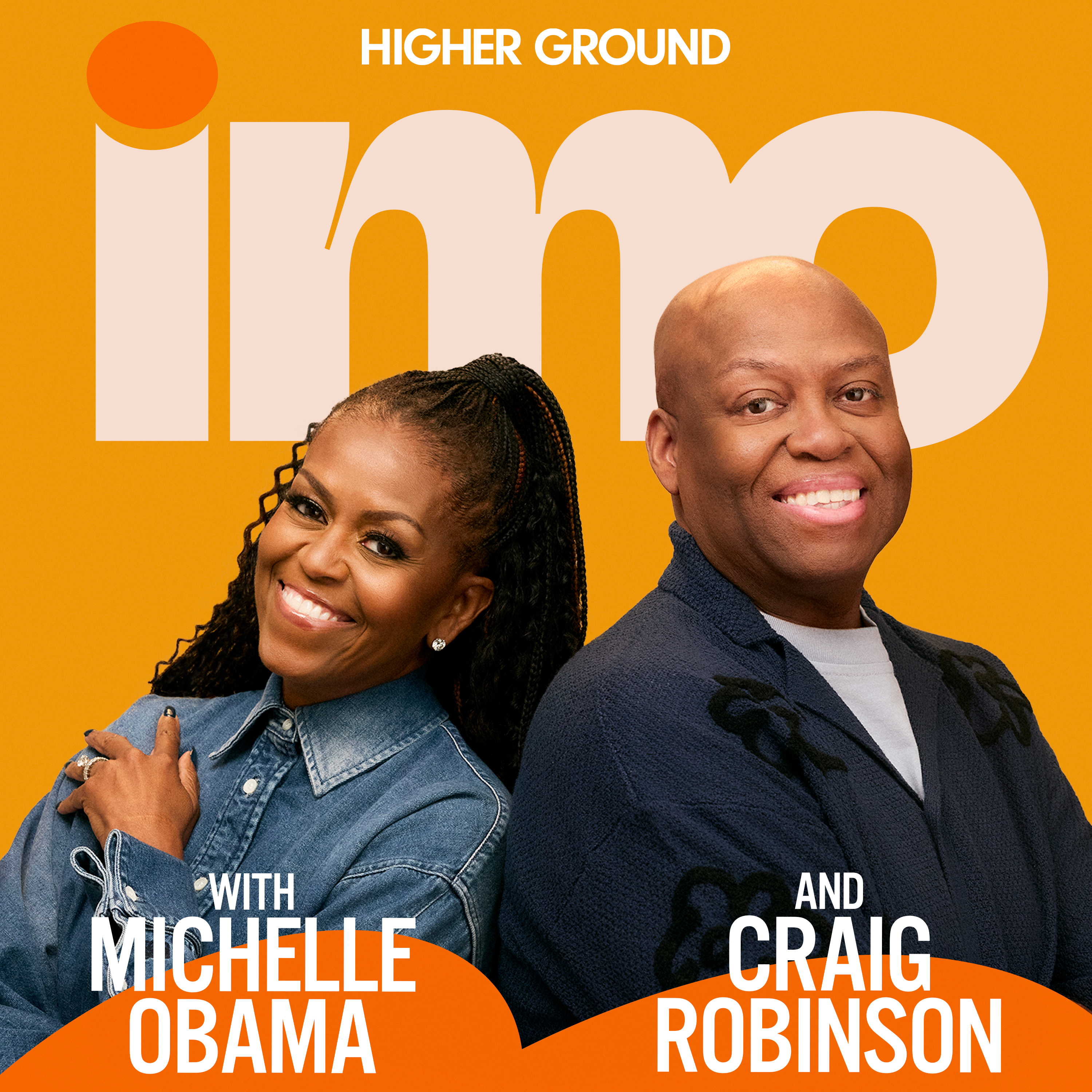
Pod Insights IMO with Michelle Obama and Craig Robinson Take Back Control of Your Health with Dr. Sharon Malone About this episode On this week’s episode, OB/GYN (and close friend!) Dr. Sharon Malone joins the podcast to talk about the urgent issues plaguing women’s healthcare in the U. S. and how women can safely navigate a medical system that is not built for them. Plus, the group answers a listener question from a woman looking to freeze her eggs.
Have a question you want answered? Write to us at imopod.com http://imopod.com.
See Privacy Policy at https://art19.com/privacy and California Privacy Notice at https://art19.com/privacy#do-not-sell-my-info.
Transcript Speaker names marked ? are inferred from speaking time and the show’s known hosts — they are not voice-verified.
0:00 Michelle Obama? The one thing I would say to women is this, no one's coming to save you. So if you think that the president, or the governor, or your state legislator is coming to save you, they're not. But they will if you make them.
0:23 Craig Robinson? This special health-focused episode of IMO is brought to you by Cologuard, a non-invasive colon cancer screening test. Hey, Meech.
0:32 Michelle Obama? Hey, Craig Robinson. You know, today's topic is one that's near and dear to me.
0:42 Michelle Obama? Now, one of the reasons why I'm excited about, one of the many reasons I'm excited about our platform IMO is that we, you know, really get to talk about a whole array of issues that we both care about. But this topic today is particularly of note for me because we're going to be talking about women's health. We've got one of our dear friends, Dr. Sharon Malone, on. And, you know, she's going to talk about her new book, new podcast that we're excited about. But we want to talk about a whole range of things. And, you know, in many ways, to have a guy like yourself on in the midst of this conversation
1:27 Michelle Obama? to some people might seem funny because a lot of men don't feel a connection to women's health. Because, quite frankly, oftentimes, we as women don't understand our own issues, and we're going to talk a little bit about that. But I think you are in a unique position because we grew up in a household where women had voices. And despite the fact that we grew up in such an open household for that time in life, or that stage of our lives, I'm still surprised at how little I know about my own body.
2:08 Michelle Obama? You know, and how many things... We didn't talk about, not because our parents weren't open to it, but they didn't know. You know, so we're gonna talk more about this. But let's introduce, let's get, let's get Sharon in on the, on the conversation.
2:24 Craig Robinson? Yeah, and you said Sharon's family and, and, and I, you know, I could introduce her without the notes, but I'm gonna, I'm gonna read Dr. Sharon Malone's bio here. She, Dr. Sharon is a nationally recognized OBGYN with over 30 years of experience. A New York Times bestseller with her book Grown Women Talk, and a longtime advocate for providing practical information on women's health and aging. So here to join us is a good friend and, but just basically a family member, Dr. Sharon Malone.
3:03 Michelle Obama? Welcome to IMO Sharon.
3:08 Michelle Obama? Have you with us.
3:10 Speaker 02 Thank you for having me.
3:11 Michelle Obama? Thank you, thank you. Grown Warrior, because this, this woman here has been.
3:18 Michelle Obama? All over the country promoting Grown Women Talk. I am so proud of you for, for so much. But you, you did the thing, you know, writing this amazing, creative, fun, funny, informative, open, honest book about women's health with a particular focus on women of color. But it's a book for, for everyone, men, women, people of all races and all ages, because you cover the, the spectrum of, of just some of the, the, the things that, that women go through. Can you talk a bit about why you wanted to write the book and how you're feeling about things?
4:00 Speaker 02 Yes, I want to thank both of you for having me here because it's, you know, we've had many conversations like this just around, you know, around the kitchen table. And to be able to share this is really special. And I remember, I, you know, when. I left my clinical practice now, it's been four and a half years ago. I had none of this in mind. I wasn't planning to write a book. I wasn't planning to be out here in menopause world, none of it. But you know, you gotta be ready when things happen. And I remember how encouraging you were for me. You were like, girl, come on, you can do this. And I was so nervous after I wrote the book. And I was like, oh, I don't know if you want to read it.
4:41 Michelle Obama? You didn't show it to me, right? It took so many, it's like, okay, Sharon, I know you have a rough draft. I was getting a little insulted for a second there.
4:50 Speaker 02 Well, you know, you know what it is, and you can appreciate this, Craig.
4:54 Craig Robinson? Yes, I can.
4:54 Speaker 02 I knew that if I asked her to read the book, she was gonna give me her honest opinion of the book. And I was, sometimes I wasn't sure if I was ready for that, you know what I mean?
5:05 Craig Robinson? So, welcome to the world of the Robinsons.
5:08 Speaker 02 I was like, oh, I said, wait a minute, maybe it sucks and she's gonna tell me.
5:13 Craig Robinson? And how about this, she's getting offended that you're not showing it to her.
5:18 Michelle Obama? I was like, okay.
5:19 Craig Robinson? It's like, you know, I'm not ready for constructive criticism yet. I want to get it in the right position to show it to you.
5:26 Michelle Obama? Well, to give some folks some context, I mean, Sharon and I, we've known each other since that day, that evening at the Black Caucus, when we first, actually, our eyes first met, right? Because this was a time where, what was, Sharon's husband happens to be former Attorney General Eric Holder. He's a non-factor, you know, I, I.
5:54 Craig Robinson? He is not a non-factor.
5:55 Michelle Obama? He's a non-factor in our relationship.
5:58 Craig Robinson? Okay, well, then, let's contextualize that, please.
6:01 Michelle Obama? Although, they put us together because we were both reluctant spouses attending one of these huge dinners. And where were they? Was Barack a US Senator at the time?
6:13 Speaker 02 Yes, he was a Senator because you were still living in Chicago, and Eric was in private practice. So, it was just, it was the very early days. And, you know, she came to DC, and you didn't come to DC much in those days.
6:26 Michelle Obama? No, ma'am.
6:27 Speaker 02 And they sit us at a table and we were seated just about like this. She was across the table from me.
6:33 Craig Robinson? Okay.
6:34 Speaker 02 And you know how there are things going on around us and I would just look over at her and it was in-
6:39 Michelle Obama? Well, and the things were, there was a line of people waiting to shake hands with our respective husbands. You know, people like reaching over our heads and spilling water on us, trying to get to these two, you know, illustrious men, you know. And she didn't, she didn't, she had the same look on her face as I did. Like, here we go, you know. And I looked over at, at this beautiful woman. We had, did we even have a conversation?
7:10 Speaker 02 Not until later in that afternoon.
7:12 Craig Robinson? So you hadn't met?
7:13 Speaker 02 We hadn't met.
7:14 Craig Robinson? You just saw each other at the table?
7:16 Michelle Obama? But I just saw the look on her face, which, which expressed the sentiments that I felt, which was-
7:22 Craig Robinson? Pissed off.
7:23 Speaker 02 No, no, it was just kindred spirits.
7:26 Michelle Obama? You see this, don't you?
7:27 Speaker 02 I see you.
7:28 Michelle Obama? This is like, this is crazy, isn't it, girl? That's, that was the look. And it was like, with, without words spoken, I was like, I want to get to know this woman. So when Barack got into office and appointed Eric as his Attorney General, there were just a couple of women like that, particularly sisters, black women in DC, that I knew, I, I needed, I knew I was going to need my kitchen table there. And I had to do what I've told people to do in my books, which is like, you gotta go out and find your friends. You gotta find your people. And I invited you and a couple of other people over to the Hey Adams, because it was before we were even able to get into the White House,
8:11 Michelle Obama? just for like a girlfriend's lunch. And, you know, I don't know what that call was like for you, but for me, I was like, I just, you know, before this thing gets started, I need, I, I need some info. I need to get a sense of where am I? What's this city about? Who can I trust? And I instinctively thought of Sharon. She was on the top of my list of people that I wanted to know. And we had an amazing, was it lunch or breakfast?
8:40 Speaker 02 Oh, it was lunch and it was supposed to be an hour and we talked for three. So you can imagine, so we're sitting there and it's like, okay, I don't have anywhere to go, but you're not busy. And we had, and that started it. And then we've been talking ever since.
8:53 Michelle Obama? And that's when we really started having some really deep conversations about our health as women, you know, how we neglected, you know, many of us were black women around the table, you know, we learned from Sharon all that we didn't know. So a lot of times those weekends would turn into Sharon advisory sessions because we'd bring her questions about health, things on our bodies, prescriptions. We would use her as a second opinion from our own doctors to make sure that we were covered. But, you know, your book touches on more than just the medical side of things. I mean, your book opens up with something as simple as how do you choose a medical provider?
9:34 Speaker 02 You know, I, I think if you think about how the medical system, you know, at its inception, it was never made for women and it was certainly never made for black women. So whatever, you're a second tertiary thought in this whole process. And I think that how we pick doctors, you know, how do we, how do we even evaluate a doctor is something most of us haven't thought about because you get it from your friend or you may, you know, get it from your insurance book or whatever. But there is really a process that you should go through where you can decide, I don't have to just go to this person who continually disrespects me, or I don't have to continue
10:16 Speaker 02 to go to a person when I complain, they don't hear me, or they don't address my complaints. Those are the kinds of things you have to think about. And yes, it's important to know about board certification and where they went to medical school. That's important, but not. The essential piece of this doctor-patient relationship you're gonna have.
10:35 Michelle Obama? Well, and we were raised on the doctor said. I mean, doctors for at least our generation and older, they were revered members of the community, you know, they were second to God.
10:47 Michelle Obama? And so, the thought that you would question, or even have the right or authority to question. So, so many of us, if in the black community, you even ever saw a doctor, right? But if you did have a doctor, you just fell into the arms of that person, and took everything that they said about you as being the truth, even. And if all these doctors, or most of these doctors, were men,
11:15 Michelle Obama? who are not even trained in understanding women's health in that same way. And I want you to talk a little bit about how that happens.
11:24 Speaker 02 As I said, women were really an afterthought, you know? Because, you know, in the, when I say in the old days, in the 19th century, they didn't have a lot of treatments anyway, so they didn't have a lot of treatment for anybody. This is pre-antibiotics and surgery and anesthesia and all that. But there's this whole, there's this mythology about women's bodies. And women's bodies were unclean, contemptible, ew. You know, that was sort of how the medical profession, they didn't even want to examine women, you know, in that era.
11:56 Michelle Obama? And what era was that?
11:59 Speaker 02 This is like, this is in the 1800s. And as we move into the 20th century, now, this may surprise you, but it wasn't until 1993 that it was mandated that women be included in clinical trials.
12:13 Michelle Obama? 1993.
12:15 Speaker 02 1993. Most of what we know about medications, most of what we know about medical devices, have been, the research has been done on men, and extrapolated to women. Because the thought was, well, we don't, women are complicated, you know? They've got all these hormone things going on, and we don't really wanna, you know, that'll mess up our research. So it's just easier to work with somebody that, you know, is in a different, in the same state every day. So, 1993 is the first time women were included. So, most of what we know... Has been post then.
12:56 Speaker 02 But I'll do something, I'll give you something that was shocking even to me. Because as I was doing the research for my book, I said, well, okay, how much is spent on women's health and research? And as of the 2022 figures, NIH, which is the largest funder of medical research Which is now being dismantled, yes. By the way. But in 1993, NIH had a $45 billion budget that they used for, they endowed for medical research. Of that $45 billion, less than 11% of that $45 billion went to conditions that either primarily or exclusively affect women.
13:41 Speaker 02 Less than 11%. Now, we're 51% of the population. So all of the things that we still are asking questions about, menopause, perimenopause, you know, the healthcare disparities in maternal health, you name it. Everything that we have, migraines, fibroids, endometriosis, all of those things that affect women, they don't get funded. And so that's sort of how weird.
14:09 Craig Robinson? And now to Misha's point and to what's going on in society, we're moving backwards again. I mean, so that just made me think, where do you send women to get proper information on all of this stuff? Reproductive, IVF, HPV, you know, all of the things, menopause, where do you send people for information?
14:37 Speaker 02 Well, you know, there are certain things that are gonna, that I think that government is uniquely situated to do. You know, because the private sector does what the private sector does. And they're interested in, you know, they want a new drug. They don't want to look at an old drug because there's no money to be made in an old drug. And so a lot of the things that we are looking at, even like hormone replacement, we're still basically working with the same data from, you know, 20, you know, from 30 years ago because there's not been any funding for the new research.
15:12 Michelle Obama? And this is the frustrating thing about the fight to protect women's reproductive health. Sadly, it has been reduced to choice, the question of choice. And it's as if that's all of what women's health is. That's the only thing. And as I attempted to make the argument on the campaign trail this past election was that there's just so much more at stake. And because so many men have no idea about what women go through, right?
15:53 Michelle Obama? We haven't been researched, we haven't been considered, and it still affects the way a lot of male lawmakers, a lot of male politicians, a lot of male religious leaders think about the issue of choice as if it's just about the fetus, the baby. But women's reproductive health is about our life. It's about this whole complicated reproductive system that does, the least of what it does is produce life. It's a very important thing that it does. But you only produce life if the machine that's producing it, if you want to, you
16:36 Michelle Obama? know, whittle us down to a machine, if the machine is functioning in a healthy, streamlined kind of way. But there is no discussion or apparent connection between the two. Sharon, can you talk a bit about sort of the state of, the current state? What's keeping you up at night of the many things that keep you up at night about the state of women's health?
17:00 Speaker 02 Yes, I think that... One of the things that is disturbing to me is that somehow or the other, government has gotten involved in decisions that are personal and healthcare decisions. It's not just about, you know, whether someone chooses to have a pregnancy or not, but you should have, this is a situation where a woman should have control over her body, when and if to have a baby, and to decide how that pregnancy should continue. Because let me say this, if doctors are afraid to do their job,
17:43 Speaker 02 and it's not, and this is not about abortion. This is about a woman who is in, who is miscarrying, who is, her life is in danger, or she is in a position where we know that this pregnancy is not going to continue, and a doctor is afraid that they're going to go to jail because they are helping that woman
18:05 Craig Robinson? Right.
18:05 Speaker 02 to make sure that she'll live to be able to do this again?
18:09 Craig Robinson? Mm-hmm.
18:10 Speaker 02 You know, these are the kinds of things that, you know, are very worrisome. And let me tell you what the downstream effect of that is. In states where there are the most restrictive in the post-Dobbs world, if you're, if I'm a young person and I want to be an OB-GYN, I might, one, I might choose not to be an OB-GYN. And if I do choose that as my profession, am I going to want to train in a state where, you know, my career is in jeopardy? Am I going to want to stay in practice in a state where I have to worry about whether someone's going to drop a dime on me
18:53 Speaker 02 and turn me in because I did something to save someone's life or to preserve their fertility? And that,
19:01 Craig Robinson? Yeah.
19:02 Speaker 02 that's enough. But what happens when you don't have doctors in those states? What about all those other things? Remember, I told you, you've got all the other things to worry about. Fibroids and endometriosis and all the other Now there's no doctor there. What about the woman who's having a completely normal pregnancy? And she needs a doctor to deliver her? And there's no one there. How does that in any way, shape or form? Improve women's health? You know, it's setting us back because you know, now we're in a, now we're in a situation where
19:41 Speaker 02 everyone, now you have no access. And that's a problem.
19:52 Craig Robinson? This next segment is presented by our friends at Cologuard, a non-invasive colon cancer screening test. You know, when I first got my job at Oregon State, I was in my 40s, sort of early 40s. And I really hadn't had a doctor of my own. And I, I got a doctor finally, Dr. Chen, and got my first sort of blood screening at that point in time. Because you know, growing up, we went to the clinic when we got sick. And now that I, and then once I moved to Corvallis, I started getting physicals every single year.
20:29 Craig Robinson? And from then on, I felt like, okay, I'm taking care of my, my own health a little bit better than I had before. So Dr. Sharon, how'd that do?
20:40 Speaker 02 You know what? You did great, Craig. But you know what? That, your experience is not unlike most people's. Most of us did not grow up going to doctors on a regular basis.
20:49 Craig Robinson? So can you talk, Dr. Sharon, about an essential thing that we can do for our health as we get older? Why is screening for colon cancer so important?
20:58 Speaker 02 Colon cancer is one of the most common types of cancer in the United States. And as a physician, I've unfortunately seen firsthand how common it is. In my clinical practice, I have seen patients getting diagnosed with stage three or stage four colon cancer because they waited too long to get screened. And these are young, healthy people. There are even patients in their early to mid 40s with no family history of colon cancer. What people don't realize is that there is no such thing as being low risk. Colon cancer affects all genders, races, and ethnicities. I can even personally attest to how serious and prevalent this cancer is.
21:41 Speaker 02 I lost my mother to colon cancer when I was 12 years old. My older sister was diagnosed with colon cancer over a decade ago. The difference in outcomes is due solely to early detection. My mother was never screened for colon cancer, and she paid the ultimate price. My sister, due to early diagnosis and treatment, is alive and cancer-free. This is why colon cancer screening for everyone, whether you have a family history or not, is important.
22:09 Craig Robinson? Can you talk a little bit about colon cancer screening and options people have?
22:13 Speaker 02 The good news about colon cancer is that it's detectable early with routine screening. Because younger people are being diagnosed with colon cancer, the recommended age for starting screening is now 45, not 50. And that's why I wanted to make sure listeners are aware of the Cologuard test, which is an effective, non-invasive test that detects cancer and precancer. As a physician, I recommend the Cologuard test because it is a solution for all the standard roadblocks that prevent people from screening via colonoscopy. They're thinking, "Well, how am I going to take off work? Who's going to pick me up from the procedure? How am I going to deal with all the prep the day before?"
22:57 Speaker 02 But for those who are at average risk, meaning you don't have a personal or family history of colon cancer, polyps, or inflammatory bowel disease, the Cologuard test is a convenient and affordable test that is delivered to your home and can be done on your own schedule. No prep, no scheduling, no missing work. With the Cologuard test, there is simply no excuse not to screen. So do it.
23:24 Craig Robinson? However you go about getting screened, we just want to remind you to not let your health take a backseat. Thanks again to Cologuard for being a partner of our show and reminding us of the importance of getting screened for colon cancer. Talk to your healthcare provider, or you can request a Cologuard prescription today at coliguard.com/podcast. The Cologuard test is intended to screen adults 45 and older at average risk for colorectal cancer. False positives and false negatives can occur. This special health-focused episode of IMO is brought to you by Cologuard, a non-invasive colon cancer screening test.
24:07 Craig Robinson? As we discussed earlier with Dr. Sharon, getting screened for colon cancer is a crucial part of prioritizing our health as we get older, especially because right now, colon cancer is considered the most preventable, yet least prevented, cancer out there. As it stands, colon cancer is on the rise in people under 50, which is why the American Cancer Society recommends that if you're at average risk, you begin screening at 45. Even if you live a healthy lifestyle and don't have symptoms, no one is at low risk for colon cancer. We want to make sure our listeners know
24:49 Craig Robinson? that colon cancer can be treatable in nine out of 10 people. But the key here is that it has to be caught early. With the Cologuard test, you can take control of your colon cancer screening through a prescription-based test with none of the prep that's required of a colonoscopy. Not only is the Cologuard test effective for colon cancer screening, but it can even detect precancer. And in addition to its convenience, the Cologuard test is also affordable. Most insured patients find they pay nothing out of pocket. With zero downtime, no special preparation,
25:33 Craig Robinson? and a screening test that's delivered right to your door, don't let your health take a backseat. So if you're 45 or older and at average risk, ask your healthcare provider about screening for colon cancer with the Cologuard test. You can also request a Cologuard prescription today at Cologuard.com/podcast. The Cologuard test is intended to screen adults 45 and older at average risk for colorectal cancer. Do not use a Cologuard test if you have adenomas, have inflammatory bowel disease, and certain hereditary syndromes, or a personal or family history of colorectal cancer.
26:17 Craig Robinson? The Cologuard test is not a replacement for colonoscopy in high-risk patients. Cologuard test performance in adults ages 45 to 49 is estimated based on a large clinical study of patients 50 and older. False positives and false negatives can occur. Cologuard is available by prescription only.
26:46 Speaker 02 Just the fact that we've abandoned science, you know, that now medicine is, you know, what we're going to look at and how we're going to make policy is based on whoever's in charge, their particular priorities. And science and evidence be damned, we're not, we're not looking at that now. And let me just say, a lot of what we do, yes, we do have to infer. We don't have absolute evidence for everything, but we have a good amount, particularly for things like vaccines that have been around for, you know, for certainly as long as we've been alive. We have a track record on those.
27:29 Speaker 02 And to sort of throw science out the window because someone has a cockamamie theory about it is, is pretty troubling. If that's the road that we're going to be on, you know, and we are seeing the results of that now.
27:45 Michelle Obama? We're seeing more and more conversations from anti-vaxxers, right? We saw it during COVID. What's that about? Why are we all of a sudden, after all these generations, now pushing against vaccines that have saved lives for decades?
28:10 Speaker 02 Well, you know, it matters who's in charge. And I think sort of the way medical research used to work was that, you know, there were there are researchers and there are people at NIH and there are scientists who, you know, do the who actually do the work. And the work drives the policy, not necessarily the other way around. Now, granted, there is some because there are people deciding what research gets funded and what doesn't. That's always been the case. But now we're having, at the highest levels, people decide, no, we're not doing that. And you kind of go, wait a minute, but we've got 50 years of data on that. And it's as if that does not exist.
28:54 Speaker 02 And we're just going to do and we're going to serve the theories and, you know, whims of whoever it happens to be. And so it's not really coming, you know, it's not coming from the scientific community. It's really coming from someone else who has a very different view of what they think is important. And they're embracing some theories and some, you know, conspiracies that really have no basis in science. And that's a problem if that's how we're going to continue to do research in this country.
29:28 Michelle Obama? And we're seeing that with this measles outbreak. So what's going on there?
29:34 Speaker 02 Well, you know.
29:35 Michelle Obama? This is in Texas, correct?
29:37 Speaker 02 Yeah. I mean, they've got what like now over 500 cases of measles, a disease that was considered eradicated in this country. And here's the thing, like take for instance, smallpox. Okay, smallpox was a terrible thing and then everybody got vaccinated. It's been declared by the World Health Organization, it's eradicated. Now, no one gets it. But if you allow the measles to come back, and more and more people are unvaccinated. And the thing that people really don't remember about why it's so important to get an MMR, the MMR part of it was rubella. And rubella was why pregnant women get it. And guess what? You have congenital defects in children,
30:22 Speaker 02 deafness, blindness, birth defects in pregnant women who are unvaccinated. So as bad as it is amongst the children, yes. Will most of them survive? Yes, they will. But what about everybody else? What about the ones that don't? And one child dying is too many. But now, you're going to infect pregnant women and unborn children. And if you really care about unborn children, that seems to me a good enough reason to vaccinate.
30:48 Michelle Obama? So if you're a mother that's vaccinated, does that protect your unborn child?
30:54 Speaker 02 If you are vaccinated. Exactly. But what if we keep this trend going? You know, and as these children who are unvaccinated now reach puberty and childbearing years, then they will be just as at risk as generations were before.
31:12 Michelle Obama? I mean, it's just, it's just mind-boggling to believe that with all that we know, you know, with all the resources, with the wealth in this nation, that we are going to go backwards in time, that we are, we are walking backwards with our eyes wide open, with sirens blaring, you know? It's just, it's just unbelievable to me that in a short period of time, we're here having these kind of conversations.
31:41 Speaker 02 We had just really, you know, even on the women's health front, we had just started to make, we're like, wow, now we know about that 45 billion, and we're only getting, you know, 4 billion of it.
31:55 Speaker 02 All right, well, that was great, except as we were starting to make progress and they were saying, yes, we've got to pay attention to women's health issues. And you know, there was President Biden came up with $100 million White House Initiative for Women's Health in Midlife. The Department of Defense had a $500 million grant that was supposed to go to studying women in the military because nobody was studying them. It's just all gone. It's all gone.
32:22 Craig Robinson? So Sharon, before we get to our listener question, we have some great listeners who sending great questions. But before we get to that, given all of this non-information and misinformation and the dialing back of funding, if you could give women your biggest piece of advice that they could hear from our platform here on sort of what they should be doing, what would that piece of advice be?
32:53 Speaker 02 The one thing I would say to women is this, no one's coming to save you. So if you think that the president or the governor or your state legislator is coming to save you, they're not. But they will if you make them. And see, this is where I said, a lot of what we've got to do now, we can't, you know, political environment is what it is. But this is a, it's a political issue. It's not a partisan issue because this will affect all women. It doesn't matter, you know, what your political affiliation is. And this is where I think that as 51% of the population and probably 60% of the voting population,
33:35 Speaker 02 that we have an opportunity for this big A advocacy is for women to say, hey, look here, I'm going to talk to my local, my state legislators and say, this is important to me, and you're either going to address this, or we will vote you out. And that is really the only power that we have collectively is to make sure that our voices are heard and that once people realize that we're serious about this and we're not going to just sit here and take it, I think we'll get some, I think people will start to listen.
34:09 Michelle Obama? Yeah, and Craig, you know, that, that, that piece of advice cannot just be directed to women. You know, this is why I implore the men in the world who have women that they say they care about, daughters that they are raising,
34:33 Michelle Obama? that this is their issue too. I mean, for men to sit on their hands over this issue and trade out women's health for a tax break or whatever it is, is a sad statement about that man's level of value of the women in their lives. And there are a lot of men who have, they have big chairs at their tables. You know, there are a lot of women who vote the way their man is gonna vote. It happened in this election. So just to direct this at women, unfortunately, we've seen is not enough.
35:16 Speaker 02 You know, and we are already facing a doctor shortage coming up because we're getting older. You know, we're watching this. You know, we're the last of the baby boomers, but we are, there's a huge push, the people that are gonna need the most care, and we don't have enough doctors to meet that need. And so we've gotta, we've gotta figure that out and figure out even more, I'd say more innovative ways to deliver care, just like in the old days where you would get sick and you'd call the doctor and he would come to your house. Okay, when they stop doing that, you're never gonna go back and do that again. Right. Well, we need a real, serious innovation change in how care is delivered right now because we don't have enough doctors to backfill.
36:00 Speaker 02 And to be a little bit more, you know, to take it even further, when people are saying, yeah, we need more culturally sensitive doctors, and we do.
36:11 Michelle Obama? But here's the problem. How are you going to get them if you're decimating public schools? Where are these doctors going to come from?
36:19 Craig Robinson? And diversity programs.
36:20 Michelle Obama? Exactly. How is that going to happen? So you've got to figure out a way. That's why I said it all of its politics. And it's politics and making decisions at the local level, at the state level, for making sure that people are in a position. Because people like you and me and Michelle, who, you know, went to Ivy League colleges from public schools. That's a rarity. That's a rarity.
36:49 Craig Robinson? Well, I know I said I'll get to the question. This has just been a just terrific and enlightening discussion. But we have a question from Lisa from Chicago. And let's give a listen.
37:06 Speaker 03 Hey, this is Lisa from Chicago. I'm moving up in my career and doing really well. And I don't want to slow down, but I also want to have a family in the near future. So I'm wondering, what age should women start freezing their eggs if they're not ready to become pregnant? What health tips and checkups can both partners do to ensure they're ready to conceive? This is a topic my husband and I are having, and I'm also hearing more about it from friends. Thanks.
37:36 Michelle Obama? Now, this is a question that we are getting around our kitchen table from the next because we're in that generation. Our daughters are in that stage in life where, you know, it's
37:50 Craig Robinson? Both of us.
37:51 Michelle Obama? Yeah, all of us. Where, you know, they're deciding between pursuing a career, you know, how long do they have to wait, finding a mate? All of those questions feel more existential. But even given that, I met a young woman that's a part of our world who just froze her eggs, and she's in her 30s. And very enlightened, very educated. She just did it. But she said she only did it because she heard other people doing it. She had never heard in all of her enlightened years on this planet about the importance of freezing eggs,
38:35 Michelle Obama? that it was even a possibility that she could or even should freeze her eggs. So that in today's young women, she said she had never been in a conversation about the importance or the possibility of freezing her eggs. Thirty something, early 30s.
38:54 Speaker 02 That's, that's very interesting because to give you an idea of how much has sort of become part of the conversation and that a lot of the tech companies in an effort to retain female employees and talent, they're using, they're offering egg freezing as a benefit. Because, you know, we don't want you to, you know, we want to have this and we want to make sure that you're here. So that will allow you to work longer and do whatever because now you've got this, these, this in the bank. But there are two issues that I really want to distinguish between. One is egg freezing and the other is embryo freezing.
39:38 Speaker 02 So say for instance, if you do IVF. Now, we have a lot of experience with IVF and, you know, a lot of success with IVF. We are not as far along with egg freezing because egg freezing wasn't a thing until maybe, I want to say 15 years ago, that it even was a possibility. So even though we could freeze sperm forever and we could, you know, freeze embryos, we just sort of got into the technology to be able to freeze eggs.
40:06 Michelle Obama? And just so that we're, we're not assuming things, the difference between egg freezing and embryo freezing is...
40:12 Speaker 02 Okay, so embryo freezing is just a regular IVF procedure. If you were doing IVF and you took medications and you had eight eggs, they would fertilize them all. And you don't want all eight at once. So they would take, you would take two or three out, freeze the rest so you could come back if that didn't work. That's what embryo freezing is. And that we know is pretty successful. The world of egg freezing is, as I said, relatively new. And to give you an idea, because it's technologically more difficult to freeze an egg than it is to freeze an embryo, believe it or not.
40:51 Craig Robinson? Okay.
40:51 Speaker 02 It is.
40:51 Craig Robinson? I did not know that.
40:52 Speaker 02 Because it has to, because a certain number of them, you have to freeze them, and then you've got to unthaw them before you fertilize them. So if you already had a partner, I would tell any young woman who is like saying, you know what, my husband or my partner and I are planning to have a baby, but not right now, and I'm 34 years old, you know, maybe three years from now. Because here's the part that I really talk a lot about in my book, In Grown Woman Talk. As we talk about perimenopause and all this, one of the things that we don't talk enough about during perimenopause, which is that period between about 35 and 45 for most women,
41:36 Speaker 02 one of the first things that changes is your fertility. You're not as fertile at 40 as you were at 30. And so that's how a lot of women will come to this, as they start to realize, oh, my goodness, I can't get pregnant. And that is just because aging of the eggs and...
41:53 Michelle Obama? And the drop off is huge and sudden, right?
41:57 Speaker 02 It is. And, but you don't know, for each individual woman, you don't know how long, you know, I say you're stamped with an expiration date, and you don't know when your eggs are going to expire. For some people, it may be 42. My mother, I was born when my mother was almost 45 years old. Now, I'm sure she was not entirely pleased about that situation.
42:18 Michelle Obama? You were the last of how many, though?
42:20 Speaker 02 Eight.
42:20 Michelle Obama? You know?
42:21 Speaker 02 But then she hadn't had a baby since, you know, in eight years before I was born.
42:27 Craig Robinson? Oh, I got you.
42:27 Speaker 02 So you know what I mean?
42:28 Michelle Obama? Surprise, Sharon T.
42:29 Speaker 02 Oh, I thought it was menopause, and guess what? It's you. So I say that to say that that's the natural progression of women's fertility. So here's the question. Well, if you're a young person and you don't have a partner identified, or you don't have a heterosexual partner, you know, what are you going to do in terms of, when am I going to decide to freeze my eggs?
42:58 Speaker 02 Well, the younger you are when you freeze them, the better outcome you have because you'll get more eggs. You know, from you'll get a bigger harvest. But here's the problem, the younger you are when you freeze them, the less likely you are to come back for them. Because if you froze your eggs at 30 and you decided to get pregnant at 34, because you found the love of your life, or you've made that decision, I would still tell you at 34, well, go get pregnant. I would, I wouldn't unfreeze your eggs. I'd only unfreeze your eggs if you had tried on your own.
43:33 Craig Robinson? Yeah, that makes sense. I get it. I get it. Yeah, that makes sense.
43:36 Michelle Obama? But that's why the research is so unclear about the viability of frozen eggs.
43:42 Speaker 02 So even though we've been doing it for 15 years, the reality is the number of people who have actually come back for those eggs is depending upon who you read, anywhere from 6 to maybe 10% of them have, people have even come back. So it's not like everybody, because a lot of people will get pregnant first. And that's why trying to tell someone, I would never tell a 25-year-old to freeze their eggs.
44:06 Craig Robinson? How much does all of this cost?
44:08 Speaker 02 As much as IVF.
44:10 Craig Robinson? It is as much as IVF.
44:11 Michelle Obama? It's as much as IVF. Same shot, same medicine.
44:14 Speaker 02 It's the same shots, it's the same, the same procedure.
44:17 Michelle Obama? The only thing is there's no fertilization. That's all.
44:20 Speaker 02 And then they freeze them. And then you have a storage fee every year for every year you don't come back for them.
44:25 Craig Robinson? I'm here for you. It is expensive.
44:28 Speaker 02 It can vary anywhere from like 500 to maybe, I don't know.
44:31 Michelle Obama? A month?
44:32 Speaker 02 A year.
44:33 Craig Robinson? A year.
44:33 Speaker 02 A year, because they've got to keep.
44:35 Michelle Obama? What if there's a power shortage in your?
44:37 Speaker 02 That was my next question. You know, in your place. So you need to have a very reputable place that you are freezing your eggs and making sure they will still be in business 10 years from now when I come back for them. So there's a lot of thought process goes into it. So what if you say to a 37-year-old who wants to freeze their eggs? And you go, okay, you do the whole thing, whatever. And it's like, oh, you only got six eggs. Well, then your success rate is not 70%. It's somewhere far south of there. And then you have like, well, then if you do another round, then take whatever that costs and double it. And that's the, you know, that's why I said the reality of it. I don't want, I don't ever want a young woman to think, well, I don't have to decide right now.
45:21 Speaker 02 I'll just freeze my eggs and not worry about it. And I think we all as parents understand this. There's never a point in your life where you say, I'm good. I got nothing to do for the next 22 years.
45:31 Michelle Obama? That's right.
45:31 Speaker 02 To raise a child. There's never a perfect time for it. And just make sure that whatever the reason is that you're delaying is a, is a good enough reason for you. If you look back on that reason and say, well, that was fine because I just could not have done it.
45:47 Craig Robinson? Right.
45:47 Speaker 02 At that point. I, I, I get that. But because it's inconvenient.
45:56 Speaker 02 You know, just know that there are some real life factors that have to be taken into account. So, you know, do it, don't do it. Make sure you know why, know, make sure you know what it costs. And understand that, that frozen egg does not guarantee anyone a baby. It, it gives you a chance of having a baby.
46:16 Craig Robinson? Yeah.
46:17 Michelle Obama? And does, does, um, uh, does it make sense for young women, young men to start getting, uh, uh, sort of a, a sense of their fertility? You know, sort of be, before all of this, like, you know, should young women go in and have ultrasounds and to see, does that make any sense? To, to have that on their minds?
46:41 Speaker 02 Not really, because there's really, other than menopause or perimenopause, there's really not any one thing that is going to really be a predictor of whether or not you're going to be able to get pregnant. So you can't go in and say, give me a fertility test and tell me how fertile I am right now. And all I can say to you is, is if your periods are regular, you know, and you're getting them every month and you're otherwise healthy, assume it's good. You know, if you're below a certain age.
47:06 Craig Robinson? So there's no like dietary, you know, exercise, none of that stuff will help.
47:10 Speaker 02 You should always do, let me just say this.
47:11 Craig Robinson? You should be healthy.
47:12 Speaker 02 Yeah, just the, the health thing everybody should do because that's just the cornerstone of everything. But it, you can't necessarily improve your fertility.
47:21 Craig Robinson? Right.
47:22 Speaker 02 I would say the one thing that probably might decrease if you smoke, because there is something about ovarian aging and for women who smoke and for people who, you know, drink excessive amounts of alcohol, that might be a factor. But the thing that's different about women than it is about men, with men, you make a new set of sperm every 69 days. You get a new batch, right?
47:44 Craig Robinson? Right, right.
47:45 Speaker 02 We are born with all we're ever gonna have. And that's it. You, you, we have.
47:51 Michelle Obama? We always get the short end of something.
47:52 Speaker 02 I'm telling you, isn't it? We get all we have.
47:55 Michelle Obama? Sperm after sperm after sperm.
47:57 Craig Robinson? Well, we can jack ours up with behavior too, right?
48:01 Michelle Obama? No, see, you used that word, jack up. It's like, be careful there. I was like, where are you going with that, dude?
48:06 Craig Robinson? I just, I was, yes, I was trying not to curse. I should have cursed, it would have been better.
48:12 Michelle Obama? We might have to bleep that out.
48:14 Craig Robinson? No, but seriously, it's...
48:19 Craig Robinson? We can mess ourselves up too, but not, I mean, we, you know, that's what I learned in the IVF process.
48:25 Michelle Obama? Well, speaking of that, I don't want to jump away from the question, but I am curious about what they, what is the connection between aging sperm and birth defects?
48:36 Speaker 02 You know, that's, that's some new...
48:38 Michelle Obama? Because they're gonna cut out research in that too. It's like, no, I'm 80 and I'm good. I'm still good.
48:44 Speaker 02 You know, it does, you know, see now, now, see now, you've touched on a nerve now because, you know, my mother was 45 and my dad was 66 when I was born. Who knows what I could have been?
48:55 Michelle Obama? And that's...
48:56 Speaker 02 You know, God, you know.
48:58 Michelle Obama? It's like, you're just coming in on the last of everything. Sharon's just squeezing out the last little brain cells.
49:04 Speaker 02 I might have two or three Nobel prizes by now.
49:06 Craig Robinson? And they probably smoked and drank like my mom did.
49:10 Speaker 02 Oh, my God, oh, my God. My, but, yeah, so there, there is at least some, you know, again, anecdotal data that says that older sperm, more autism. We should tell some people, like, maybe it's the old sperm, maybe it's not the vaccine that's causing the autism. You know, why don't you look at that?
49:27 Michelle Obama? They'll never let that secret out.
49:29 Craig Robinson? Good luck with that one.
49:32 Michelle Obama? That may be the, the key behind all the defunding, everything. It's just like, let's just blow it up. And then the old men can...
49:39 Craig Robinson? We can't let them find this stuff out.
49:40 Michelle Obama? Old men can keep marrying 20-year-olds.
49:43 Speaker 02 Exactly.
49:44 Michelle Obama? It's like, I'll give you the baby you want. We don't have to keep that, really.
49:51 Craig Robinson? Yeah, I'm already in trouble with the guys because they don't think they gotta go to the doctor's appointment with you now. I'm gonna be...
49:59 Speaker 02 All right, we don't have to keep this part in too, but it's funny that you said about going to a doctor's appointment. And I will have to be honest about this, is that I love it when men come with their wives, you know, again, we're talking about stuff, or we're talking about fertility, or we're talking about your surgery, or whatever. I do find it weird when a dude is sitting at the end of the table when I'm doing the pelvic exam. I'm like, because I only had like two people that would do that, and I was like...
50:28 Michelle Obama? Yeah, but why would they sit at the end? Just sit up by your wife's head. See where she is. Just go to the head of the table. They're down there with you?
50:39 Craig Robinson? This is good. This is educational for men. If you're gonna go, don't stand in the wrong side of the examination.
50:48 Speaker 02 You don't really need to be in for the exam. You can be there for the talking part and the talking part after, but you don't need to be there to watch me doing what I'm doing. No, you don't need, we don't need that.
50:59 Michelle Obama? Yeah, that sounds about right, yeah.
51:01 Speaker 02 But the thing, see, for women too, is that same thing about why we are born, we're born with all the eggs that we're gonna have. That's why birth defects, you know, things like Down's Syndrome and other sort of chromosomal defects happen in women because our eggs are as old as we are. We never get a new batch. So they don't function as well in that process. And that's why birth defects go up with age, and miscarriages go up with age.
51:31 Craig Robinson? This has been really helpful for me, and I want to get to some takeaways for Lisa on the freezing eggs. And the two that I jotted down, and tell me if I have these wrong, is don't freeze your eggs too early was something I thought you could do it at any point in time, and bank it like it's money.
51:55 Speaker 02 And you know why? Because, again, because we don't have enough experience to say how long will they last. And right now, the current recommendation is that you should come back for them by 10 years. Okay, so, but we don't know, you know, will they last 20? I don't know.
52:11 Craig Robinson? Yeah.
52:11 Speaker 02 They don't know either.
52:12 Michelle Obama? And if you freeze them at 25, you may not be ready.
52:14 Craig Robinson? Ready at 35.
52:15 Speaker 02 Exactly. Or you may have just got them by 25, now 35, you're married, so you go and have them the other way. So you spent, you know, tens of thousands of dollars on the freezing, plus the storage, plus all of that. And I always say this, if it's a benefit on your job, okay.
52:32 Craig Robinson? Yeah, right.
52:32 Speaker 02 You know, but if you have to.
52:34 Craig Robinson? Insurance covers it.
52:34 Speaker 02 Right, but if you really have to go in, dig in your pocket, then I would say ideally, I would not do it before 30.
52:43 Craig Robinson? Yeah.
52:43 Speaker 02 Unless there's some, some other rationale for it.
52:47 Craig Robinson? That, that, that was new, that's new news, right? I think for a lot of people. And then, how about pick the right place?
52:54 Speaker 02 Yeah.
52:55 Craig Robinson? It's like, you have to really investigate these places where you're sending your eggs.
53:01 Speaker 02 Do your research and make, and, but here, all right, here's another little piece about what's problematic today is that, I just read something last week, is that the part, the, the part of the CDC which collects all this statistics on this, has been dismantled. So now, you are, there is no government agency that's going to, um, you know, collect all this data, so you will be able to evaluate one center versus the other. Now you may be left to whatever they say is what it is. So, that's a problem.
53:34 Craig Robinson? Well, those were two that I, I picked up on. Am I missing anything, or have you got a couple?
53:38 Speaker 02 And I was saying, if you, if you have a partner, or you have someone identified that you want to be the sperm donor.
53:46 Craig Robinson? Right.
53:47 Speaker 02 If, if you're, freeze, if you have the opportunity, freeze an embryo, don't freeze an egg.
53:52 Craig Robinson? Yeah. Well, this, this is good for Lisa. I, I, and it's, it's good for me to hear, and I think for the guys out there, this is good for them to hear. So I really appreciate you.
54:03 Michelle Obama? And I want the men out there, be involved in the, you know, it doesn't have to be your, your partner. If you've got any women in your life who are willing and open to help educate you, it's, seek it out. Um, Sharon?
54:20 Michelle Obama? Thank you for the book and
54:22 Craig Robinson? Wait.
54:23 Michelle Obama? we have to talk about
54:24 Craig Robinson? You have your podcast coming up.
54:26 Michelle Obama? That's coming up.
54:27 Craig Robinson? I want to hear about that.
54:28 Michelle Obama? Because we're going to be able to hear from Sharon a whole lot more and dig deeper into a whole range of issues because you are working on your, your own podcast. Tell us all about it.
54:39 Speaker 02 You know what? My podcast is called The Second Opinion or TSO. So we have IMO and we have TSO.
54:46 Michelle Obama? I would love it.
54:47 Speaker 02 And what I really want to do with this is to go deeper into some of the issues and to really hear from women about the things that they may be wrestling with and may not have gotten good answers for. And here's the, the reason why I love the title of the podcast is because I know a lot, but I don't know everything. And sometimes, guess what? I need a second opinion. And when we're talking about topics that I am not the subject matter expert, I have no problems getting those people involved such that we make sure that, you know, in your five to seven minutes that you get in your doctor's office, you may not get all your questions answered, but we're going to try to take care of them on the second opinion.
55:31 Craig Robinson? I love it.
55:31 Michelle Obama? So exciting and I would be remiss to say that TSO is a part of the Higher Ground Audio family. And as, as proud as I am of all the work you put into Grown Women Talk, I know that TSO is going to have the same level of candor, humor. Are you going to have some good music to your podcast? Because what we didn't mention that, you know, Sharon, the book Grown Women Talk comes with a playlist because my girl loves her music. And sprinkled throughout every story, she has a song
56:09 Craig Robinson? Oh, neat.
56:09 Michelle Obama? that goes with it, you know? And it is a fun, it's, it's a, it's a fun playlist.
56:16 Speaker 02 See, now that's a great idea because what I'm going to do with each episode, or maybe once a month, we'll have a TSO playlist. See, but you know, my friend, your sister over here, you know that.
56:27 Craig Robinson? Yeah, I know, I know. See, she, she, this was her way. To get us to talk about how good her music tasted.
56:33 Michelle Obama? I wasn't even thinking about it. I wasn't even thinking about it. What I was thinking about is that I am looking forward to having Sharon back on IMO. I am looking forward to having some great conversations with you, more candid, more focused on TSO. Because this issue, if anyone couldn't tell, is near and dear to my heart. Health and women's health has been at core of my advocacy since I've been in the public eye. I believe strongly that we as women have to take ownership over our health. I live my life by that motto, and I've been better off, you know? I mean, my physical health is directly linked to my mental health.
57:17 Michelle Obama? And what got me through so many of the tough times over the last decade was the fact that, you know, I felt good inside. And I think it's incumbent upon us to share that good news with other women because it's something we can do. You know, we don't have to be athletes climbing up a mountain. We just have to get up and move a little bit, eat better, be advised, believe in science, and have candid conversations with the people that we love. It's doable. I just want us to do it. So I'm grateful, Sharon, that you are going to be the voice of that conversation. So, so excited.
58:00 Speaker 02 And thank you for welcoming me to the family.
58:02 Michelle Obama? Yeah.
58:04 Craig Robinson? Yeah.
58:05 Michelle Obama? It's gonna be good.
58:06 Craig Robinson? And actually, thanks for letting the guy be in on this discussion. This was very helpful.
58:09 Michelle Obama? Well, I think you need to be in, or more guys, I shouldn't say you. But, you know, that's going to be a part of it, right? Sharon, having those male voices around the table, people who are educated, but those men who are totally clueless, so that the men can feel comfortable in their cluelessness, that it doesn't, you know, it doesn't prevent them from being at the table, asking all kinds of questions. It's better to ask and be wrong than not ask at all.
58:58 Craig Robinson? I love this time of year, but hosting during the holidays can be a bit of a challenge. So Kelly and I have collected a few hacks to make it a little bit easier. One of our favorite moves is an extendable dining room table. It's this great walnut color and it's mid-century modern, so it looks awesome in our space. And it even has extra storage in the legs. When we don't need the middle panels, we just slide them out and our space is back to how it was before. For all things hosting, Wayfair delivers high-quality, customer-trusted products for your home so you can host and celebrate without the stress. Use filters, customer photos,
59:41 Craig Robinson? and more than 20 million verified 5-star reviews to confidently find the right fit for your home. When refreshing your home this holiday season, Wayfair delivers exactly what you need. Head to wayfair.com to shop all things home. That's W-A-Y-F-A-I-R dot com.
1:00:01 Speaker 04 Wayfair, every style, every home.
Previous Be a Different Kind of Leader with Brian Chesky Next Change Your Relationship with Money with Steven Bartlett Page updated November 3, 2026 · transcript and summary are machine-generated