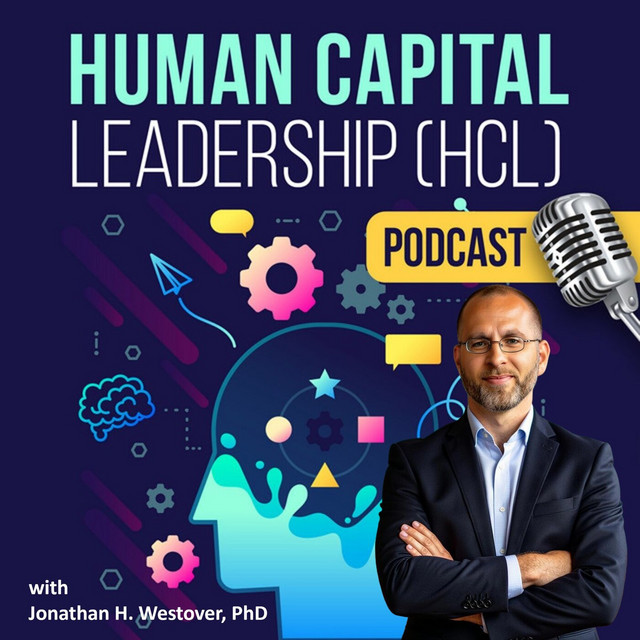
Pod Insights Human Capital Leadership The Role of Apprenticeships in Preparing the Future Workforce, with Jennifer Carlson About this episode In this podcast episode, Dr. Jonathan H. Westover talks with Jennifer Carlson about the role of apprenticeships in preparing the future workforce.
Jennifer Carlson serves as the CEO of Apprenti. Apprenti is a non-profit, apprenticeship intermediary and workforce consulting organization that delivers a secondary pipeline of tech talent to address U. S. domestic digital skills shortages. A former business leader with AIG, Progressive and adjunct professor at Seattle University, Jennifer also serves on the Tech Councils of North America (TECNA) foundation board, and as an Advisory Board Member - Apprenticeships for America.
Check out all of the podcasts in the HCI Podcast Network!
See Privacy Policy at https://art19.com/privacy and California Privacy Notice at https://art19.com/privacy#do-not-sell-my-info.
Transcript 0:03 Speaker 00 Welcome to the HCI family of podcasts. We're your source for personal, professional, and organizational growth and development. We share our own original research, explore industry trends, and interview executives and thought leaders from across the globe. Join us for practitioner-oriented content around all things leadership, HR, talent management, organizational development, and change management. Maximize your personal and organizational potential with the HCI family of podcasts.
0:35 Speaker 00 Jennifer Carlson, welcome to the conversation today.
0:37 Speaker 01 Thank you, John. Good to see you.
0:38 Speaker 00 It is a real pleasure to be with you. You're joining us from Seattle. I'm south of Salt Lake City in Utah. And today, we're going to be talking about the role of apprenticeships in preparing the future workforce. Skills, skills are all the rage right now. That's what everyone is talking about in organizations. They're trying to figure out how do we better map skills? And how do we better hire for skills rather than just like someone lists a diploma or years of experience like, but what do you actually do to demonstrate skills? And in that environment, looking at apprenticeships is really valuable. Any sort of experiential learning opportunity for for students to really demonstrate what they can actually do, not just what they know, is is going to be really, really important for for organizations today, but organizations in the future as well.
1:23 Speaker 00 So as we get started, I wanted to share Jennifer's bio with everybody. Jennifer Carlson serves as the CEO of Apprenti. Apprenti is a nonprofit apprenticeship intermediary and workforce consulting organization that delivers a secondary pipeline of tech talent to address US domestic digital skills shortages. A former business leader with AIG, progressive and adjunct professor at Seattle University, Jennifer also serves on the tech councils of North America Foundation Board and as an advisory board member for apprenticeships for America. There's a whole lot more I could say about your background, but I'm going to pause there. Anything you would like to highlight by way of your background or personal context before we dive on it?
2:03 Speaker 01 No, I think let's just dive in.
2:04 Speaker 00 Okay, awesome. Well, let's start with just a quick overview of Apprenti. Like, What inspired you to create Apprentee? What were the gaps that you were seeing in the workforce? You know, between what traditional higher ed is doing or tech colleges and such versus, you know, what you're trying to do in preparing future hiring pipelines?
2:25 Speaker 01 Yeah, not to get too bogged down in the history of it, but having been on the executive leadership side of some IT transformations, it was quick to see there are not enough tech practitioners out there and we had to do a lot with consultants because we couldn't find enough people to hire to do those in the large Fortune 500 companies. Concurrently, I would say in my own experience, as regularly one of the only women, if not the only woman in the room, there was a, you know, severe lack of diversity approaching the problems that we were trying to solve. So when I moved to Seattle and made Seattle home, this is not the insurance mecca I had come from, it is a tech mecca. And so, uh, working with the trade association, it was easy to see that this wasn't just
3:08 Speaker 01 a consumer problem from a B to B perspective. This was, um, the fact that the tech companies themselves really couldn't find enough talent and were struggling with some of the same issues. And, and that made very clear that we need to, to create another pipeline. There needed to be more talent creation going on, but the ecosystem from a higher ed perspective is very limited.
3:29 Speaker 00 Yeah, and, and I would suspect, like especially within the tech sector, um, anything STEM related in the tech industry in particular, though, like not only finding talent generally, but like more diverse talent, right? It is particularly challenging. And so if you're trying to extend the, the, you know, the, the funnel of like potential inputs of like more women, uh, you know, more people of various diverse backgrounds into the tech industry, having more than just kind of the traditional university pipeline is going to be really important.
4:02 Speaker 01 Well, you know, we, we've started hearing more and more companies come to the table and talk about the fact that, you know, there's an incredible value proposition to higher ed, always has been, there's never a question about that. But that A, we're not getting enough talent. And then when we think of diversity from a talent Perspective, it's that alternative set of of ideas coming in the front door, whether it's because it's a different set of schools than we typically recruit from, or it's people from other backgrounds coming in. They look at problems differently, and there's a huge value proposition, tons of research out there about the ability for people to come in that haven't been classically trained to look at the problem differently.
4:43 Speaker 00 Yeah, yeah. So that cognitive diversity, like the the mindset diversity, just the background diversity, all of it, all of it, super, super, super valuable. All right. So you you find you you found a a prenti and what how or I guess, describe a little bit how that's kind of filling this gap and helping to create these alternative pipelines.
5:05 Speaker 01 Well, we had the benefit being in Washington of a lot of tech companies founded here. So we've got everybody from Microsoft and Amazon to Zillow, F5, Redfin, you know, Tableau, all these companies here that were struggling with the same problem. But individually, we're trying to figure it out for themselves. And serendipitously in 2015, this is the same time that the US government pumped out a grant to try and expand registered apprenticeship, which is the what we've always used in this country for the building trades, thinking blue collar. It's it's really just an ecosystem. It's a hybrid of some classroom training with a hands on set of training. And it's an alternative to going to college that comes out with very similar levels of training,
5:49 Speaker 01 but without the formality of the degree and an accelerated path. So it was convenient, if you will, to have a conversation with those companies together from the standpoint of a trade association at the time to say, how are we going to figure out a bigger way to fix this problem? Because it's not a Washington problem, it's not a single company problem. It's an everyone, everywhere problem. And every company is a tech company now. I mean, Starbucks has a massive tech department, right? JP Morgan Chase, massive tech departments, and they're competing for the same talent, and there isn't enough of it out there. So how are we going to solve this? And thankfully, they were all willing to come to the table and say, you're right. And we like having a third party convener, which is sort of how we became the intermediary
6:34 Speaker 01 to connect not only what the companies were doing and kind of reevaluate which jobs have to have the degree and which jobs could be done without one. And at the same time, pull in all the other resources, which is why I founded it as a nonprofit, so that we could work more closely with higher ed. We could find funding through state and federal resources and access that and then manage it on behalf of the employers who wanted the benefit without all of the oversight.
7:00 Speaker 00 Yeah, yeah. One, this is perhaps a bit of a tangent, but I think it will resonate with a lot of folks is, you know, like thinking about the overall, you know, life cycle of, of the labor force and this talent pipeline and you apprentice ships or other sorts of experiential learning to give people kind of boots on the ground experience, hands on, like they can actually learn how to do stuff in the trades. It's been super common for a long time. And, you know, we can do more of those types of things and other types of talent pipelines. What's been your experience in terms of like the, the career path for folks who maybe go through an apprenticeship,
7:42 Speaker 00 kind of an approach, that accelerated approach, but not without, not with the traditional college degree, like maybe that could potentially be great for entry level types of jobs. What does it mean for them as they want to progress in their career?
7:54 Speaker 01 So the good news is this, and we, we set out when we did this kind of analysis with the companies to talk about the which jobs have to have the degree and which jobs don't.
8:03 Speaker 00 Yeah.
8:03 Speaker 01 Um, these big tech companies sat back and they really did a pragmatic review and said, okay, about 40% of the jobs in-house have to have the degree or higher, think data scientist, right? PhD in math. Um, but, and, and so they kind of gave me the finger wagging and we're like, told you. And I was like, uh huh. And let's talk about the other 60%. That's a lot of hiring that has to take place. And, and they were like, yeah, well, let's look at those. And, and our biggest challenge, according to the industry, was the fact that those are the jobs that require somebody to come in the door with three to five years of experience in the degree.
8:38 Speaker 00 Yeah.
8:39 Speaker 01 And I was like, okay, so what is it you're getting out of the degree that's telling you they have to have a degree for those jobs when you've just indicated that those are not jobs that necessarily would have to? And the answer was, well, we know they know how to learn. And I'm like, then why do you care where they learned it?
8:55 Speaker 00 Mm hmm.
8:56 Speaker 01 Right? So let's start talk about that skills based background. Let's talk about what is it that they need to come to the table with? To be able to step into that role if I could get them the level of training that your expectation is requiring. And so we took the 10% at the bottom off the table, those kind of IT help desk jobs, the super fundamentals. There are a ton of programs out there that do a great job at filling. I don't need to compete with that space, nor do I want to cannibalize it. So let's focus on that 50% that's in the middle. And that's where the companies have had the biggest pain point because they can't get anybody with those years of experience plus the degree. And I'm like, all right, well, if we agree, we're going to waive the degree. Now, what is it that they need to have in terms of skills?
9:40 Speaker 01 That gets a little more company centric, but I've got candidates coming in the door that say things like, you know, I've done taking out the where they did it. I've done supply chain. I've done payroll. I've hired people. I've, you know, done all of these other things. The company doesn't need to know that it came in the form of being a Burger King manager. Right? They still know how to do supply chain management and consumption. They know how to do people scheduling and management. They've done payroll. They've done all these other things that as a skill, the companies have accepted and said, wow, those are great skills for us. It's there's a prejudice and a bias built into the idea of where did they do it, not correlating to what we do. But if I can get them then the skilled training that they need, which usually is a certification
10:25 Speaker 01 that we as the tech sector have already created because it's AWS cloud, it's Azure cloud, it's those are certs you can get. Or CompTIA Network Plus or Security Plus. These are things that are globally consumed. And in many cases, we remind these companies that they already consume apprenticeship in other parts of the globe because it's pretty standardized in all sectors in Europe and in Asia. That they kind of step back and go, okay, let's give this a try. And then they're looking at how do they scale that equitably in their organization so that these folks are really walking in the door. Or and have the runway for not only being successfully retained in that job, which 90% of our placements are into the
11:08 Speaker 01 company, but the company is now working through that skill set issue. Now, we're only five, six years in to the to the density that we need to be able to do the the longitudinal study to show that they have long term progression. But we're seeing long term progression and are partnering with the US Department of Commerce to do a longitudinal and look back at, are they staying in their job? Are they growing in their job? Or suspiciously, are only the people with a degree from some institution along the way.
11:39 Speaker 00 Yeah.
11:39 Speaker 01 Going to get promoted and the other ones don't. So there's a lot of other secondary work going on in the marketplace around. Can we map it to college credit so they at least have credit if they want to go back and fill and finish the degree? Is it something the company is truly going to require? You know, these are people by and large in their early 30s, the median age in our program is 31. So these are people with 10 years of life experience and they've been really sticky to the sector. But we need to now understand what their longevity is and if they're going to get the paper ceiling hold up at some point.
12:14 Speaker 00 Yeah, yeah. And I have to say, I'm I'm happy and impressed that so many organizations are willing to take a good, hard look at like the assumptions around what's actually required to be able to do the job. Cause I mean, for forever, you know, there's been need a college degree, need three to five years of experience. And maybe, maybe you do, but in a lot of cases, do you really? But both from the degree standpoint, but also the like, I hate it when I see that on the job posting, three to five years of experience. And especially if it's for a fairly entry level type of position, you're just like, why? And and and it also, you know, you just mentioned like so many of the people that go through your program. You know, they have years of experience, years of life experience, years of work experience.
12:59 Speaker 00 Maybe it's just in adjacent areas, right? Maybe it's it. Or or maybe, maybe it's a woman who who chose to be like a an at home mom or a caregiver. To an elderly parent or like there's a gazillion scenarios, right? Where someone may not have like the traditional on paper on their resume, like clear linear progression, you know, towards a certain career. In fact, that's becoming less and less common. And so like finding ways to tap into the various really valuable skills that people might have, but it doesn't come in the traditional way. And we've always assumed it had to come in that traditional way. So I I'm really pleased that more organizations are are approaching it like this.
13:42 Speaker 00 But it's also it's it's it's a hard mindset to shift, right?
13:46 Speaker 01 It's a culture shift.
13:47 Speaker 00 It's a total culture shift.
13:48 Speaker 01 It's not just a culture shift for tech. It's a culture shift for the US.
13:52 Speaker 00 Yeah.
13:52 Speaker 01 Because this is not, we're not the only ones building into this sector. I mean, healthcare is doing it. We're expanding into life sciences and biotech. You have financial services doing it in roles beyond technology. Like, everybody is moving in this direction because there isn't enough coming out of higher ed to fill our collective need. Um, so it's not a a a negative on higher ed. It's just a capacity issue on higher ed. And and as much as as we talk about this idea for the last 50 years of college for all, like, let's pick everybody go to college. Um, it doesn't change the fact that whether you like it or not, 70% of the US does not go to college.
14:31 Speaker 00 Right.
14:31 Speaker 01 Seventy percent. And and interestingly enough, that's consistent with Europe and Asia. Like, it's it's not some arbitrary thing. This is a pretty well settled statistic across the globe that that is not everybody's learning modality. That is not an indicator of somebody's ability to be successful. I can tell you because we do not qualify anybody on a degree or prior work experience. They come in cold and we try to keep it that way to make sure that we're talking to people who have the capacity to learn and the interest. And then we screen them on what their skill sets are and distill that to send to an employer. But until they've actually been accepted to the program and are filling out their new hire paperwork, that's the only time we find out
15:14 Speaker 01 what your prior work experience was and what your your educational level was. And I will tell you, interestingly enough, as diverse as the population are that come to us, um, 50% or very close to 50% of them have a degree. It's just that they did their degrees in, you know, liberal arts, or they went to night and weekend school, online university, for-profit school, schools that we as an industry have not been historically known for recruiting from, or even discount. But yet, these folks did what they were told to do and got the degree for all. And I will tell you, at the other end of the pipeline, that 90% retention looks identical, whether they had the degree or not. So the degree was not an indicator of greater success.
15:56 Speaker 00 Yeah, I, I, I think that's absolutely right. I think there's so much, so much data to support what you're saying. And again, it's a mindset shift. It's a culture shift for a lot of organizations. And as I said in the introduction, like, it is like skills. Skills are the hot topic. Like, everyone's talking about skills, but only some organizations seem to really be leaning into what that actually can mean in a way that looks different than what they've always done. Right?
16:24 Speaker 01 That's right.
16:24 Speaker 00 And, and it's because they have a whole, like, system set up for what they've always done. And now-
16:29 Speaker 01 The infrastructure is there for that.
16:30 Speaker 00 Uh huh, uh huh. So that's, that's where having like a partner like what you're doing, how that can really help support it. So they don't have to recreate the wheel, right?
16:40 Speaker 01 Well, and, and, you know, this is the question that a lot of people ask us is, what's the difference between an internship and an apprenticeship? And, you know, an internship is usually they're tied to college, number one. Number two, that every company does it differently for every occupation. We don't call the job the same thing inside every company. You know, they could do, they could be there for six months and do six different things for a month each at a company, or they could do one thing really well for six months, or three months. And that's, I think, going back to your point earlier about we keep putting this minimum three to five years of experience, and what do we really want out of that? It's that most employers behind closed doors will admit that they don't want to be the first employer, and because they know it's a higher turnover.
17:24 Speaker 00 Right.
17:24 Speaker 01 And they have to do the heavy lift of onboarding these folks. Well, guess what? That's the same thing as an apprenticeship. The difference is, the industry and the 500 companies we work with are the ones weighing in on what the job standard is. Is in agreeing to what that job title taxonomy is, even if we don't call it that, we know what that job is. And they're saying, these are the things they're going to be proficient in at the end of a year. And we know how to consume that. And that takes the place of that three to five year expectation. And in a, a company kind of equate this really nicely for us.
17:59 Speaker 01 That they had a lot of internal executives going, where are these folks coming in on a college spectrum? And finally, after a year or two of doing it, they were like, we gotta stop trying to equate them to that. They're their own thing. Stop trying to fit the round peg into the square hole. Um, and, and instead just assume we have two different taxonomies and two different titling systems. And when they did that, they said, the folks that we're, we're recruiting and pulling directly in from college. Are coming in with a philosophical and a theoretical background of understanding how we got to where we are. And know the fundamentals, but don't have the experience. Whereas the folks coming in from an apprenticeship have just spent immersively months in the classroom, writing code, doing what they need to do, understanding cyber screen, whatever the role is.
18:42 Speaker 01 And they're ready to hit the ground running, but they don't have the philosophical background to understand how we got here. And they're like, this is just two sides of the same coin. We need to both build some muscle about how do we onboard this group. Similarly to this group and get a, a similar outcome, just different. Um, and some of these companies are starting to recognize that when they pull it in and they go, look, you know, we're an enterprise level company. We want 500 people every year that we recruit in, maybe it should be 250 from college. And 250 apprentices, because they can actually co-mentor each other and take some of the pain off the mentor, or the mentors. Shoulders manager, right? Like they can help level each other up.
19:25 Speaker 01 And you know, what you're getting with a 31 year old is a level of maturity and quickness to learn and a want to be there. Um, and, and it's working out really well on a retention level.
19:36 Speaker 00 Yeah, I love it. Well, Jennifer, this has just been a really great eye opening conversation. I know at the time I need to let you go here in a minute, but before we wrap things up, I just wanted to give you a chance to share with the audience how they can connect with you, find out more about your work, your team, and then give us a final word for today.
19:52 Speaker 01 Sure. Jay Carlson, C A R L S O N at ApprenticeCareers.org, A P P R E N T I C A R E E R S dot org, nonprofit. Or on LinkedIn, and I think you have my LinkedIn, my LinkedIn link that you can give. Either way is perfectly fine. Happy to connect with you. My final thought, and I would also recommend looking at our website for more information, ApprenticeCareers.org. My final thought is this, if you're in a position where you have vacancies in your organization and it takes longer than three months to fill that vacancy. And this does not have to be in technology only. This could be HR, technology, any other role.
20:35 Speaker 01 If it takes three months to fill that role, then it should be an apprenticable role. You should be talking with myself as an intermediary or any number of other intermediaries in this space that focus on your industry. That can help you fill those on a consistent basis on a target date and have pre qualified people coming in the door ready to fill those gaps.
20:53 Speaker 00 Yeah, well said. Thank you so much. It's been a real pleasure. I encourage the audience to reach out to get connected, find out more about what Jennifer and her team can do for you. And as always, I hope everyone can stay healthy and safe. They can find meaning and purpose at work each and every day, and I hope you all have a great week.
21:14 Speaker 00 Thanks for joining us for this episode of the podcast. We hope you stay healthy and safe, and please join us again soon.
Previous Why the Workplace Needs More Fun, with Alexandria Agresta Next How Nonprofit Leaders Can Engage and Develop Employees, Despite a Lack of Resources, with Chris Wong Page updated November 6, 2026 · transcript and summary are machine-generated