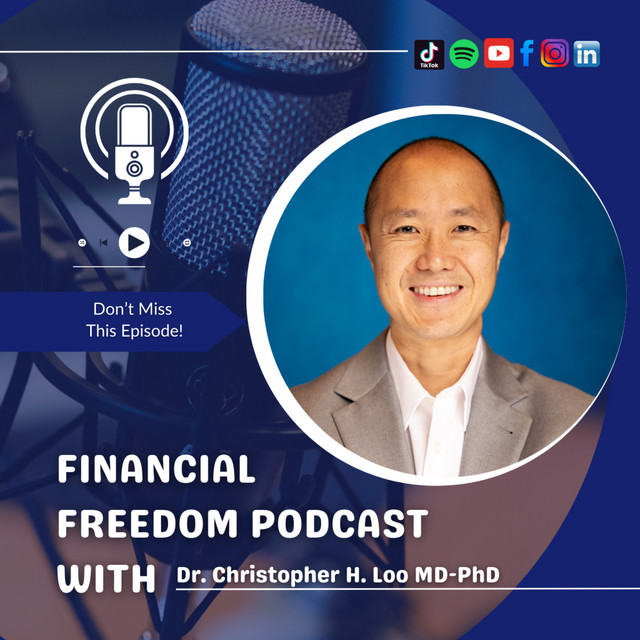
Pod Insights Financial Freedom Podcast with Dr. Christopher H. Loo, MD-PhD Business Exit Strategy for Small Business Owners with Stephanie Hayes | Build to Sell, Exit with Wealth About this episode If you're a founder or entrepreneur searching for a business exit strategy for small business owners, this podcast episode with Stephanie Hayes is the step-by-step clarity you've been looking for. Stephanie specializes in helping business owners design exits that maximize wealth and personal freedom—no matter the size or stage of your company. We talk about how to shift from operator to architect by focusing on how to create business assets that drive value. Stephanie walks you through business model design for solopreneurs, the importance of understanding small business valuation strategies, and how to build a sellable business that aligns with your lifestyle goals. This episode breaks down the critical mindset and tactical moves behind an asset-based business strategy, covering everything from exit planning for entrepreneurs to navigating the emotional readiness to exit a business. You’ll discover how to transition from business owner to investor, and explore smart, lesser-known alternatives to selling your business that preserve your legacy and long-term financial freedom. Whether you're just beginning to think about your exit, or already building toward it, this episode is packed with practical takeaways to future-proof your small business.#BusinessExitStrategy #SmallBusinessTips #StephanieHayes #EntrepreneurPodcast #BuildToSell #AssetBasedBusiness #ExitPlanning #SellYourBusiness #FromRevenueToWealth #ServiceBusinessExit #ExitStrategyForEntrepreneurs #SolopreneurStrategy #BusinessValuationDisclaimer: Not advice. Educational purposes only. Not an endorsement for or against. Results not vetted. Views of the guests do not represent those of the host or show. To check out the YouTube (video podcast), visit: https://www.youtube.com/@drchrisloomdphdClick here to join PodMatch (the "AirBNB" of Podcasting): https://www.joinpodmatch.com/drchrisloomdphdEnhance your productions through Descript (affiliate): https://get.descript.com/gaei637mutikCheck out TubeBuddy, the all-in-one platform that helps you grow and scale your YouTube channel (affiliate): https://www.tubebuddy.com/pricing?a=FinancialFreedomPodcastClick here to check out our Amazon product of the day (affiliate): https://amzn.to/3ZLseCCWe couldn’t do it without the support of our listeners. To help support the show:CashApp- https://cash.app/$drchrisloomdphdVenmo- https://account.venmo.com/u/Chris-Loo-4Spotify- https://podcasters.spotify.com/pod/show/christopher-loo/supportBuy Me a Coffee- https://www.buymeacoffee.com/chrisJxClick here to schedule a 1-on-1 private coaching call: https://www.drchrisloomdphd.com/book-onlineClick here to check out our bookstore, e-courses, and workshops: https://www.drchrisloomdphd.com/shopClick here to purchase my books on Amazon: https://amzn.to/2PaQn4pFor audiobooks, visit: https://www.audible.com/author/Christopher-H-Loo-MD-PhD/B07WFKBG1FFollow our YouTube channel: https://www.youtube.com/chL1357Follow us on Twitter: https://www.twitter.com/drchrisloomdphdFollow us on Instagram: https://www.instagram.com/thereal_drchrislooFollow us on Threads: https://www.threads.net/@thereal_drchrislooFollow us on TikTok: https://www.tiktok.com/@drchrisloomddphdFollow our Blog: https://www.drchrisloomdphd.com/blogFollow the podcast on Spotify: https://open.spotify.com/show/3NkM6US7cjsiAYTBjWGdx6?si=1da9d0a17be14d18Subscribe to our Substack newsletter: https://substack.com/@drchrisloomdphd1Subscribe to our Medium newsletter: https://medium.com/@drchrisloomdphdSubscribe to our LinkedIn newsletter: https://www.linkedin.com/build-relation/newsletter-follow?entityUrn=6992935013231071233Subscribe to our email list: https://financial-freedom-podcast-with-dr-loo.kit.com/Thank you to all of our sponsors and advertisers that help support the show! Financial Freedom for Physicians, Copyright 2025
Transcript 0:00 Speaker 00 This episode is brought to you by Indeed. You're ready to level up your business, but the pressure to find the right person to make that happen is intense. Indeed sponsored jobs can help carry the load. It boosts your job post to help it reach quality talent fast. Cut through the chaos with Indeed sponsored jobs. Get a $75 sponsored job credit at indeed.com/podcast. Terms and conditions apply. Hiring now? Then this is a job for Indeed sponsored jobs.
0:31 Speaker 01 Low energy, unfocused, foggy? You might be dehydrated. Whether it's hot yoga, over 100 degree weather, or too much sun. Gator Light, with a specialized blend of five electrolytes, was scientifically designed to help move fluids into the body faster for rapid rehydration. Shop now at retailers nationwide. Gator Light hydrates faster than water. Is it in you? Symptoms noted are signs of mild to moderate dehydration. Consult a healthcare professional if symptoms persist.
1:01 Speaker 02 Good afternoon, guys, and welcome to the podcast. From Vancouver, I've got Stephanie Hayes, and she's a business and exit strategist. And so for all the business owners, entrepreneurs out there that are, that have exit strategy in mind, Stephanie is the expert today, and she's the founder of Assets to Exit. And it's a pathway for established business owners to move from revenue to wealth and plan their exits. Stephanie, welcome.
1:30 Speaker 03 Thank you so much. It's a pleasure to be here.
1:33 Speaker 02 Yeah. Briefly, chronicle your journey and, and the work that you're doing right now.
1:38 Speaker 03 Briefly? Oh, my goodness. I have been an entrepreneur for most of my career. And I started out working in startups in the dot com space. I have a master's degree in the management of technology. So I come from a very like startup and entrepreneurial focused career and worked with a partner to start up our first business, gosh, was like six, a couple of months before my daughter was born, so 2007, I think. And then just went from there. So we built a consult, a boutique consulting company. And then after a couple of years, I realized like the business model wasn't quite right. And I got really interested in business models and understanding business models and how businesses are architected and all the different pieces kind of work together.
2:22 Speaker 03 Started up a software company shortly after that and which is still going. And, and then I just became really interested in working with small business owners and how they construct their businesses and how they build and grow their businesses. And I was an entrepreneur mentor at the university with putting the folks from the academic community into their own startups. And I was continuing to work with corporate entities as well on the consulting side, but more like bigger scale organizational design, operating models, that kind of thing.
2:55 Speaker 03 And then this just grew and it grew to a place where I was sitting in a room down in Texas about five or six years ago. And I was looking at all my stuff on a wall and I thought, man, I've done a lot of stuff, but I'm not really building anything. Like, I'm not really creating something that, and I think about owning real estate and how that appreciates and value and how you create assets inside of real estate. And I thought, why can't I do the same kind of thing inside my business? And then that got me thinking, like, these small businesses, there's a whole marketplace for buying and selling businesses. And is, can't I just treat this like I would treat property or I would treat an asset that I would invest in, I happen to have the skills to make this kind of investment much more valuable.
3:38 Speaker 03 So it really got me thinking, and it's not about my clients and the folks that I was working with, and I was like, why couldn't they do it too? They have little, small businesses, they are solo entrepreneurs, whatever. They don't think that this is a possibility for them. But when I started to really unpack it, I started learning about all these different marketplaces and all these different places that people sell and buy businesses. And I was like, man, there's a market for all of these businesses. So why are we focusing so heavily on just building revenue? Like, of course we need to, but why are we also not thinking about our long-term plan with these businesses and working towards an exit so that all this work that I'm doing can actually amount to something at the end? That's where the idea started and over the past few years, I've really been developing
4:20 Speaker 03 it out until these offers and working with my clients specifically on building assets inside their business, but also on that exit plan and what they're going to work towards. So I don't typically work with the people who are like, oh my gosh, I have to sell right now for some reason. We're being a little bit more thoughtful about it and we're thinking, okay, if I've got three to five years, if I've got 10 years before I even want to think about leaving my business, why don't we talk about what that's going to look like and work backwards from there so we can build a growth plan that is actually building those, the value of the business so that when I ultimately do want to sell, or I just sell the assets of my business, they are far more valuable and I'm going to get a whole lot more out of them. So it's like this beautiful combination of the exits plus all of the business growth
5:04 Speaker 03 and business model design that I've been doing for so long. And it's really evolved into something that people are, like, it's really resonating with people around the conversation because a lot of these folks don't even think it's an option for them.
5:16 Speaker 02 Hmm. Interesting. And so this, that is really interesting because there's a lot of paradigm shifts. And the first thing is talking about is, because you touched upon it, business as an asset and not a job. And you talk about transition from income dependency to building long-term value in the business. What key mindset shifts and how does the people listening to this start to view business as an owner as opposed to an operator?
5:44 Speaker 03 Yeah, it's a great question. So I think what the big thing is that it really changes the decisions that you make. It really changes how you look at your business. And so if you're constantly chasing income, then you're throwing all your money into marketing and you're throwing your money. It's like putting it through a sieve, right? And I don't argue that we stop focusing on building revenue inside the business. But when people start to shift to realizing that all the work they've been doing, like the assets they've been creating inside their business that they don't see as assets, or the relationships they've been creating, the partnerships, the audience they've been building, the brand, that's all worth something from the perspective of a buyer down the road. So why don't we start building those outward and start working on something? And what, and so what it ends up being for people is that they have a much more meaningful business
6:29 Speaker 03 and it gives them a renewed energy. So a lot of people will talk about selling their businesses, if they're even talking about selling their businesses, because they're tired or they don't see the future, or they don't see where it's going, or they feel like they're just like on a hamster wheel. And once they start realizing that they're actually working towards something much bigger. It's like this new, it's this new flow inside their business and now they've got something else to focus on and they've got an end goal. And I think that makes a huge difference. I think a lot of what we call burnout is actually not just I'm fatigued. It's more like, I don't see the meaning. I don't see what I'm working towards. I don't have a like a vision for my business anymore. And so I think both those things really make a difference in terms of how we,
7:12 Speaker 03 what we're viewing our business as, not just a vehicle through which we bill for our time. And then just what happens when we can't do that anymore? We just shut down. Like, no, you've got lots of really valuable stuff. I bought a business a couple of years ago, eat my own dog food, right? And it was, I bought the assets of a business. And a purchase is not always that I'm buying an entity or that you have to sell your whole business. Like you could create something really valuable. You could create an event inside your business that you run year after year. And it built, you build a brand and you create this system for running this event. And then you can sell that. That's like a product, right? So there's all sorts of ways you can build asset inside your business and just keep like selling those off. And you can sell those on the, on the market.
7:56 Speaker 03 There are also different ways that you can exit your business. So everybody thinks that it's just a sale, but you can do an operational exit where you actually just take yourself out of the business, but you retain ownership. You can do like a transfer to employees. You can do, there's seven different types of exits that you can make as well. I just want people to be open and understand that this conversation can actually happen and that there are options for them in their business.
8:19 Speaker 00 This episode is brought to you by Indeed. You're ready to level up your business, but the pressure to find the right person to make that happen is intense. Indeed sponsored jobs can help carry the load. It boosts your job post to help it reach quality talent fast. Cut through the chaos with Indeed sponsored jobs. Get a $75 sponsored job credit at indeed.com/podcast. Terms and conditions apply. Hiring now? Then this is a job for Indeed sponsored jobs.
8:49 Speaker 04 Low energy, unfocused, foggy, you might be dehydrated. Gatorade Zero powders have been scientifically designed to help improve hydration balance in the body with a clinically proven electrolyte blend and no artificial colors or flavors. Great tasting hydration, no matter where you're going. Shop now online or at retailers nationwide. Gatorade hydrates better than water. Is it in you? Symptoms noted are signs of mild to moderate dehydration. Consult a healthcare professional if symptoms persist.
9:19 Speaker 02 Yeah, and the other follow-up question I have for you is, how does somebody know whether or not their business is sellable and how much it's worth?
9:30 Speaker 03 Everything's sellable. You can sell anything, honestly. I've bought businesses for $500. Now, I don't recommend it. You're not going to want to go buy $500 businesses unless you really, you have a plan for them. But my point is that you, like, the, opening up the idea that you can sell an asset inside your business that you've created is, makes it a whole lot more feasible. Now, the other thing people get, like, a little bit question, questioning is, I have a personal brand and my business has been just about me, so I can't sell that? Yes, you can. The business that I bought was a personal brand. So you can, when you know what the business is and you look at the business, there's always value in it. And so we always do, as part of this process, we'll do a benchmark valuation where we go
10:12 Speaker 03 and we do an ST evaluation of, usually it's an ST evaluation of these businesses. And I say, look, right now, this is what you would sell it for. Doesn't matter what it is. Like, it could be not that much, or it could be something. Now, if we look at that valuation and we start pulling some levers and there's a whole, like, risk adjustment and another exercise that you do, inside of that risk adjustment, you start to see how making some changes and where those opportunities are could result in a much higher valuation for you. So just because right now, you're not sure what that valuation would be, doesn't mean that you can't work towards something that does. Give you higher valuation in the future. So it really depends on the business. It depends on
10:56 Speaker 03 the industry they're in, what they're, how it's configured, what kind of assets they have right now. But that whole conversation of opening it up, I have a little freebie called nine types of assets you can build inside your business. And I think a lot of people don't think about these things, but they're all correlated to what someone would pay for, a buyer would pay for inside the business. Can I guarantee that you're going to get a specific valuation right now? No, of course not. But it's a place to start and it's a place to also understand where you can invest your time and resources to make something much more valuable.
11:28 Speaker 02 A follow-up question, because you talked about exit strategy options and talk about this when, because I think there was a really good quote, I think Tony Robbins, he was like talking about business owners versus operators and he was talking about exit. And then there was one client, he was saying that he doesn't plan to sell the company. And his response was an exit doesn't necessarily mean selling the company. So how do you know when it's time to, how do you get ready to exit either a sale or these different exit strategy options that you described?
12:04 Speaker 03 That's what I'm trying to help people understand is that there are options for them. Like I said, there's kind of seven different types of exits you can make and you've got to find the one that works best. We actually have a client who's, who had originally chosen to do an operational exit. So she had put somebody in place to actually take over the business and eventually buy it from her. And now she's, I might just want to sell, right? So I think you actually can go through stages of exits too. And whatever feels the most comfortable for you right now, that's what, it's about alignment with your goals and your values and what you feel about your business. And a lot of people are, have a hard time stepping away from it. So maybe the first thing to do is to plan for an operational exit. And then as you get closer and closer to
12:45 Speaker 03 it, you want to reevaluate. So if there's a lot of value in doing this planning, like way in advance, right? You don't want to do that just when you feel like it's time to sell. You want to do it now because you can work to build all this value inside your business for the next five, 10 years or whatever it's going to be. And then Then you get to a place where you have the option. The type of exit that you make really depends on your business and who you are as an individual and what your goals are for an exit. Is it a big financial exit? Is a lifestyle exit? Is it a legacy exit where you want to build it so that your family can take over and have an income stream or whatever it might be, right? So that's a conversation that each person needs to have separately.
13:25 Speaker 02 Interesting. And talk about the financial and tax planning, understanding tax implications and post-exit financial goals.
13:33 Speaker 03 I am not a tax attorney. I'm not a tax expert and taxes are going to vary widely depending on where you're at. Like for us, it looks different than for someone down in the US versus someone in the, in Europe. So I don't want to give tax advice on the, I, all I can say is make sure you get some good advice because it would be very different depending on where you are living and what your requirements are there. But I, I do think like you want to optimize for, you want to up, you want to plan an exit type that's going to optimize your lifestyle post-exit. That's why part of the exit strategy is about doing a post-exit plan. So what do you want your life to look like?
14:16 Speaker 03 Some like my purchase for my business, the business that I purchased is vendor financing. So she's now getting an income for the next three, four years from me buying her business. So that was actually really important to her where, as opposed to having like a big buyout at one time. So again, this is so personal and you really have to think about what things look like from the future, but I, I definitely don't want to give tax advice on this show because I, I very much probably would be wrong about wherever you happen to be situated.
14:48 Speaker 02 And then talking about, like I said, that's just important to understand that there's financial and tax implications, how you exit. Talk about emotionally, emotional readiness and how to prepare founders with identity and purpose after an exit. A lot of them struggle to reinvent themselves. How do you get emotionally ready?
15:10 Speaker 03 Yeah, that's why we do a post-exit strategy before we even get close to our and in fact, your post-exit strategy can often inform the type of exit that you planned for. But this is real for people, right? Imagine you built this business for 10, 15 years and then all of a sudden, one day it's just not there anymore. And so there's all that conversation around purpose. So that's what you want to be spending a little bit of time on doing before you ever get, start your process of exiting, right? Before you put any sort of exit plan together or start doing deals because what you're willing to accept as an offer, as a sale price, can actually be really influenced by what you expect in your life after you exit. What's more worth it to you?
15:54 Speaker 03 But I do think that adjustment, like having something to move towards once you get out of your exit, that really excites you and is really aligned with, you know, your next goals and the value. That's why I really want to make sure that there are a lot of people who come to us and who are like, I just want to sell my business. And actually, they don't want to sell their business, but they're frustrated because they can't see the growth path. And so we want to do that assessment first to make sure, are you really? Do you really? Are you done? And this lady who I bought the business from, she was done. And she had been my client years before and we had designed this business together. And so I knew the business really well, but she was just done, right? There was no like, that was the right time for her to exit and to sell. And I think we did it in about a month.
16:38 Speaker 03 Like we did the deal in about a month. But for some people, like truly, they think they need to exit or they think they would need to sell because they just don't see a path forward. But actually, they're really attached to their business. And if it was in a different form or it was producing different results, or maybe what they needed to do was focus on a different audience or a different client group that really, I do a lot of work on business alignment, right? And getting back to making sure your business does what it needs to do for you. We want to make sure all of that isn't like that it's not about them just needing a different business model and a different growth strategy, that they're truly at the end of their life cycle with their business. And that's fine. Everybody has a certain, everybody thinks that they have to take their business all the way up to completion, but that's not true. You might be
17:23 Speaker 03 the right person to lead this business between now and here. And then by this point in time, you're like, no, I'm good because this business no longer serves what I need it to do. So now I'm going to hand it off to the person who's going to be able to do more with it. That's how the whole succession goes. Coming back to your question, I think people need to be really clear and really thoughtful about what their post-exit plan is going to look like. Maybe you just want to rest for a while. Like maybe for some people, yeah, don't even talk to me. But for some people, they, they actually would love to stay involved a little bit and drip themselves out eventually. So it really comes down to who's buying it and what they want out of it too, because that wouldn't work for me to have someone continue to be involved. And I would
18:04 Speaker 03 just want to be able to clean, take it over. But yeah, the mindset shifts can be really significant and that sense of purpose and value in your life, like you got to figure out a way that you're going to be able to retain that, or you're just going to be really clear on the idea that's going to change.
18:20 Speaker 02 The next question I have for you is, because there are some people, they just, they don't want to be a business owner. They just want to, they don't want a job, but they're happily, they're happy self-employed, charging for their services, their time. And is everything, what are your thoughts on just someone staying solopreneur or self-employed versus a business owner? And let's say they, they don't want to hand it off. Let's say they just want to do it till they die. And what are your thoughts on that?
18:48 Speaker 03 It's fine. Just be clear on the fact that you have options. And again, there are like even within the realm of people who are interested in this whole like asset-based business model, I've got inside my group program, I've got people who are like happy to stay where they are, but they like this idea of maybe investing in some assets for the long run, but they're still really happy to be doing their service-based business. And that's fine. But they know they've got an option, but their motivation is not, oh, I'm going to build this huge thing that's Going to give me a big exit. That's fine. I want you to be happy in your business and I want you to be, I want it to be fulfilling you and to be satisfying you. And if that's what it is, then we make some tweaks,
19:27 Speaker 03 maybe to certain things and then that's fine. For other people, they're like, let's maximize how much I'm going to get, how much I can build into this and how much I'm going to get for this thing that I, that's a different level. Like I do different work with those guys. And everybody's got a different tolerance or a different desire or a different persona when it comes to being a business owner. And there's no right or wrong, but I want them to have the option and to see that they can do a little bit of this or they can do a lot of this, right? But they're, they can do more than just chasing income for the rest of their lives.
20:04 Speaker 02 Yeah, because I was going to ask you like, because like, for example, we have a lot of real estate investors on the podcast and some of them, they, they don't want to build a business. All they want to do is take their hard earned money and invest it well and in cash flowing real estate. And they don't want to, they can sell that real estate, probably not as, not for as significant multiple as like a business. It suits their, their goals. Let's, shifting the conversation, talk about like buyer fit. And at some point where like private equity or VC or angels or whatever, or a business like they come knocking. How do you seek buyers or how do you align yourself is with buyers? Cause then you hear stories like these turned down,
20:48 Speaker 02 for example, Facebook or turning down or Netflix getting turned down. How do you get the right buyer fit?
20:57 Speaker 03 It's a values fit for sure. And to be, to be clear, I'm not working with the, like the tech startup that's going for VC money. There's lots of people to support those guys and it's a total, I've been through that. It's a totally different world. These are small business owners. These are like, I built this from my heart and I, they can sell their business for a couple of million dollars or maybe more than that, or they could sell it for. Two hundred thousand, there's lots of different ranges in there. But finding the right buyer comes back down to like goals and values. So when you're putting together your memorandum, your offer, you put together like a memorandum, letter and blah, blah, blah. I always recommend that we put a lot in there about the seller, right?
21:39 Speaker 03 About the seller and what is important to them and the values that they have around the sale. And we communicate the human side of the business too. Because I think finding that fit with the buyer is super important because not only is it going to facilitate a much more fair transaction, it's also going to mean that the transition and the, a lot of business owners really care about their business living on and continuing to have the impact that they had originally created. And they want to get a buyer who they would hate to see their business like turn into something totally else. So I think that's a huge part of the sale too. I think, I think a buyer would be more, or seller would be more motivated to sell to
22:19 Speaker 03 someone for less price, like a smaller price, if they felt like their business was going to be taken care of than for somebody who would offer more and like completely change the impact that their business was going to have. You can work with a broker, you can work with a, an advisor, you can work with a, we're partnered up with a couple of private equity firms, like there, there's lots of pathways for you, or you can sell on a marketplace, right? So depending on where you sell, you're going to have more or less influence on the type of buyer that you attract.
22:52 Speaker 02 Interesting. Let me see here. And so I know we're coming to the end of the conversation. And what I really loved about your bio is you talk about helping business owners move from revenue to wealth. And describe this idea, like, once they get to a certain aspect, like what's after the exit? What, what can people do? You mentioned they can become investors, they can do consulting, retirement. Talk about that.
23:22 Speaker 03 Buy another business.
23:25 Speaker 03 Again, it comes back to what your goals are for your lifestyle. Are you at retirement age and what do you want that money to do for you? Maybe you want to put it in a safer, a safer instrument where it's just going to earn you dividends for the rest of your life. Or maybe you're 20 something or 30 something and you've, you've managed to build a profitable little business and now you want to take that and you want to be a bit more risky. Start something else up. Actually, I don't recommend that. I recommend going and buying something else that exists already. Right? The whole invest a printer lifecycle is actually pretty interesting. Or maybe your big goal was to buy yourself a house or something like that. Right? So mostly I would say, don't squander that money or a way that you're going to earn,
24:08 Speaker 03 have a goal for it, have a plan for it and make it align with what you're trying to achieve within your life.
24:15 Speaker 02 Yeah. Yeah. Interesting. We have a question from the audience and one of them is say, let's say you do build the nine types of asset to build in your service based business, which I encourage the audience to go and check out Stephanie's. It's on a website, but let's say they, the question is that you build this asset that's sellable. How would you go? Is there a listing service? Do you go to a brokerage? Like in real estate, there's like a H A R or whatever, but what do you, how do you do? How do you list it for business?
24:43 Speaker 03 Most people will list through a broker because it is just, it's the same kind of contract as buying a business. It's just you're buying the assets. Most people will list through a broker, but there, there are marketplaces where you can list like flip out and there's a like handful of them where you can just list the assets of your business or you just word of mouth or you go there are communities where you can go and you can find, or you can find buyers as well.
25:09 Speaker 02 And, and I assume working with you, there's documents that you need to have and have ready when you're, want to list your, your business for sale. So I assume, so I encourage the audience to check that out. And, and again, thanks so much for coming on and this interesting topic. And how can people find you and contact you, reach out to you and learn more from you?
25:29 Speaker 03 Sure, probably best to find me at my website, which is stephaniehayes.biz. And I am pretty active on LinkedIn as well. I have a writing platform called Exit Intent on Substack as well. That would be a good place to find me. Just launched it, so just have a few posts in there right now, but definitely either one of those three places would be great.
25:49 Speaker 02 Excellent. And thanks again, and thanks so much for offering your wisdom and expertise.
25:54 Speaker 03 Yeah, thanks for having me.
25:58 Speaker 05 When you shop pickup at Kroger, you can expect the savings you love and fresh groceries selected just for you. Our associates are committed to getting every detail right, carefully handpicking your items, checking for quality and freshness, and packing your order with care. Because bringing you fresh, quality groceries is what we do best. And right now, enjoy $20 off your first online order of $75 or more. Restrictions apply. See site for details. Kroger, fresh for everyone.
26:28 Speaker 06 It's officially the holiday season, and Abercrombie's new collection has outfits for everything on your calendar. It's the busiest time of year, and between shopping and party invites, I don't have time to plan every look. But Abercrombie's always got me covered. Their sweaters are the perfect easy layer for low-key plans, and on a nice night out, I'm reaching for their classic trousers. Fill your closet with the pieces you'll need all season long. Have a very Abercrombie holiday. Shop in the app, online, and in stores.
Previous Neuroscience-Based Addiction Recovery with Dr. Rob Kelly | Rewire Your Brain to Heal Next CEO Leadership Coaching with Vince Covino | Scaling with Soul & Strategy Page updated November 7, 2026 · transcript and summary are machine-generated