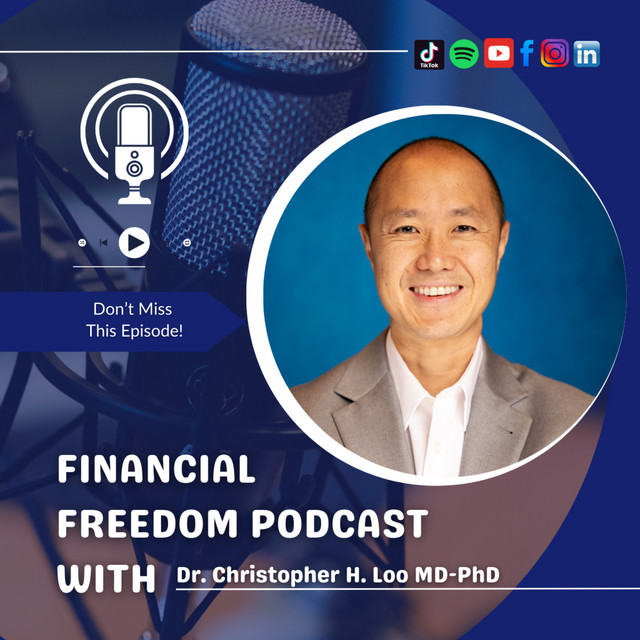
Pod Insights Financial Freedom Podcast with Dr. Christopher H. Loo, MD-PhD #1343 - Unlocking Effective Leadership in STEM: A Fusion of Engineering and Psychology About this episode What if you could transform your leadership skills by integrating engineering precision with psychological insights? In this insightful episode, Jeremy Doran unveils how combining his background in engineering and psychology enhances communication and leadership within the STEM fields. He explores the challenges and solutions for engineers transitioning into leadership roles, offering practical advice on mastering essential soft skills, navigating difficult conversations, and cultivating a more inclusive and effective workplace. Tune in to learn how to bridge the gap between technical expertise and interpersonal effectiveness. To check out the YouTube (video podcast), visit: https://youtu.be/-7Q3xZju7Hk Disclaimer: Not advice. Educational purposes only. Not an endorsement for or against. Results not vetted. Views of the guests do not represent those of the host or show. Click here to join PodMatch (the "AirBNB" of Podcasting): https://www.joinpodmatch.com/drchrisloomdphd Enhance your productions through Descript (affiliate): https://get.descript.com/gaei637mutik Check out TubeBuddy, the all-in-one platform that helps you grow and scale your YouTube channel (affiliate): https://www.tubebuddy.com/pricing?a=FinancialFreedomPodcast Click here to check out our Amazon product of the day (affiliate):https://amzn.to/4gkgVIk We couldn’t do it without the support of our listeners. To help support the show: CashApp- https://cash.app/$drchrisloomdphd Venmo- https://account.venmo.com/u/Chris-Loo-4 Spotify- https://podcasters.spotify.com/pod/show/christopher-loo/support Buy Me a Coffee- https://www.buymeacoffee.com/chrisJx Click here to schedule a 1-on-1 private coaching call: https://www.drchrisloomdphd.com/book-online Click here to check out our bookstore, e-courses, and workshops: https://www.drchrisloomdphd.com/shop Click here to purchase my books on Amazon: https://amzn.to/2PaQn4p For audiobooks, visit: https://www.audible.com/author/Christopher-H-Loo-MD-PhD/B07WFKBG1F Follow our YouTube channel: https://www.youtube.com/chL1357 Follow us on Twitter: https://www.twitter.com/drchrisloomdphd Follow us on Instagram: https://www.instagram.com/thereal_drchrisloo Follow us on Threads: https://www.threads.net/@thereal_drchrisloo Follow us on TikTok: https://www.tiktok.com/@drchrisloomddphd Follow our Blog: https://www.drchrisloomdphd.com/blog Follow the podcast on Spotify: https://open.spotify.com/show/3NkM6US7cjsiAYTBjWGdx6?si=1da9d0a17be14d18 Subscribe to our Substack newsletter: https://substack.com/@drchrisloomdphd1 Subscribe to our Medium newsletter: https://medium.com/@drchrisloomdphd Subscribe to our LinkedIn newsletter: https://www.linkedin.com/build-relation/newsletter-follow?entityUrn=6992935013231071233 Subscribe to our email list: https://financial-freedom-podcast-with-dr-loo.kit.com/ Thank you to all of our sponsors and advertisers that help support the show! Financial Freedom for Physicians, Copyright 2024
Transcript 0:01 Speaker 00 This episode is brought to you by Google Chrome. You think you know a browser, but Gemini and Chrome? That's new. It can help you with practically anything on the web, like restoring a vintage motorcycle from a 50-page restoration blog, or finally break down that long article you've had open for weeks. Gemini and Chrome is here for it. Ready to make anything online make sense? There's no place like Chrome. Check responses set up required. Compatibility and availability varies 18 plus.
0:27 Speaker 01 Born from the intensity of a night in the eternal city. Introducing Born in Roma Fragrances by Valentino.
0:36 Speaker 01 Feminine perfume Donna Born in Roma features juicy black currant, central jasmine, soft cashmerin and warm vanilla. Masculine leaning but unisex Womo has notes of fresh violet leaf, aromatic sage, green vetiver and mineral salt. Shop holiday gifts at Macy's.com.
0:56 Speaker 02 Hey guys, welcome to this week's podcast episode. I've got a fantastic guest for you today, Jeremy Doran. And he is better leadership through better communication. He's got a wealth of background and knowledge to share with the audience. He's also a podcast host, How to Talk to Weirdos, which is an interesting title. And today's topic is going to be all about conversations and how to be more effective. So Jeremy, welcome.
1:22 Speaker 03 Thank you. It's great to be here. I appreciate you having me.
1:25 Speaker 02 Yeah, I know we, I love getting just people from different perspectives into the business realm for the audience. So share your story and background and how you came to be doing what you're doing.
1:36 Speaker 03 It depends on how much time you have, but I went to school for engineering and psychology. And that got me some interviews just because people were wondering, who is this weird guy who does both of those? And I worked in corporate America for about 10 years. I did a lot of helping people develop strategies. I was lucky enough to get to live in Italy and travel around Europe. That was wonderful. And then I've been doing leadership training and coaching for about the last 15 years. A lot of the value that I have in leadership training is that I've got a very diverse background. So I've got the engineering process mind and the psychology softer type skills. I've been overseas. I've owned my own small business, worked in a large business.
2:21 Speaker 03 So I've got a little bit of perspective on most situations. So that's me in a nutshell.
2:28 Speaker 02 Yeah, it's quite a fascinating story and I found like the some of the best communicators, they've had a variety of experience either through travel or through work and learn how to different cultures, different points of view, how to talk to people, delving into it. And one thing is bridging worlds and you've got interesting thing, you've got a background in mechanical engineering, psychology, and how do you leverage these two opposite fields to enhance coaching leadership training in the STEM field?
2:58 Speaker 03 Yeah, a lot of the leadership training I've done happens to be for engineers who've gotten promoted. And most engineers, not all, have a challenge communicating with the rest of the world. And then they become engineers and they need to develop all these soft skills and they need to start dealing with people in different divisions and they may need to start dealing with investors. And so there's ways that they can understand how different people communicate. And it's not just an issue for engineers. Everybody has trouble communicating because we all assume other people are like us and they rarely are.
3:37 Speaker 02 Yeah, and which brings me to my next question is, because I did a lot of consulting work too. And it was just, how do you reach the client? Even though you may have all the technical knowledge, but if you can't communicate that and the client can't understand it, you're just no better off than someone who doesn't know it, know the material. My next question is mastering communication and you focus on improving communication with people with different backgrounds, people coming from different experiences and share a case where effective communication significantly impacted your relationship?
4:14 Speaker 03 I'll tell you just in my personal relationship, to give you a little more background on me, people never really made sense to me growing up. So that's why I spend so much time thinking and talking about communication because I've had to pay attention to it. People never really made sense and it got me to realize just how many assumptions we all make. When people talk and they write an email, they've got a tone of voice in their head. And when someone's reading that email, they have a tone of voice in their head, but the tones of voice might not match at all. So what might seem like it's a well-intended email might be received as something really harsh.
4:56 Speaker 03 So just understanding that you have to be really careful about your assumptions. I've gotten some work emails where I looked at them. My initial reaction was, oh no, here we go. This is trouble. And then I just stop and think about it. And I think about how else it could be interpreted. And then I just go back and ask the question. What I've found is when you're not a hundred percent sure, asking the question resolves so many issues that don't need to be issues.
5:28 Speaker 02 Uh huh. Yeah, it's interesting how much, because I learned this during my training is how much can be misconstrued over emails and text and different assumptions. And because you can't see or feel or hear the emotions, it's just the words and what you well-intended. And somebody can take it the wrong way and you never, that was never your intentions.
5:48 Speaker 03 Yeah. And then once it starts, it's never going to get, if it started over email, it's never going to get resolved over email because it's just going to keep going sideways. And God forbid text. Once you misunderstand, misinterpret something over text where there's not even grammar in full sentences, boy, you don't resolve it. When that starts happening and you feel it, you really need to pick up the phone or walk over to the person.
6:16 Speaker 02 Yeah. The other thing that I've really, I've read is I came across this book called, it's called The Difficult Conversations. And, and it's very useful in negotiations. And I think it's people in like the FBI and they use it in hostage situation. High emotion, high stakes, very emotional. So talk about difficult conversations, entering into those, whether some people that I know, they just stay out of it. They just like, just stay out of it. Talk about that navigating difficult conversations.
6:48 Speaker 03 Yeah, the just avoiding them doesn't work. I've been married, am no longer married, and in that marriage, we would ignore things. And we knew that we could avoid them and we would just avoid them. And they never got resolved. And in my current relationship, we, as unpleasant as it sometimes is, will just address what is going on and then work through it. But what the biggest piece of advice I would give people is on those difficult conversations, don't have them spur the moment. If someone does something that's going to require a pretty in-depth discussion,
7:29 Speaker 03 take your time and come back to it when you're not emotionally triggered.
7:35 Speaker 02 Yeah, yeah, that's, I love that. Taking the pause and just take for a walk, get some fresh air when you're in a good state of mind. Then you can talk in a very civilized and otherwise it just goes into screaming, shouting match.
7:49 Speaker 03 Yeah. And if you can separate yourself from it and then come back, you can approach it from a, here's what our issue is and what can we do to resolve it? Whereas if you just respond right away with some sort of pointing finger and you always do this, then that's never going to go well.
8:06 Speaker 02 Yeah, yeah, I love that. Talk about the future of leadership and kind of especially in today's world, it's very chaotic and dynamic and changing. And a lot of people are just starting their companies and they don't want to work for traditional. What are critical skills, future leaders in the STEM fields need to develop to succeed?
8:26 Speaker 03 I think it always comes back to active listening and asking questions and not making assumptions. So many people are now of different generations. And people talk about Gen X or Gen Y. And you see them actually rolling their eyes like, oh, those Gen X people don't know blah, blah, blah. But every generation has their own issues. They're just different. And so if you approach it as kids these days never want to do such and such, then.
9:01 Speaker 03 That communication is not going to go well. If you can just stop and check in with people and actively listen without making assumptions, it goes so far to helping everyone be more engaged and more productive.
9:15 Speaker 02 Yeah, there's a generational gap. Boomers are still in the workforce and you've got Gen X and you've got millennials and Gen Z. They are really shaping the way we work and communicate. They're shaping the culture, which is really interesting. How do you incorporate skills into your coaching and clients? And also you talk a lot about these during your speaking engagements.
9:39 Speaker 03 I'm not sure I understand the question, so I'm going to interpret it however I want. How's that?
9:44 Speaker 02 Yeah, definitely.
9:45 Speaker 03 Going extending on the topic of asking questions is just being open minded. The thing that got you where you are is not necessarily the thing that will get you to the next place. And I see so many people be successful in their jobs and they get promoted to management. And then some younger, less experienced person has this idea and they're just close to it. And the immediate answer is no, without really stopping to think of if it's a better thing. You see it with kids. Parents with kids, if they're not careful, when a kid asks for something, the answer is no, stop doing that. No. And it's just a habit. But if you can stop and think when you're in a corporation and some new person
10:30 Speaker 03 comes up with what seems like a wacky idea, that wacky idea may be the best thing ever. So remembering to stay open to ideas is pretty crucial, whether it's from a younger person or someone from a different department who just has a different point of view.
10:46 Speaker 02 Yeah. Yeah, I love that. Coming to the end, and there's two more questions I have is I want to talk to you about your podcast. But one thing is talking about is fear and part of everybody's journey is this fear and you help people overcome that. So kind of share your personal theory you've conquered in your career and what strategies you used to overcome and how you help clients.
11:07 Speaker 03 So my favorite story is I'm afraid of heights. And when my daughter was five, we were at a Club Med that had a trapeze school. And we'd walk by the trapeze and they would say for days, hey, do you want to try the trapeze? My answer was, no way, I'm not doing that. Then they got smart and they asked her, they said, hey, little girl, would you like to do the trapeze? And she said, yes. So right as she was about to go, she started crying. And I said, what's wrong? She said, you go first. I'm like, oh, man. And what I realized in that moment is when people have fears, there are dangers of doing a thing and not doing a thing.
11:49 Speaker 03 To me, the fear was the danger of climbing this 25 foot ladder and swinging through space and falling and breaking myself in half. But then I realized the other fear is letting my daughter down, not teaching her how to confront her fears and overcome them. And I realized that I was more afraid of that than I was of climbing that ladder. So when people are making business decisions, they may be afraid of making a leap. And I'll always get them to think about what are the dangers if you don't leap? And then balance them.
12:26 Speaker 03 And thinking about the danger of not doing something will often help you realize it's worth actually trying this risky thing.
12:35 Speaker 02 Yeah, yeah, I love that. How can, so you've talked about your podcast, which is interesting, is talking about how to talk to weirdos. I'm just curious, the genesis of that name and how can, you know, what inspired you to start this podcast? How has it evolved? And how can people find you and check out the work that you do?
12:55 Speaker 03 Yeah, I'm actually thinking of changing the name just because the term weirdo turns some people off. But it's really so many people are in some way neurodivergent. And when you're talking to someone who's on a different side of the bell curve than you, they seem like a weirdo because the way they think and process is so different. So that was how that came about. An easy way to find me is my webpage, which is jeremydorrinspeaks.com. And you can find me on LinkedIn or a few other places. But if you look up Jeremy Doran Speaks, that's the easiest way to find me. So the webpage is, or the podcast is currently How to Talk to Weirdos. And we're in discussions about what the name ought to be next.
13:41 Speaker 02 Yeah, I love that. Yeah, I'm also renaming my podcast was Financial Freedom for Physicians. And then it became Financial Freedom Podcast because I had guests, business guests and non-physicians and a variety of audiences in expanding. All the, all of Jeremy's resources will be in the links in show notes. And be sure to give him a follow so we'll check out his podcast. And with that, thanks so much for a very inspiring conversation.
14:09 Speaker 03 Thank you. It's been wonderful being here.
14:12 Speaker 04 Your sausage McMuffin with egg didn't change, your receipt did. The sausage McMuffin with egg extra value meal includes a hash brown and a small coffee for just $5, only at McDonald's for a limited time. Price and participation may vary. Promotion pricing may be lower than meal pricing.
14:27 Speaker 05 Sam's Club is the club for every holiday club. Guess who's joining the club this season? Walmart Plus. Yep, Sam's Club Plus membership now comes with Walmart Plus at no extra cost. Two memberships, one great price. Just 120 bucks a year can save you time and over $700. Want to get in on the membership duo of the century? Visit sam'sclub.com. Come join us. Sam's Club.
Previous #1342 - Transforming Ideas into Impact: A Conversation with Nick Jain of IdeaScale Next #1345 - Visionary Leadership and Brand Transformation with Brian Smeltzer Page updated November 7, 2026 · transcript and summary are machine-generated