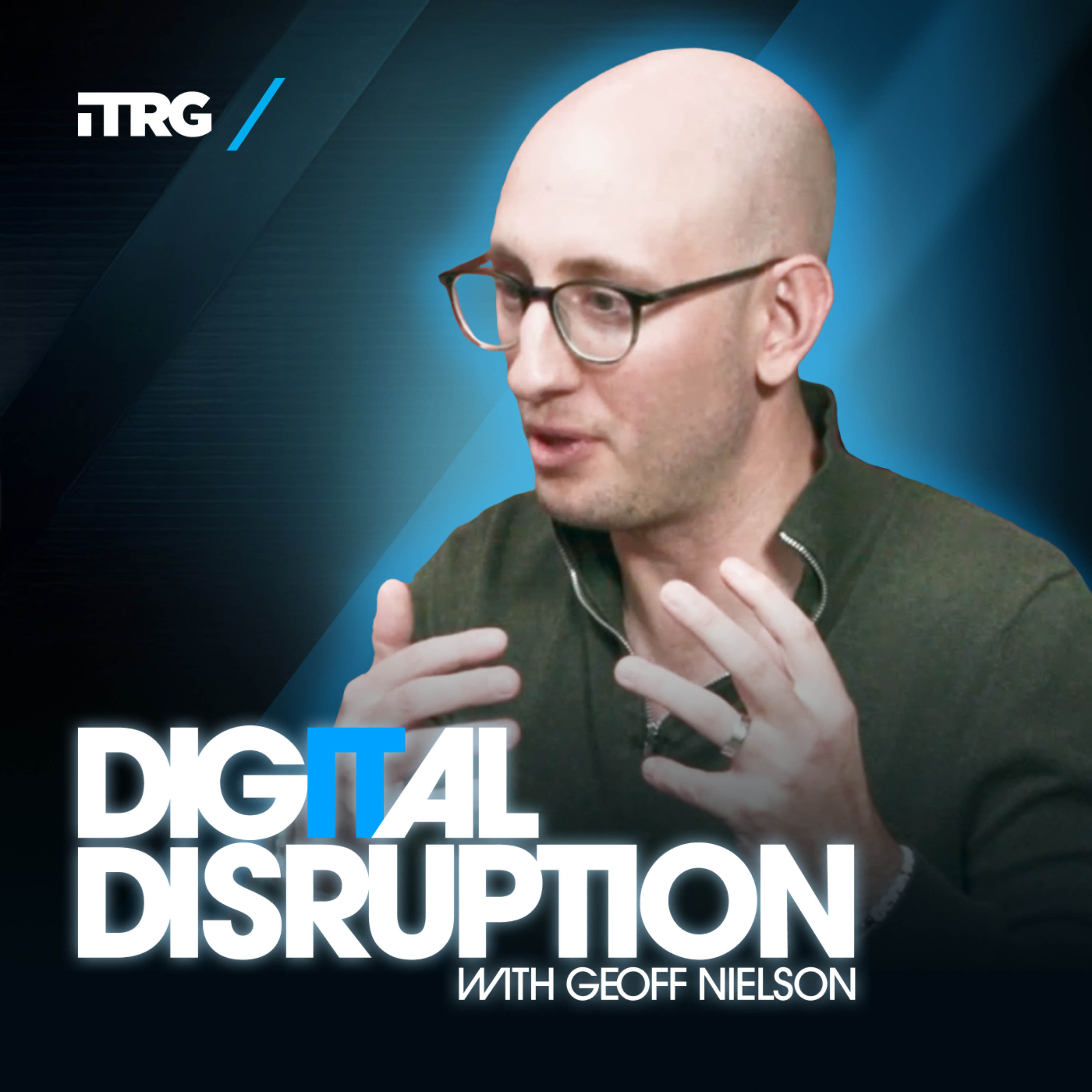
AI Has Made Everything Worse | Hany Farid on the Internet's Truth Problem
Digital Disruption with Geoff Nielson
- 1h 1m
- Transcript
Summary
Written by a model from the transcript; not yet reviewed.
This episode of Digital Disruption features host Jeff Nielsen and deep fake expert Hani Farid discussing the profound trust crisis fueled by generative artificial intelligence and the attention economy. The guest explains how social media and large language models have democratized content creation and enabled unprecedented levels of disinformation, state-sponsored cyber threats, and corporate scams. They analyze why individuals cannot reliably detect fake media and argue that the tech industry must face product liability and regulatory reform to ensure user safety. Despite the alarming state of digital deception, the conversation concludes on a hopeful note regarding AI's potential to drive scientific breakthroughs once proper safety guardrails are established.
- Individuals cannot rely on personal visual inspection to detect deep fakes in a casual setting. 15:46
- Removing social media applications from mobile devices helps reduce compulsive doom scrolling. 20:08
- Organizations must implement active monitoring tools to secure remote video interviews against identity substitution. 44:50
Chapters
- 0:02Introduction and Host Overview
The host introduces the episode, the guest Hany Farid, and outlines the focus on deep fakes and trust in the digital world.
- 1:26Deep Fakes and the Trust‑No‑One Era
Farid explains how generative AI has amplified the prevalence of fake media, especially on social platforms, and how this erodes public trust.
- 2:30Scale of Fake Content on Social Media
Farid estimates that over half of highly engaged content on platforms is fabricated or manipulated, highlighting the difficulty for users to discern truth.
- 7:25Consequences for Democracy and Society
The conversation turns to how widespread misinformation undermines shared facts, fuels polarization, and threatens democratic institutions.
- 17:22Regulatory and Liability Responses
Farid discusses the need for regulatory frameworks and product liability to compel tech companies to build safer platforms and protect consumers.
- 45:31Industry‑Level Mitigation Strategies
The hosts explore practical steps for enterprises, including awareness training, policy development, and technical defenses against deep‑fake attacks.
- 46:14Policy and Tech for Secure Remote Calls
The speaker outlines the need for policies and technology to verify participants in virtual meetings to prevent impersonation.
- 48:35Real‑World Threats from North Korea
Illustrates how North Korean operatives infiltrated Fortune 500 companies, highlighting the urgency of remote worker verification.
- 51:13Ownership and Communication Gaps in C‑Suite
Explores who should own the remote‑work security problem and the lack of clear ownership among executives.
- 54:20Physical vs Digital Security Paradox
Contrasts strict physical security protocols with lax digital ones, stressing the need for consistent trust models.
- 58:40Building Trust in Digital Interactions
Discusses strategies—tech, policy, awareness—to establish trust in video calls and prevent deep‑fake attacks.
Highlights
- 2:58
Half of Popular Content Is Fakedata
The guest estimates that upwards of half of high-engagement social media content is entirely fake, including AI influencers and state-sponsored disinformation.
- 12:19
The True Cost of Attention Business Modelsinsight
Platforms optimize strictly for user engagement rather than truth, creating an attention economy that monetizes human outrage and division.
- 15:46
Humans Fail at Deep Fake Detectioninsight
Lab studies show that even in controlled environments, humans perform only slightly better than chance at identifying real versus AI-generated media.
- 18:04
The Case for Tech Product Liabilitystrategy
The guest argues that forcing tech companies to internalize product liability, much like the automotive or food industries, is the most effective path to safer software.
- 35:01
Analyzing Physics in Video Forensicsstrategy
Professional forensic analysts look for consistent lighting sources and physical plausibility rather than relying on unreliable automated detection websites.
- 40:37
Enterprise Onboarding Vulnerabilitiesdata
Organizations face massive infiltration threats, with massive corporations uncovering thousands of potential imposters and bad actors using face swaps during remote hiring.
- 58:12
AI Solving Century-Old Math Problemsinsight
Despite the severe risks of disinformation, the guest highlights the exciting reality that AI is successfully solving open mathematical and software engineering problems.
Quotes
“So I don't think there's a single Fortune 5 company that probably hasn't gotten hit.”
Unnamed speaker · 0:31 “I would say AI has made everything worse because it's fully democratized access to very sophisticated technology that used to be in the hands of the few.”
Unnamed speaker · 3:47 “You cannot, as an individual, become a digital forensics expert.”
Unnamed speaker · 15:46 “If you are spending your time, the majority of your time on Reddit, on TikTok, on social media, you are living in an alternate reality that is created for you.”
Unnamed speaker · 6:25 “So I think there are technological solutions here that will help.”
Unnamed speaker · 48:06 “I think we are going to have to figure out how to have trusted communication, number one.”
Unnamed speaker · 54:53
Sponsored segments
- InfoTech 11:03–11:33
- Infotech 1:00:39–1:01:14
About this episode
Hany Farid, one of the world’s leading experts on deepfakes and digital forensics, joins us to explain why AI-generated content is pushing us toward a world where we can no longer trust what we see, hear, or even who we’re talking to online. From AI-generated misinformation and social media manipulation to voice cloning, deepfake video calls, and North Korean IT workers infiltrating major companies, Hany breaks down how rapidly the threat landscape is evolving. He explains why humans are not good at detecting deepfakes, how digital forensics experts actually identify manipulated media, and why organizations need to rethink cybersecurity, remote hiring, and digital identity. This episode also dives into Big Tech’s role in the crisis, whether regulation and liability can make technology safer, the growing influence of large language models on how we access information, and what it will take to rebuild trust online. Despite the risks, Hany remains optimistic about AI’s potential. The challenge, he argues, is learning from the mistakes of the social media era and finding a way to harness AI’s power without sacrificing safety, security, and trust. Subscribe and like this video for more conversations with the world's leading thinkers on AI, technology, innovation, and digital transformation. In this video: 00:00 North Korean IT workers are already inside companies 00:41 Welcome to a “trust no one” digital world 01:49 How much of the internet is already fake? 04:59 Are we heading toward the dead internet? 07:06 What happens when we can’t agree on facts? 08:20 The existential threat of a post-truth world 09:49 Could AI control the information we see? 11:33 Who is manipulating us online? 13:20 How AI is supercharging scams and fraud 15:41 Why you can’t reliably detect a Deepfake 17:28 Should Big Tech be held liable? 19:37 Hany’s Advice: Get social media off your phone 21:26 Can liability force Big Tech to change? 24:25 Should kids be banned from social media? 25:37 The real problem with social media’s business model 28:08 Will Big Tech control the future of AI? 31:20 “China will beat us” and the case against AI regulation 33:31 How experts actually detect deepfakes 36:16 How real-time face swap deepfakes work 39:39 The Deepfake threat facing businesses 40:25 AI fraud is already costing companies millions 41:47 How fake workers get hired 42:49 Why voice biometrics are no longer secure #ai #futureofwork #technologypodcast #cybersecurity #deepfakes #digitaltrust #bigtech #aivoice #digitaltransformation #futureofjobs #futureofai #tedtalk Connect with Hany: LinkedIn: https://www.linkedin.com/in/hany-farid-40a97935/ Our links: Visit our website: https://www.infotech.com/?utm_source=youtube&utm_medium=social&utm_campaign=podcast Follow us on YouTube: https://www.youtube.com/@InfoTechRG
Transcript
11,949 words · 2 speakers
Topics
- TikTok
- Get Real
- Fortune 500
- North Korea
- Microsoft
- YouTube
Page updated · transcript and summary are machine-generated