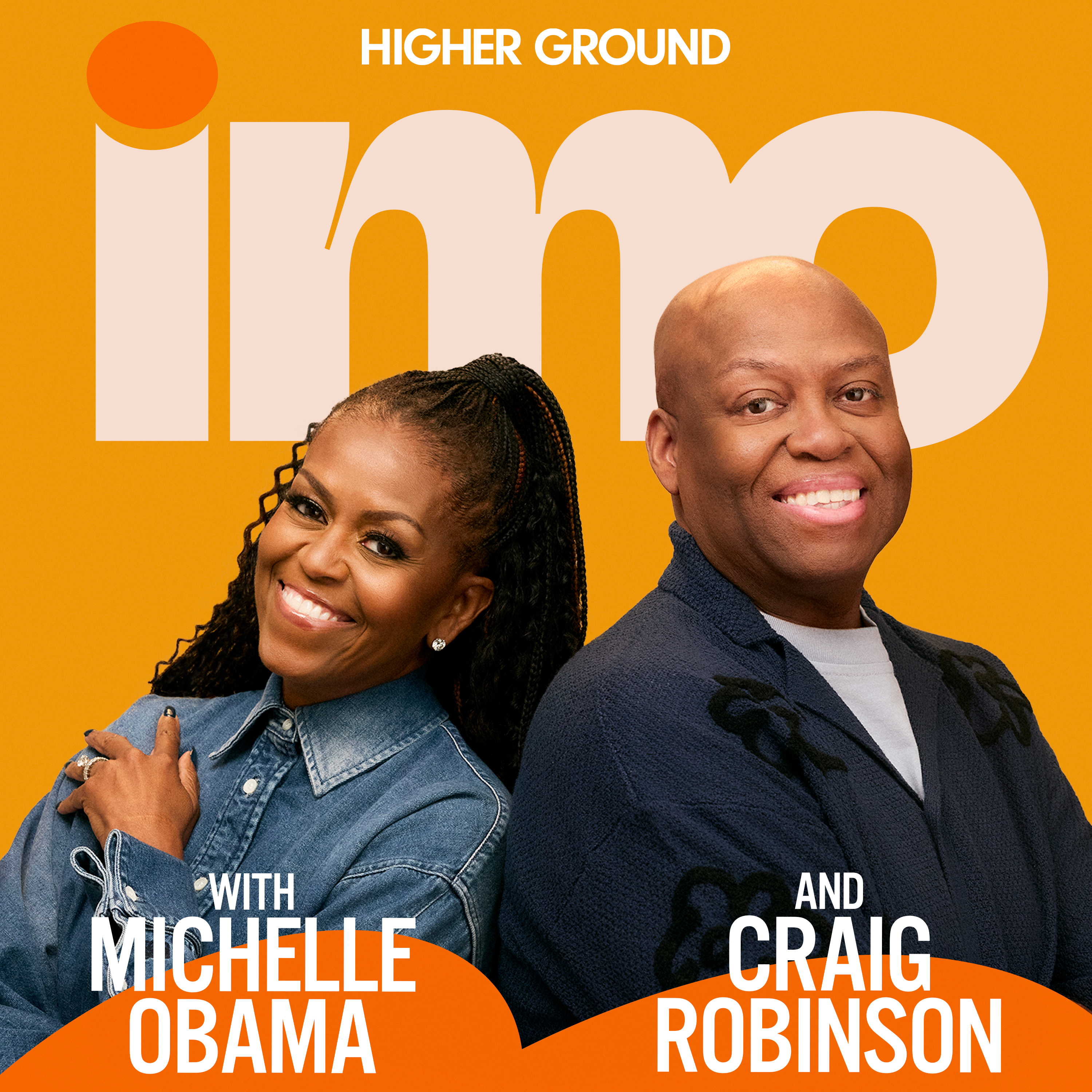
Pod Insights IMO with Michelle Obama and Craig Robinson Pursue What You Love Before You Pursue Love with Jay Shetty About this episode World-renowned life coach, podcaster, and former Hindu monk Jay Shetty joins Michelle and Craig to dive into a listener's question about professional ambition and dating. The trio discuss money in relationships, finding balance between work and romance, and Michelle shares her advice for choosing a life partner. Is the pursuit of perfection—in work or dating—worth it?
Have a question you want answered? Write to us at imopod.com http://imopod.com.
You can watch Jay in person as he takes his podcast On Purpose on the road. Tour tickets available HERE https://www.jayshetty.me/tour.
See Privacy Policy at https://art19.com/privacy and California Privacy Notice at https://art19.com/privacy#do-not-sell-my-info.
Transcript Speaker names marked ? are inferred from speaking time and the show’s known hosts — they are not voice-verified.
0:00 Speaker 00 If you can't see something in your mind, you can't create it in your life. And so instead of looking at life through these two extremes, maybe there's a middle path. And the middle path could be that, wait a minute, maybe I don't need to quit my job. Maybe I can stay at my job and then build my passion and build my skills and learn and expand my network. And maybe this thing that feels like a big risk and feels like a big jump and a big leap, maybe I could make it feel like a series of steps that make it feel seamless and smooth. Maybe it doesn't need to be, if I don't go all in, then I'm not gonna make it. And I think sometimes also,
0:44 Speaker 00 our mindset today is if I don't go all in, then it doesn't matter.
0:54 Michelle Obama? This episode is brought to you by Indeed and Pine Sol.
0:59 Craig Robinson? Well, it is great to see you.
1:01 Michelle Obama? Hi, you.
1:02 Craig Robinson? I missed not recording with you and spending time with you.
1:07 Michelle Obama? Welcome to one of my favorite places to be.
1:09 Craig Robinson? I know.
1:10 Michelle Obama? Martha's Vineyard.
1:11 Craig Robinson? We have to figure out how to get here more often.
1:13 Michelle Obama? You know, I keep telling you all that. Like, this is a great place for the boys at this age. I know you all are busy with basketball and all the things. But last time they were here, they had a ball.
1:24 Craig Robinson? Oh, they, they, listen, it's not their fault. It's, it's, it's our fault. Between basketball and music and school, it just, it makes it tough. But, I mean, I really appreciate you having us here. How about this?
1:37 Michelle Obama? Yeah, yeah, we're lucky. I mean, I can actually walk, you know? I can get on a bike and ride for hours. I can walk on my own. You know, you can see the ocean. The towns are just very quaint. So I'm, I'm glad you're here.
1:53 Craig Robinson? I am glad to be here. And our listeners should know that you have, your oldest nephew got married this summer.
2:00 Michelle Obama? I'm just so happy for Avery.
2:02 Craig Robinson? It was, it was really neat.
2:03 Michelle Obama? Avery and Emily.
2:04 Craig Robinson? Another Mrs. Robinson.
2:05 Michelle Obama? Another Mrs. Robinson. Yeah, that's, that's strange.
2:08 Craig Robinson? That is.
2:09 Michelle Obama? How does it feel having your first child married?
2:12 Craig Robinson? I will tell you that Kelly and I were so focused on the wedding because we didn't hear anything about what was going on. So we thought it was gonna be a disaster, of course.
2:23 Michelle Obama? No faith, no faith.
2:24 Craig Robinson? No faith in your own kids who you've raised to be well. And when we showed up and everything was so well done and so tastefully done and so many of the little things like the name tags and the menus were all done by hand by Emily and Avery. It was such a wonderful and beautiful ceremony. I left there feeling proud.
2:47 Michelle Obama? Yeah, yeah. Well, you did a good job, dude.
2:50 Craig Robinson? Thanks. Thank you.
2:52 Michelle Obama? Way to go. Way to go.
2:54 Craig Robinson? Well, in speaking of jobs, we have a great question today.
3:01 Michelle Obama? We do. We do. Good segue. Way to go.
3:05 Craig Robinson? Thanks. I'm working hard to be like our first guest, Jay Shetty. I'm trying to be Jay.
3:11 Michelle Obama? Okay, okay.
3:13 Craig Robinson? But the question deals with leaving your current situation to try and find a job in something that you're passionate about. And you know, I've dealt with that.
3:26 Michelle Obama? Yeah, passion versus family versus...
3:29 Craig Robinson? Versus financial.
3:30 Michelle Obama? Financial, yeah, yeah. Something that we've all dealt with, but it's a good question to get us started.
3:37 Craig Robinson? Yeah, yeah. And we've got a great guest for this. Jay Shetty is a number one New York Times bestselling author, award-winning storyteller, and I happen to be telling my sister all about someone she knows. This is really for me because I'm meeting him for the first time. He's a podcast host, which I've already said I'm trying to be like him.
3:59 Michelle Obama? You can learn a little something here.
4:01 Craig Robinson? And a former monk.
4:03 Michelle Obama? Yeah.
4:04 Craig Robinson? How about that?
4:05 Michelle Obama? Mm hmm.
4:05 Craig Robinson? Dedicated to helping people train their mind for peace and purpose every day. And he hosts the popular podcast On Purpose, which you were on, by the way. I'm very excited to have him with us today. And Jay, why don't you come on out? It's good to see you, man. Oh, thanks for being here.
4:27 Speaker 00 Great to be here. Thank you so much.
4:28 Michelle Obama? It's great to see you. Thank you. Thanks so much.
4:31 Speaker 00 Craig, it's wonderful to meet you.
4:32 Craig Robinson? It is so nice to meet you, man. I listened to the show you did with my sister and I was like, I couldn't stop listening.
4:38 Speaker 00 Oh, that's very kind of us because of her. Everything she said is beautiful.
4:42 Craig Robinson? We already know. We already know.
4:44 Michelle Obama? Jay, I am, I'm just grateful that you're here. After our conversation, I don't know if you remembered, but I was like, I could talk to you forever.
4:53 Craig Robinson? Well, I, let me tell you this. I've been thinking about what I wanted to talk to you about. And I know we have to get to this question, the question that we have from our listener. But I wanted to know, Jay, I'm sure you've been on a number of shows. I can imagine that people wanted to ask you about being a monk the most.
5:14 Michelle Obama? Is that true?
5:16 Speaker 00 That's true. That's 100% right.
5:18 Craig Robinson? I did my research. What I want to ask you about is what have you been asked about in your experience the least? And how has that informed who you are as a person now?
5:33 Speaker 00 Wow, that's a great question. That's a great question.
5:36 Craig Robinson? Like I said, I'm trying to be you. Trying to be you.
5:40 Speaker 00 Well, you're doing better than me right now. You've stopped me already. The thing I'm asked about least probably is my family.
5:52 Michelle Obama? Hmm.
5:53 Speaker 00 And the fact that you're both doing this together just shows how important family is and how, how much it shapes us and how much it molds us. And I would say my family experiences are a huge part of why I do what I do today. And I've never spoken about this before, but I have a really beautiful relationship with both my mother and father. But I mediated their relationship ever since I was a young boy.
6:16 Michelle Obama? Hmm.
6:17 Speaker 00 And so I found myself at 10 years old. Sitting with them individually, listening to them, trying to understand them, giving them a shoulder to rest on, to feel seen, heard, and understood.
6:30 Craig Robinson? Wow.
6:31 Speaker 00 And I feel that all the work I try and do today to try and help and serve the people online, or wherever it be, through my books and my podcast, comes from, I feel I've just played that role my whole life. I remember doing it for my parents and recognizing that they were both beautiful, wonderful people, but
6:47 Craig Robinson? Wow.
6:47 Speaker 00 had their differences and to be able to recognize that at an early age, I think, has allowed me to not have this divided thinking of it's one or the other.
6:57 Michelle Obama? I'm just picturing 10-year-old Jay sitting down between mom and dad. Okay, now, tell me what you're thinking here and what did you mean? But kids do find themselves with the level of sort of precocious empathy. You know, oftentimes, kids do become the mediators in the family and that you were 10 years old doing that.
7:20 Craig Robinson? And I would, I would venture to say that there are more people who are in your position who turned out a mess because they were refereeing their parents. I mean, I, I think you gotta, you gotta feel pretty good about where you are, given the position you were in.
7:39 Speaker 00 I would like to think that I took good notes and that helped a lot of what to do, what not to do.
7:46 Michelle Obama? What not to do, yeah.
7:46 Speaker 00 And I think I'll be happy and satisfied if I figure out how we can help more people get to that. I think that's the hot spot.
7:54 Michelle Obama? And, yeah, that's why I wanted you here. The reason we're doing these conversations is to, to talk. You know, to talk through things with people, to talk through things in person, you know, with us here, hopefully shedding some light, giving people tools and, you know, some kind of direction, because everyone is looking just for a little bit of direction.
8:18 Speaker 00 Yes.
8:19 Michelle Obama? It's like, how did you get here? How did you, how did you not mess that up? And as you know, we don't have the answers.
8:24 Speaker 00 Nope.
8:25 Michelle Obama? But oftentimes, it's just the conversation that people find helpful.
8:30 Craig Robinson? Actually leads to our question from our listener, Adrian.
8:34 Speaker 03 Hi, Michelle and Craig. My name is Adrian and I'm a 38-year-old man who works in tech. I've been considering recently whether to take a major career risk, which is starting a new company, or to stay in a high-paying job that will afford me the opportunity to have a family. These dreams seemingly are at odds. Given my experience in an emerging industry, I feel like I have a real chance at starting something big and making a difference. In the long run, I think it will pay off, but it will require years of hard work, long hours, and financial instability. Not the best circumstances for having a family. The alternative is putting my career dreams on the back burner
9:17 Speaker 03 and prioritizing financial security so that I can support a family in the future at some unknown time. I'm currently single, but I'm also serious about settling down when I do meet the right person. At my age and knowing I do want a family one day, how should I approach this decision? Should I prioritize my career dreams or financial stability and starting a family earlier in life? Thanks, Adrian.
9:45 Michelle Obama? Sounds like a familiar dilemma. You know, and the first thing I think about is how I wasn't a risk taker. I think because of the stability that we had in our family, I thought that that was the way you led a life, that there, that things were linear, you know? If you did the right things, if you checked certain boxes, that you were winning in life. And as a result, I think my view of what life could be was way too narrow. But I was on, I was off on that path, not really thinking about anything but checking the boxes. So I did what I was supposed to do. I went to grammar school, got great grades,
10:30 Michelle Obama? went to the best high school I could go to, got great grades, applied to an Ivy League school, got in, did well.
10:38 Michelle Obama? Never asking myself, why? What do I care about? After graduating from Princeton, went to Harvard. Why? Because I got in. And I thought, well, maybe I want to be a lawyer, but it seems like it's a very linear thing. And it wasn't until I was practicing law that life hit me in a certain way and I started to think about my why. And that sort of made me stop and think, wow, I've been kind of stuck on this path that isn't even mine. Thinking that what was important was a good job, the right salary, the right school, that there were like these answers. And none of it had to do with happiness.
11:28 Craig Robinson? This segment is brought to you by Indeed. Hey, Meech, you remember your first job?
11:33 Michelle Obama? Oh, yeah, yeah, I do. It was working on the line at a book bindery.
11:39 Craig Robinson? Yes.
11:40 Michelle Obama? I got that job. I was my, my high school boyfriend at the time, his mom worked at the bindery and got us summer jobs. And it was the kind of job where whatever you did, that one thing, you did it 10,000, 100,000 times. You know, I remember it was like, because they made binders for school and things like that, like the, the paper binders. And you'd have the three hole punch and you'd have to punch the, the metal thing that would split the papers open. I would be responsible for putting the metal thing in the hole. And then I would hand it to my boyfriend, who would put it in the machine and it would stamp it.
12:21 Craig Robinson? Do you remember my first job?
12:23 Michelle Obama? Working at Soldiers Field, where, where the Bears played.
12:26 Craig Robinson? Yes, that was a great first job for me. Consolidated concessions. And what we did were we, you know, the, the vendors were the guys who would be, hey, peanuts, hey popcorn. Well, we supplied those guys with their basket of stuff, whether it was hot dogs. Because I remember the, the smell of boiled hot dogs. We would take the hot dogs right out of the hot. Strainer, slather it in mustard, throw it on the bun, wrap it up, put it in the canister.
12:59 Michelle Obama? So you were actually handling food?
13:00 Craig Robinson? Handling food with no gloves. This was back in the seventies.
13:04 Michelle Obama? All I remember is that you were excited because you got to drive.
13:08 Craig Robinson? Yes.
13:09 Michelle Obama? Before you had a license.
13:10 Craig Robinson? I was 14 years old and they had these trucks and Cushman, they were called Cushman's, they were small carts that you drove around to restock all of the concession stands. Just a, just a great experience, but the world's changed so much, but the hiring process is still stuck in the past. That's why we've partnered with Indeed to discuss how better work helps create better lives. Indeed is helping job seekers elevate their skills so that they can match with employers better and faster. In turn, employers get qualified candidates. Job seekers are working harder than ever, but struggling to find the right opportunities.
13:52 Craig Robinson? At the same time, employers are screening out qualified candidates without realizing it and struggling to fill their open roles. That's why Indeed is focused on skills first hiring, helping people get jobs based on what they can do, not just where they went to school or who they know. Mish, for example, there was no school that taught me how to be a basketball coach. It was a lot of skills that I had picked up while I was working in corporate America. You know, you think about project management, communication, understanding how to manage people. Those were things that I had to learn before I started coaching.
14:36 Craig Robinson? But it's not just about getting hired. It's about finding a workplace that actually supports you because a great workplace impacts overall happiness. Another way Indeed is championing better work is by conducting the largest study on work well-being and actually creating the work well-being score, which is a score based on the current employee's real experiences at a company, measuring happiness, purpose, stress and satisfaction. Finding the right opportunity can change your life and Indeed is helping match those looking for better work to those offering it. From encouraging equitable hiring practices to empowering employees.
15:21 Craig Robinson? Together, we can create a world that really can work better. We're so thrilled that PineSol is a partner of IMO. PineSol has been connected to our family forever. To this day, whenever my sister and I catch the scent of PineSol, we automatically feel better about life. The smell of PineSol has always taken us back to our childhood home. It is amazing how smells can transport you to a place or a moment in time. Another smell that takes me back is cherry blossoms, which always remind me of visiting Michelle in DC. That's why I'm excited for PineSol's newest scent, Cherry Blossom. The cleaning power you know and love from PineSol
16:05 Craig Robinson? is available in a new scent this spring. Cherry Blossom, which is light and fresh and leaves a lasting floral scent while eliminating tough dirt, grease, and grime. You can use PineSol Cherry Blossom Multi-Surface Cleaner to help deodorize and clean hard, non-porous surfaces, including floors, sinks, counters, stoves, bathtubs, shower stalls, tile, and more. Visit pinesol.com to find where to shop PineSol Multi-Surface Cleaner in the new Fresh Cherry Blossom scent.
16:47 Michelle Obama? So when I think of Adrian's question, I think he's got a narrow way of thinking about what a happy life can and should look like. And so my first thing for Adrian is to think about, why does he think that? Why does he think his choices are either/or? That I can either have a family, or I can have a career? Or if I'm gonna have a family, then I have to have a certain set of things? I think a lot of young people, a lot of people in general, because of their narrow view of what's possible, they find themselves limiting.
17:25 Michelle Obama? What life could look like. And I always challenge young people now to first think about your why. You know, don't think about the what. Don't worry about numbers and titles because you can have all that. And I've seen people have it all and they're still not happy.
17:43 Craig Robinson? Right.
17:43 Michelle Obama? He could have a big, high paying job, a great career. Maybe he decides to get married, have kids, but then he'll have no time for them. And then he'll be disgruntled about that.
17:56 Craig Robinson? Sounds familiar.
17:57 Michelle Obama? Sounds familiar. Stop checking boxes, first of all. You know, and start thinking a little bit bigger about what a happy life can look like.
18:07 Craig Robinson? That's a good place to start. Jay, what are your thoughts?
18:10 Speaker 00 Yeah, I'd have to agree. I think everything that Michelle just said, I think, really summarizes the challenge. And he used a line that said, seemingly at odds. And I think that's exactly what it is. It's like, we live in this world now where it's either, either or. Like, I can either have success and ambition, or I can have love and relationships.
18:33 Craig Robinson? Right.
18:34 Speaker 00 I can have an amazing family and home, or I can have an amazing career. And what's fascinating about it is that it's actually a block in the mind. And I feel like if you can't see something in your mind, you can't create it in your life. And so instead of looking at life through these two extremes, maybe there's a middle path. And the middle path could be that, wait a minute, maybe I don't need to quit my job. Maybe I can stay at my job and then build my passion and build my skills and learn and expand my network. And maybe this thing that feels like a big risk and feels like a big jump and a big leap,
19:14 Speaker 00 maybe I could make it feel like a series of steps that make it feel seamless and smooth. Maybe it doesn't need to be, if I don't go all in, then I'm not going to make it. And I think sometimes also.
19:29 Speaker 00 Our mindset today is if I don't go all in, then it doesn't matter. But then if you don't go all in, you're just all out. You never try, you never gave it a go. And I think also the perception of thinking that if I have a family, it means I can't take risk. Going back to your point of the why, Michelle, I feel like a lot of us don't realize that maybe the partner you're going to be with is going to be attracted to your ambition. Maybe they'll be attracted to the fact you want to take a risk. Maybe when you're honest with them about who you are, they'll say, you gotta go for your dreams. I don't want to be with someone who's settled. And so I think you can't preempt that. It all depends who you attract and who you choose.
20:09 Craig Robinson? So your refereeing relationship ability is coming to light here because he's not even in a relationship yet. And he's determined, he's determining that his partner wants one thing or the other. Why do we think the norm is either make a whole lot of money or be happy? Why can't you, why can't you do both?
20:33 Speaker 00 I think there's a feeling we have that if I do one thing, then I'll do it perfectly. And so that perfectionist mindset, we feel, well, if I just focused at home, I'd build a perfect home. Or if I focused on my career, then I'd build a perfect career. And the truth is, we're going to do both imperfectly, whether you gave them 100% attention or 50/50.
20:54 Craig Robinson? Yeah, that's a great point.
20:55 Speaker 00 And I think what I hear in Adrian and I empathize with it, I genuinely do, is we're all struggling to give ourselves permission to make mistakes on both. And there's this feeling today that I have to get it 100% right. And the truth is, we're going to fumble and we're going to fall. And maybe one day I'm not going to be the best at work. And maybe I am going to say something to my wife that I regret and I want to take back. And maybe I'm not going to be present at every recital and maybe. And, and that's the reality. And I think we've stopped looking at life as this real, honest, transparent, flawed-filled dance. And we almost want it to be like, well, if I devote my life to this,
21:38 Speaker 00 then I will be able to eliminate all forms of trauma, pain and stress. And I just don't think it's real. So I think we're seeking that permission. I think that we're looking for someone to say, it's okay.
21:51 Michelle Obama? I think it's incumbent upon us as adults and people with platforms to talk a lot about the fail, you know, just to own up to the fact that, as you said, Jay, life is full of getting a whole lot of stuff wrong. We will get more things wrong than we will get right, and we've all done it, and we're all okay in the end. I have had four or five different careers, you know, I would want Adrienne to understand. It's like, few people pick a career at the age of 10, or 12, or 15, or 21, and stick with it forever. I want to know, why aren't you dating? I mean, what are you doing? You know, you're almost
22:31 Michelle Obama? 40 years old. Is that all you're doing is working? And how are you going to ready yourself for a partner? Do you think that you're, you know, building a business is the only thing that's going to be required of finding a good mate?
22:46 Craig Robinson? Let me just help Adrienne out here. And feel free to jump in here, Jay, because Adrienne's probably thinking, I am 38 years old and I don't have somebody. Is it because I don't have enough money? Or is it because I don't have this thriving career? And it begs the question that I have for a lot of these women out here. If you had, and I'll say it to you too, would you be attracted to a guy who's not financially sound when you meet him?
23:26 Michelle Obama? I married one.
23:27 Craig Robinson? Don't you like that alley-oop I just threw you?
23:32 Michelle Obama? No, that was a good.
23:33 Craig Robinson? In basketball, you just point. You don't even have to say, you just point and run down the court. And let me say, one more thing before you give your answer. Most, you have to admit, most of your sister-in, not just
23:46 Michelle Obama? Women, other women?
23:47 Craig Robinson? I'm talking about women in general. Typically are not like you at that age. They're looking to
23:55 Craig Robinson? They're looking to catch, they're looking for a good catch.
24:00 Michelle Obama? Mm hmm. And there's a clear definition of what a good catch is.
24:05 Craig Robinson? And to Jay's point about maybe you can find somebody who's attracted to the hunt with you, which I think is hard to find these days.
24:15 Michelle Obama? Yeah, no.
24:16 Craig Robinson? If you disagree, feel free.
24:18 Michelle Obama? No, no, I mean, I think you make a good point, and I think we can't generalize across the board for women. And I think women are also confused about what they want and what they should be looking for in a mate. I have a lot of friends who will ding a guy because, you know, he doesn't have a college degree. So there are a lot of people who aren't looking deep enough. They aren't thinking broadly enough about what makes for a good partner. And instead, we all just look at the superficial things. The first question we ask if we're on a blind date is, tell me, what do you do? You know, just starting with that question, you know, arguably could put somebody on the defensive because what are you looking for?
25:02 Michelle Obama? Why is it the first place that we start? Are we trying to get some idea of how much money they make? And that definitely happens. And I think on the flip side with men, sometimes I think they're maybe a little bit too visual. I think there are a lot of women who are open to a lot of different kind of men and a lot of different kind of lifestyles. Women want a partner. They want to feel loved. They want to feel desired. They want to feel chosen. And I think a lot of women, I would tell Adrienne, if you're just straightforward with who you are, you know, you're going to find a mate. You're going to find somebody that wants to go on that journey with you and will be excited about it.
25:44 Michelle Obama? And it might make taking the risks a little easier because you're not doing them alone. You know, I left my corporate firm when I met Barack. And I had somebody who was like, I got your back. The risk you think you're taking, they're not that crazy. And I'm here to help you. That's when I said, I would rather have that in a partner than a higher income. I'd rather have somebody who was ready to do some hard things with me. But that meant I also had to be ready to do some hard things with him. I just think we shouldn't assume. You know, you just gotta kind of get out there and meet people and come to people with
26:29 Michelle Obama? your truth and then let them decide. But I feel like Adrian may be just too afraid. He's making some assumptions without even testing the waters, that there is a, there is a partner out there for him that will embrace everything that he wants to be and it could make the ride a lot more fun and easy than it would be doing it alone. So I don't know if that answers your question.
26:55 Craig Robinson? No, that, that, that answers it, but, and I'm gonna ask Jay to referee again.
27:09 Craig Robinson? You know, now that I've been traveling for this podcast and staying in Airbnbs more, it makes me think back to when I was coaching and how much I could have used Airbnb back then. I would have loved to have put my team up in a house instead of a hotel. It makes for better camaraderie. It makes for a, a better communication between the players. If I could get a place big enough for my whole team, we would have saved on actual hotel rooms, but we would have saved on conference rooms, we would have saved on video, audio and video, and more importantly, we would have saved on food and beverage, which is the most expensive thing when you're traveling. In addition, I would have used this when I was recruiting because you end up in a lot
27:54 Craig Robinson? of small towns that don't necessarily have good hotels. And I would have easily signed up for getting a Airbnb in some of these small college towns. This episode of IMO is brought to you by Theraflu. As a product that was created to provide effective and comforting relief when you're fighting the flu or a cold, Theraflu firmly believes that the ability to rest and recover when sick should be a right, not a privilege. You know, I think back to the time when my dad was working for the city of Chicago as a stationary fireman, and it seemed to us that he never missed work and he never got sick.
28:37 Craig Robinson? But what we realized is that my dad didn't want to take his paid sick time because he wasn't sure.
28:46 Craig Robinson? If he would keep his job by doing that. And my sister and I realized that my dad was, would be sick, but he just thugged through it. It was a difficult thing for him to deal with then. And unfortunately, so many Americans still face this pressure today. 27 million Americans still lack paid sick time, which causes them to have to choose between losing a day's pay and getting the proper rest they need in order to get better. And, and what's worse, this all too common issue disproportionately impacts lower income individuals. Theraplu created the Rest and Recover Fund,
29:26 Craig Robinson? which has committed nearly $1 million to provide micro grants to workers to help offset the financial burden of taking an unpaid sick day. It's been making a big impact and Theraplu is committed to keeping the fight going as everyone deserves the right to rest and recover. Learn more or help someone apply for the fund at theraplu.com/righttorecover.
29:58 Speaker 00 No, I was, I was listening to Michelle and just relating in, in our own unique and different way to so much of what you said. When I met my wife, I'd just left the monastery and I was in debt. I didn't have a job and even though I was a first class honors degree graduate, I couldn't get a job because surprise, surprise, no one wanted to hire a former monk.
30:21 Craig Robinson? Why not?
30:22 Speaker 00 So it was like, what are your transferable skills? Like sitting still and being silent, like we don't need that. But, but it wasn't valued. Like I remember going, I wouldn't even get a job interview. Actually, I was applying online and I wouldn't even get invited to the next stage. It was quite hard on my own self-worth and I was starting to date this girl at the time. It was now my wife.
30:42 Michelle Obama? How old were you? I was just.
30:43 Speaker 00 I was 25, going on 26. And so I was, I was younger than Adrian. So I understand that there's, there's a difference there. But there was a part of me that just thinking, will I ever get a job? Like who's ever going to give me a shot? And I'm so grateful to my wife for, you know, sticking through all of that with me and navigating it with me and never ever making me feel pressure. I think that's what I'd give her credit for. Is I've never felt pressure from her for a certain type of lifestyle, a certain set of things, even today. And I think that's what allowed me to take more risks. It's what allowed me to dream bigger. It's what allowed me to try new things and fail and go backwards and forwards. And for Adrian, I would encourage him,
31:26 Speaker 00 like I think we all are, of be honest about who you are, be transparent about what you want. And if you're not out there meeting people and having these conversations, you're going to assume that everyone wants you to be set up, steady and stable, rather than ambitious dreaming and navigating what that looks like. And so one of the things I think would be helpful for him is to start meeting people, is to start dating, and also talk to friends who are in those environments. Talk to his friends who are entrepreneurs, who have left the world of work. Talk to them about who's friends with their circles, who's connected, because you're also gonna find them in similar spaces.
32:07 Speaker 00 It's gonna be more likely that one of your friends says, oh yeah, I just met this person. They're also trying to be an entrepreneur. They also wanna be with someone who's figuring it out. And I think that culture today is growing compared to when you met or when we met. I feel like the culture today of people building interesting lives together is spreading further.
32:26 Craig Robinson? Did you meet your wife in the wild or did you meet her online? Is that what it's called, like normal, in the wild? I love it. I'm taking that. I'm using that forever.
32:37 Speaker 00 Based on that, it would be in the wild.
32:39 Craig Robinson? You met her in the wild.
32:39 Speaker 00 Yes.
32:40 Craig Robinson? And you met Barack in the wild. Yeah, because there wasn't. There wasn't any. We were old.
32:44 Speaker 00 No water place to love it.
32:46 Craig Robinson? Yeah, there was. It was all wild back then, but so, you know.
32:51 Craig Robinson? I'm interested in knowing how Adrian is meeting people because I agree with you. You got to get out there and open yourself up to failure on a relationship side to find that right person. And I think it feels like in this day and age, to your point, people are living more alone and being comfortable with being alone and doing things a certain way and don't venture out into the wild. And you might step in some dog mess every now and then and you clean your shoe off. You can't be like, you can't be like me and throw your shoe away when you step in some dog.
33:31 Michelle Obama? But the thing, you know, I want Adrian to think about the power of building something with someone, you know, because I also worry that, you know, Adrian's on this path. He's gonna have the perfect everything, will have bought the house. And he might get suspicious of bringing someone into that who hasn't been part of the climb. You know, I think, I think in my marriage, we're stronger because we've been through a hard climb together. I mean, we've seen it all. I loved my husband way before there was any idea he might be president of the United States. In fact, if I thought that, I probably wouldn't have married him.
34:15 Michelle Obama? But the beauty of just trudging through some hard stuff together, you know, it can, it can bind you in a unique way. I don't want Adrian to rob himself of having a good partner along that journey because he could achieve all that, meet some, some woman, and then he'll wonder, well, do you love me just because I've got the house and the nice job? I mean, so back to the point of there isn't really one right answer. I mean, he could do all of that and then grow suspicious of somebody who's just glomming on, you know, rather than knowing that somebody is marrying him for him.
34:56 Craig Robinson? Yes.
34:57 Michelle Obama? You know, and then he might find himself trapped in sustaining. Something that he might not even enjoy, but he's married a person who married him because he does have a big bank account and a, you know, a big house and has created this financial stability. He could decide in 10 years of being an entrepreneur or trying something big that he doesn't even want to do that. You know, I mean, their life is long and that's the other thing I'll, I'll say to Adrian. Life is long, you know, he might be interested in this big job now or being an entrepreneur, but in 10 or 20 years, he may want to do something else, you know, he may have kids and decide like you did. I mean, and Craig,
35:41 Michelle Obama? you should tell your story.
35:43 Craig Robinson? Yeah.
35:43 Michelle Obama? About your transition, because I will joke that we stopped checking boxes sort of at the same time in our lives. We started at these high salaried careers and ran away from it because I know I was running towards fulfillment, not the salary.
36:04 Craig Robinson? Yeah.
36:05 Michelle Obama? And Craig, you did the same thing.
36:06 Craig Robinson? My situation, Jay, was a little bit different, but similar philosophically. I was fortunate enough to get drafted, but I didn't make the NBA. So I didn't make a whole lot of my, I went overseas to play for a couple of years. And I was fortunate enough to play for a coach over there who said to me, you know, you went to Princeton, you played for Pete Carril, can you show my guys how to play a little bit of that offense? And I did. And we went from being the 12th place team out of 12 to being in third place.
36:40 Michelle Obama? Wow.
36:41 Craig Robinson? And I thought, you know what I'm gonna do? I'm gonna be a coach. And I went back to Princeton to go visit her because she was still there. I stop off and I see Coach Carril and I said, Coach, I know what I want to be. I want to be a coach. And he said, you don't want to be a fucking coach. Why would you want to be a coach? Here you are, a black guy from the South Side of Chicago with a Princeton degree, and you can't give up this basketball. Now, he wasn't doing that maliciously. He was being a mentor and saying, there's more for you out there than being a coach. And of course, I was like the dutiful player. Like, OK, Coach.
37:23 Craig Robinson? I went straight out of his office and to Wall Street. And I began to work my way up. The whole time, I'm thinking, I should be a coach. I should be teaching kids. I should be teaching them the lessons that I learned from my first coach, who was my father. And my, one of the former assistants from Princeton, offered me a job, being an assistant coach at Northwestern University. This is where I come to my sister, and I'm like, I just got offered an assistant coaching job. But I go from making what a trader makes to making about $45,000 a year. And I'm going through a divorce. I've got two kids, four and eight.
38:07 Craig Robinson? And I'm trying to figure out, should I make this move? And that was when you said, what did the kids say? And I was like, I haven't told them yet. And she's like, you should talk to them. At least you'll know where they stand. And so I put this decision, basically, in the hands of an eight-year-old and a four-year-old. And I said, Daddy's getting a new job. And my eight-year-old said, are you moving away? And I was like, no, we'll still be here, but I'm gonna be a coach. And he looked for a minute, and he said, does that mean that your office will be a gym? I totally didn't expect that from him.
38:49 Craig Robinson? And I said, well, it won't be the gym, but it'll be right next to the gym. And my four-year-old daughter said, do they have a pool there? And all of the agita that was inside me just went away. And that's when I made the decision to go into coaching. So for Adrian, I'm like, do what you love doing if you can. Now, he doesn't have a family now. So to me, he's in the perfect position to try some stuff.
39:17 Speaker 00 I think sometimes when Adrian's sitting there going, do I have to quit my job and start this out? There's things at his great company that can fuel that passion. There's something there for you to learn. And actually, when you try and make that leap or that jump without this healthy transition, you rob yourself of all the time that you get to learn, make mistakes. When I was at Accenture, I got to see how corporate companies build programs for mental health. We had 500,000 employees at the time. I got to think about what that looked like. How do you scale mindfulness across a company? I got to ask questions without the risk, without the fallout. And so I think Adrian's in a great position. And I think he could be throwing it away.
40:00 Speaker 00 And I would encourage him to first fall in love with where you are. Make work meaningful. I think it's okay to want to change where you work. But first, make your work meaningful, wherever you are.
40:12 Craig Robinson? Yeah.
40:20 Craig Robinson? This episode of IMO is also brought to you by Acorns. Acorns is a financial wellness app that makes it easy to start saving and investing for your future. You don't need to be an expert. Acorns will recommend a diversified portfolio that matches you and your money goals. You don't need to be rich. Acorns lets you get started with the spare money you've got right now, even if all you've got is spare change. You know, I was in investment banking for almost 14 years. And one of the best pieces of money advice I've ever gotten was compounding makes a big difference in savings.
41:04 Craig Robinson? It only takes a little money put in time after time to start working for you. So sign up now and join the over 13 million all-time customers who have already saved and invested over $22 billion with Acorns. Plus, Acorns will boost your new account with a $20 bonus investment.
41:28 Craig Robinson? Offer only available at acorns.com/imo. That's A-C-O-R-N-S dot com slash I-M-O to get your $20 bonus investment today. Whether you're just starting out or looking to grow what you've got, Acorns makes it simple to invest and build a better future. Paid non-client endorsement. Compensation provides incentive to positively promote Acorns. Investing involves risk. Acorns Advisors LLC, an SEC registered investment advisor. View important disclosures at acorns.com/imo. This episode of IMO is brought to you by Cologuard,
42:12 Craig Robinson? a non-invasive colon cancer screening test. The Cologuard test is a one-of-a-kind way to feel more in control of your colon cancer screening through a prescription-based test with none of the prep that's required of a colonoscopy. When I was a coach, my players had a team of people helping them with their physical well-being. They had so many tools to make sure every member of the team was on top of their health and wellness. But what I want our listeners to know is that even if you eat well and have a healthy lifestyle, that does not mean you are low-risk for colon cancer. The Cologuard test is the only FDA-approved, non-invasive option that looks for both altered DNA and blood in your stool,
42:57 Craig Robinson? which can indicate the presence of abnormal cells. The good news is that when caught at the early stages, colon cancer is survivable in 90% of people. So, screening and early detection are crucial. With zero downtime, no special preparation, and a screening test that's delivered right to your door, we shouldn't let our health take a backseat. So if you're 45 or older and at average risk, ask your healthcare provider about screening for colon cancer with the Cologuard test. You can also request a Cologuard prescription today at Cologuard.com/podcast.
43:37 Craig Robinson? The Cologuard test is intended to screen adults 45 and older at average risk for colorectal cancer. Do not use a Cologuard test if you have adenomas, have inflammatory bowel disease, and certain hereditary syndromes, or a personal or family history of colorectal cancer. The Cologuard test is not a replacement for colonoscopy in high-risk patients. Cologuard test performance in adults ages 45 to 49 is estimated based on a large clinical study of patients 50 and older. False positives and false negatives can occur. Cologuard is available by prescription only.
44:18 Craig Robinson? I love this time of year, but hosting during the holidays can be a bit of a challenge. So Kelly and I have collected a few hacks to make it a little bit easier. One of our favorite moves is an extendable dining room table. It's this great walnut color and it's mid-century modern, so it looks awesome in our space. And it even has extra storage in the legs. When we don't need the middle panels, we just slide them out and our space is back to how it was before. For all things hosting, Wayfair delivers high-quality, customer-trusted products for your home, so you can host and celebrate without distress.
44:57 Craig Robinson? Use filters, customer photos, and more than 20 million verified five-star reviews to confidently find the right fit for your home. When refreshing your home this holiday season, Wayfair delivers exactly what you need. Head to Wayfair.com to shop all things home. That's W-A-Y-F-A-I-R.com.
45:28 Craig Robinson? How do we change that? I mean, I know you're doing what you can. You're talking about it. You're having some quality people on your show. And to Meesh's point, we want to just be able to help folks like Adrian understand that you're going to get a lot of messages from a lot of different places. Here's what we
45:48 Speaker 00 Think is the healthiest way to go about it. I think it has to be top down and bottom up. And so I was speaking to a client of mine a few years ago, who's a CEO at a large company. And we'd worked on some really tough stuff with him. And then I'd said to him that the next stage of his growth was for him to share what he'd been through with his team. And he said to me, he said, Jay, I can't share it. And I said, what do you mean? And he said, well, if I share it, I'm gonna appear weak. Weak, lose my leadership. I'm gonna lose my, I'm gonna lose the clout and the authority I have. And I said to him, I said, you sharing your weakness makes you strong. Like you being able to tell them, I went through this, I found help.
46:32 Speaker 00 And I've come out the other side is the narrative we need to hear. So I think one of the biggest challenges for men today specifically is leadership position men either not making the space, not having the time. Maybe they were never given the opportunity. And I think that's what I see the most compassionately and empathetically is most people who don't give people the opportunity are people who weren't given the opportunity themselves. And so I think the best thing we can all do is turn to both men and women in our lives and all genders in our lives and just look at someone and say, what are you going through? Where's that space for leaders to openly share? And I'm thankful that people have come on the podcast and shared those stories.
47:15 Speaker 00 I remember, Michelle, you were talking about your kitchen table being the place of stories. It's like, this has to happen in informal settings, not just on TV. I think it's important, but it needs to happen everywhere. And then bottom up too, I think that a lot of us today are really scared of asking for help. When we're going through a tough time, we're scared of even asking our parents. We're scared of asking our friends. We're scared of asking our brothers and sisters. Because we're scared that our problems aren't big enough, they're not real enough, that they're not valid enough. And we keep questioning whether anything we have to say is enough. Only to realize that if we don't ask for help, that's the biggest weakness.
47:58 Speaker 00 And our greatest strength is our network, is our community. And so, don't put yourself in a position where you're your only stability and foundation, which is where Adrian's kind of at right now. He's trying to figure it all out on his own.
48:13 Michelle Obama? Yeah. And I would want Adrian to spend some time, not just thinking about the achievements, but to think about the kind of life he wants. And not in terms of just job title, but how do you want to feel about your day? You know, is it going to be enough for you to, you know, have a big bank account and work all hours and never see or have time for the people that you love? If you have kids, do you want to spend a lot of time with them? Would that bring you joy? You know, do you want to go to their games? Is that something that you care about? I would want Adrian, and I think I would want all men, to do a little more of that soft soul searching,
48:57 Michelle Obama? that it's okay to identify and nurture those real, true feelings. It's like, who are you? And it's okay if you're not a hard-driving, competitive mogul. You know, that's okay. We don't need all of that in the world. In fact, I think we have too many men striving for one kind of leadership. We need a broader cross-section of men in the world. So who are you, Adrian? You know, deep down? And then work to build the life based on that truth. And that may require a little counseling. It's definitely going to require him to talk to more people, to find some community, his kitchen table,
49:40 Michelle Obama? and to actually have conversations, people who know him and can say, Adrian, man, you're really not that dude. You know, people who can look you in the eye and say, like I did with my brother, you really love coaching. You know, and you'd be a great coach. So go coach, we got your back. But if he never taps into that and doesn't learn how to share some of... This this agita, you know, he'll be struggling alone.
50:08 Craig Robinson? Yeah.
50:08 Michelle Obama? For a long time.
50:09 Craig Robinson? Um, but we need to train ourselves.
50:12 Michelle Obama? Yeah.
50:12 Craig Robinson? Speaking as we we're not as good at being empathetic. We we're locker room guys, right? And as soon as you're vulnerable in the locker room, you get attacked. And sometimes it's in a humorous way, but it's an attack. We need more people like the Jays of the world, like me, like all of us who are who understand this issue to be out in the world doing it at the kitchen table level. To your point, so with that. So we've talked about a lot of things. I would love to hear what you would think a couple of or a few takeaways for Adrian based on our discussion.
50:54 Speaker 00 Yeah, I think what Adrian needs is practical advice is how can you look at this differently? How is there not only two choices? We've all said this today. What's that third choice? What's the middle path? What's that version that puts them together as opposed to separates them apart? And so I think that's the most practical advice for Adrian is let's approach this through a new lens where we're now not looking at it in a divided way and wanting a harmonious life. That's not gonna happen.
51:22 Michelle Obama? Yeah.
51:23 Speaker 00 The the second practical advice I'd say to him is stop trying to predict, project and assume everything. There's this feeling, and we all do this. We plan, project and predict the partner we're gonna meet, how our profession's gonna go, how things are gonna be. And I think all both of you would say, having lived life more than I have, it rarely goes to plan. Like it pivots so often. And so be open to the pivot. I think we place so much emphasis on making the perfect decision.
51:58 Michelle Obama? Yeah.
51:58 Speaker 00 That we sometimes don't even ever make one. And so I think be active. Start that company on the side. Get out there and date. Stay at the company and keep doing well. Start putting things into practice and then pivot rather than trying to theorize perfectly in your mind how everything's gonna play out.
52:17 Craig Robinson? Terrific. Anything else to add to your?
52:21 Michelle Obama? Just to emphasize that a happy life looks very different than what we think it it looks like. Once I stopped checking boxes and started thinking about who I wanted to be in the world, not what I wanted to be, not only that, you know, I realized that there's so many ways to be happy. You know, I mean, maybe Adrian will decide that he doesn't want to get married at all. You know, he may decide to have a partner and not have kids. He may fall in love with a partner who doesn't believe in marriage. I mean, life be lifein'. That's the that's the other saying I like that my kids say. Life just be lifein' and be open to it.
53:06 Michelle Obama? There is no perfect way to be, you know? Every every way of being is good, you know? And if you're showing up in the world as a good human, kind, trying to do the right thing, that's what a good life is, as far as I'm concerned.
53:23 Craig Robinson? And I can't add to either one of those. The only thing I will say to Adrian is, don't be afraid to be an old dad.
53:31 Michelle Obama? Okay.
53:32 Craig Robinson? And be in our ODC, which is the Old Dads Club, because those kids will keep you young and.
53:38 Michelle Obama? You had your second set of kids. How old were you? Just to.
53:42 Craig Robinson? So I was, see, I don't know how to think that way. I just know that Austin is 14 and I'm 62, so I was 48.
53:53 Michelle Obama? Yeah.
53:53 Craig Robinson? Right? Is that, does that add it up?
53:55 Speaker 00 That's inspiring for me, too.
53:56 Craig Robinson? Forty eight.
53:57 Speaker 00 I'm not a dad yet, and I think about that often. So I'm gonna be hopefully joining the ODC.
54:02 Craig Robinson? Yeah, listen, Ben, you see, you got your hair now. Just wait, that's that stuff is gone once you have kids. No, but I, listen, this was, Adrian, I hope this was helpful for you. But Jay, I want to thank you for being on. Man, it just is an absolute treat for us.
54:19 Michelle Obama? Isn't he amazing?
54:20 Craig Robinson? He's just amazing.
54:21 Michelle Obama? I just.
54:22 Craig Robinson? You see, and she, she was going on and on. I'm like, he can't be this good. And then I heard you and I was like, oh my God, now I'm with you in person and I'm just so thrilled that you're a part of the family and we will, we absolutely want to have you back at some point.
54:38 Speaker 00 Oh, I'm so touched by that. But honestly, I, I think it's, the, the pleasure's all mine to sit with you both, to learn from you both, to hear about your stories. And I'm so grateful you're doing this format because I think there's something special about siblings sitting together and sharing their journey and the amount you know about each other. I think it's beautiful and I think this will inspire a lot of siblings, a lot of family connections to improve. Thank you for being such a wonderful example. Thank you for inspiring me to want to do more with my sister now and.
55:06 Michelle Obama? That's our next.
55:07 Craig Robinson? Yeah.
55:07 Michelle Obama? We're gonna call Amy.
55:09 Speaker 00 It's very grateful.
55:10 Michelle Obama? They're calling her.
55:11 Speaker 00 Thank you so much.
55:11 Michelle Obama? Yeah, thank you.
55:12 Craig Robinson? Thank you, man. This has been terrific.
55:35 Craig Robinson? This episode is brought to you by Cologuard. I knew that I shouldn't delay screening for colon cancer and Cologuard has made that process one million times easier for all of us. I just answered a few questions about my age and medical history. And once their licensed clinician determined I was eligible, they issued the prescription and the Cologuard Plus kit was sent right to my home. No doctor's office visit necessary. For me, there was just immediate relief in getting it done. It cost me $0 with my insurance. It took me truly 15 minutes and now I can rest easier knowing I screened properly. Plus, if you get a negative result, you generally don't need a repeat Cologuard test. For three years.
56:19 Craig Robinson? If you're 45 or older and at average risk, it's time to screen for colon cancer, even if you feel perfectly healthy. And Cologuard Plus gives you an option you can use right at home. Talk to your healthcare provider about screening for colon cancer with Cologuard, or request it online today at Cologuard.com, where they have an easy telehealth option. Don't wait. Cologuard products are intended to screen adults 45 and older at average risk for colorectal cancer. Do not use if you have had a personal history of colorectal cancer or polyps, have inflammatory bowel disease, a family history of colorectal cancer, or certain hereditary syndromes, or a positive result from another colon cancer screening method within that test-recommended screening interval. Cologuard results should be interpreted with caution as false positives and false negatives do occur. Available by prescription only.
Previous Disappointment Is the Key to Career Success with Keke Palmer Next Break Up With Him When It’s Over with Elaine Welteroth Page updated November 3, 2026 · transcript and summary are machine-generated