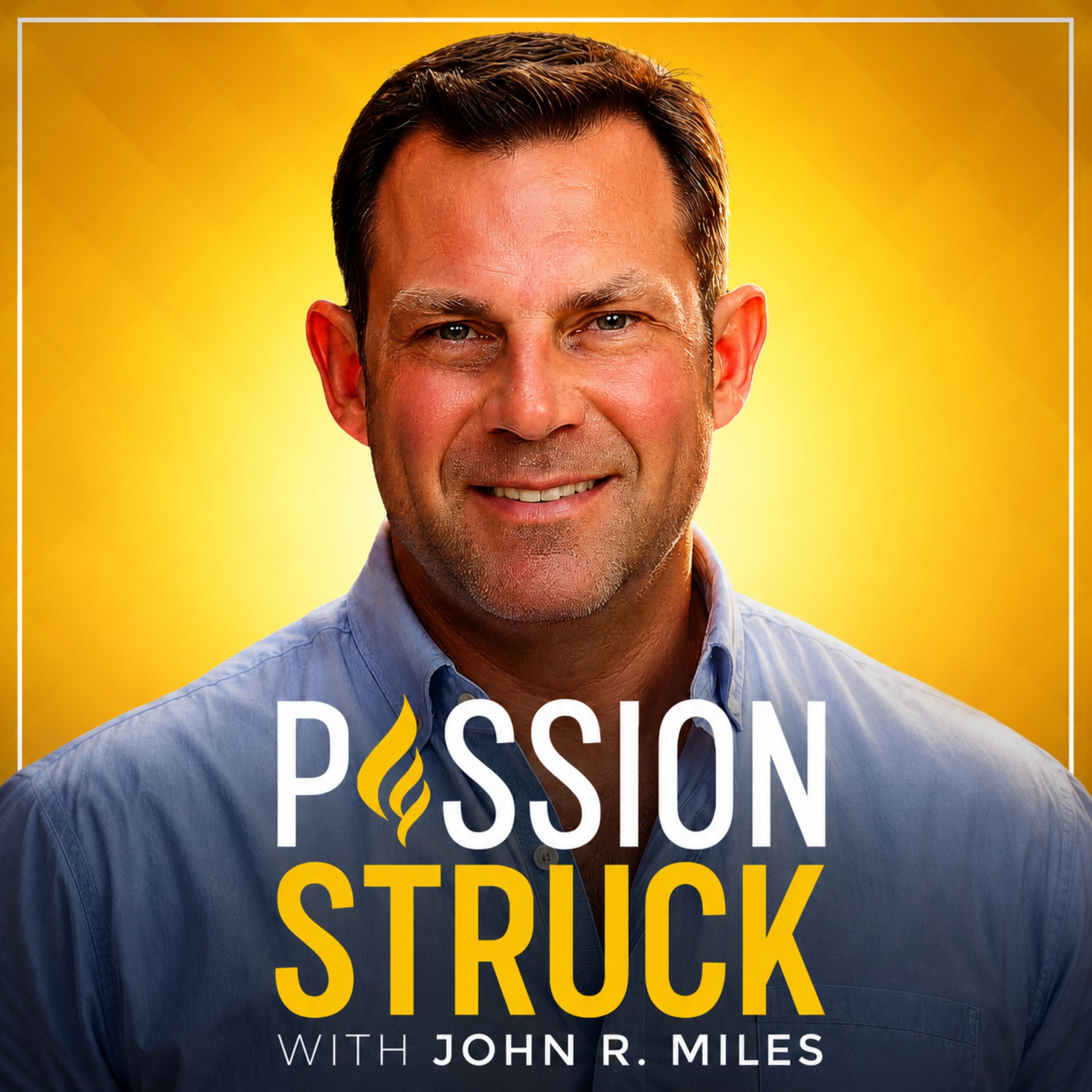
How Your Beliefs Shape Your Happiness, Success, and Future | Shawn Achor – EP 831
Passion Struck with John R. Miles
Hosted by John R. Miles
- 1h 14m
- Transcript
Summary
Written by a model from the transcript; not yet reviewed.
John R. Miles and guest Shawn Achor explore how human belief systems act as a powerful lens shaping happiness, success, and the future. They discuss the concept of the great drift, examining how society has become untethered from traditional village, work, political, and religious structures, leaving people searching for meaning and purpose. Achor argues that beliefs do not just change the present moment, but actively predict future outcomes, citing examples like the expanding placebo effect and the evaporation of the home-field advantage during the pandemic. The conversation highlights the six universal negative beliefs that plague modern individuals—such as feeling alone, that behavior does not matter, or that work is meaningless—and offers concrete strategies like adding warrants and qualifiers to transform limiting beliefs into fruitful action.
- Beliefs about the world are more predictive of physical and mental outcomes today than they were twenty years ago. 14:12
- Transform wishful thinking into a productive belief by adding a because statement and an if-then qualifier. 31:43
- Peer-to-peer recognition at work significantly increases employee retention by reinforcing feelings of mattering. 1:06:00
- Reviewing pre-curated positive photos on your phone helps entrench supportive memories and shifts your self-perception. 1:09:05
Chapters
- 0:00Podcast Intro and Ad Read
John Miles opens the episode with a brief introduction and an ad read before diving into the conversation.
- 6:18Belief as a Lens: Changing What Happens Next
The conversation turns to how the lens of belief shapes perception, action, and future possibilities, using examples from sports and AI.
- 7:12Shawn Achor Joins the Conversation
Shawn Achor is welcomed to the show, and the host outlines the episode’s focus on the power of belief and its impact on happiness and success.
- 12:18Placebo Effect and the Rise of Belief Power
Achor discusses research showing that the placebo effect has doubled over 20 years, illustrating how modern beliefs are increasingly powerful.
- 30:44Practical Ways to Reframe Beliefs
Achor introduces the concept of a belief stem, adding warrants and qualifiers to transform wishful thinking into actionable, evidence‑based beliefs.
- 42:25Negative Beliefs and the Great Drift
Achor outlines the societal shift toward negative beliefs—feeling alone, insignificant, and powerless—and its consequences for mental health.
- 44:00Closing Reflections and Takeaways
The hosts wrap up by summarizing key insights on belief, meaning, and intentional living, and tease future episodes.
- 45:25Connecting Mattering and Systemic Unmattering
John Miles and Achor discuss the concept of systemic unmattering, how environments erode a sense of worth, and the need to restore collective meaning.
- 49:34Personal Story: From Research to Parenting
Achor shares how his daughter's health crisis led him to pause his career, reevaluate his beliefs, and prioritize family over professional ambition.
- 50:35Sean’s Story of Feeling Replaced
Sean recounts how news alerts about successful authors made him feel replaced and unimportant.
- 54:37Oprah’s Insight on Knowing You Matter
John brings in Oprah’s words to emphasize the universal need to feel that one matters.
Highlights
- 12:49
The placebo effect for various chronic conditions has doubled or tripled over the past twenty years, indicating that human beliefs are actually more predictive of bodily outcomes today than they were before the technological revolution.
- 16:16
Home-Field Advantage Discoveryinsight
During the pandemic when sports games were played without spectators, the statistical home-field advantage completely evaporated. This proved that the advantage is driven by psychological belief rather than physical travel exhaustion.
- 32:50
Converting Wishes to Fruitstrategy
Achor explains that to avoid wishful thinking, parents and leaders must attach warrants and conditional qualifiers to encouragement, giving the brain concrete actions and past evidence to make a belief possible.
- 40:49
Untethered from Societyinsight
Humans have become untethered from four historical pillars of community: village, work, political structures, and religion, leading to an increase in anxiety, depression, and feelings of isolation.
- 1:06:09
Peer Praise Retains Employeesdata
Research at LinkedIn showed that employees who received just three touchpoints of peer-to-peer praise over six months saw their retention rate jump from 80% to 94% under the exact same pay and conditions.
Quotes
“Your beliefs influence what you notice, what you attempt, how you respond to setbacks, and what you believe is possible.”
John R. Miles · 3:45 “The lens through which you view the world predicts what happens next within your life, and our beliefs don’t just change how we experience the present—they change what happens next.”
Unnamed speaker · 10:22 “And that message was that, hey, you matter.”
Unnamed speaker · 52:46 “The meaning is imbued and created.”
Unnamed speaker · 53:24 “And 81% of them are looking for a new job.”
Unnamed speaker · 1:04:08 “And when you change the language about things, it changes the way that we follow, our brains go where our words go.”
Unnamed speaker · 1:08:37 “A smile is the weakest intervention we can do.”
Unnamed speaker · 1:14:01
Sponsored segments
- Whole Foods Market 0:37–0:54
- Kalshi 4:38–5:04
About this episode
Shawn Achor, bestselling author of The Happiness Advantage and The Power of Beliefs, explains how our beliefs shape our happiness, performance, relationships, and future possibilities.
Transcript
14,738 words · 7 speakers
Speaker names marked are inferred from speaking time and the show’s known hosts — they are not voice-verified.
Topics
- Target
- The Happiness Advantage
- The Power of Beliefs
- The Mattering Effect
- Lowe's
- Flint
- seanacor.com
- The Architecture of Agency
- NASA
Page updated · transcript and summary are machine-generated